---
title: "The Future of Advertising Created by Ad Technology ① \n\n~ Ken Honda, President of FreakOut"
description: ""
url: "https://dentsu-ho.com/en/articles/1142.md"
html_url: "https://dentsu-ho.com/en/articles/1142"
canonical: "https://dentsu-ho.com/en/articles/1142"
language: "en"
alternate_language_url: "https://dentsu-ho.com/articles/1142"
translation: "machine"
type: "article"
site: "Dentsu-ho (電通報)"
llms_txt: "https://dentsu-ho.com/llms.txt"
published: "2014-05-20T06:00:00+09:00"
---
# The Future of Advertising Created by Ad Technology ① \~ Ken Honda, President of FreakOut
> Navigation: [Site index (llms.txt)](https://dentsu-ho.com/llms.txt) · [Home](https://dentsu-ho.com/en) · Parent: [New Articles (新着記事)](https://dentsu-ho.com/en/latest_articles) · [Digital Trends](https://dentsu-ho.com/en/booklets/56)
Note: This website was automatically translated, so some terms or nuances may not be completely accurate.
Published: 2014-05-20T06:00:00+09:00 · Series: [Digital Trends](https://dentsu-ho.com/en/booklets/56) (Part 1 of 27)
## Themes and tags
- Themes: [Marketing (マーケティング)](https://dentsu-ho.com/en/theme/marketing), [Advertising (AX) (広告)](https://dentsu-ho.com/en/theme/ax), [Management / Corporate Affairs (BX) (経営 / 企業)](https://dentsu-ho.com/en/theme/bx), [Digital / Technology (DX) (デジタル / テクノロジー)](https://dentsu-ho.com/en/theme/dx), [Creative (クリエイティブ)](https://dentsu-ho.com/en/theme/creative), [Social Issues (社会課題)](https://dentsu-ho.com/en/theme/social_issue), [Idea Generation & Methodologies (アイデア / 発想法)](https://dentsu-ho.com/en/theme/idea), [Insights / Research (インサイト / 調査)](https://dentsu-ho.com/en/theme/insight)
- Tags: [Digital](https://dentsu-ho.com/en/tag/デジタル), [Advertisement](https://dentsu-ho.com/en/tag/広告), [Future](https://dentsu-ho.com/en/tag/未来), [Technology](https://dentsu-ho.com/en/tag/テクノロジー)
## Authors
- Honda Ken(Freak Out / President)
## Adjacent articles
- Next: [https://dentsu-ho.com/en/articles/1143](https://dentsu-ho.com/en/articles/1143)
## Body

The ever-evolving digital world. Our new series "Digital Trends" launches this month, bringing you the latest topics. The inaugural theme is "Ad Technology." Interest in "ad technology," epitomized by terms like RTB and DSP, is rapidly surging.\
As the saying goes, "from slots to people," ad tech fundamentally changes advertising concepts and mechanisms. It offers significant insights not just for internet advertising but for all future advertising. We spoke with key figures from two major RTB industry leaders about the relationship between advertising and technology, and the emerging future of advertising.\
The first installment features Ken Honda, President of FreakOut. Interviewed by Yuzo Ono, Planning Promotion Department Manager, Dentsu Digital Inc.
\[Part 2: Interview with Hitoshi Nakagawa, [Director of](http://dentsu-ho.com/articles/1143) MicroAd Future Advertising Research Institute, [is here](http://dentsu-ho.com/articles/1143)**.\]**
**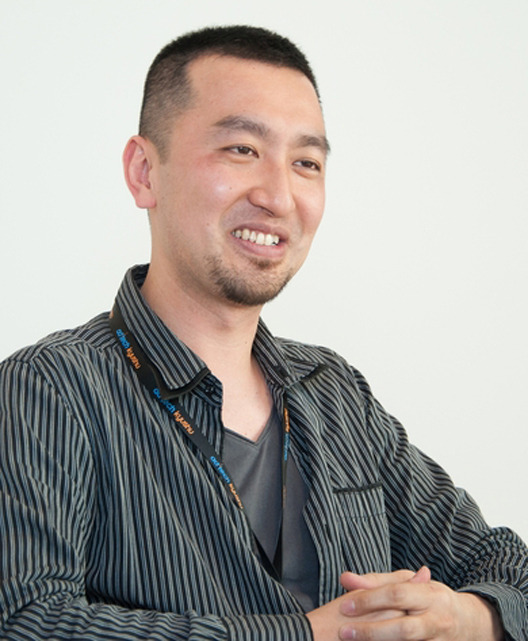**
**Mr. Ken Honda**\
(Honda Yuzuru)\
President of FreakOut.\
Founder and President of FreakOut, the first company to launch a DSP business in Japan. A serial entrepreneur in the advertising industry, he also founded the ad network company Brainer before FreakOut and sold it to Yahoo Japan. He is also an angel investor who continues to invest primarily in advertising ventures with strong technical capabilities.
---
****
## **■ RTB: Revolutionizing the Advertising Mechanism**
**──FreakOut is a pioneer of RTB in Japan. What attracted you to RTB?**
**Honda:** When it comes to opportunities in the internet business, there are various possibilities, such as the expansion of possibilities due to PCs being replaced by smartphones. However, I found it interesting that, in a different trend, a completely new form of transaction supported by technology was emerging in the already huge advertising business, which was an unexpected change.
**──It's truly groundbreaking that the underlying mechanism changes, rather than the visible front-end devices or creatives. To get back to basics, I understand you originally came from the technology side. What drew your attention to advertising?**
**Honda:** This goes back quite a while. Around 2000, while working in a biology research position at a U.S. university and doing computer programming, Google emerged. Many people were researching SEO—how to rank higher in search results. Out of simple curiosity, I started researching what happened when searching in Japanese. Through that, I began noticing that presenting information within a specific context led people to buy things, and I started finding advertising interesting.
**──So that's why you're so interested in RTB now. Traditionally, the advertising world followed this timeline: "Buy ad space" → "Audience sees the ad." With RTB, that timeline flips 180 degrees: "Audience sees the ad" → "Buy ad space." And technology makes this happen instantly. I think this is a revolutionary event in advertising history. But when you think about it, this is essentially what advertising always wanted to do. It just wasn't possible until now, and technology has made it possible. What do you think?**
**Honda:** From an advertiser's perspective, I completely agree. And I believe this technology has the potential to increase advertising effectiveness by a factor of 100,000 times compared to current methods. For example, currently, out of 1,000 ad impressions, one gets clicked, and out of 100 clicks, one person buys something. Multiplying these gives 100,000. But as technology evolves and ultimate prediction emerges, a single impression could lead to a purchase with 100% probability. In other words, advertising effectiveness has the potential to increase by up to 100,000 times.
**──Indeed, that represents the ideal advertising scenario, and technological progress is making that possibility visible. By the way, when explaining RTB, some say that while the mechanism is different, the targeting outcome is essentially the same as behavioral targeting. What is the most significant difference in reality?**
**Honda:** RTB's strength lies in its ability to separate the ad space from the publisher and purchase it through a fair bidding process. While behavioral targeting aligns with advertiser needs, it also had to consider publisher constraints. RTB, however, allows advertisers to freely purchase the exact moment they want by winning the bid at the highest price. That's the fundamental difference. As more data accumulates going forward, the attribution perspective will become increasingly important. This is a perspective that's difficult to evaluate when only certain media outlets can buy ad space. I believe it only becomes visible when all media are laid out flat on the DSP platform connected by RTB, allowing free purchase under conditions of fairness.
****
## **■ The Fusion of Technology, Science, and Art**
**──From an engineer's perspective, what makes advertising interesting?**
**Honda:** It's the fact that there are problems technology alone cannot solve. I believe advertising products require three elements: the technology supporting the infrastructure, the science interpreting the moment, and the art that engages human emotions to deliver results. The interesting part is figuring out the right balance of how much of each to incorporate.
**──In the early days of online advertising, it felt like everyone was focused on using new technology to change creative, but not so much on changing the underlying mechanisms. Would you agree?**
**Honda:** Seeing RTB technology and being drawn to it—that's exactly what makes me an engineer. Engineers are more interested in scalability than expression, and I saw that potential in the advertising business enabled by RTB. However, what you put in the ad space after buying it via RTB falls into the realm of expression. So, I consider technology and science while keeping that in mind. Looking ahead, I believe new forms of expression will emerge—like O2O—where we capture an individual's movements, track their flow, and derive answers. That's the kind of new expression I think infrastructure players can create.
**──That's expression integrated with the system itself. While innovations in online advertising, like Google's search-linked ads, were often driven by people coming from outside the ad industry, do you think tech-focused individuals will continue to transform advertising?**
**Honda:** Data scientists, in particular, are starting to take an interest in this field. In the realm of big data utilization, DSPs aggregate data from various sources, resulting in massive volumes of data to handle. The RTB methodology, which can manage this, is likely appealing to them.
**──I see. However, some point out that pushing optimization for each individual using data can lead to a problem where the target market shrinks progressively, a phenomenon sometimes called "shrinking optimization" from the corporate perspective.**
**Honda:** I believe that stems from poorly set KPIs. While I mentioned a potential 100,000x increase earlier, pushing that to its extreme does indeed lead to that problem. Therefore, KPIs that evaluate intermediate points become crucial. I see this as a transitional phase where we're still working to gain understanding of something new. I don't want to see a trend where promising, emerging technology is restricted by ignorance that only looks at simplistic KPIs.
**── On the other hand, from the user perspective, as discussed in the book 'The Closed Internet,' there's a view that information optimization narrows the world, leading to a siloed experience.**
**Honda:** To avoid that, I think we need to properly focus on sparking interest and gaining awareness. For example, there's the behavior where someone who purchases a product becomes a fan afterward and shares it on social media. Since we platform operators will eventually have access to this kind of data too, we can also consider how to leverage information sharing to drive the next wave of awareness.
## **■ The Future of Advertising Shaped by Technology**
**──Changing the subject slightly, in the world of stock trading, computer-driven automated trading sometimes goes too far, causing wild swings in stock prices. I've heard that humans actually can no longer understand why the computers made those particular decisions. Could something like that happen in advertising too?**
**Honda:** I believe so. Bidding is evolving from simple machine learning—where you feed correct data and it mimics that buying pattern—to more sophisticated systems that learn and infer from extracted features to make purchases, even without any correct data. So, we'll see situations where we don't know the reasoning behind the decision, but the resulting effect is highly effective. Going forward, not only data scientists but also talent involved in this kind of artificial intelligence will enter the industry.
**──That's fascinating. Changing the subject, online, the boundaries between content (articles), recommendations, and advertising are increasingly blurred. Will this overlap continue to grow?**
**Honda:** As ad formats diversify and RTB becomes more flexible in responding to them, I believe we'll be able to provide ads that are more seamlessly integrated and highly compatible with content. To put it extremely, it will even become possible to insert ads as text within articles.
**──That would completely erase the boundary between ads and articles. So how do you think mass media and ad tech will coexist going forward?**
**Honda:** As a platform provider, our ultimate goal is simply to connect all touchpoints. Understanding people's flow, including mass media, and determining what answer to provide at any given moment. Within that, we also want to consider giving traditional media new value. For example, even ordinary transit ads not connected to the internet could leverage device location data to identify movement patterns, segment audiences, and deliver the most relevant transit ads to those people.
## **■ Technology enhances human value and makes the world better**
**──Whether mass media is connected to the internet or not, various technologies collectively create an attribution-based worldview, with DSPs operating behind the scenes. Earlier, we discussed artificial intelligence. As technology advances this way, where will human wisdom ultimately reside?**
**Honda:** Our mission includes "empowering people to do human work." We believe technology shouldn't replace human jobs; rather, it should stimulate human creativity. Procedural details like buying ads are definitely more efficient when handled by machines. Building on that, we envision an environment where human resources shift to planning and creative work—injecting human power into crafting advertising campaigns, targeting, and scenarios that truly fit the brand. That would be fascinating.
**──So the idea is that advancing technology actually enhances human value?**
**Honda:** That's what we aim for, and personally, as an engineer, I approach advertising product development with that design philosophy. While the financial industry has become less human-dependent due to the advancement of financial engineering and HFT (high-frequency trading), the advertising industry is more likely to retain areas where human value can shine, like planning and creative work. I see that as the very essence of art, and I want to explore technology and science that are highly compatible with that.
**──Looking ahead, where will you focus your efforts?**
**Honda:** For the immediate future, I want to explore what's possible within the RTB world. Mobile RTB is still emerging. We need to bridge the gap between apps and web, connect across devices, and even link offline and online experiences. Essentially, I want to connect everything.
**──Listening to you, it feels like all the keywords we've been hearing about for years—ubiquitous computing, big data, attribution—are finally converging. It feels like that world has finally arrived.**
**Honda:** That's right. The background is that computing power has reached levels practical for real-world use, and all media now provide information. Furthermore, I feel there's still plenty of room to scale up the calculations. Within the next few years, I want to perform calculations from various perspectives, increasing them by a factor of 1000 for each impression. By doing so, I believe we'll be able to better track the flow and establish new KPIs.
**──Looking back at the history of the internet, its very foundation seems rooted in a belief in human goodness. This industry seems to attract many people who think positively. Steve Jobs, who believed in "making the world a better place," is a classic example. When the internet first began, some even believed that connecting the entire world would eliminate war.**
**Honda:** That's true. But actually, advertising might just eliminate war. You could target the right people and direct ads toward fostering peace. I believe "RTB increases humanity's wealth." RTB breaks down advertising space into the smallest possible units, uncovering new advertising value that was previously unseen. This increases overall value, enabling media that previously yielded only 1 unit of value to generate more than 1 unit.
**──RTB increases humanity's wealth. That's fascinating. Thank you very much.**
---
### **Digital Terminology Explained**
**RTB【real-time bidding】**\
Real-time bidding. An online advertising auction mechanism where competitive bids for ad slots occur each time an ad impression is displayed, determining which ad is delivered.\
** **
**SEO \[search engine optimization\]**\
Search Engine Optimization. Measures such as rewriting web pages to rank higher in search engine results.\
** **
**Behavioral Targeting Advertising**\
A targeting method for online advertising that analyzes a user's interests based on past page views and search history to deliver ads tailored to individual preferences.\
** **
**Attribution**\
Also translated as "advertising contribution," this concept seeks to understand how each advertisement contributed to the process from ad awareness to purchase.\
** **
**DSP \[demand side platform\]**\
A system used in online advertising transactions that sets conditions based on objectives for ad optimization and performs automated buying via RTB. It is a crucial component enabling RTB transactions.
**O2O \[online to offline\]**\
A concept where online and offline purchasing activities are interconnected, or where online activities influence purchases at physical stores.
**KPI \[Key Performance Indicator\]**\
A metric that quantitatively shows the degree to which a goal has been achieved (performance) in advertising campaigns, etc.\
** **
**CPA \[cost per acquisition, cost per action\]**\
The advertising cost per instance where a user directed from online advertising completes a desired action on the advertiser's site, such as registering as a member, purchasing a product, or achieving another defined goal.
**Wearable device**\
Information devices worn on the body like clothing or watches. Google's eyewear device "Google Glass" is a well-known example.\
** **
**Retargeting advertising**\
A targeting method that identifies users who have previously visited a specific company's website and displays ads to them again.\
** **
**PDCA Cycle**\
A cycle of planning ("Plan"), executing ("Do"), verifying results ("Check"), and then improving the plan ("Action").
---
## Author (著者)
### Honda Ken
Freak Out / President
Founder and President of FreakOut, the first company to launch a DSP business in Japan. A serial entrepreneur in the advertising industry, he also founded the ad network company Brainer prior to FreakOut and sold it to Yahoo Japan. He also serves as an angel investor, focusing his investment activities on advertising ventures with strong technical capabilities.
Sharing: the HTML page offers share buttons for X, Facebook, LINE and Hatena Bookmark (not reproduced here).
## Related links
- [Home](https://dentsu-ho.com/en)
- [Site index (llms.txt)](https://dentsu-ho.com/llms.txt)