---
title: "Robots will become home-bound interfaces\n\n――Frontline developers discuss\n\nThe relationship between robots and IoT\n\n~ Shunsuke Aoki, Representative Director of Yukai Engineering"
description: ""
url: "https://dentsu-ho.com/en/articles/1716.md"
html_url: "https://dentsu-ho.com/en/articles/1716"
canonical: "https://dentsu-ho.com/en/articles/1716"
language: "en"
alternate_language_url: "https://dentsu-ho.com/articles/1716"
translation: "machine"
type: "article"
site: "Dentsu-ho (電通報)"
llms_txt: "https://dentsu-ho.com/llms.txt"
published: "2014-10-24T06:00:00+09:00"
---
# Robots will become home-bound interfaces ――Frontline developers discuss The relationship between robots and IoT \~ Shunsuke Aoki, Representative Director of Yukai Engineering
> Navigation: [Site index (llms.txt)](https://dentsu-ho.com/llms.txt) · [Home](https://dentsu-ho.com/en) · Parent: [New Articles (新着記事)](https://dentsu-ho.com/en/latest_articles) · [Digital Trends](https://dentsu-ho.com/en/booklets/56)
Note: This website was automatically translated, so some terms or nuances may not be completely accurate.
Published: 2014-10-24T06:00:00+09:00 · Series: [Digital Trends](https://dentsu-ho.com/en/booklets/56) (Part 7 of 27)
## Themes and tags
- Themes: [Marketing (マーケティング)](https://dentsu-ho.com/en/theme/marketing), [Customer Experience (CX) (顧客体験)](https://dentsu-ho.com/en/theme/cx), [Digital / Technology (DX) (デジタル / テクノロジー)](https://dentsu-ho.com/en/theme/dx)
- Tags: [Digital](https://dentsu-ho.com/en/tag/デジタル), [Robot](https://dentsu-ho.com/en/tag/ロボット), [IoT](https://dentsu-ho.com/en/tag/IoT)
## Authors
- Shunsuke Aoki(Yukai Engineering Representative)
## Adjacent articles
- Previous: [https://dentsu-ho.com/en/articles/1714](https://dentsu-ho.com/en/articles/1714) · Next: [https://dentsu-ho.com/en/articles/1848](https://dentsu-ho.com/en/articles/1848)
## Body

Robotics is currently drawing intense attention in the IT industry, with major IT companies successively acquiring robotics-related ventures. If a future arrives where various everyday objects connect to the internet and become robotized, then robotics can be seen as a concept closely related to IoT (Internet of Things). This time, we spoke with Shunsuke Aoki, CEO of Yukai Engineering. After achieving success in internet ventures, he transitioned into robot development, launching unique robots like the palm-sized social robot "Coconatch."\
(Interviewer: Yuzo Ono, Planning Promotion Department Manager, Dentsu Digital Inc. Business Bureau)\

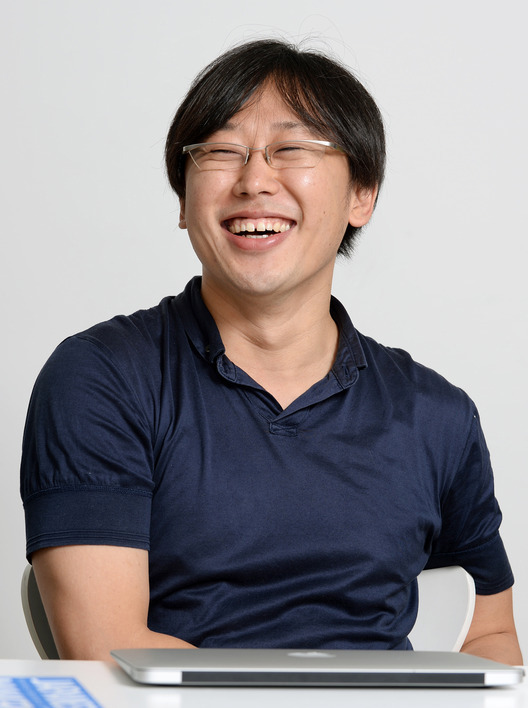
Representative of Yukai Engineering
**Shunsuke Aoki**
In 2001, while still a university student, he founded "TeamLab" and served as its Director and CTO. In 2007, he established the robotics venture "Yukai Engineering." The company develops and sells products like the social robot "Coconatch" and the physical computing toolkit "konashi."\
He also collaborates on joint development projects with other companies, such as "Telepathy One," "necomimi," and "teamLab Hanger."
---
## Intelligence cannot be created without a body
**──When people think of robots, they generally imagine mechanical things, but there are also terms like "search robots" that refer to entities without physical form. What exactly is the definition of a robot?**
**Aoki:** There's no **academic** definition. The Robotics Society covers all kinds of technologies; it's more like an umbrella term, so there's no clear boundary. Within that, we consider a robot to be something that makes people want to talk to it, something that makes people want to communicate with it.
**──Despite your success in internet-based ventures, you shifted to robot development. I hear the reason was that you wanted to step outside the computer screen.**
**Aoki:** No matter how hard you work online, you're only manipulating things within the confines set by others—like browsers or smartphones. But the real world has so much more variety, and I found that world more interesting.
**──In a way, is that similar to IoT? Did you want to expand the internet into a broader world?**
**Aoki:** That's part of it, but I also shared the mindset expressed by Alan Kay, often called the father of the personal computer: "People who are really serious about software should make their own hardware." Rodney Brooks, founder of iRobot (the company that developed the Roomba vacuum robot), initially researched artificial intelligence. He then decided to push that research further to create truly useful intelligence, which led him to establish the company.
This person wrote the famous paper "Elephants Don't Play Chess." The point is that elephants can remember human faces, understand language, and live in families. These are highly advanced abilities, yet elephants don't play chess. The symbolic processing and logical abilities associated with chess, long considered intelligent and rational, are actually a very recent development in nature. For living beings, other forms of intelligence are more important.
The underlying idea is that certain things can only be understood through having a body; true intelligence cannot arise without one. Even within AI research, defining the concept of "self" is an extremely difficult challenge. This is why Brooks began arguing that intelligence cannot be created without a body.
**──So, like the elephant used as an example, is truly autonomous artificial intelligence even possible?**
**Aoki:** I believe it is possible. Humans don't make every decision by theoretically considering all options. For example, when chess grandmaster Hanyu makes a move, he reportedly instantly visualizes about five possible moves out of hundreds of millions of options, unconsciously narrowing them down. He then simulates those five narrowed-down moves in his mind. Current computers, however, cannot perform this narrowing down; they calculate every possible move using computational power to arrive at an answer. The human brain can unconsciously narrow down possibilities. For instance, when you think about what to eat for dinner today, you don't calculate every single possibility, right? Regardless of whether it's correct or not, considering every possibility is unnecessary for survival. What's more important is choosing the optimal option on the spot. I believe such brain functions can be replicated with some kind of hardware.
## Smart Homes as the Catalyst for Robot Adoption
**──Home robots like vacuum cleaners have become popular recently. What are your thoughts?**
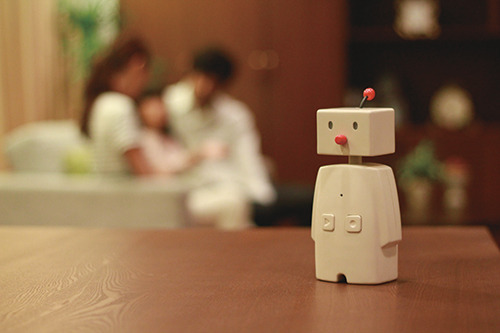
The "BOCCO" home robot, which connects families through casual communication, is the latest product developed by Yukai Engineering.
**Aoki:** I was involved in the development of major appliance manufacturers' robotic vacuum cleaners from the initial concept stage. The goal was to create a robot that could become a member of the family. I thought that being family might mean "sharing trivial information." Nowadays, we can share such trivial information with acquaintances on Facebook, but in the past, that was something only shared within the family. Therefore, I believed that for a robot to become a family member, it needed to know that kind of information. That's why we added features like a voice memo function that can be recorded via smartphone.
**──Some robots, like cleaning robots, are practical, while others are more entertainment-focused. Do you think they'll evolve in separate directions like that?**
**Aoki:** I think so. For example, there are many types of insects, but they all do something useful for their environment and, as a result, get their share. That's how they adapt and survive. So, we might even see robots that just sit behind the TV, constantly rustling away, sucking up dust (laughs).
**──So you mean specialized robots, rather than general-purpose ones, will become more widespread?**
**Aoki:** Versatile robots are certainly convenient. But if you had such an all-knowing, versatile robot in your home, I think the humans living there would feel very self-conscious. You couldn't get cozy with your partner in front of a robot like that, right? (laughs)
**──So, assuming specialized robots become widespread, what kinds besides cleaning robots might catch on quickly?**
**Aoki:** I think communication robots that aren't humanoid. Sony's "AIBO" is a really good example. Robots that understand your instructions and express their own emotions.
**──Is there a catalyst for such widespread adoption?**
**Aoki:** I think it will be smart homes. When appliances connect to networks and data is collected on the people living in the house, robots will be able to understand things like, "You've been sleep-deprived lately." A major background factor is the widespread adoption of smartphones. This dramatically increased monthly data usage, enabling the digitization of human behavior and allowing robots to process that massive amount of information.
**──So, in that sense, robots will become the interface for appliances and such?**
**Aoki:** Exactly. For example, if a microwave connects to the internet and starts cooking recipes it downloads, you'd need a tablet attached to the microwave to operate it as a user interface (UI). The same goes for washing machines. That would mean tablets everywhere in the room. Plus, if each manufacturer has different controls, just learning them all would be a huge hassle. But if there were a separate interface allowing broad instructions, I think we could achieve much more sophisticated functionality.
**──If that's the case, wouldn't robots essentially become combined with tablets?**
**Aoki:** Yes, that's right. Having something like that, where you could ask, "When's the next bus?" and it tells you the time, or handles other things that are a hassle to search for—that would be ideal. Recently, there's a service called "Google Now." Using this, it tells you information about necessary places or times without you even asking. I think this app is futuristic and interesting.
However, smartphones are already quite mature in their current form, so evolving them further into robots would be difficult. I don't think smartphones need to walk or move around; having basic functions like conversation is sufficient. Considering the pace of growth in battery and motor technology, the energy efficiency for physically moving smartphones isn't likely to improve much going forward. However, network and processing power have increased hundreds of times over, so smartphones and tablets will likely evolve in that direction. I suspect their UI will remain largely unchanged for the next several decades.
Also, it's been about 100 years since keyboards first appeared. Given how long they've been used, I think keyboards will stick around for the next 100 years too.
**──So, just as the keyboard will remain, the interfaces for smartphones and tablets will also stay in their current form, while robots will develop their own optimal interfaces separate from these?**
**Aoki:** Yes. I don't think the entire home will become a tablet. Smartphones and tablets are tools that enhance the individual, but I believe robots will exist as a separate interface tied to the home.
## IoT, robots, and ubiquity are closely related.
**──You mentioned robots have an image close to that of yokai. Why is that?**
**Aoki:** Yokai characters are incredibly fascinating, aren't they? They're not just images in people's minds; they have a connection to the real world, like being invisible but following people with just their footsteps. You could say that's a kind of human interpretation.
People love the idea of robots. It's not like humanity has ever been saved by robots in the past (laughs). But this fascination isn't new—myths feature human-made beings, and in the 18th century, there were "automata," mechanical dolls. Essentially, robots embody human desires.
**──Robot development is advancing in many areas. Are there any particular cases that interest you?**
**Aoki:** The one I found most interesting is Nest, which Google acquired. It's an intelligent thermostat that monitors whether people are home, but what's fascinating is that it also tracks what other homes are doing. This allows for the utilization of lifestyle data from many households in a big data sense.
**──Speaking of internet companies, Amazon is experimenting with delivering goods using unmanned aerial vehicles, or "drones."**
**Aoki:** Drones are robots too. The reason they're trending now is largely due to improved battery performance and the miniaturization of control computers, allowing them to fly independently. But when it comes to their potential? Aircraft are inherently risky, and in reality, the energy efficiency of autonomous truck transport is superior. So initiatives like using drones for package delivery are probably just a flash in the pan.
**──What's the background behind internet companies like Google and Amazon showing interest in robots?**
**Aoki:** I think it's a sense that robots are the next big thing after smartphones.
**──Robots come in various types, like autonomous or remotely operated, and their forms range from humanoid androids to many other designs. Does each type serve a specific purpose?**
**Aoki:** Yes. In that sense, IoT might mean everything around us becomes a robot. It's not just about having many different robots.
**──This robotization of various things feels similar to the concept of "ubiquitous computing" that was often discussed before.**
**Aoki:** Yes. I believe ubiquitous computing and IoT are fundamentally the same.
**──So IoT, robots, and ubiquity are closely related concepts.**
**Aoki:** The reason robots are gaining attention now is because sensors have become smaller, more powerful, and cheaper. And they'll become even cheaper within the next decade. That means sensors will be embedded in all sorts of things, enabling diverse forms of perception. Additionally, the software aspects—like voice recognition and synthesis for human communication—have advanced thanks to faster CPUs. So, I think we'll be able to do even more new things going forward.
**──For example, as cars become more robotic, tracking windshield wiper movements could reveal real-time weather conditions across regions. As more things become robotic and interconnected, we'll likely uncover insights previously unknown.**
**Aoki:** I think this will increasingly happen within homes. We'll be able to know who used the toilet, how long someone spent in the bath, or how long they slept. This data could then be used to understand efficient sleep patterns, health management, and even what lifestyle choices might improve a child's academic performance.
**──That suggests new forms of advertising and marketing too. By the way, some people describe IoT as "redefining hardware" or "redefining the internet." What are your thoughts?**
**Aoki:** I feel IoT is closer to redefining life itself. Think of things like your alarm clock or bed automatically controlling when you wake up. When the things around us in daily life become smarter, I believe that brings about change. While previous information tools were about improving the individual, I think IoT is a tool for improving not just individuals, but families and groups too. Making family life more enjoyable, for instance.
## Ventures and NEETs are a hair's breadth apart
**──It's been said for a long time that Japan's manufacturing sector lacks vitality. Robots seem like they could be a good fit for Japanese culture. What do you think about their potential?**
**Aoki:** For that to happen, I think we need more venture companies to emerge; otherwise, we can't compete internationally. It's difficult for large corporations to take on challenges in markets that don't exist yet. The line between venture and NEET is paper-thin, and I feel like our current society is stifling the buds of challenge. Companies like Google aren't growing primarily through internal innovation; they're acquiring new companies. Without creating that kind of cycle, it's hard to win. Challenging within a large organization is fundamentally difficult because the direction of the organizational structure is different. Even if you talk about innovation within the company, it's hard. For example, if you wanted to create something like GoPro (a small wearable camera specialized for active sports) internally, you'd have to tolerate an employee who's only been surfing for ten years. But doing that would be unsustainable for the company. So, I think things might change if large corporations start acquiring or partnering with various startups, and this approach spreads to manufacturing too.
**──Are you interested in controlling robots with brainwaves?**
**Aoki:** Yes, I am. Research on robots controlled by brainwaves is quite advanced, and I believe that field will continue to progress. However, the drawback is that pushing this further would require directly implanting electrodes into the brain. Even in research institute projects, they use massive headgear to capture brainwaves. So, I think a breakthrough beyond electrodes is necessary.
**──How do you see the relationship between humans and robots evolving in the future?**
**Aoki:** I think it will be similar to the relationship between humans and supernatural beings. Robots, no matter how hard they try, probably won't surpass pets. Pets occupy a position quite close to humans, so in the family hierarchy, robots would rank below pets. Yet, when it comes to things that exist alongside humans, I think that's where supernatural beings come in. It would be nice if someday we could have a robot like a "zashiki warashi" (house spirit). You cherish and worship it, and before you know it, your income increases (laughs).
**──That's fascinating. In sci-fi, there are stories about robots forming alliances and rebelling, but even without going that far, robots connecting with each other could have dangerous aspects.**
**Aoki:** That aspect exists, but I think humans will probably adapt to it. Just look at Facebook—sharing your daily life with a huge audience was unthinkable a decade ago, but now it's normal.
**──So common sense changes, and the necessary literacy develops to match. What kind of future do you see as robots continue to evolve?**
**Aoki:** In the near future, I think everything around us will become robots that understand our intentions and can communicate with us. Currently, most internet traffic consists of audio, video, and text information—things we perceive with our eyes and ears. But as sensor data increases, the composition of traffic will change.
**──What will be the major challenges in future robot development?**
**Aoki:** I think it's the legal framework. Even how sensor data is used relates to laws like the Personal Information Protection Act.
**──Is there a specific type of robot you'd like to create in the future?**
**Aoki:** I'm actually developing one now—a robot that supports families. You know how there are "latchkey kids"? This robot would send notifications to a smartphone when the child comes home or opens the refrigerator, allow voice messages to be sent from the smartphone, and even enable communication with our parents' generation who don't use smartphones. It's a robot designed to facilitate this kind of casual communication.
## Back Numbers (バックナンバー)
- [Will Future Cars and Appliances Evolve Through Downloads? IoT from the Manufacturing Frontlines \~ Mr. Akinori Takahagi, Representative Director of Moff](https://dentsu-ho.com/en/articles/1714) — 2014-10-23T06:00:00+09:00 · [Marketing (マーケティング)](https://dentsu-ho.com/en/theme/marketing)
- [The Great Linguistic Transformation: A Once-in-500-Years Shift Brought by "Internet Language" \~ Novelist Tomomi Fujiwara](https://dentsu-ho.com/en/articles/1503) — 2014-08-19T06:00:00+09:00
## Author (著者)
### Shunsuke Aoki
Yukai Engineering Representative
In 2001, while attending university, he founded "teamLab" and served as its Director and CTO. In 2007, he established the robotics venture "Yukai Engineering." The company developed and sold products such as the social robot "Coconatch" and the physical computing toolkit "konashi." He also collaborated on joint development projects with other companies, including "Telepathy One," "necomimi," and "teamLab Hanger."
Sharing: the HTML page offers share buttons for X, Facebook, LINE and Hatena Bookmark (not reproduced here).
## Related links
- [Home](https://dentsu-ho.com/en)
- [Site index (llms.txt)](https://dentsu-ho.com/llms.txt)