---
title: "Turning Social Issues to Your Advantage\nNew Marketing Concepts"
description: ""
url: "https://dentsu-ho.com/en/articles/1737.md"
html_url: "https://dentsu-ho.com/en/articles/1737"
canonical: "https://dentsu-ho.com/en/articles/1737"
language: "en"
alternate_language_url: "https://dentsu-ho.com/articles/1737"
translation: "machine"
type: "article"
site: "Dentsu-ho (電通報)"
llms_txt: "https://dentsu-ho.com/llms.txt"
published: "2014-10-22T07:00:00+09:00"
---
# Turning Social Issues to Your Advantage New Marketing Concepts
> Navigation: [Site index (llms.txt)](https://dentsu-ho.com/llms.txt) · [Home](https://dentsu-ho.com/en) · Parent: [New Articles (新着記事)](https://dentsu-ho.com/en/latest_articles) · [The New World of Marketing Japanese Companies Should Aim For](https://dentsu-ho.com/en/booklets/75)
Note: This website was automatically translated, so some terms or nuances may not be completely accurate.
Published: 2014-10-22T07:00:00+09:00 · Series: [The New World of Marketing Japanese Companies Should Aim For](https://dentsu-ho.com/en/booklets/75) (Part 3 of 4)
## Themes and tags
- Themes: [Marketing (マーケティング)](https://dentsu-ho.com/en/theme/marketing), [Management / Corporate Affairs (BX) (経営 / 企業)](https://dentsu-ho.com/en/theme/bx), [Creative (クリエイティブ)](https://dentsu-ho.com/en/theme/creative), [Social Issues (社会課題)](https://dentsu-ho.com/en/theme/social_issue), [Idea Generation & Methodologies (アイデア / 発想法)](https://dentsu-ho.com/en/theme/idea)
- Tags: [Innovation](https://dentsu-ho.com/en/tag/イノベーション), [Marketing 4.0](https://dentsu-ho.com/en/tag/マーケティング4.0), [Diversity](https://dentsu-ho.com/en/tag/ダイバーシティ)
## Authors
- Philip Kotler(Northwestern University / Kellogg School of Management / Professor)
- [Koichi Yamamoto](https://dentsu-ho.com/en/person/297)(Dentsu Inc. / CDC)
## Adjacent articles
- Previous: [https://dentsu-ho.com/en/articles/1736](https://dentsu-ho.com/en/articles/1736) · Next: [https://dentsu-ho.com/en/articles/1739](https://dentsu-ho.com/en/articles/1739)
## Body
## If you're obsessed with "perfection," you won't find a breakthrough

**Kotler:** Actually, I once wrote an article arguing that "Japan has the world's most outstanding marketers."
**Yamamoto:** Really?
**Kotler:** Yes, I genuinely believed that at the time. American marketers seemed to feel criticized and complained about it (laughs).
But back then, Japanese companies dominated the market—whether in electronics, cameras, motorcycles, or automobiles. I argued it was **because Japanese** companies **knew "how to win."**
Because the Japanese didn't just copy American products and make equivalent ones; they improved them and made better products. They were constantly refining their products. And they sold them at lower prices than American products. There's no better strategy than selling a superior product at a lower price. That's what knowing how to win means.
So, when Japan's growth later slowed, friends often asked me, "When will Japan regain its momentum?" I always answered, "It will bounce back in a few more years." However, 20 years passed while I kept saying "a few more years."
**Yamamoto:** So we've **entered an era where the old "winning formula" no longer works**.
**Kotler:** Today, Japan is pushing forward with Abenomics, trying to bring in a new wind, but there's hardly any talk about marketing. It's as if that part has been completely left out. **Marketing is the truly critical issue, yet** it seems it's still not well understood.
For instance, regarding exports, I believe Japan is at a disadvantage because few people understand English or European languages. This isn't the case in Japan's neighboring countries. English is spreading rapidly in South Korea, and Indonesians, for example, speak English regularly. Yet when you come to Japan, you rarely encounter people who speak English well. I'm a native English speaker, but in Japanese hotels, I sometimes can't read the instructions for the TV or toilet controls.
**Yamamoto:** That's the **language** barrier issue.

**Kotler:** Another point is the debate over how perfect a product must be. Japan has demonstrated to the world its ability to create perfect products in any category, but this perfection comes with the drawback of high prices. I believe it would be wise to develop **two distinct product lines**: one perfect and higher-priced, and another less perfect but more affordable.
This point cannot be discussed without considering China's presence. China isn't aiming for profit maximization; it's using low product prices as a weapon to maximize market size. Actually, Japan was once like that too. There was a time when Japan aimed for mass production rather than securing high profits. China is currently in that same situation.
Meanwhile, the global economic landscape is not particularly favorable. Growth is sluggish, and many people remain impoverished. Even the middle class is shrinking. In other words **, what the market truly demands now are products that are both good and affordable**. To my eye, Japanese manufacturers seem to genuinely misunderstand this reality and appear unprepared to respond to such conditions.
## Diversity drives innovation
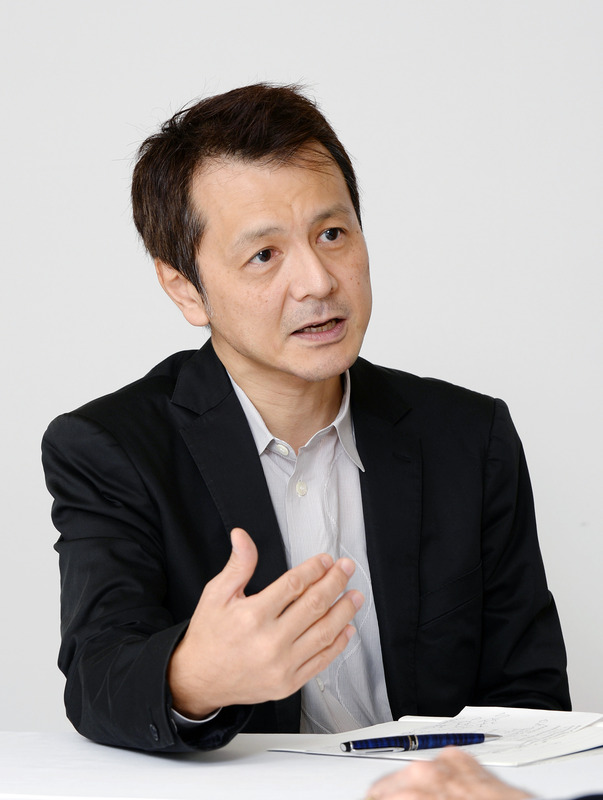
**Yamamoto:** Many Japanese feel Japan is **a** " **pioneer in social problems**." Issues like a declining birthrate and aging population, excessive population concentration in major metropolitan areas like Tokyo, and the resulting increasing depopulation and aging in rural areas. How can we develop marketing strategies **that turn these challenges into opportunities**?
**Kotler:** Japan is not only aging; its birth rate continues to decline, leading to a shrinking population alongside the low birth rate. While the Japanese are reluctant to accept immigrants, the solution may ultimately require making the same choice as Germany. Germany accepted immigrants from Turkey, Greece, and other countries to address its labor shortage.
Countries can selectively decide which nations to actively accept labor from. Labor can be divided into two categories. One consists of people providing physical labor, such as in the construction industry. The other comprises those capable of intellectual work. Attracting the latter group, in particular, requires the inviting side to possess considerable appeal. While I recognize Japan's past efforts in this regard, I believe it still falls short **in terms of diversity**.
Diversity **means bringing together people with varied perspectives when making decisions.** However, Japan has been criticized for having overly homogeneous decision-makers. In other words, the decision-making process has become more of a rubber-stamping exercise rather than serious debate that embraces confrontation.
**Yamamoto:Innovation** is unlikely to emerge from that kind of corporate culture.

**Kotler:** Japanese companies excel at kaizen, right? They make small, incremental improvements every day, from every angle. However, that is improvement, not innovation. The Walkman, which defined an era, was continuously refined afterward, leading to various types like the children's Walkman. Yet, none ever stepped outside the "Walkman" framework. Then, addressing the same challenge – "wanting to listen to any kind of music, anytime, anywhere" – the iPod responded with a completely new concept.
Of course, Japan has produced various innovations. But has Japan truly generated enough innovation? The essence of this challenge may lie in the homogeneity of Japanese people and Japanese society.
**Yamamoto:** Many people emphasize the importance of diversity as an essential element for generating innovation.
**Kotler:** Returning to the earlier point about aging, one perspective is that Japan could become **a "pioneer in aging**." Since global aging is undeniable, Japan will learn ahead of the world how to meet the needs of the elderly. It could even become a specialist excelling in addressing senior needs.
However, personally, I hope Japan finds a way forward by inviting many young people from abroad to immigrate and join its society. Some might suggest encouraging people to have more children, but I don't think that would be very effective. Introducing subsidy systems like France's to encourage having more children could be an option, but I don't necessarily believe such initiatives will **truly** lead to **new ideas**.
## Back Numbers (バックナンバー)
- [The era of efficiently leveraging content marketing is coming.](https://dentsu-ho.com/en/articles/1736) — 2014-10-21T06:00:00+09:00 · [Marketing (マーケティング)](https://dentsu-ho.com/en/theme/marketing)
- [What Japanese Companies Need Now: A Major Shift Toward Marketing Focus](https://dentsu-ho.com/en/articles/1733) — 2014-10-20T07:00:00+09:00 · [Marketing (マーケティング)](https://dentsu-ho.com/en/theme/marketing)
## Author (著者)
### Philip Kotler
Northwestern University / Kellogg School of Management / Professor
A global authority in marketing, he founded and chairs the World Marketing Summit. He has developed various marketing theories and influenced numerous global business leaders. He is a three-time recipient of the Alpha Kappa Sigma Prize. His major works include Marketing Management by Kotler and Keller, Principles of Marketing: From Foundational Theory to Practical Strategy, Kotler's Introduction to Marketing, and Is There Hope for Capitalism?
### Koichi Yamamoto
Dentsu Inc. / CDC
Graduated from the Department of Architecture, Faculty of Engineering, University of Tokyo; joined Dentsu Inc. in 1986. Studied at Columbia University from 1999 to 2000, earning an MBA. Specializes in global brand management, technology branding, innovation management, communication design, and user experience design.
- [Person page](https://dentsu-ho.com/en/person/297)
- Series: [The New World of Marketing Japanese Companies Should Aim For](https://dentsu-ho.com/en/booklets/75), [Recommendations for the Future](https://dentsu-ho.com/en/booklets/198)
- Latest articles: [A Conversation with Brian Eno: Creativity Through Machine Intelligence](https://dentsu-ho.com/en/articles/4529), [Interview with MIT Professor Hiroshi Ishii: Intelligence, and Life and Death (Part 2)](https://dentsu-ho.com/en/articles/3887)
Sharing: the HTML page offers share buttons for X, Facebook, LINE and Hatena Bookmark (not reproduced here).
## Related links
- [Home](https://dentsu-ho.com/en)
- [Site index (llms.txt)](https://dentsu-ho.com/llms.txt)