---
title: "What Japanese Companies Must Ask Themselves:\nA Higher-Level Sense of Purpose and CSV"
description: ""
url: "https://dentsu-ho.com/en/articles/1739.md"
html_url: "https://dentsu-ho.com/en/articles/1739"
canonical: "https://dentsu-ho.com/en/articles/1739"
language: "en"
alternate_language_url: "https://dentsu-ho.com/articles/1739"
translation: "machine"
type: "article"
site: "Dentsu-ho (電通報)"
llms_txt: "https://dentsu-ho.com/llms.txt"
published: "2014-10-23T06:00:00+09:00"
---
# What Japanese Companies Must Ask Themselves: A Higher-Level Sense of Purpose and CSV
> Navigation: [Site index (llms.txt)](https://dentsu-ho.com/llms.txt) · [Home](https://dentsu-ho.com/en) · Parent: [New Articles (新着記事)](https://dentsu-ho.com/en/latest_articles) · [The New World of Marketing Japanese Companies Should Aim For](https://dentsu-ho.com/en/booklets/75)
Note: This website was automatically translated, so some terms or nuances may not be completely accurate.
Published: 2014-10-23T06:00:00+09:00 · Series: [The New World of Marketing Japanese Companies Should Aim For](https://dentsu-ho.com/en/booklets/75) (Part 4 of 4)
## Themes and tags
- Themes: [Marketing (マーケティング)](https://dentsu-ho.com/en/theme/marketing), [Advertising (AX) (広告)](https://dentsu-ho.com/en/theme/ax), [Creative (クリエイティブ)](https://dentsu-ho.com/en/theme/creative), [Social Issues (社会課題)](https://dentsu-ho.com/en/theme/social_issue)
- Tags: [CSV](https://dentsu-ho.com/en/tag/CSV), [Communication](https://dentsu-ho.com/en/tag/コミュニケーション), [Marketing 4.0](https://dentsu-ho.com/en/tag/マーケティング4.0)
## Authors
- Philip Kotler(Northwestern University / Kellogg School of Management / Professor)
- [Koichi Yamamoto](https://dentsu-ho.com/en/person/297)(Dentsu Inc. / CDC)
## Adjacent articles
- Previous: [https://dentsu-ho.com/en/articles/1737](https://dentsu-ho.com/en/articles/1737)
## Body
## CSV (Creating Shared Value): Going Beyond CSR
**Yamamoto:** Finally, I'd like to ask about your thoughts on the future of marketing. Earlier, you mentioned that new concepts and methodologies like content marketing are still in a trial-and-error phase. What do you think will be the driving factors to further advance this evolution?
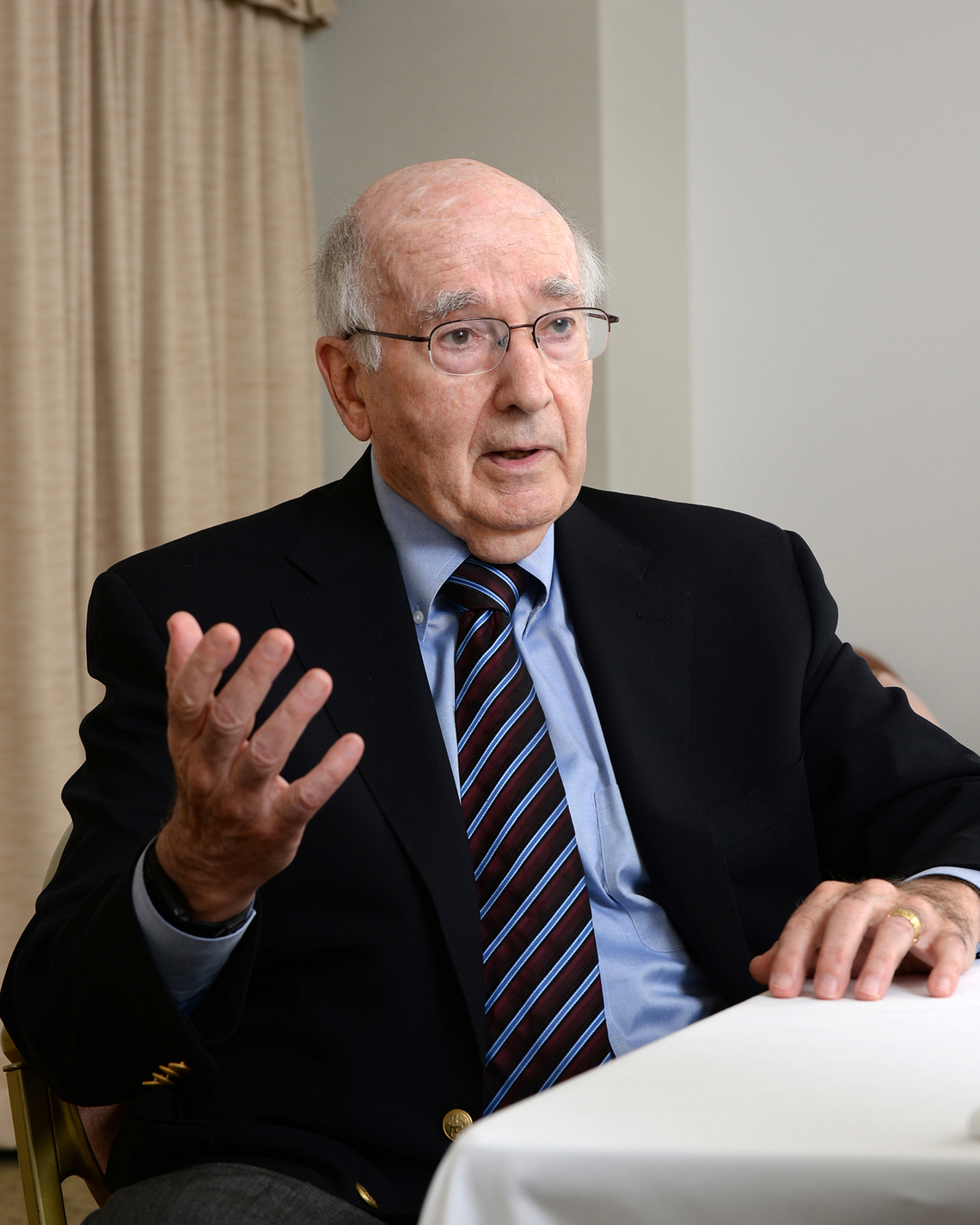
**Kotler:** Since this is a crucial point for Japan too, let's review a bit before answering.
Marketing has evolved through 1.0, 2.0, and 3.0. Marketing 2.0 pointed out that simply explaining to people that your product is perfect—appealing solely to reason—is not enough to convince them. Yet, to me, many Japanese companies seem stuck not even at 2.0, but still at 1.0. They seem convinced that simply creating a perfect product, telling people about it, and demonstrating its superiority compared to competitors' products is sufficient.
2\. **To achieve Marketing 3.0, the goal is to tell a story**. That is how you build a brand. Once successfully established, a brand becomes a living part of people's lifestyles. It happens not through logic, but emotionally – it becomes "part of my lifestyle."
**Marketing 3.0 builds** on this **,** but **it introduces another dimension to construct: demonstrating a higher purpose.** While Marketing 4.0 focuses on marketing that addresses consumers' self-actualization needs, the crucial preceding step is for companies to demonstrate a greater sense of purpose. They must position themselves as agents driving change to make the world better and show genuine sincerity in wanting to address the world's problems.
If asked, "What kind of change does your company bring to the world?", how would you respond? Some executives might answer, "The Earth faces the crisis of global warming. We want to solve that challenge." Other answers are possible too. In any case, it must be a purpose of a higher dimension.
As Professor Michael Porter of Harvard Business School wrote in the Harvard Business Review, this means aiming beyond what is typically proclaimed under CSR (Corporate Social Responsibility). He argues that companies must not be satisfied merely with fulfilling what is called CSR; they must create shared value. This is **CSV, or Creating Shared Value.** Professor Porter uses the CSV concept to envision a company where everyone—down to the very core of the organization—is constantly thinking about making the world better. There is no reason Japanese companies should not be like this.
If an entire company embraces this mindset, it will significantly influence business decisions aimed at achieving that vision. Reaching that level takes things to a different dimension. The reality, however, is that most companies worldwide—not just in Japan—simply want to make good products and believe that's sufficient. But if multiple companies make good products, how can one differentiate itself? One answer lies in **embracing a higher-level purpose: solving pressing challenges for many people.**
## The ability to imbue products with a brand's "story"
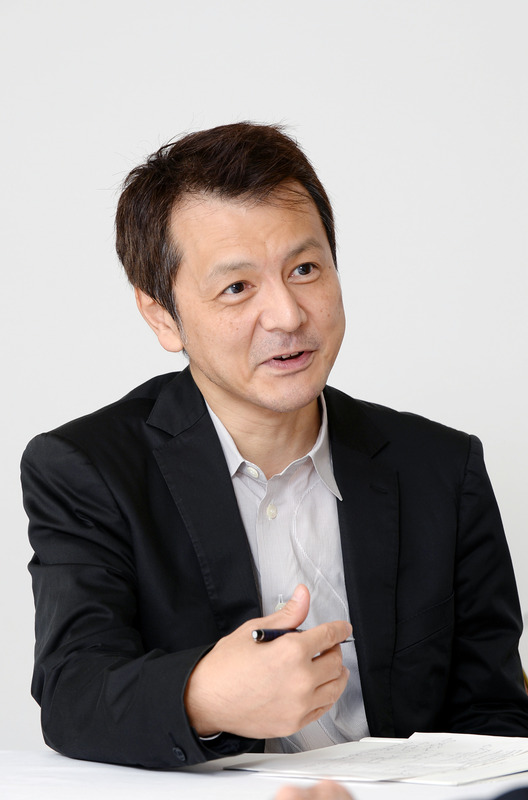
**Yamamoto:** Throughout Japan's history, I believe many great companies held such a stance. In fact, I think many companies still possess such ideals today. However, they seem unable to integrate this into their marketing efforts. For Japanese companies, this point represents a major challenge, doesn't it?
**Kotler:** You're absolutely right. For example, the founding story – the tale of how the founder, driven by a great vision, created this product – isn't that something you often hear within companies? Such stories give a company a certain aura, yet I feel that " **history** " isn't being fully leveraged. What's gaining attention in marketing today is the act of telling a "story." **The company's brand itself is the story**. Most existing companies started out small. They were likely small companies founded by someone blessed with remarkable talent. Shouldn't we shine more light on that?
**Yamamoto:** Rather than elevating founders to unrealistic pedestals, we should present them in a way **that makes them feel connected to everyday people and society**.
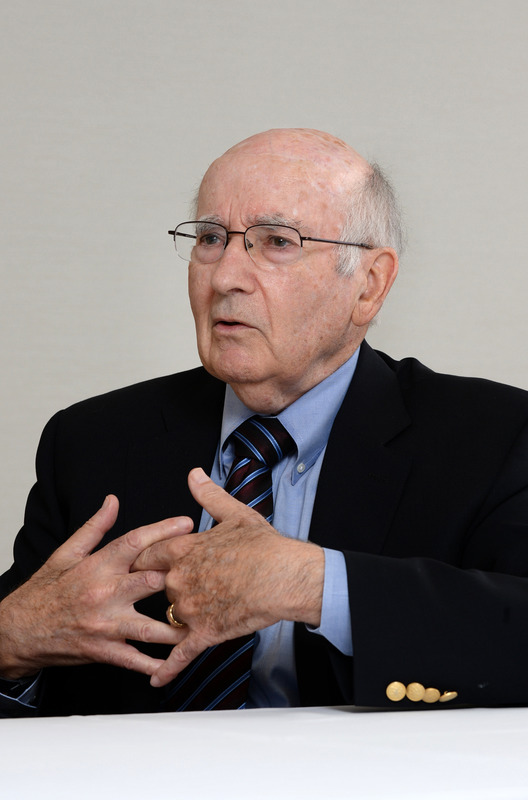
**Kotler:** I agree. I can feel the strong loyalty Japanese employees have for their companies. Even the design of the company badges they wear reflects their feelings toward the company. Japanese employees should also know their company's history well. They're surely taught about it to foster interest. However, nurturing interest and affection for the company is one thing; translating that into the actual products they make or telling it as a story is another matter entirely.
**Yamamoto:** You're right. I'll keep that point in mind as I continue to think about the nature of communication business. Thank you very much for your time today.
**Kotler:** Thank you for the excellent questions.
## Back Numbers (バックナンバー)
- [Turning Social Issues to Your Advantage New Marketing Concepts](https://dentsu-ho.com/en/articles/1737) — 2014-10-22T07:00:00+09:00 · [Marketing (マーケティング)](https://dentsu-ho.com/en/theme/marketing)
- [The era of efficiently leveraging content marketing is coming.](https://dentsu-ho.com/en/articles/1736) — 2014-10-21T06:00:00+09:00 · [Marketing (マーケティング)](https://dentsu-ho.com/en/theme/marketing)
## Author (著者)
### Philip Kotler
Northwestern University / Kellogg School of Management / Professor
A global authority in marketing, he founded and chairs the World Marketing Summit. He has developed various marketing theories and influenced numerous global business leaders. He is a three-time recipient of the Alpha Kappa Sigma Prize. His major works include Marketing Management by Kotler and Keller, Principles of Marketing: From Foundational Theory to Practical Strategy, Kotler's Introduction to Marketing, and Is There Hope for Capitalism?
### Koichi Yamamoto
Dentsu Inc. / CDC
Graduated from the Department of Architecture, Faculty of Engineering, University of Tokyo; joined Dentsu Inc. in 1986. Studied at Columbia University from 1999 to 2000, earning an MBA. Specializes in global brand management, technology branding, innovation management, communication design, and user experience design.
- [Person page](https://dentsu-ho.com/en/person/297)
- Series: [The New World of Marketing Japanese Companies Should Aim For](https://dentsu-ho.com/en/booklets/75), [Recommendations for the Future](https://dentsu-ho.com/en/booklets/198)
- Latest articles: [A Conversation with Brian Eno: Creativity Through Machine Intelligence](https://dentsu-ho.com/en/articles/4529), [Interview with MIT Professor Hiroshi Ishii: Intelligence, and Life and Death (Part 2)](https://dentsu-ho.com/en/articles/3887)
Sharing: the HTML page offers share buttons for X, Facebook, LINE and Hatena Bookmark (not reproduced here).
## Related links
- [Home](https://dentsu-ho.com/en)
- [Site index (llms.txt)](https://dentsu-ho.com/llms.txt)