---
title: "\"You\" are the ultimate media."
description: "The theme of the 123rd Dentsu Inc. Design Talk, held on November 11th, was \"You Yourself Are the Ultimate Media.\" Creator Takashi Takagi has been active in the media and content industry since the 1980s. Since relocating his base overseas in 2008, he has specialized in communication strategy and next-generation technology, consistently offering sharp insights to the entire creative industry from a global perspective. We present a talk where LINE's Shintaro Tabata posed questions to Mr. Takagi about society, media, and humanity."
url: "https://dentsu-ho.com/en/articles/1913.md"
html_url: "https://dentsu-ho.com/en/articles/1913"
canonical: "https://dentsu-ho.com/en/articles/1913"
language: "en"
alternate_language_url: "https://dentsu-ho.com/articles/1913"
translation: "machine"
type: "news"
site: "Dentsu-ho (電通報)"
llms_txt: "https://dentsu-ho.com/llms.txt"
published: "2014-12-05T07:00:00+09:00"
---
# "You" are the ultimate media.
> Navigation: [Site index (llms.txt)](https://dentsu-ho.com/llms.txt) · [Home](https://dentsu-ho.com/en) · Parent: [News (ニュース)](https://dentsu-ho.com/en/news) · [Dentsu Design Talk](https://dentsu-ho.com/en/booklets/23)
Note: This website was automatically translated, so some terms or nuances may not be completely accurate.
Published: 2014-12-05T07:00:00+09:00 · Category: News (ニュース)
## Themes and tags
- Themes: [Marketing (マーケティング)](https://dentsu-ho.com/en/theme/marketing), [Advertising (AX) (広告)](https://dentsu-ho.com/en/theme/ax), [Management / Corporate Affairs (BX) (経営 / 企業)](https://dentsu-ho.com/en/theme/bx), [Digital / Technology (DX) (デジタル / テクノロジー)](https://dentsu-ho.com/en/theme/dx), [Creative (クリエイティブ)](https://dentsu-ho.com/en/theme/creative), [Social Issues (社会課題)](https://dentsu-ho.com/en/theme/social_issue), [Media / Content (メディア / コンテンツ)](https://dentsu-ho.com/en/theme/media), [Idea Generation & Methodologies (アイデア / 発想法)](https://dentsu-ho.com/en/theme/idea)
- Tags: [Innovation](https://dentsu-ho.com/en/tag/イノベーション), [Global](https://dentsu-ho.com/en/tag/グローバル), [TV](https://dentsu-ho.com/en/tag/テレビ), [Design Talk](https://dentsu-ho.com/en/tag/Design Talk), [Robot](https://dentsu-ho.com/en/tag/ロボット), [Media](https://dentsu-ho.com/en/tag/メディア), [Creator](https://dentsu-ho.com/en/tag/クリエイター)
## Adjacent articles
- Previous: [https://dentsu-ho.com/en/articles/1719](https://dentsu-ho.com/en/articles/1719) · Next: [https://dentsu-ho.com/en/articles/2033](https://dentsu-ho.com/en/articles/2033)
## Body
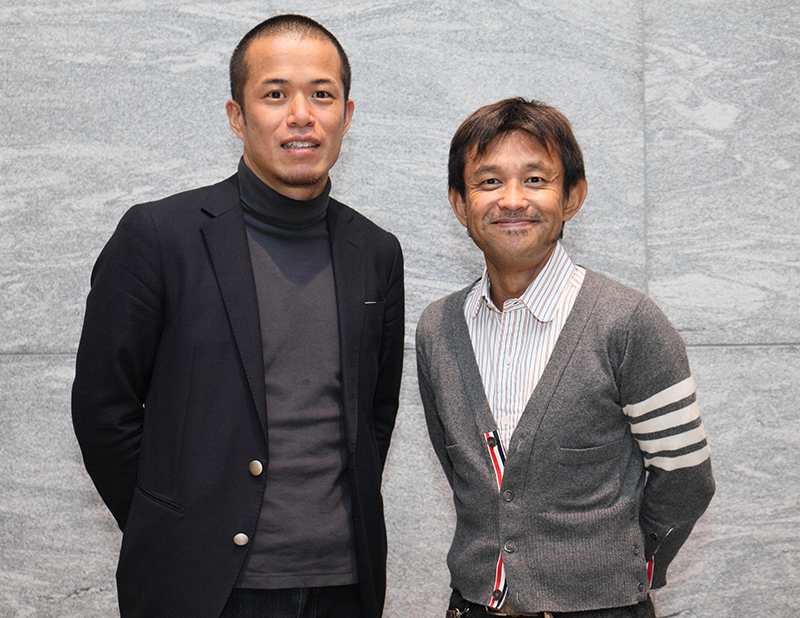
The theme of the 123rd Dentsu Inc. Design Talk, held on November 11th, was '"You" Are the Ultimate Media.' Creator Tsuyoshi Takagi has been active in the media and content industry since the 1980s. Since relocating overseas in 2008, he has specialized in communication strategy and next-generation technology, consistently offering sharp insights to the entire creative industry from a global perspective. This article introduces a conversation where LINE's Shintaro Tabata posed questions to Takagi about society, media, and humanity.
## The Era of Empowered Individuals: How the Relationship Between Individuals and Organizations Will Change
**Tabata:** I've been a "Takagi follower" since high school and still never miss your email newsletter. Today, I'd like to ask you about the theme: "You Yourself Are the Ultimate Media." Back when mobile email was gaining popularity, you famously said, "For high school girls, the ultimate killer content is an email from their boyfriend." Today, individuals are more compelling than any content. A power shift is occurring between organizations and individuals. The old ideas of "paying your dues within an organization" or "organizations nurturing individuals" no longer hold. The meaning of why capable individuals should belong to an organization is becoming less clear.
**Takagi:** When you publish a book through a publisher, you get 10% royalties, but if you self-publish on Kindle, you get 70%. The world is shifting towards direct sales models, and this is happening in the music industry too. It will undoubtedly happen in television (video) as well. Take Canada's "VICE MAGAZINE" as a prime example. It started as a free paper and is now becoming the world's largest independent media outlet. Even media mogul Rupert Murdoch invested in them because they tackle topics considered taboo on TV, delivering what viewers actually want to see.
**Tabata:** When we talk about digitization, the narrative has always been "print vs. digital," but the real issue is whether it's a direct-to-consumer model, right?
**Takagi:** People with their own ideas and marketing theories can leverage them endlessly on their own. The amazing thing about the internet is that individuals can build systems that keep generating income five or seven years down the line.
**Tabata:** But I also wonder if truly interesting creators just appear out of nowhere? If I may speak from a deliberately conservative perspective, I suspect such people ultimately come from TV stations or production companies.
**Takagi:** Looking at the US situation, I'd say about 70% are people connected to existing media, and about 30% are complete newcomers.
**Tabata:** How do those newcomers develop? I'm curious how someone fresh out of college, lacking marketing theory, can grow without belonging to an organization. Internships?
**Takagi:** Internships are really about building connections. You sort mail and deliver it to different departments, and people start recognizing your face. Then when they're short-staffed, they think, "That intern seems capable, let's give them a chance."
## Brooklyn and the Chuo Line: The Art of Global Marketing
**Tabata:** Where exactly does that "seems capable" reputation for interns come from?
**Takagi:** One place is the restroom. People meet folks from different departments there and chat about current projects. Another is the break room. There's even an MIT study showing that revitalizing restrooms and break rooms boosted work efficiency and sales.
**Tabata:** Restrooms and break rooms? So, can you seize opportunities beyond just thinking "That person seems promising"?
**Takagi:** It's not luck (laughs). Also, people whose hobby is "basketball" are out of the question.
**Tabata:** Huh!? Really?
**Takagi:** That's what they say in America. If someone lists basketball as a hobby on Facebook, they're immediately assumed to be Republican. In the UK, for example, if a Japanese appliance maker wants to enter the market. They reverse-engineer the DSP and find it won't sell in West London, so they target East London first. If it sells there, it'll naturally sell in Cambridge too, and then in Scotland. So then, they hire local creators to build the mindset together... that's the idea.
**Tabata:** I see. That kind of common sense, that unspoken atmosphere, you just can't grasp it unless you live there.
**Takagi:** But if you don't understand it, you won't sell. I had a meeting recently with creators in Kuala Lumpur. For this project, since marketing costs are low, we can't advertise in Manhattan, so let's start in Brooklyn. Then the question came up: "What about Japan?" And they said, "The Chuo Line is relatively liberal, yet advertising costs are low. You should start with the Chuo Line." Creators from Kuala Lumpur were saying that.
**Tabata:** Huh!? That person lived in Japan, right?
**Takagi:** No, they didn't. We know because the data shows it. I mean, if you don't understand that, you can't even create products, let alone advertise them. That's global marketing.
**Tabata:** From your perspective, Takagi-san, in what areas could Japan gain a competitive advantage?
**Takagi:** Japan has money, so I think the path forward is investment. You can't create new things without breaking vested interests, but Japan can't break them, right? So I think investing in places where new things are happening is the way to go.
## The Future of the Body and Media: Will Smartphones and Cars Become Free in the Future?
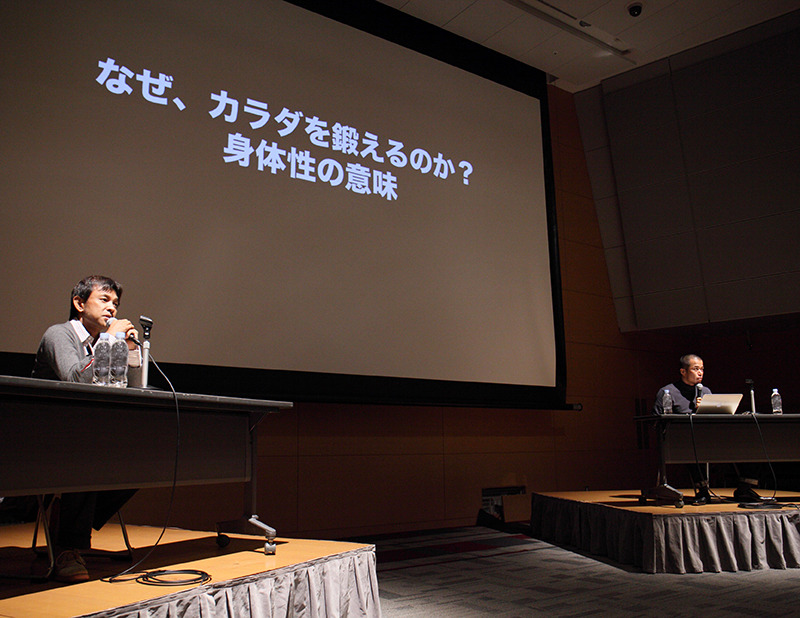
**Tabata:** One last question. You have an extraordinary passion for traveling the world, and you even train your body while on the move. Lately, I've been thinking a lot about the overall value of information perceived through the five senses. No matter how great an experience is, it's meaningless if your senses aren't sharpened. I wonder if that's where the significance of physical training lies. What do you think?
**Takagi:** Regarding physicality, media used to exist outside the body, but it's increasingly trying to enter the body. We started carrying phones that used to sit in the corner of the house, then they became wearable and attached to the body. Now they're implanted in the ear or become contact lens-like. We can even identify diseases we're prone to through DNA. If you robotize a non-functional leg, it might even function better than before. What happens next? Research is advancing on carrying around a miniature version of yourself, about 30 centimeters tall. You could take it with you to run errands, like grabbing coffee.
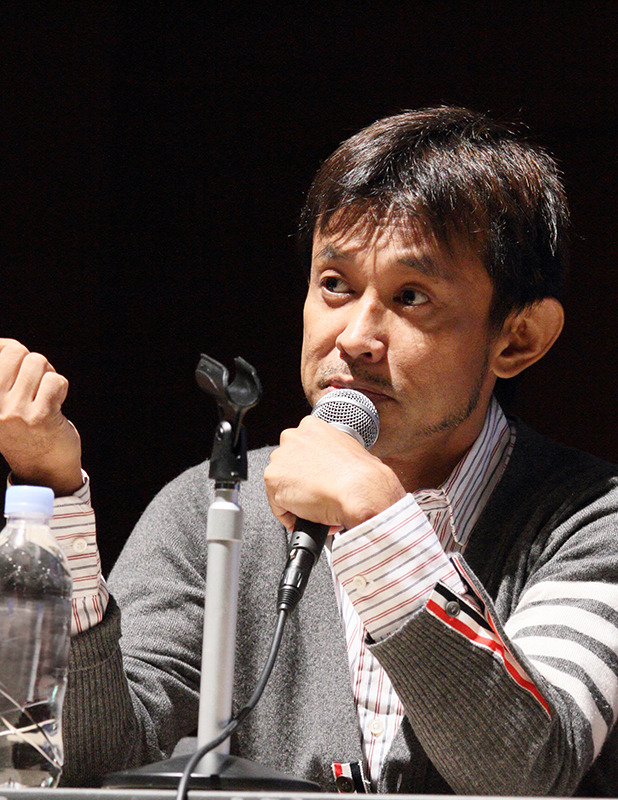
**Tabata:** A miniature version of yourself? Is that like a pet?
**Takagi:** I think the social barrier would be high if the robot were small and cute. But if we made it into a character like a sacred old man, I believe we could probably overcome that barrier.
**Tabata:** But if you abandon a pet robot like Aibo, people don't think, "That person is terrible," right?
**Takagi:** Depends on the generation and the person. I was talking to a Japanese college student recently about breaking up with his girlfriend. He said he didn't cry when they met to break up, but he cried when he deleted her data from his phone.
**Tabata:** It's hard to tell which is the main entity and which is the sub.
**Takagi:** You wouldn't be sad if your TV broke, but you'd be really sad if your smartphone broke. Your smartphone is a symbol of the individual, whereas a TV, which just passively delivers information, isn't. Things that become symbols of the individual survive.
**Tabata:** Is the trend of young people moving away from cars also because they've stopped being symbols of identity?
**Takagi:** I think in the future, taxis, cars, and smartphones will all become free. Cars and smartphones themselves will become media, operated through advertising revenue.
**Tabata:** Coming from magazine media, I've always believed the role of advertising media is like the "plate" or "table setting" that makes the "food" – the ad creative – look delicious. But that kind of emotional world... in the world of real-time bidding (RTB), it might just be good old nostalgia.
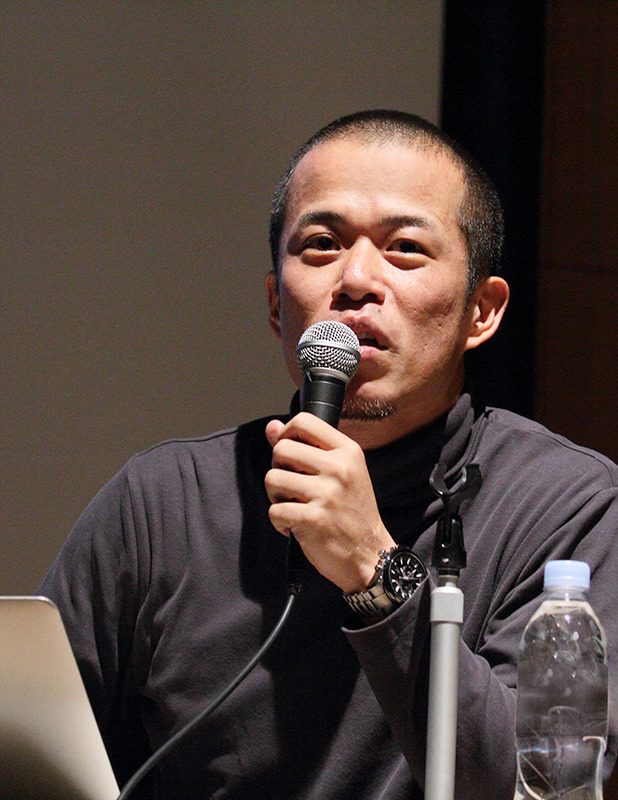
**Takagi:** That sensibility is definitely fading away.
**Tabata:** But if we can use advertising like RTB effectively, it has the potential to make things like taxis free. So the advertising business itself has an exciting future ahead.
**Takagi:** RTB has this image of driving prices down cheaply, but the fact that prices fluctuate means they could also skyrocket. I think everything will become subject to bidding going forward. Hotel online booking rates are already variable, so next will be restaurants, right? Companies investing in servers and robot development to become providers of such systems will dominate all advertising and emerge as the winners.
**You can read the full interview here [on AdTie](http://www.advertimes.com/20141205/article175796/)!**
Planning & Production: Dentsu Inc. Event & Space Design Bureau, Aki Kanahara
Sharing: the HTML page offers share buttons for X, Facebook, LINE and Hatena Bookmark (not reproduced here).
## Related links
- [Home](https://dentsu-ho.com/en)
- [Site index (llms.txt)](https://dentsu-ho.com/llms.txt)
