---
title: "We focused on the idea that \"the combination of frequencies is crucial.\""
description: ""
url: "https://dentsu-ho.com/en/articles/330.md"
html_url: "https://dentsu-ho.com/en/articles/330"
canonical: "https://dentsu-ho.com/en/articles/330"
language: "en"
alternate_language_url: "https://dentsu-ho.com/articles/330"
translation: "machine"
type: "article"
site: "Dentsu-ho (電通報)"
llms_txt: "https://dentsu-ho.com/llms.txt"
published: "2013-11-18T07:00:00+09:00"
---
# We focused on the idea that "the combination of frequencies is crucial."
> Navigation: [Site index (llms.txt)](https://dentsu-ho.com/llms.txt) · [Home](https://dentsu-ho.com/en) · Parent: [New Articles (新着記事)](https://dentsu-ho.com/en/latest_articles) · [The Future of Communication Unlocked by Biometric Signals](https://dentsu-ho.com/en/booklets/22)
Note: This website was automatically translated, so some terms or nuances may not be completely accurate.
Published: 2013-11-18T07:00:00+09:00 · Series: [The Future of Communication Unlocked by Biometric Signals](https://dentsu-ho.com/en/booklets/22) (Part 4 of 10)
## Themes and tags
- Themes: [Marketing (マーケティング)](https://dentsu-ho.com/en/theme/marketing), [Management / Corporate Affairs (BX) (経営 / 企業)](https://dentsu-ho.com/en/theme/bx), [Customer Experience (CX) (顧客体験)](https://dentsu-ho.com/en/theme/cx), [Digital / Technology (DX) (デジタル / テクノロジー)](https://dentsu-ho.com/en/theme/dx), [Creative (クリエイティブ)](https://dentsu-ho.com/en/theme/creative), [Social Issues (社会課題)](https://dentsu-ho.com/en/theme/social_issue), [Idea Generation & Methodologies (アイデア / 発想法)](https://dentsu-ho.com/en/theme/idea), [Insights / Research (インサイト / 調査)](https://dentsu-ho.com/en/theme/insight)
- Tags: [Digital](https://dentsu-ho.com/en/tag/デジタル), [Future](https://dentsu-ho.com/en/tag/未来), [Technology](https://dentsu-ho.com/en/tag/テクノロジー), [neurowear](https://dentsu-ho.com/en/tag/neurowear), [Creative](https://dentsu-ho.com/en/tag/クリエイティブ)
## Authors
- [Toshitaka Kamiya](https://dentsu-ho.com/en/person/41)(Dentsu ScienceJam Inc.)
- Mitsukura Yasue(Keio University / Department of Systems Design Engineering, Faculty of Science and Engineering)
## Adjacent articles
- Previous: [https://dentsu-ho.com/en/articles/278](https://dentsu-ho.com/en/articles/278) · Next: [https://dentsu-ho.com/en/articles/331](https://dentsu-ho.com/en/articles/331)
## Body
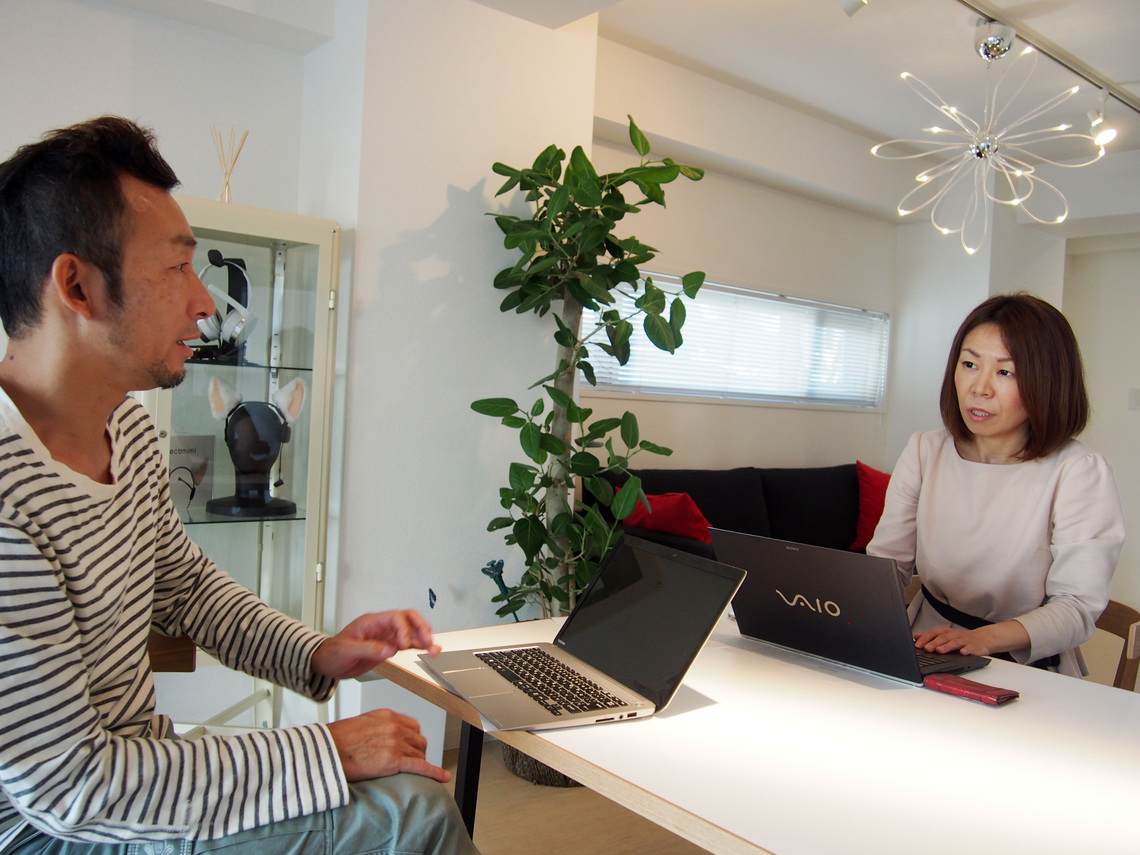
This time, we present a conversation between Associate Professor Yasue Mitsukura of Keio University and Dentsu ScienceJam Inc.'s Toshitaka Kamiya. Their discussion spans from brainwave frequencies to joint research with companies, even touching on the dangers of ill-fitting glasses.
## The Development of a Simple EEG Device
Kamiya: Professor Mitsukura, your research involves bio-signals like brainwaves, ECG, and EMG. How does this differ from previous brainwave research?
Mitsukura: Previously, we defined concentration based on high alpha wave activity, for example. Our approach is entirely different: we analyze brainwave frequencies in detail and focus on frequency combinations.
Kamiya: How do you measure these frequency combinations?
Mitsukura: To measure concentration, we first create a state where the person is focused. For example, we ask them to move red beans with chopsticks and record their brainwaves during that task. Even when recorded in the same focused state, the data varies widely between individuals. However, analysis reveals underlying patterns. We then define that "a high combination of this frequency and that frequency indicates successful concentration" and establish these as patterns. Beyond concentration levels, we're also defining metrics like interest levels and stress levels.
Kamiya: So, you have the person wearing the measuring device move the red beans.
Mitsukura: Yes. They continuously move the beans with chopsticks.
Kamiya: What kind of measuring device do you attach for the measurements?
Mitsukura: People probably imagine EEG machines as huge devices, but we use something really simple. It's just like necomimi.
Kamiya: Professor, when did you start this kind of research?
Mitsukura: It's been about 15 years now.
Kamiya: So the research content and equipment must have been completely different in the beginning, right?
Mitsukura: That's right. There was even a time when people would say things like, "Isn't brainwave research just occult stuff?" When I first started, we had to attach large devices to the head to measure brainwaves, and just putting those devices on took about 40 minutes.
Kamiya: Forty minutes!?
Mitsukura: First, we had to part the hair, apply paste to the scalp, and then attach and secure each sensor individually. Spending 40 minutes just on prep? You couldn't possibly concentrate after that. Then we had to move the electrodes with chopsticks...
Kamiya: That alone sounds like it would make you uncomfortable (laughs).
Mitsukura: It definitely increases the stress level. One day, my supervisor, a professor, suggested, "Why not simplify this device?" So, when I researched the literature, I found that the mind and mood are defined as being related to the prefrontal cortex. That's when we decided to create a simplified device that could only capture the prefrontal cortex.
Kamiya: You decided to build it yourselves.
Mitsukura: Yes. But any device trying to capture brainwaves picks up a lot of noise. For example, if you blink, it registers completely different brainwaves. However, through signal processing, we defined the blink signal. By filtering that out, we could capture more accurate brainwaves. We kept advancing the research from there and finally developed a small sensor.
Kamiya: Around what year was that?
Mitsukura: The first prototype headset for our simplified EEG device was completed in 2005.
## The combination of frequencies is crucial!
Kamiya: Could you briefly explain the difference between your engineering approach and approaches in medicine or psychology?
Mitsukura: In medicine, the goal is to examine the diseased part. They use large devices like MRI to study where in the brain the disease is located. Psychology doesn't observe the brain moment by moment; instead, it defines phenomena using physiological signals like changes in blood oxygen levels. However, changes in blood oxygen levels take time. For example, oxygen levels don't change the instant you have a sudden realization; they rise about a minute after that moment. To capture moment-to-moment activity, you really need EEG. Also, a key difference is that we don't focus on alpha or beta waves.
Kamiya: Could you explain alpha waves and beta waves in simpler terms?
Mitsukura: First, frequency refers to how many times per second the brainwave peaks occur. A state with about one to three peaks per second is called the theta wave. Because it's very slow, a high number of theta waves is defined as a sleeping state.
Next, waves occurring 4 to 12 times per second are called alpha waves, representing states of concentration or relaxation. Waves occurring around 13 to 22 times per second are called beta waves, defined as being associated with high stress. We used to categorize things this way, but it doesn't apply to everyone. We thought about how to increase accuracy and focused on the idea that "the combination of frequencies might be important."
Kamiya: That's unique. When was that?
Mitsukura: I believe it was before that new EEG device arrived, so over ten years ago now.
Kamiya: What insights did you gain from analyzing frequency combinations?
Mitsukura: For example, by identifying the "combination present during stress," we could then determine the stress level based on that specific combination.
Kamiya: You mentioned you can now detect "concentration," "interest," "likes/dislikes," "stress," "relaxation," and "sleepiness." Is there anything else?
Mitsukura: We can evaluate taste. While people's taste sensations and favorite foods vary greatly, we've discovered that the brainwaves produced when something tastes delicious are the same. This means we can tell whether someone is finding their food delicious while they're eating it.
Kamiya: That's fascinating (laughs).
## Wearing the wrong glasses can make you forgetful!?
Kamiya: Professor Mitsukura, you collaborate with various companies on research. Could you share a bit about that work?
Mitsukura: There are many, but for example, we collaborated with an automaker and a tire manufacturer on research examining "how much changing tires affects ride comfort."
Kamiya: Tires can really change the ride that much?
Mitsukura: First, we investigated whether we could even detect a difference. The results showed that even driving the same road with different tires produced completely different brainwave patterns. We then focused on how road surfaces affect brainwaves, conducting research where we measured brainwaves while driving on roads with banked curves and rutted surfaces.
Kamiya: So those research findings are incorporated into product development?
Mitsukura: Yes. With that tire manufacturer, we also tagged words and brainwaves under the theme "What makes a bicycle ride exhilarating?" It involved tagging things like "exhilaration occurs with this type of brainwave pattern."
Kamiya: And there's also the CM evaluation with the printing company, right?
Mitsukura: Yes. With the printing company, we evaluated commercials using brainwaves. We measured brainwaves to capture evaluations that wouldn't appear in questionnaires. We also conducted research to identify what points make children happy, at what times of day, and which parts of a book capture their interest while reading, to extract what children find interesting.
Kamiya: There's quite a lot of it, isn't there?
Mitsukura: We've worked with nearly 50 companies now, so explaining everything would take forever.
Kamiya: When did you start doing research with companies?
Mitsukura: It's definitely increased significantly since 2005. Recently, we've also been doing research on the five senses. For example, it seems there's no quantitative evaluation method to determine if a speaker is good or bad. In surveys, people who said Speaker A was "good" would sometimes evaluate the same speaker as "bad" when they heard its sound without being told it was the same speaker. But if you evaluate using brainwaves, that inconsistency disappears, making it an objective evaluation tool. We're also conducting joint development research with ophthalmology, focusing on how wearing ill-fitting glasses affects brain waves.
Kamiya: Does it cause stress?
Mitsukura: Technostress, yes. Ultimately, this can lead to dementia.
Kamiya: Really!? Dementia?
Mitsukura: Yes. It does. Visual information significantly impacts brain waves, so wearing ill-fitting glasses is dangerous. But in Japan, you can sell glasses without a license, and you can buy them online.
Kamiya: Is it different in other countries?
Mitsukura: For example, in the US and Europe, you need a license to sell glasses. But in Japan, anyone can become an optician. If you can buy glasses with the same prescription you've been using for a year, you end up wearing completely mismatched glasses every day for a year or two. That state puts a tremendous strain on the brain, and studies show it leads to forgetfulness.
Kamiya: We really need to be careful about our eyeglasses.
\[ [To be continued](http://dentsu-ho.com/articles/331) \]
Interview Location: [Dentsu ScienceJam](http://www.dentsusciencejam.com/) Inc [.](http://www.dentsusciencejam.com/)
## Back Numbers (バックナンバー)
- [A new experience where music finds us](https://dentsu-ho.com/en/articles/278) — 2013-11-11T07:00:00+09:00 · [Marketing (マーケティング)](https://dentsu-ho.com/en/theme/marketing)
- [A future where cars, homes, cities, and the world itself, understand human needs.](https://dentsu-ho.com/en/articles/267) — 2013-10-28T07:00:00+09:00 · [Marketing (マーケティング)](https://dentsu-ho.com/en/theme/marketing)
## Author (著者)
### Toshitaka Kamiya
Dentsu ScienceJam Inc.
At Dentsu Communication Design Center (CDC), Next Generation Communication Development Department, launched the neurowear brand and was responsible for producing and developing the brainwave communication tools "necomimi" and "mico." In August 2013, established Dentsu ScienceJam Inc., challenging new business development possibilities by combining scientists' intelligence and cutting-edge technology with Dentsu's unique ideas.
- [Person page](https://dentsu-ho.com/en/person/41)
- Series: [The Future of Communication Unlocked by Biometric Signals](https://dentsu-ho.com/en/booklets/22)
- Latest articles: ["The Ideal is the Beauty and the Beast Dinner Scene" neurowear Roundtable Discussion: Part 2](https://dentsu-ho.com/en/articles/612), ["The Global Standard is Simplicity" neurowear Roundtable Discussion: Part 1](https://dentsu-ho.com/en/articles/610)
### Mitsukura Yasue
Keio University / Department of Systems Design Engineering, Faculty of Science and Engineering
Since 1999, he has served as an assistant professor in the Department of Intelligent Information Engineering at Tokushima University's Faculty of Engineering, a full-time lecturer at Okayama University, and an associate professor at Tokyo University of Agriculture and Technology. He is currently an associate professor in the Department of System Design Engineering at Keio University's Faculty of Science and Technology. Since August 2013, he has concurrently served as Chief Technology Officer at Dentsu ScienceJam Inc.
Sharing: the HTML page offers share buttons for X, Facebook, LINE and Hatena Bookmark (not reproduced here).
## Related links
- [Home](https://dentsu-ho.com/en)
- [Site index (llms.txt)](https://dentsu-ho.com/llms.txt)