
Note: This website was automatically translated, so some terms or nuances may not be completely accurate.
 Behind the Scenes of "Expressions That Resonate" [8/18]
Interview with Calligrapher Takuya Takahashi "The Spirit of Tohoku's Six Prefectures, Conveyed Through Brush and Ink 'Infographics'"
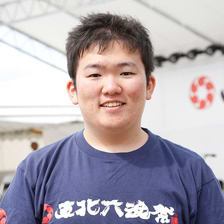
Takahashi Takuya
Behind the scenes of "effective expression," we focus on "successful promoters of expressive activities" across various fields. This time, we spoke with calligrapher Takuya Takahashi, who has consistently created the title calligraphy and theme characters for the "Tohoku Rokkon Festival" – an event uniting six Tohoku festivals to commemorate the victims of the Great East Japan Earthquake and pray for reconstruction. We heard about the thoughts he pours into each character.
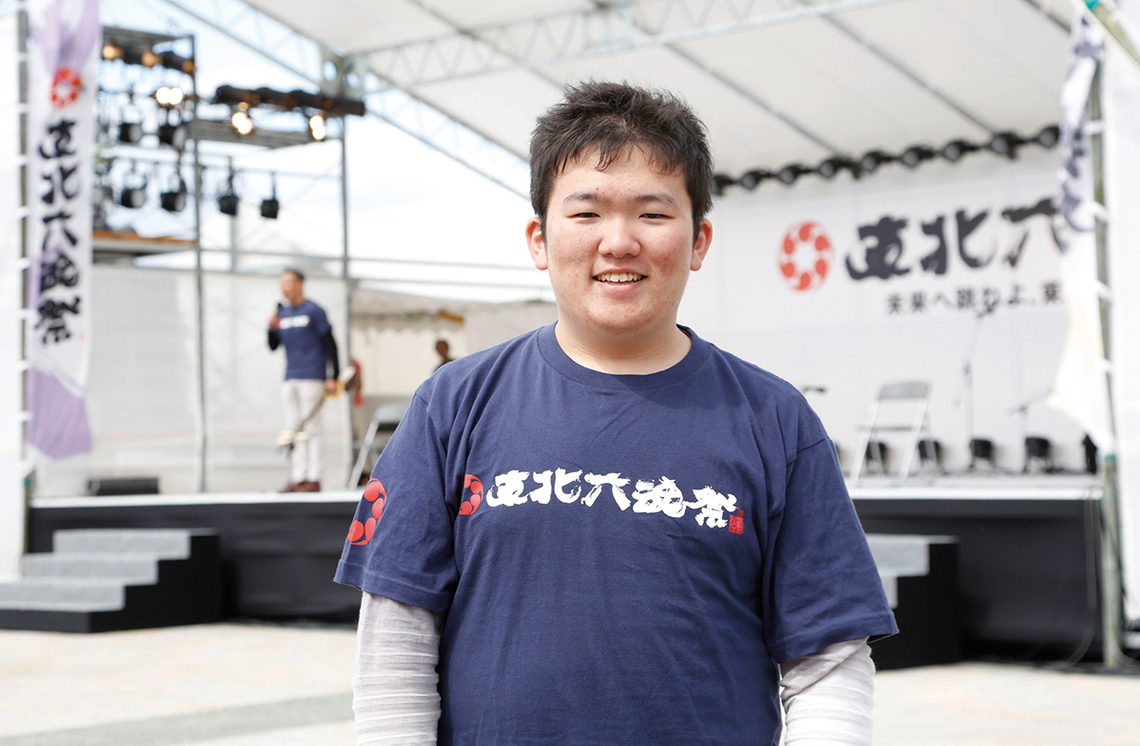
The Great East Japan Earthquake occurred in March of my sixth-grade year. The inaugural Tohoku Rokkon Festival in Sendai was held in July of my first-year junior high school year. At that time, I was commissioned to write the festival's title calligraphy and the theme character "Prayer" (祈). Since then, I have written the single character theme for the Tohoku Rokkon Festival every year.
When assigned that year's character, I researched its meaning, the characteristics of the hosting prefecture or city, events that occurred, and various other aspects. Adding my own thoughts, I thoroughly contemplated what form the character should take. After forming that image, I would write hundreds of drafts and select one final piece for actual use. This method remained fundamentally unchanged for six years.
July 2011, Sendai: "Prayer" (祈). As an unprecedented event bringing six festivals together, I made the character embody the image of dancers. Though it was right after the disaster, I deliberately made it dynamic, also to convey a sense of mourning.
May 2012, Morioka "Hope". The year hailed as the first year of reconstruction. The image is of a fist raised high, shouting "Ganbarō!" (Let's do our best!). I deliberately made it quite bold and unconventional.
June 2013, Fukushima "福" (Fuku). I replaced the "sheath" radical with the character for "child" (子). The brushstroke powerfully sweeping from the lower left to the upper right represents a bridge to the children's future. I shaped the entire character to resemble Fukushima Prefecture.
May 2014, Yamagata "Ki" (Rise). As the fourth and midpoint, it embodies the human strength driving recovery forward with the spirit of "Let's rise again!"
May 2015, Akita "輝" (Kagayaku - Shine). The entire character expresses the "Kanto Festival". The left side represents the people supporting it, standing powerfully rooted to the earth. The right side is the Kanto lantern pole; look closely and you'll see the pole is actually bending.
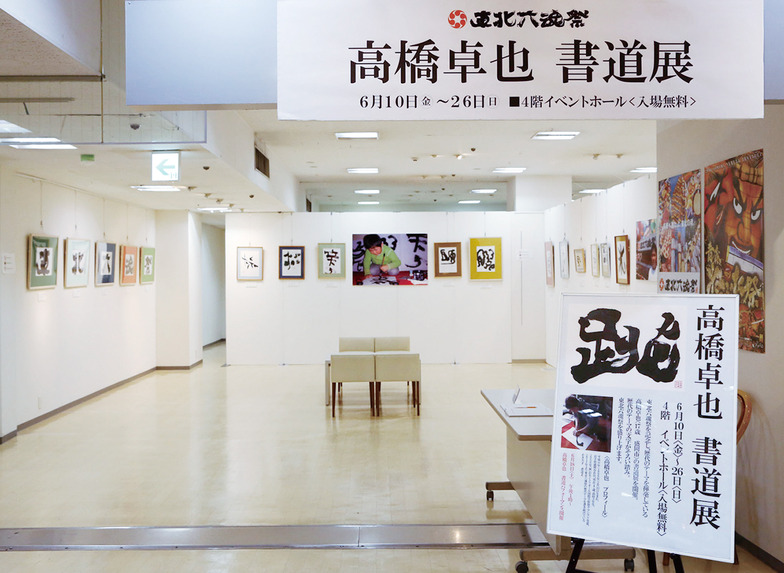
Then this June, Aomori "跳" (Jump). This character depicts the figure of a Haneto dancer from the Nebuta Festival. The more I wrote it, the more the character itself seemed to leap. It became a much more powerful leap than my initial image.

The theme characters for the Tohoku Rokkon Festival are seen by many people. My sense of mission—that they must be something that energizes people—grew stronger each year. I felt the brushwork mustn't change over the festival's duration, so I used the same brush for six years. Every time I saw people at the venue wearing T-shirts or holding goods featuring my characters, I felt so deeply appreciated by so many people, it brought tears to my eyes.
One thing I feel now is that each of the six Tohoku prefectures has its own distinct character. For example, how each prefecture expresses its representative festival differs. I could truly feel the wonderful individuality of each of the six prefectures. And also, the unity among the six prefectures. In the beginning, showcasing each prefecture's individuality was the main focus, but I feel a sense of unity gradually grew stronger.
I first picked up a brush when I was zero years old. Apparently, I played with my grandmother's brush pen as if it were a toy. While I'm a calligrapher, I've also been a computer person since I was little. Since I could read both hiragana and katakana from age two, I apparently used an electronic dictionary to convert words to kanji and then wrote those kanji. Currently, I belong to the photography club at school. I'm also really into video editing, and just the other day, I passed the national IT Passport exam. For me, videos, photos, and calligraphy are tools to express my feelings.
This year, I became a third-year high school student. I can't even begin to imagine what I'll be like ten years from now. I'll keep practicing calligraphy, but right now, I don't want to limit my future. I want to try all sorts of things that help people.
Was this article helpful?
Share this article


Newsletter registration is here
We select and publish important news every day
For inquiries about this article
Back Numbers

Author
Takahashi Takuya
Calligrapher