
Note: This website was automatically translated, so some terms or nuances may not be completely accurate.
Tokyo International Projection Mapping Awards Young creators' works compete
On December 16, the "Tokyo International Projection Mapping Award vol.2" (Organized by: The Tokyo International Projection Mapping Award Executive Committee / Operated by: Pix, ImagiKa DigitalScape / Special Sponsors: Panasonic and others) was held at Tokyo Big Sight in Ariake, Koto Ward.
This award is Japan's largest projection mapping contest for young video creators, established as a gateway to the video production industry. Aiming to discover and nurture the talent of next-generation creators, it provides the large stage of Tokyo Big Sight as a venue for presentation. Since Vol.0 in 2015, it has widely recruited participants from both Japan and overseas.
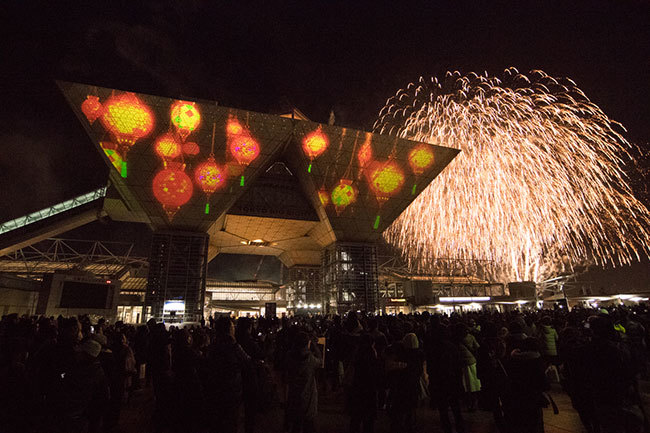
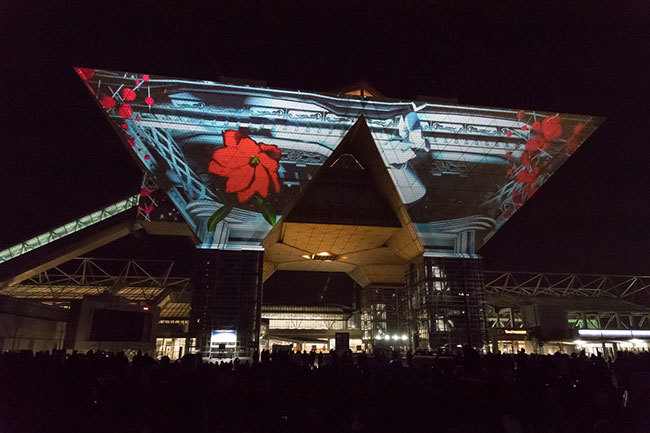
The works were projected onto the distinctive inverted triangular wall of the Convention Center. As dusk fell, a large crowd gathered in the plaza in front of the Convention Center, awaiting the event's start.
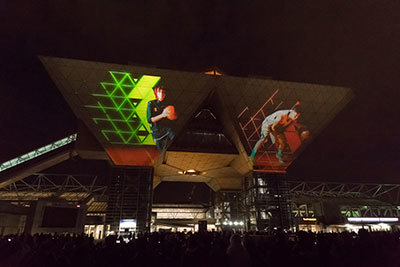
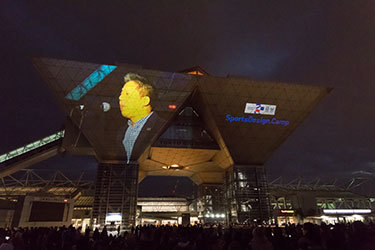
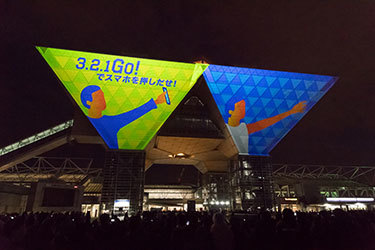
Prior to the screening of the entry works, Panasonic, the special sponsor, held the inaugural exhibition screening of "SportsDesign.Camp" works.
This camp is part of Panasonic's "Let's Build TOKYO Together" participatory activity, held at the Panasonic Center Tokyo in Ariake to energize the Olympic and Paralympic Movement. It is certified as an "Official Tokyo 2020 Program."
Related Article:Panasonic Launches Tokyo 2020 Official Program Participatory Activity "Let's Build TOKYO Together"[July 27, 2017]
Focusing on the theme of Sports × Design × Technology, four teams of young creators planned and produced interactive video works. Panasonic provided the technology used in the Rio Games opening and closing ceremonies for the video production. The company also hosted talk sessions featuring renowned guest lecturers active in the field. Following workshops held from September to November, the event served as the final showcase for the completed works.
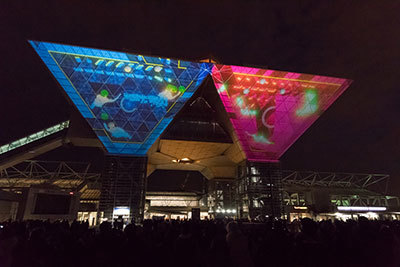
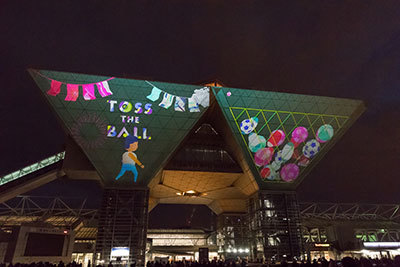
The exhibition featured a project explanation by Kunihiro Igaike of Panasonic Center Tokyo, followed by screenings of the four participating teams' works.
Using themes like basketball, football, and ball toss games, the interactive works employed technology such as sensors and cameras. Responding to real-time input like movements during on-site demonstrations, they expressed new ways to experience and enjoy sports.
https://sportsdesign.camp/
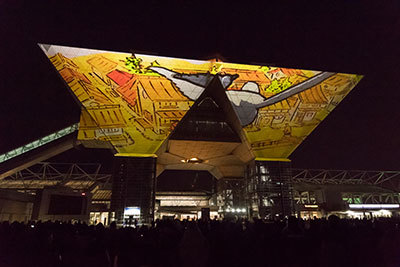
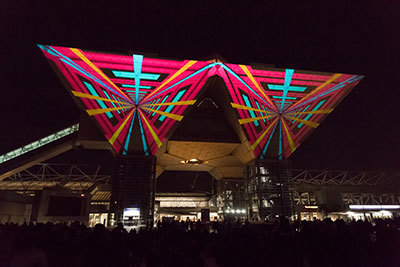
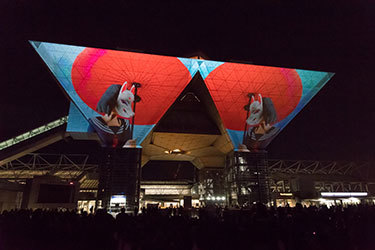
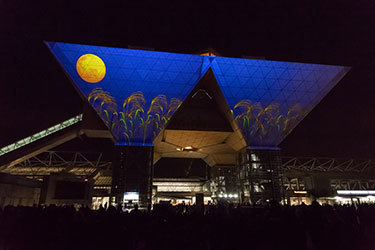
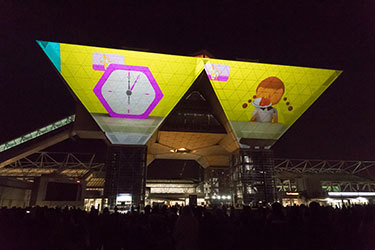
Eleven teams, including one from overseas, advanced past the first round of the awards selection. Themes ranged from "Dreams," "Time Slip," "Japanese Harmony," to "Legends," with each team's ingeniously crafted work screened under the cold winter sky.
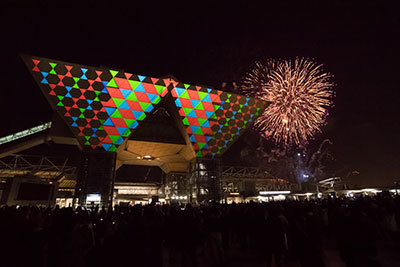
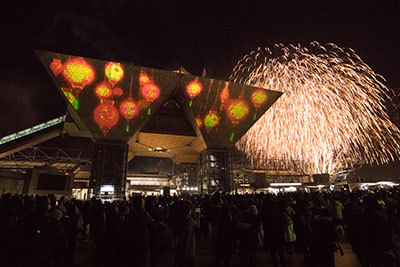
The screening concluded with a special approximately 7-minute show. This featured a digest video re-edited from works by student teams that had previously participated in the award, paired with an original song inspired by the event and synchronized fireworks. The audience responded with enthusiastic applause for this spectacular finale.
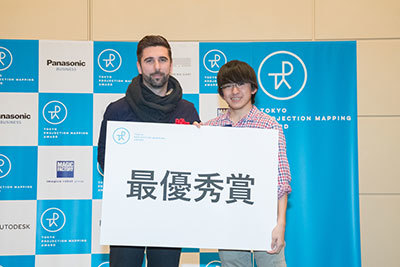
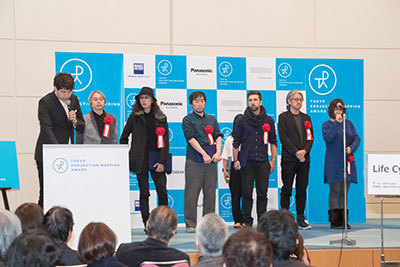
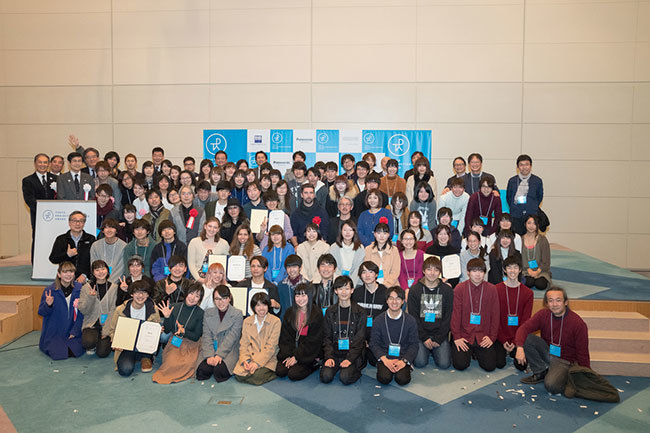
At the awards ceremony, Chairman Shinichiro Nakaso (President of PIKS) addressed the audience regarding projection mapping: "While it's already considered a common event in society, it still holds immense potential heading into 2020. It's crucial for creators to keep pace with hardware advancements, and we look forward to the talents of the next generation, like all of you."
The Grand Prize was awarded to Digital Hollywood University's work "BLACK." It was praised for understanding the essence of projection mapping and poetically expressing art.
Judge Daisuke Moriuchi (NHK Producer) offered the overall comment: "Entertainment is about making viewers reflect. It moves hearts, inspires emotion, and brings enjoyment. I hope you continue to experience diverse things, learn from them, and apply that to your video production."
Award Site:
https://pmaward.jp/
Was this article helpful?
Share this article


