
Note: This website was automatically translated, so some terms or nuances may not be completely accurate.
 #The Failure of a Certain Dentsu Inc. Employee [1/2]
The story of how I ended up selling the new business I created at Dentsu Inc. to a venture company. (Part 1)
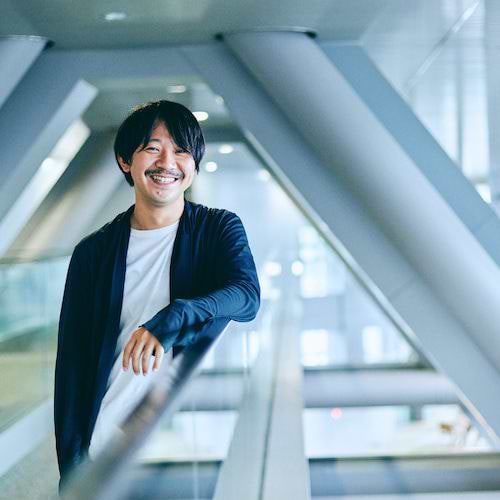
Yuichiro Kojima
Business-related blogs mostly talk about "success stories."
Of course, there's demand for them, and I understand the desire to hear from successful people rather than those who failed.
However, in business, failure experiences should be more common than success stories. I understand why success stories are valuable precisely because of this, yet it's only those stories that seem to circulate widely.
Especially in Japan, few people actively consider sharing their "failure experiences." That's because failure is seen as something to hide, something to be ashamed of.
It's rare to hear about failure experiences shared within Japanese business circles.
But I believe it's precisely these failures that should be shared. By sharing them, those experiences become nourishment for others, a reference point. If we hide them, it's as if the very act of challenging oneself never happened.
With that in mind,
I proposed writing for my company under the theme #FailuresOfADentsuEmployee
and submitted it to the company (I'm still surprised they approved it).
That became the article titled 'The Story of How I Ended Up Selling a New Business I Built at Dentsu Inc. to a Venture Company.'
Business-wise, it was clearly a failure, but for me, it was a valuable and meaningful failure.
I'd like to briefly explain why.
That's what this story is about.
※This article was edited by Web Dentsu News based on a Nikkei COMEMO article.
Read the Nikkei COMEMO article here
The Reverse EXIT Pattern
In the business world, an "EXIT" refers to the method of generating profits by selling a venture company's business or company to someone else, or through an IPO (initial public offering).
To put it bluntly, it's when young people or small companies launch new ventures and then sell them to larger companies to make a profit.
For those launching new ventures, EXIT is the goal and the target.
Young people or small companies create something from nothing (0 to 1) and grow it to 10.
Large corporations or investors who see the potential to grow that business to 1000 buy it at 100.
Those who created the 0 to 1 receive the profit of 100.
That's the dream story of an EXIT.

In an EXIT, the buyer is fundamentally "a larger counterpart or company." This is because large corporations can leverage their financial strength to rapidly scale the business.
However, the EXIT I experienced at Dentsu Inc. was the opposite of the norm.
We sold a business we launched at Dentsu Inc. to a company smaller than Dentsu Inc. itself.
This happened in June 2022.
There is no EXIT for large corporations
Earlier, I described EXIT as "one of the goals for young people and small companies." But when a company like Dentsu Inc. launches a new business, what becomes its goal?
While the option of "selling to a company larger than Dentsu Inc." isn't entirely out of the question, the goal is still to "nurture it as our own business and turn it into a new revenue stream."
This is a common approach among many major domestic companies. In fact, many companies hold internal new business contests or open calls for proposals.
I was one of the applicants myself.
This story goes back 12 years. I was 27 at the time.

Working in sales, I applied to the company's new business program. I think it was around the time my university classmates were starting to thrive at venture companies, and I was feeling the pressure.
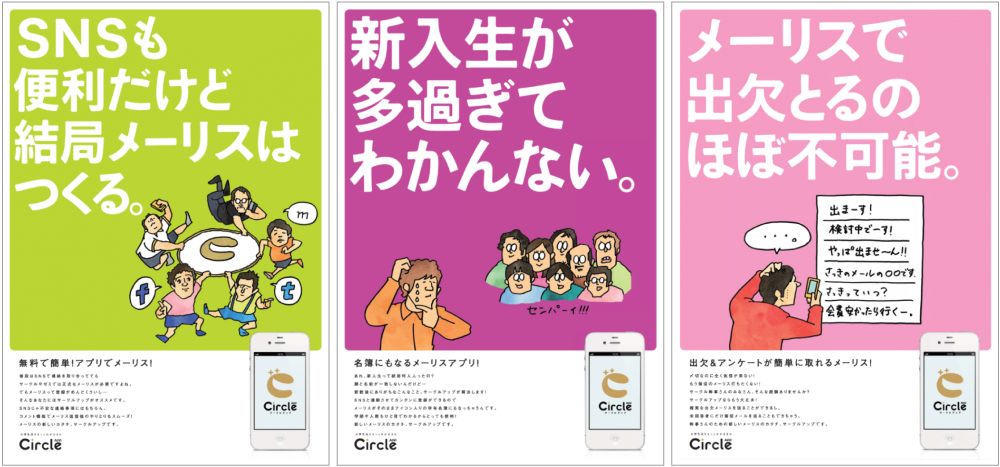
After several presentations, my business concept was adopted. Two years later, the launched service gained 10,000 users.
※CircleApp, a university club platform, surpasses 1,000 groups and 10,000 users | Web Dentsu Inc.
https://dentsu-ho.com/articles/685
It spread by word of mouth without major promotion, so it was a relatively smooth start.
Up to this point.
It couldn't compete with the maturity of existing businesses.
This new venture was launched under such circumstances, but Dentsu Inc. at the time lacked a specialized department for new ventures. (Now, there is a dedicated new ventures department, and even a Startup Preparation Office has been established.)
Therefore, I ended up working on the new venture without transferring from my original department.
Since it wasn't my primary role, I naturally had to handle my "usual work (i.e., existing business)" simultaneously.
New ventures and existing businesses.
Working on both simultaneously made me realize the sheer power of existing businesses.
The existing businesses of a large corporation are highly refined. Everything necessary is already in place. All that was required was to fulfill my role within that framework, and a system was already established to generate solid revenue. It was terrifying to realize how much I had taken this for granted until now.
On the other hand, the new venture I started was entirely trial and error. Things never went according to the business plan; I kept stumbling. It took time and was inefficient.
On top of that, I struggled to get cooperation from within the company at the time.
You could say the benefits weren't immediately apparent to internal stakeholders.
For salespeople selling advertising packages to clients that could reach audiences of 1 million or 10 million people, it was only natural that they wouldn't take me seriously when I pitched a "media platform with 10,000 university students."
"It's our own company's project, so everyone should cooperate!"
That kind of idealistic thinking didn't fly at all.
As a result, while working on existing projects, I spent my days selling the service door-to-door, like a one-person venture company.
A: Work on existing businesses with immediate, large sales in sight
B: New business work (which I wanted to do) with no immediate revenue in sight
Which should take priority?
Since I was receiving a salary from the profits of the existing business, I was constantly torn.
Working at a company with a proven business model, I felt awkward dedicating time to a small-scale new venture. Before I knew it, I was sneaking around to work on the new project.
Before long, even those around me began to forget I was working on new ventures at all.

(Continued in Part 2)

Was this article helpful?
Share this article


Newsletter registration is here
We select and publish important news every day
For inquiries about this article
Author