
Note: This website was automatically translated, so some terms or nuances may not be completely accurate.

In today's world, where digital technology is evolving at an accelerated pace, AI is becoming increasingly commonplace in daily life. At the same time, the constant creation of new information and content leaves many people exhausted by information overload. Amidst this, keywords symbolizing our era are gaining attention, such as "vibe coding," a new programming technique using AI, and "brutalism," a trend in web design that strips away information for simplicity.Turning our attention to these trends should provide hints for contemplating the changes technology brings to society and our lives. This article introduces five carefully selected trend words that deserve attention right now.

Vibecoding:The New Wave in Software Development Where Code is Generated Through AI and Natural Language Dialogue
"Vibecoding" is the new buzzword in software development. Proposed by prominent AI researchers, it refers to a novel coding methodology leveraging AI.Developers provide instructions in natural language, such as "I want this feature," and the AI automatically generates the code. This approach involves humans then reviewing and refining the code to complete it. Compared to traditional methods of manually writing code and repeatedly debugging, it offers significant advantages in improving work speed and enhancing operational efficiency.In fact, one software company reports that approximately 20% of their code is already generated via "vibe coding." However, it may not be suitable for building highly complex systems. Furthermore, it is essential that developers do not over-rely on AI output and maintain rigorous quality control. Understanding these characteristics, let's focus on this as a hint for utilizing AI in programming.
Articles related to Vibecoding covered in Dentsu-ho can be found here

A counter to the information overload era:Brutalistweb design,stripped of ornamentation
While recent web pages predominantly feature designs packed with diverse elements, "Brutalism" is gaining attention as a movement reevaluating this "information overload." Originally a term from architecture, it refers to a style that, like exposed concrete, eliminates decoration and emphasizes the texture and structure of the material itself. This concept has been applied to web design, leading to an increase in interfaces that pursue extreme simplicity.While "Brutalism" lacks a strict definition, it often features characteristics like white or black backgrounds, asymmetrical layouts, and simple typefaces.While it may not be suitable for situations prioritizing "clarity" or "usability," it has emerged as an antithesis to the modern era overflowing with information overload and sophisticated designs. It is used to emphasize the "essence" of information. Why not consider adding it to your web design options as a new approach to highlight a brand's worldview or create memorable campaign sites?
Related Brutalism articles on Dentsu-ho:

"Runri"(润日):New immigrants from China. What the migration of the wealthy brings to Japan
In recent years, migration to Japan by China's affluent class has increased, and they are called "Runri." While the character "潤" (run) originally means "to profit," its pronunciation resembles the English word "run," leading to its adoption to also mean "to migrate."While "Runmei" (runmei), referring to Chinese immigrants to the United States, was previously dominant, Japan is now gaining attention as a new destination due to changes in visa systems and education/healthcare environments. Many "Runri" are successful wealthy individuals, often self-employed. Their demand for high-end housing and strong interest in education are expected to inject new vitality into the real estate market and international education sectors.However, challenges exist, including real estate investment, intensifying entrance exam competition, and cultural isolation among immigrants, necessitating perspectives aimed at realizing a coexistence society. As books themed around "Runyili" are published and interest grows, it becomes essential to consider this phenomenon, which is having a significant impact on Japanese society, from a more multifaceted viewpoint.
Articles related to Runri (Rurī) covered in Dentsu-ho can be found here
- Miyakonojo City: Japan's Top Hometown Tax Donation Recipient and Rapidly Growing Immigrant Population – Learning from Its City Promotion Strategy
Learning from High-End Brand Marketing Pros: New Affluent Consumer Trends Shaped by the Pandemic
Current State and Future Potential of Cross-Border E-Commerce. Considering Entry Points

New Disclosure Rules for the Sustainability Era:What Arethe"SSBJ Standards"?
As sustainable initiatives grow increasingly important in corporate management, development is progressing on a new disclosure framework: the "SSBJ Standard." This standard outlines how Japanese companies should disclose sustainability information. It maintains alignment with international sustainability standards while incorporating elements unique to Japan.Disclosure is required across four areas: "Governance," "Strategy," "Risk Management," and "Indicators and Targets." This includes greenhouse gas emissions related to achieving carbon neutrality.Application will begin with companies having a market capitalization of 3 trillion yen or more starting in the fiscal year ending March 2027, with the ultimate goal of covering all Prime-listed companies. Going forward, compliance with the "SSBJ Standards" could become an indicator of corporate reliability. Recognizing this as a business opportunity, consulting firms and others have begun offering seminars on the topic. Why not take this as an opportunity to review your company's current initiatives in preparation for the future?
Articles related to the SSBJ Standard covered in Dentsu-ho can be found here
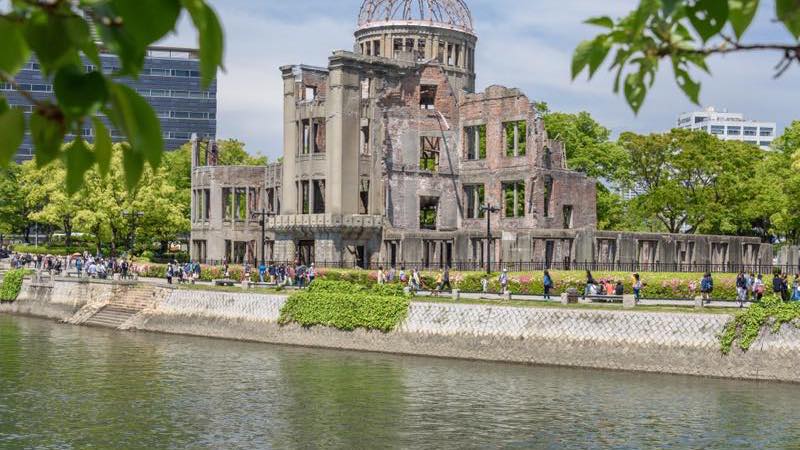
Dark Tourism:A New Form of Travel Visiting War Sites and Disaster Areas
Amidst the spread of diverse tourism styles such as green tourism and content tourism, "dark tourism" has been gaining attention in recent years. This refers to tourism aimed at visiting places that convey the traces of war and memories of disasters to the present day, and learning about their historical background and significance.Representative examples include the Atomic Bomb Dome in Hiroshima and Alcatraz Island in San Francisco Bay, where Al Capone was once imprisoned. In recent years, areas affected by the Great East Japan Earthquake have also become travel destinations. Because these places carry memories of people's pain and suffering, it is necessary to welcome visitors with consideration for the background of the destination and the feelings of local residents and related parties, as well as to disseminate information. Measures against overtourism are also essential.Nevertheless, "dark tourism" holds significant value in terms of regional revitalization and educational benefits. It is gaining attention not merely as tourism, but as a form of travel that deepens learning while rediscovering the appeal of a region.
Articles related to Dark Tourism covered by Dentsu-ho can be found here
This time, we focused not only on digital domains like AI and the web, but also on themes including migration and tourism, such as "Jyunichi" and "Dark Tourism."As people's mobility becomes active again after the pandemic, a major challenge is how to circulate the regional economy through migration and tourism. These keywords may also offer hints that bring new perspectives to such movements. In this era of accelerating technological and lifestyle changes, how should we design content and services that align with the current social situation? If you have such concerns, please feel free to consult with us.
Was this article helpful?
Share this article


