
Note: This website was automatically translated, so some terms or nuances may not be completely accurate.
 2023 Creator of the Year Special Feature [2/2]
Takuma Takasaki's Creative Clinic 2024 "Ask Me Anything Box"
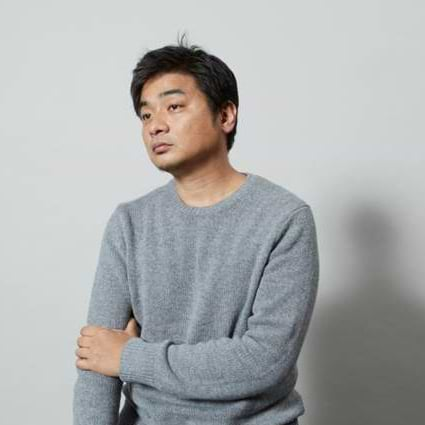
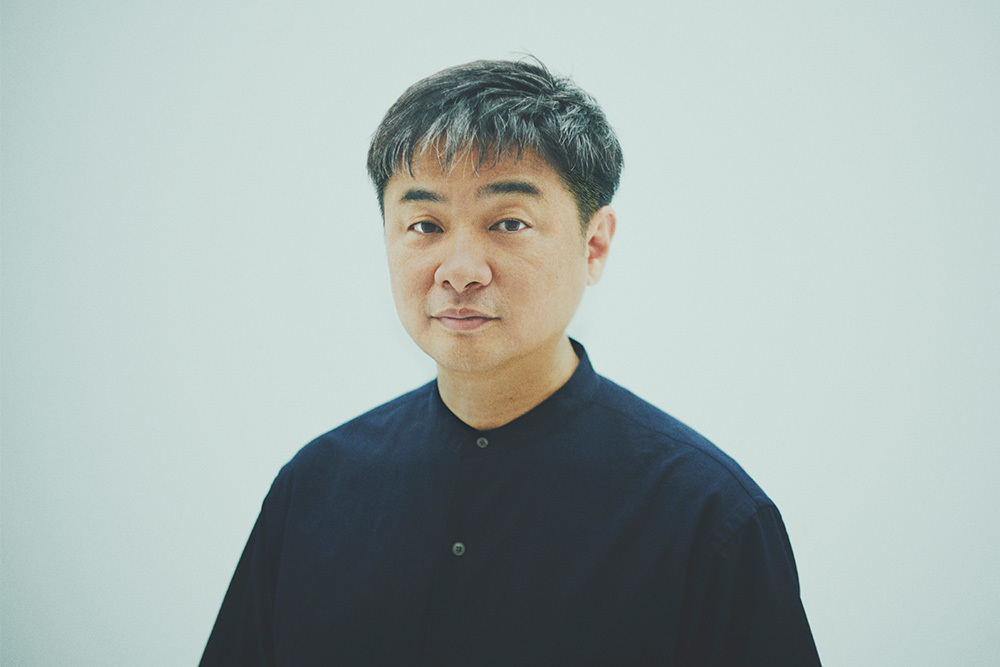
Takasaki Takuma
Takuma Takasaki Answers Your Questions—The "Ask Anything Box" creative clinic, where the top-ranking winner of the "2023 Creator of the Year" award earnestly answers diverse questions submitted by Dentsu Inc. creators, from newcomers to veterans. Discover tomorrow's work insights in his words, backed by a 30-year career and experience—not just for creators, but for everyone (especially you needing a breakthrough!).
We deliver it all in a Q&A format, preserving the raw passion of both questioners and answerer!

People often say to look beyond advertising for creative inspiration—films, manga, art—to broaden your expression. But I'm not sure how to actually "look." How do you approach content outside advertising, Mr. Takasaki?
(Copywriter)

Among researchers, especially those in corporate settings, the term "dark research" has apparently been used for a long time. It seems like a perfectly normal term for people in that field, but I only learned about it recently. It refers to voluntarily conducting research late into the night, using well-equipped facilities, to satisfy one's personal curiosity. One researcher said "dark research" expanded their toolkit and broadened possibilities. They mentioned how seemingly unrelated studies repeatedly provided major insights. I strongly resonated with this.
Thinking about it, I feel like I've been doing "dark research" all along. Especially regarding film, I've read books, researched, experimented... all on a separate track from my work. I think I approached it with the same feeling as when people go camping, play golf, or attend festivals. Simply because I enjoy it.
From there, my interest expanded beyond camera-based visuals to writing novels and creating radio dramas. When I started wondering about the pros and cons of communities, I began exploring various ways to examine them. When questions about environmental issues arose, I went to talk to university professors. The key is to fundamentally avoid stifling curiosity. I believe that's crucial.
When it comes to drawing lines between advertising, film, content... I fundamentally think, "That's just something someone arbitrarily decided, so it doesn't really concern me." So I figure I can just call everything within the scope of my curiosity "advertising" afterward. That's about how I operate. That's why I've rarely done anything purely for the sake of input.
But it seems like a sad, impoverished state for someone involved in advertising to be unfamiliar with its history, present, or future, or to lack their own voice. So, as someone in advertising, wouldn't it be good to thoroughly study advertising? In that process, following the work of photographers you encounter, following fashion, following music, following the work of cast members and becoming knowledgeable about theater – I think that kind of approach is fine.
Pulling in things you love is enjoyable, and I believe such pursuits have a very positive effect on your own output.
How to combat the lack of tangible growth as a creator. (Excerpt) While I get praised for my efforts through achievements or others' evaluations, I struggle because I lack the triggers or realizations that let me personally feel and affirm my own creative growth. What does tangible creative growth feel like for you, Takasaki-san? What kind of reassurance makes you think, "Yes, I'm on the right path"?
(Communication Planner)
I totally get that. I feel the same way. Even when praised, it's for something already done. Awards don't alleviate the pain of not finding the optimal solution for the challenges I'm currently facing. The moment I receive an award, I'm happy, but that's just an element of how others see me. It doesn't really help with the inner struggle I feel. I've been doing this for 30 years and still feel this way, so I think it's best to just accept that. Fundamentally, external evaluation and your internal sense of self are often out of sync.
At my core, I'm a planner, so the moment I conceive an idea is when I feel the greatest pleasure. It's the instant I think: This could make the client happy. This could elevate the talent's value. This could sell the product. I've found a way that isn't just self-imitation. Even a high school student in Kitakyushu, completely unrelated to the product, might feel a little happier seeing this. That moment when I think I've come up with an idea that captures all of that at once. I just relentlessly chase that feeling.
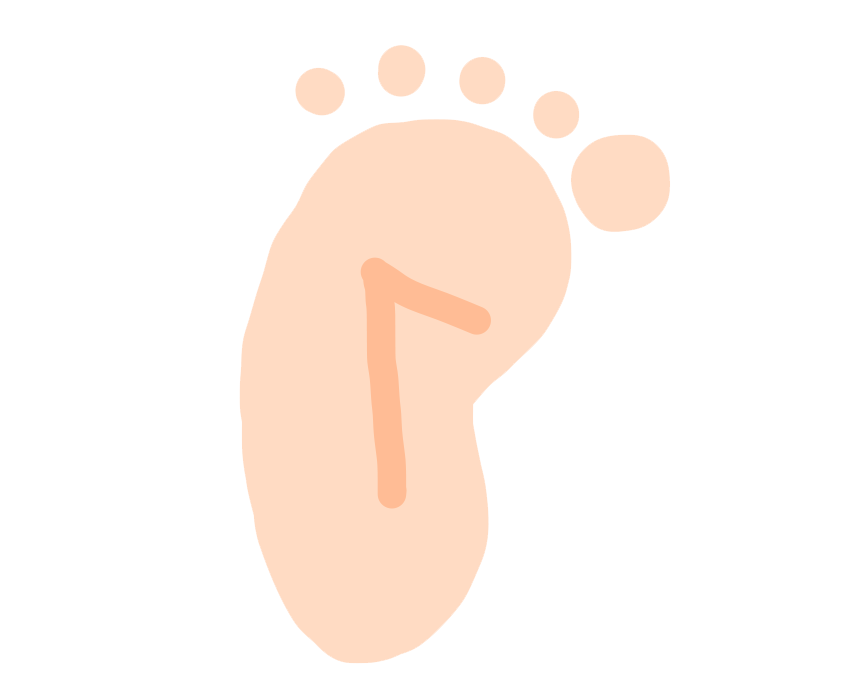
I don't consciously aim to grow. Isn't growth simply realizing your footprints have somehow grown larger when you look back? Even if I feel that growth, responsibilities, challenges, and worries also grow proportionally to that foot size, so... well, I'm just desperately trying. I wonder how long I'll keep doing this, but as long as that momentary thrill exists, I just can't quit. This might not really answer your question, but I'll just share this experience: even after 30 years, that particular worry never got resolved.
1. When an orientation comes in, Mr. Takasaki, where do you start and how do you proceed? I'd like to know your initial steps and the planning process (e.g., do you first look at competitors' examples, or start writing the copy first?).
2. What are things you consciously choose not to do when planning a commercial?
3. What do you prioritize in creative direction? (Any points you feel are uniquely yours?)
4. I get really fed up when people bring advertising examples to meetings. Yet, surprisingly, that approach often gets accepted. I wonder if that's an act that robs us of originality. What do you think constitutes "originality" in planning, and how do you think it should be expressed?
5. Years ago, I heard from a senior colleague that "even that super-busy Takasaki-san took time off work to travel abroad when he was young." I thought, "So he wasn't working 24/7! I can do that too!" and started traveling solo overseas. But is that rumor true?
6. I'm in my ninth year now. I'm not exactly a youngster anymore. But I'm not quite a mid-level either. It's a tricky stage. What should someone at this point in their career focus on? To keep growing further.
(Copywriter)
1. It varies completely depending on the situation . First, I identify what I don't know and make an effort to learn it.
If it's a product I've never used, I use it. I listen to people who use it (even if it's just research-based). If it's a place I've never been, I go there. For a recent movie project, I spent an entire day starting early morning cleaning public restrooms in Shibuya as a trainee alongside the janitors. What I felt firsthand during that experience becomes an inviolable "sanctuary for creation" that no one can encroach upon.
I also research competitors. Essentially, I believe the key is how accurately I can empathize with the client's concerns. Ideas often emerge during this process.
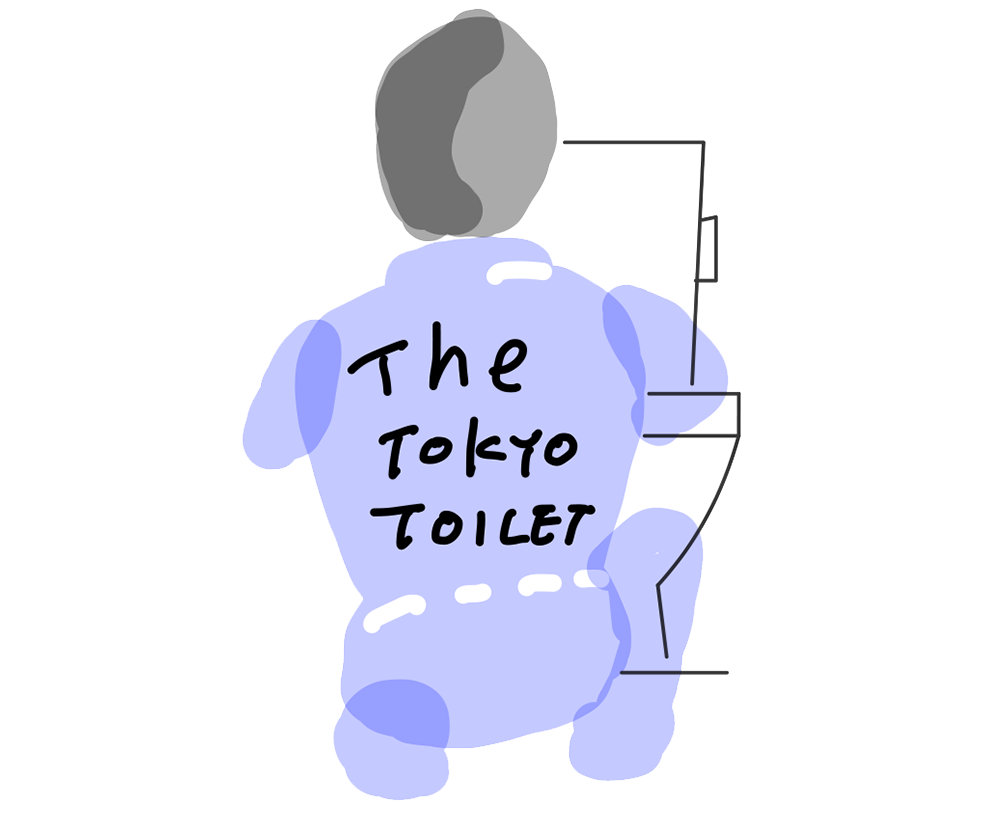
2. Don't create something dirty.
I don't create anything that diminishes a talent's value.
I won't proceed without conviction.
3. I'm really bad at creative direction. I've hardly ever managed a team without thinking for myself, and I recognize that as a major flaw of mine.
4. I believe originality can only be attained through thinking harder than anyone else. It's like mountain climbing: if you keep moving without stopping until the end, the people around you gradually thin out, and you reach a higher place than anyone else. What you hold in your hands then, I think, is originality. And there is one way to attain it easily: create the method itself. There is no better shortcut than this. Imitation of the past and imitation of oneself are the things most to be avoided, so I don't think we need to even consider them.
5. From the time I joined the company until I got married, I took the entire month of January off every year to wander abroad. I was part of Sawaki Kotaro's "Midnight Express" generation, a backpacker at heart, and I simply couldn't stop doing it. I don't think it was an era where such things were easily permitted, but my boss and senior colleagues in the department allowed it. It was time to completely reset, time to deeply engrave in my body that the world isn't just what's right in front of me.
But after I stopped doing it, I got depressed a little while later, so I think that kind of reset is probably necessary after all. It was before the internet existed, so it was good I could escape to places where I couldn't be contacted.
6.I truly believe " bones grow thicker with each fracture ." Looking back, I realize failures have nourished me more than successes. So rather than taking half-hearted swings at work that neither succeed nor fail, I think it's better to swing for the fences every time. Not that I'm saying you should fail.
When planning projects, I often get stuck wondering where to start or how to think about things, wasting time before I even begin planning. What do you usually use as your starting point when you start thinking about a project, Mr. Takasaki? Or, if there's something specific you do before diving into a commercial project, I'd love to hear about it.
(Copywriter)
① I always make sure to carve out time to think freely in a stress-free environment. I absolutely avoid turning it into storyboards, concepts, or copy. Instead, I create this irresponsible time to play around with the brief, like "What about this? What about that impression? Remember that thing from back then..." Thinking in a stress-free state gives my brain the impression that "this is fun work." It really is a lot of fun.
② During this time, if you start thinking a bit more seriously and find something like, "Hmm, maybe this area? This could work?", try turning one of those ideas into a proposal. But you'll likely find it's pretty half-baked, not as interesting as you thought.
③ We then analyze the strengths and weaknesses of that concept. Once the idea is out there, it becomes easier to view objectively (let's be objective). We then create many variations, fixing the weaknesses and expanding on the strengths.
④ If I can't write a storyboard, I try writing a proposal instead. This helps clarify the brief and reveals gaps in my own plan.
⑤ Come up with ideas to fill those gaps.
⑥ Just keep repeating this process relentlessly (this is where you might start feeling pretty sick or sleepy).
⑦ Hey, surprise! An idea that clears everything!!
The more you do this process, the faster you'll get at it. Seriously.
Looking back on your 20s and 30s, are there any work-related things you secretly think were failures or regret? I'd also like to hear why you feel that way.
(Copywriter)
As for failures or regrets in terms of expression or advertising, I don't really have many (or maybe I just try not to dwell on them). Instead, I think about things like, "There must have been a better methodology," or "I should have spoken up instead of holding back then," and I tell myself I need to avoid repeating those kinds of regrets next time.
Fundamentally, even if a concept isn't quite right, we can usually make it work on set. If it's less interesting than imagined on set, we can fix it in editing. If editing doesn't quite hit the mark, we can craft a story through PR or get creative with how it airs. Ultimately, our responsibility is to create a situation where it "sells." So, I don't dwell too much on the specifics of each individual creative choice. We pull out every trick in the book to get results. We're always putting in that effort, so I want to believe there's no such thing as failure.
1.If you have any tips for winning awards, please share them.
2. Is there any advertisement that left an impression on you (that impressed you)?
(Copywriter)
1. I believe that the moment you make winning an award your goal, it starts to have a negative effect. It's something tied to the past, something relative, decided by majority vote. If you make that your target, you end up aiming for something below the past standard, something that seems likely to gather everyone's votes. It's a system that tends to bring the disease of imitation. If I had to say, I think it's best to "win with power to spare." Stretching yourself to the limit just to win an award might feel good, but when you actually receive one, I think you should already be a step ahead.
The true value of an award lies in its ability to "create your next project" and, crucially, to "earn you assignments based on expectation." That's the essence of it.
I'm sure you want to ask about technical details, but I still think the fastest route is to have the desire to create something truly overwhelming.
2. There are many. But lately, creators often share the background story behind why they made something. We end up viewing the expression alongside the creator's intent. We see it paired with the information that someone else said it was good. We can't encounter the expression purely on its own, so I wonder if expression itself is now inherently tied to that entire context.
I'm writing about old commercials for a magazine series, and when you look at director Sekiya's body of work, it's overwhelming. Life is captured in 15 or 30 seconds. It's a made-up world, yet something real shines through. Maybe this is what modern advertising has lost. But conversely, since nobody's doing it now, it might be worth doing. I'd like to try it.
If you know any health tips for sustaining great output long-term, please share.
(Copywriter)
This might sound like something an old man would say, but I genuinely believe sleep is absolutely crucial these days. When you're sleepy, you can't do anything. After 50, you can't push yourself like you used to, so I try to plan projects as efficiently as possible and get plenty of sleep. Also, I try not to overthink things – I'll drop a project quickly and revisit it in the morning. Lately, I've been taking naps here and there. It completely overlaps with the image of my grandfather I saw as a child – writing that just now made me think, "Whoa, that's a bit much."
I got depressed around age 30. Back then, the term "depression" wasn't widely understood, so the environment was really tough. I couldn't take time off and suffered. Later, I found out my family and senior colleagues at work had been keeping in touch for me, and I was incredibly grateful. To this day, I can't hold my head up high around that senior colleague. Then, one day, a little over a year later, it was like the fog suddenly lifted, and I thought, "Somehow, I'm okay." Since then, that night sea occasionally beckons me from nearby, but I've become very clear about the line I mustn't cross. It's like I sense, "Ah, continuing this way is dangerous," and when that happens, I properly hit the brakes and slack off without anyone noticing.
Health is important. Really.
1. When I see other young creatives' work during training, they're all genuinely interesting. It makes me think, "Wow, everyone at our company has incredible potential." But among them, I believe some will consistently deliver that spark for decades, while others—I'm not sure if this is the right way to put it—will be one-hit wonders, or fizzle out, or gradually lose their ability to shine. What do you think is the difference?
2. Creative Clinic has been held several times now. What's the biggest shift in your thinking over the past decade?
(Copywriter / Strategic Planner)
1. You haven't changed, but others arbitrarily change their perception of you, and before you know it, you're labeled "that person who used to be interesting." But when you really think about it, that's none of their business, right? In this industry, where others' evaluations tend to be very visible, getting recognized and winning awards... sure, that's great. But I also think it's a shame to mold yourself too much to fit that. Other people's opinions are theirs to have; you can't control them. On the flip side, becoming too fixed in your ways and squandering your potential for growth is a waste.
I think it's crucial to consistently deliver good work by properly answering questions. Constantly update yourself and provide the best possible answer to whoever you encounter at that moment. If you keep doing that, you probably won't become a one-hit wonder. But if you do land that one hit, that's amazing. It might be luck, but I think it's incredible.
There's another key to lasting success. I think it's good to always maintain two distinct mindsets: A-self and B-self. Don't just stick to one approach—if you've done this, try that next. That way, you won't get bored with yourself and can keep going.
2. Not much has changed.
I can't (and don't want to) turn down work. Since I just transferred, I feel eager to try any job. On the other hand, with limited physical energy and time, I'm scared the quality of each piece might suffer. What would you do, Mr. Takasaki? I'd appreciate a motivating word.
(Strategy & Communication Planner / Copywriter)
Personally, I rarely turn down work. I believe there's a reason it comes to me and a right time for me to take it on. Trying to swing at every opportunity full force is exhausting. But that's how I operated when I was younger. In my case, repeatedly pushing beyond my capacity actually expanded my capacity. When you're overloaded, you learn where to start and how to proceed. You want to wrap up presentations in one go. You want meetings to be shorter. And you stop wanting to assign homework. Surprisingly, it's full of benefits.
Also, this is strange, but when you really push beyond your limits, the work that was the main reason for the overload often gets postponed or disappears. It feels like someone is protecting you. Conversely, when work disappears, I comfort myself thinking, "If I'd kept going like that, I would have definitely hit my limit."
1. Right now, I'm doing what I can by coming into the office almost every day. But I rarely get the chance to talk with my seniors. If I happen to see you, Takasaki-san, in the office, would it be okay if I said hello...?
2. I feel like my own creative approach is too one-sided. I'd love to ask seniors who can create everything from moving ads to hilarious ones how they switch their mindset for different projects—or if they tackle every genre with the same passion.
(Planner)
1. I'm on the 23rd floor WEST. Feel free to drop by anytime. I'm the kind of person who loves talking about movies and ads endlessly, so please do.
2. Whether it's emotional or humorous, the audience is still human, so I don't think there's that much difference. It's better to work as if there isn't. Add a little humor to an emotional story. Add a bit of heart to a comedy story. That kind of layered approach feels richer and tends to get a better response from everyone. It's better not to get stuck thinking in categories. Director Bong Joon-ho said the same thing. When I open "Parasite" on Netflix, it shows up as a social drama; when my wife opens it, it's a suspense film; when my daughter opens it, it's a comedy. I think that's actually more interesting.
It's best to tackle things you're not good at when you're young. Find your own way and devise methods to compete with those who excel. That's what a solution is.
1. Lately, I've been spending more time on management tasks and other non-creative work. I'm anxious because I physically can't find the time to purely write copy, brainstorm ideas, or properly wrestle with creative challenges. What mindset should I adopt when tackling daily tasks?
2. Lately, I've really come to feel that the job of a Creative Director is incredibly difficult. If you were to give advice to someone who's just become a Creative Director, what would you want to convey? I'd be grateful for any perspective you could share – whether it's the mindset needed as a Creative Director, tips for team building, or how to approach working with Business Producers (BP) and clients.
3. Lately, I've been troubled by our low win rate in competitive pitches. Just the other day, we lost one we really wanted to win. When we lose, what's the right way to bounce back? Also, if there are any secrets to improving our win rate in pitches, could you share them?
(Creative Director)
1. I've never been able to do that myself; I've always relied on others and been protected. This might sound like speaking from the opposite perspective, but management is undoubtedly a form of creativity too. It's about creating an environment that becomes fertile ground for excellent work. Thinking about it from the perspective of nurturing people might be helpful. If you're trying to sharpen yourself as a player despite time constraints, one approach might be to focus on securing a dedicated space to thoroughly tackle one project, rather than chasing numerous opportunities. Create a place for yourself where you're needed long-term by products and clients, and sustain it.
This isn't directly related, but years ago, Takashi Nakahata called me and said, "Takasaki, it's time for you to shift from quantity to quality." I was young then, so I just thought, "God is telling me my quality is low!" and ended up working even harder. Looking back now, I think he meant exactly what he said.
2. It's not specifically about being a Creative Director, but lately I strongly want to be someone who can work properly for others. For the team, for the client, for the people who encounter that product, for the people beside those who use it, for the people beside those beside them. That's how I want to think. It's not really about being a Creative Director or a department head; it's more about living properly as a person. But ultimately, I think that's what shows in your work.
3. Competition sucks, right? What sucks is that you start thinking about winning. That's why plans often get tainted. I do it, though. When I lose, I tell myself that winning would've brought misfortune instead, and I try to forget it as quickly as possible. Work issues can only be resolved through work, so I just give my all to the next project.
This April marks my third year as a CM planner. When seniors ask about my recent work and I answer, they often say things like, "You got some good projects on the ○○ case." Most of the time, they're referring to jobs where I could really agonize over the copy's expression and get detailed advice from seniors. On the flip side, there are also many jobs where, due to various circumstances, I don't have that luxury and just push forward without really understanding. Of course, there are lessons to be learned from both types of projects, and I tackle them believing they'll be useful someday. But now, in my third year, I sometimes feel I'm not getting closer to the kind of work I admire from my senior colleagues. I get anxious comparing myself to peers or those of similar seniority, and I lose sight of where my work should be headed. What do you think makes a good project for a junior planner, Takasaki-san?
(CM Planner)
Both have their pros and cons. In a team with outstanding seniors, your ideas might not make it to the final cut, but the end result often turns out great and gets talked about. In a team without such talent, your ideas are more likely to stick, but the outcome is uncertain. It usually ends up just okay and doesn't generate much buzz. I think it's good for young people to experience both patterns. As you're aware, neither is wasted. But I still feel you learn more from failures.
Failing at a presentation. Misinterpreting an orientation. The lessons from such experiences are immensely valuable. For that, it's best to take on work where you bear a larger percentage of responsibility. Regardless of the team structure or composition, when the resulting work fails, I believe the best work for your younger years is to increase that percentage of responsibility you feel. Eventually, you'll stand on your own. That's when it will serve you well. Wasting time worrying about what people close to your age or peers are doing is a waste. I think the right mindset is: don't look sideways, look straight ahead. Things won't go smoothly most of the time, so shouldn't the question be how you can turn that into your own nourishment?
What criteria do you use to decide which jobs to accept and which to decline? With any job, you often don't know the client compatibility or if it aligns with your strengths until you start working on it, so I tend to accept a lot. But with limited working hours, I know I should really turn down more to ensure good quality. Could you share any insights from your experience, Takasaki-san, or things that worked well for you?
(Creative Director / Copywriter)
Suppose you turn down Job A because you're busy and want to ensure quality. But then, right after that, you get an offer for Job B—a big, exciting project. You'd probably take Job B, wouldn't you? Maybe you're using quality or your strengths as a bit of an excuse. Looking at your question, I think you're just a bit busy and tired. So, maybe you should start by turning down a few upcoming jobs, regardless of the content, and take some time to cool down. Then you can start thinking about your own style.
In my case, I basically never turn down work. Because whatever I learn during that project will inevitably be useful for other jobs. Advertising work is especially sensitive to the market and the times. No matter the angle of the consultation, there are always hints about "the current era" or "the near future." That input definitely boosts efficiency on other projects. Staying attuned to that lets you skip some steps in your workflow. To the question of whether turning down work improves quality, I'd say no—turning it down doesn't raise quality. That's not the real issue. Probably. But I'm a bit of a weirdo, so my advice might not be very useful. Maybe it's time to take a break and then shed that style to work more carefully.
How did you find it, readers? I hope you felt the passion from both the questioners and the answerers. If the questions and answers collected here offer any hints for your future work (or life), I'd be delighted.
Thank you to Mr. Takasaki and all the creators who collaborated on this project, and to all the readers who stayed with us until the end.

Was this article helpful?
Share this article


Newsletter registration is here
We select and publish important news every day
For inquiries about this article
Back Numbers
Author