
Note: This website was automatically translated, so some terms or nuances may not be completely accurate.
How Will Companies Transform and Grow in the AI Era? AI Experts Share Their Insights at “Xplorers 2026”
“Xplorers,” a conference exploring the cutting edge of business transformation, was held on Thursday, August 27, at the Happo-en CLUB FLOOR in Minato Ward, Tokyo. This event brought together leading transformation experts active on the front lines to share the latest insights on business transformation and digital transformation (DX) and engage in in-depth discussions. For the Platinum Presentation, Mr. Gosuke Kato, Director of Dentsu Inc.’s Business Transformation Division 1, served as moderator.The panelists were Susumu Namikawa, Chief AI Officer at dentsu Japan; Kenzo Sugawara of Adobe; Junichiro Tazaki of Salesforce; and Satoshi Asano of Microsoft Japan. They discussed their companies’ strategies and visions under the theme of management transformation in the AI era.
Additionally, during the networking lunch, Mai Takahashi, General Manager of the Growth HR Department at Dentsu Inc.’s Business Transformation Division 1, and Manabu Sasaki, a business designer, took the stage. They delivered insightful presentations on the initiatives of the new organization established this past March and the evolving role of human resources in the AI era.
AI Strategies That Balance “Safety” and “Efficiency,” as Discussed by Leading Companies in Various Fields
Mr. Sugawara of Adobe, the first speaker, explained the “content supply chain” (the entire process from content planning to performance measurement) on which the company is focusing. He pointed out that in modern marketing, the volume of content has exploded and the production process has become increasingly complex due to the need to accommodate diverse channels and corresponding content variations.
Within this process, Adobe is promoting efficiency through AI, particularly in “creative production” and “variation development.” He emphasized the company’s strength in “custom models” that generate content compliant with corporate brands, highlighting the ability to balance speedy production with the safety of commercial use.
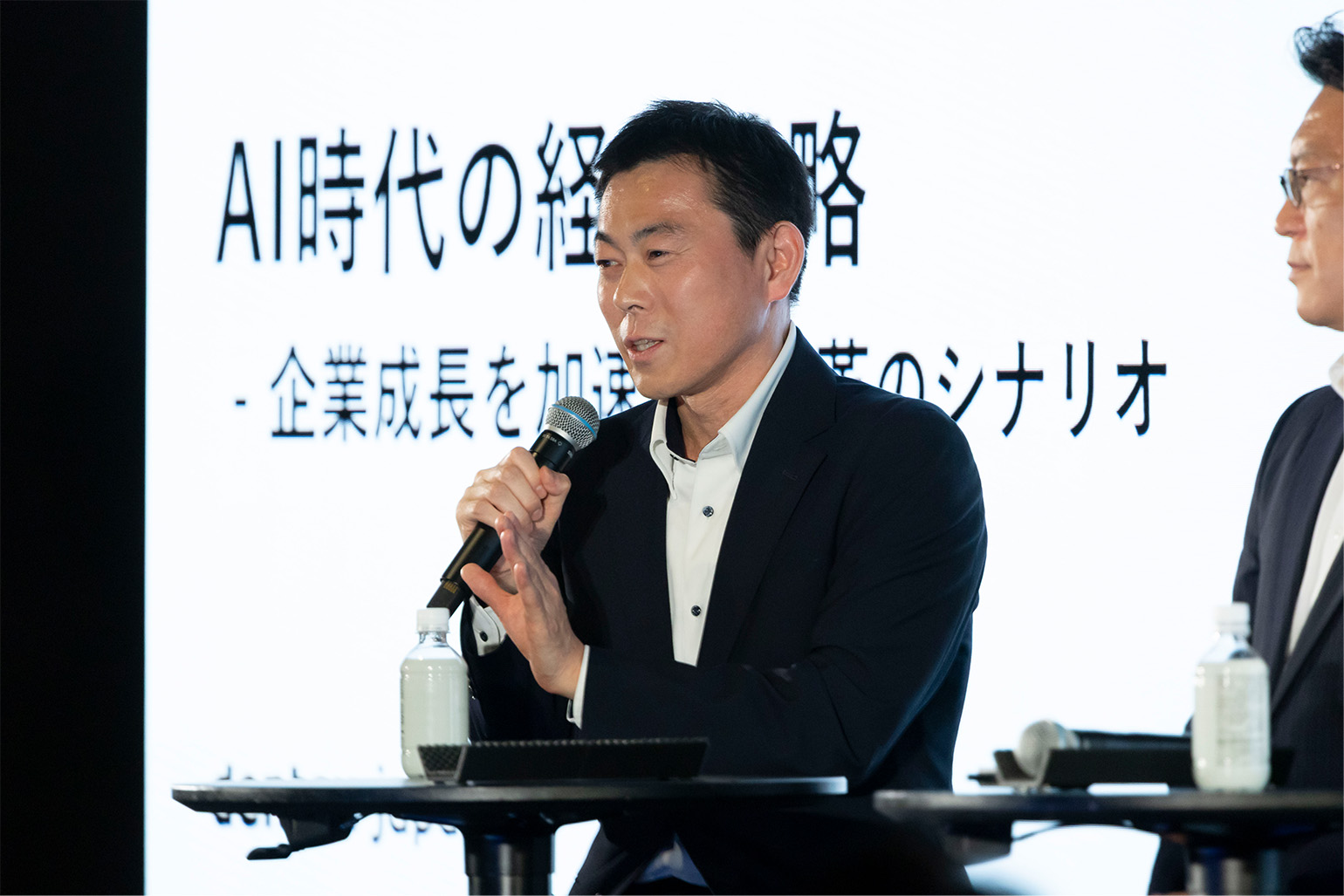
Mr . Tazaki of Salesforce, who took the stage next, explained that his company has transformed into a “company that sells AI harnesses for enterprises.” He noted that for companies to achieve a return on investment (ROI) with AI, they need AI agents that can autonomously plan and execute tasks toward specific goals; however, he also pointed out that this autonomy can sometimes lead to unforeseen compliance issues. To prevent this, he stated that an “AI harness”—an execution and control platform designed to run AI safely and efficiently—is essential.
By providing this harness, Salesforce aims to help companies become “AI-native” organizations. Just as services like Uber and Airbnb emerged in the mobile-native era, Salesforce stated that it will drive the creation of new business models in the AI-native era.
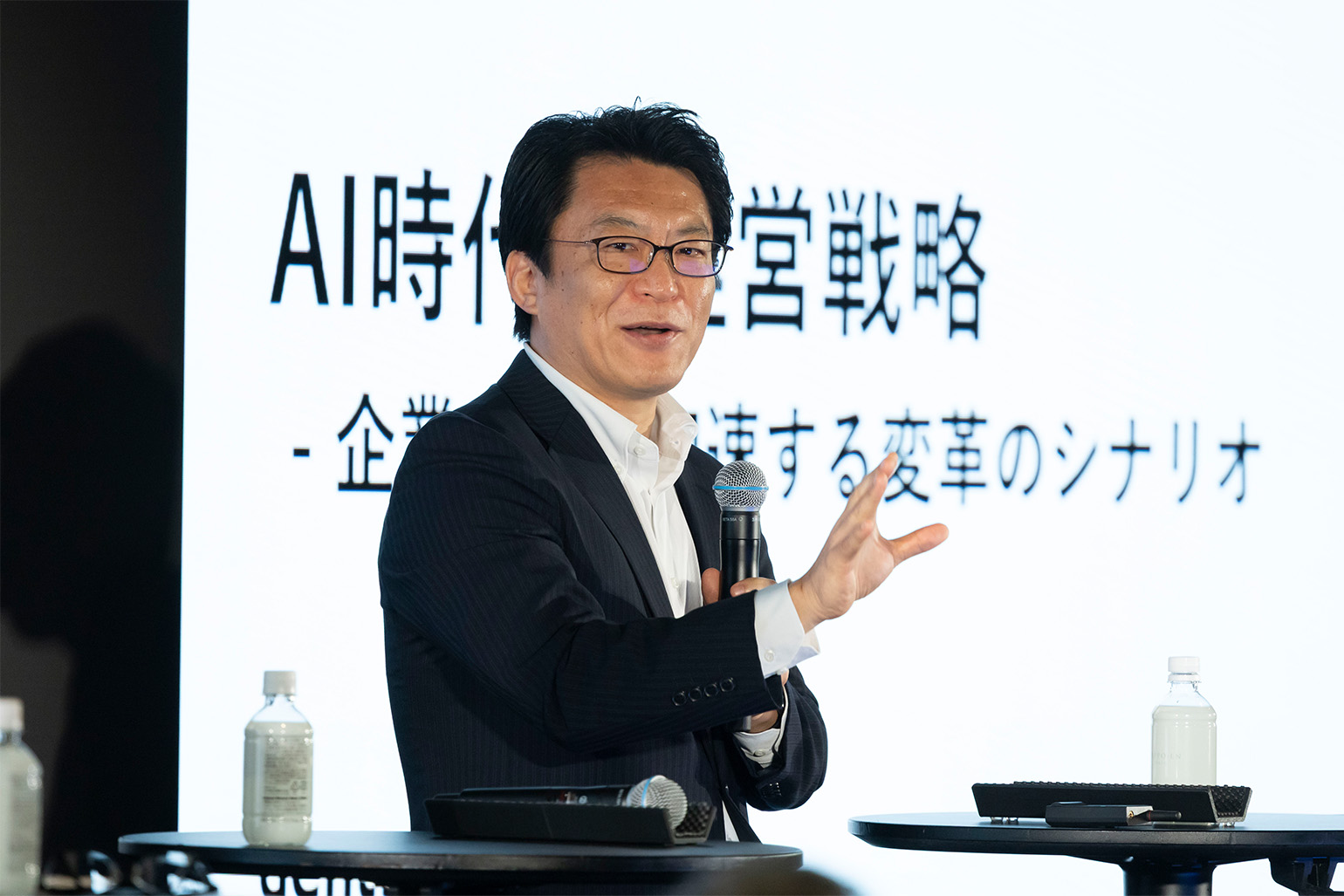
Mr. Asano, speaking next, presented the concept of safeguarding a company’s competitiveness by separating the knowledge possessed by general-purpose LLMs from the company’s unique business context. He referred to the data and operational knowledge that companies should retain as intellectual property (IP) as “Work IQ,” explaining that by accumulating and utilizing this separately from LLM knowledge, companies can maintain their uniqueness.
“Foundry IQ” includes context regarding workflows and relationships within Microsoft 365, as well as company-specific business processes, customer data, and operational data. He explained that by organizing and structuring this data, knowledge, and their relationships into an ontology map (*), a system is built that enables AI to understand the context of business operations.
*Ontology map: A knowledge map that organizes and structures the meanings and relationships of words and concepts.
From “Personal AI” to “Team AI”
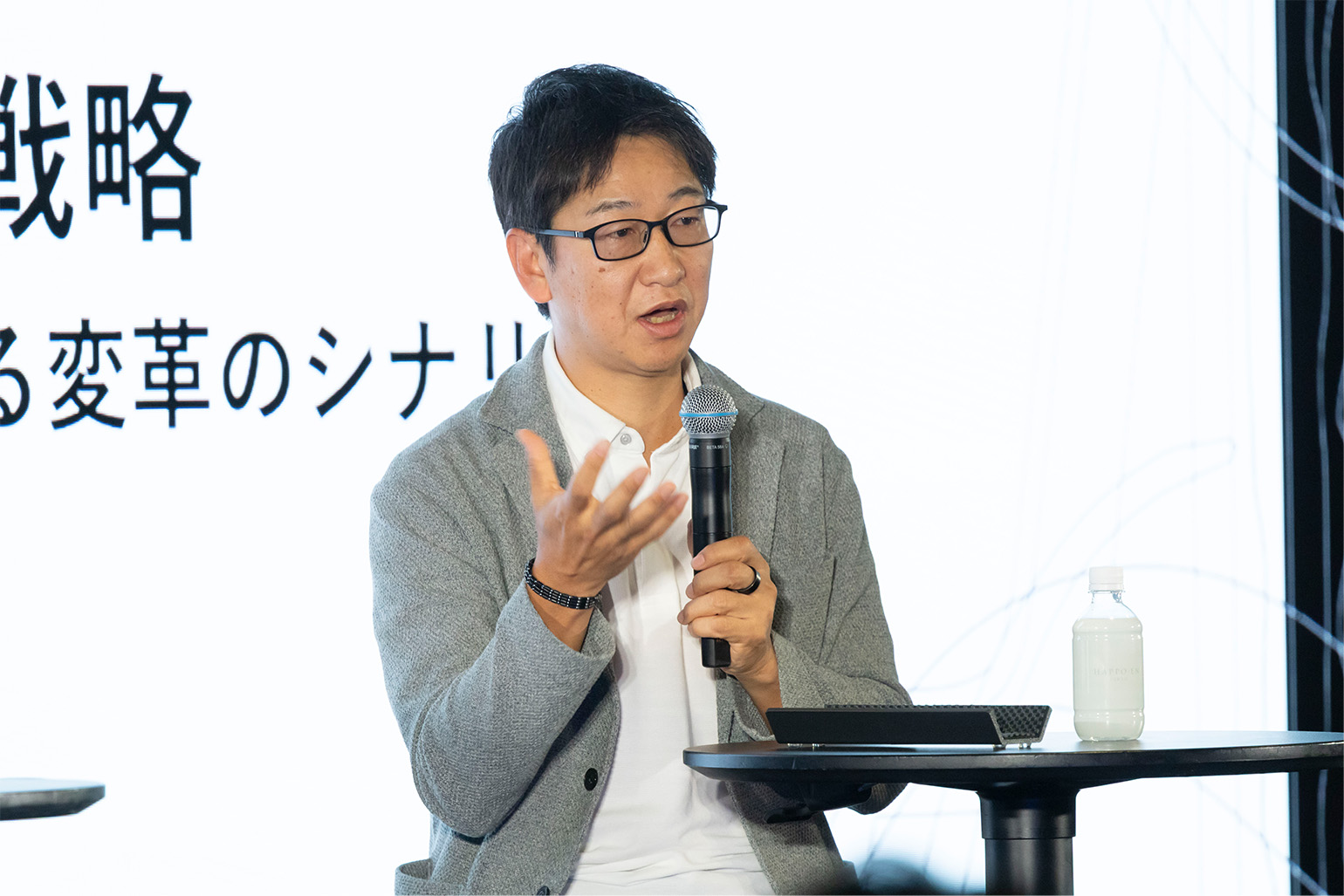
Mr. Namikawa of Dentsu Japan stated that the AI transformation has entered a new phase. Until now, the phase was one of “personal AI,” where each employee used AI as a sounding board; however, with the emergence of autonomous AI agents, the shift is underway toward “team AI,” where humans and AI collaborate.
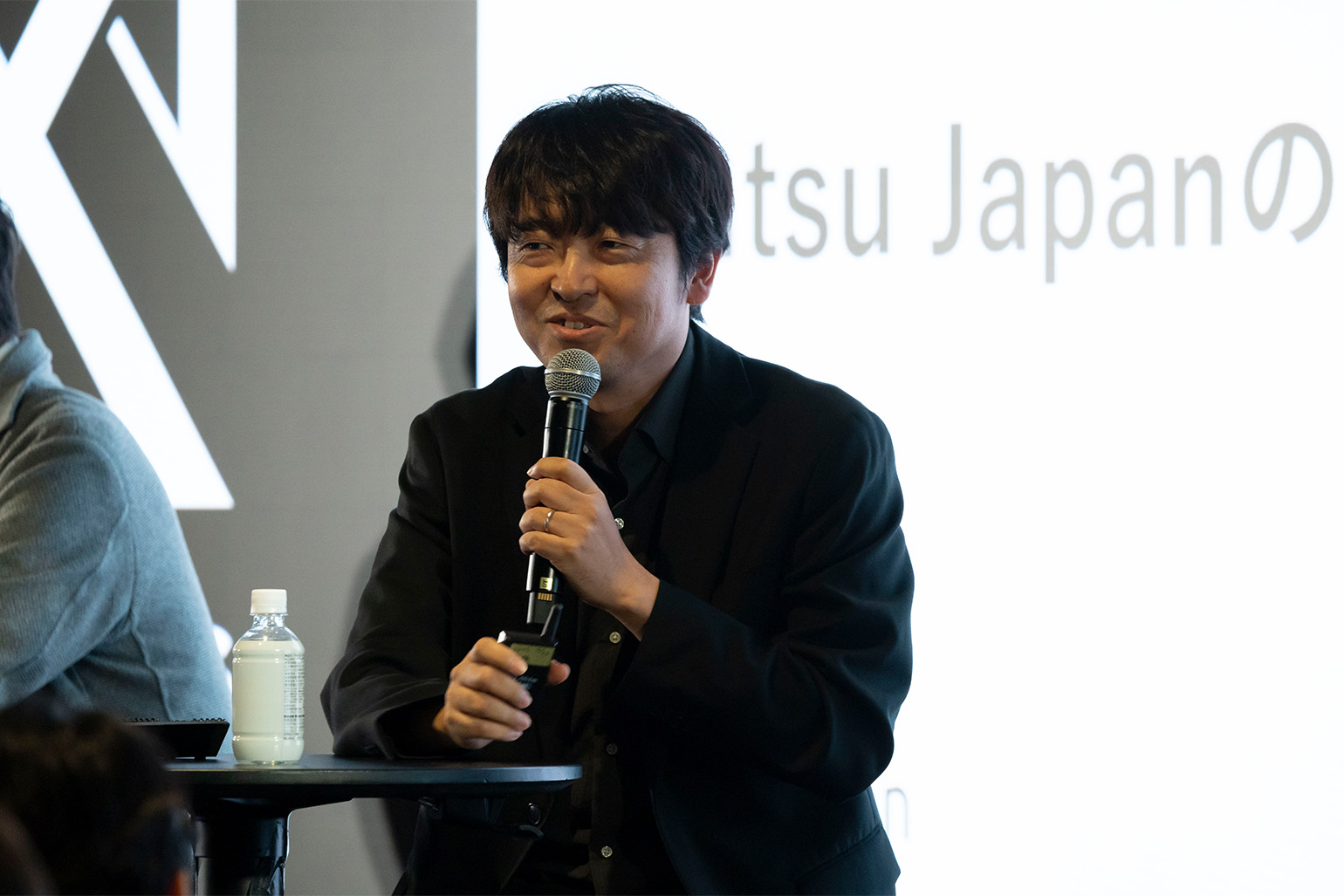
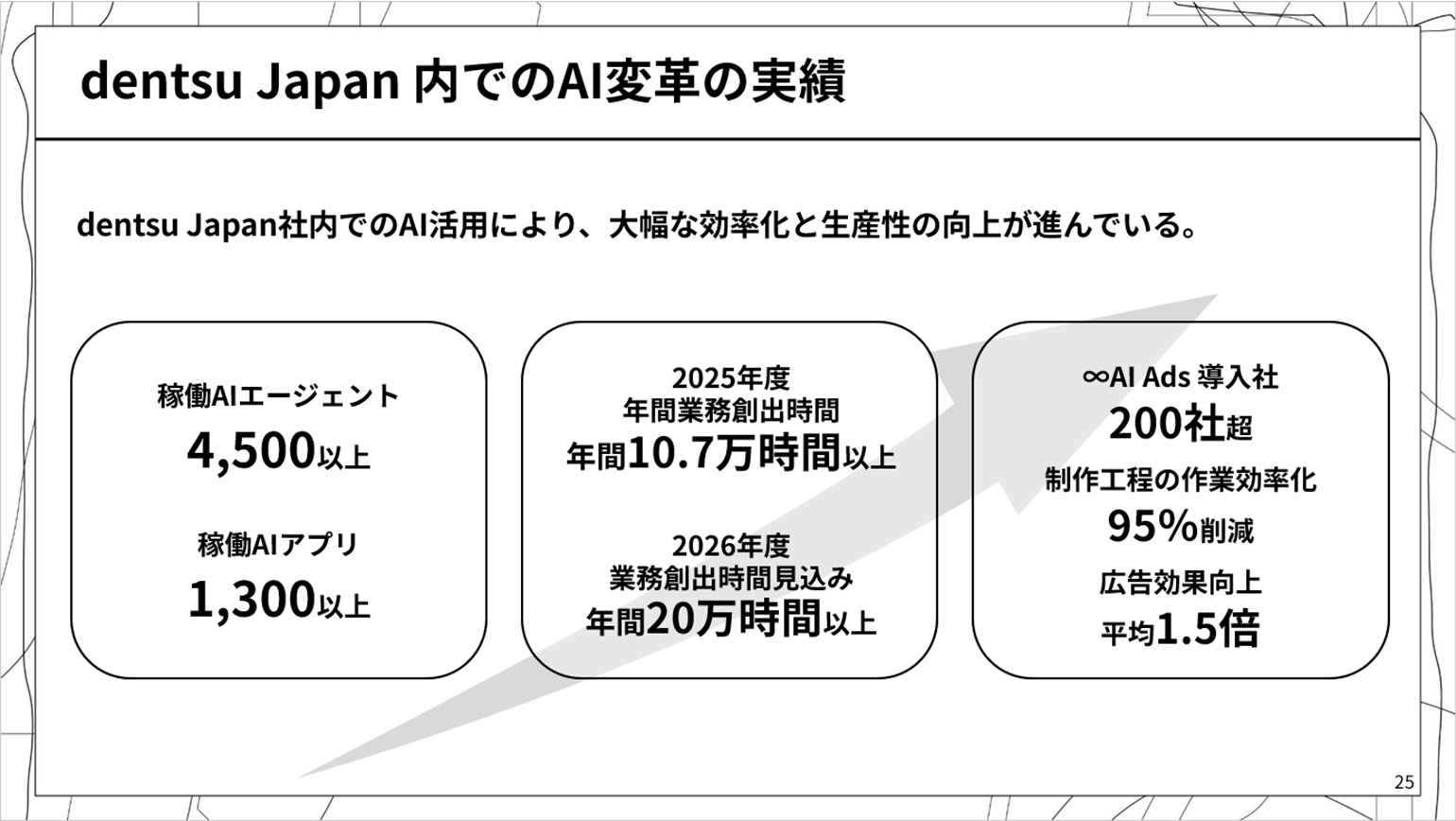
“As we move toward ‘Team AI,’ having just one employee with exceptional AI expertise won’t improve overall performance. Executive leadership and department heads must consider how to combine people and AI to foster innovation,” said Mr. Namikawa.
He also introduced Dentsu Inc.’s vision of “people and AI enhancing each other.” He revealed that the company is advancing AI-centered initiatives in collaboration with various partners, including Adobe for reforming content production workflows, Salesforce for transforming sales and customer touchpoints, and Microsoft for leveraging data in the HR (human resources) domain.
How to Enhance Corporate Competitiveness in the AI Era
Following the presentations by each company, the session moved on to a discussion. The first topic raised by moderator Mr. Kato was the question: “As AI adoption advances and corporate competitiveness becomes increasingly homogeneous, how should companies build their own competitive edge?”
Mr. Sugawara argued, “It may not be wise to focus too much on creating new value.” He stated that AI should first be utilized to “lay a solid foundation” by reviewing and streamlining existing business processes, adding that it would be meaningless to simply preserve traditional processes as they are.
Mr. Tazaki noted that it is crucial to distinguish “what should be entrusted to AI and what should be done by humans.”He proposed organizing tasks by plotting “tasks where mistakes can be corrected vs. those where they cannot” on the vertical axis and “tasks with clear vs. ambiguous definitions of success” on the horizontal axis, suggesting that tasks where mistakes can be corrected and the definition of success is clear should be delegated to AI. He further expressed the view that by allowing humans to focus on strategic decision-making—where the definition of success is ambiguous but the business impact is significant—companies can effectively leverage AI while enhancing their competitive edge.
AI Translates Expertise and Breaks Down “Organizational Barriers”
The next topic was “How to Overcome ‘Organizational Barriers’”—a challenge common to digital transformation (DX) as well.
Mr. Asano stated, “As technology evolves, so too will the ways we communicate and build connections,” citing as an example “O-Beya,” a generative AI agent system developed in collaboration with Toyota Motor Corporation. This system consists of multiple AI agents with expertise in different specialized fields—such as engines, batteries, and regulatory compliance—that provide information from their respective perspectives in response to engineers’ questions.Utilizing Microsoft Azure’s AI technology, the system supports the sharing of specialized knowledge and assists engineers in their research and decision-making. By enabling AI to conduct parallel, multi-angle analyses—a task difficult for humans—it facilitates cross-organizational problem-solving.
In response, Mr. Namikawa of Dentsu Japan explained that AI’s “translation capability” has the power to break down organizational barriers. “AI translates the ‘specialized knowledge’ that has previously served as a barrier,” he said. “However, humans must possess the will to cross those barriers.” He further described the AI era as an opportunity to transcend organizational and disciplinary boundaries, suggesting that such momentum is already beginning to emerge in various places.
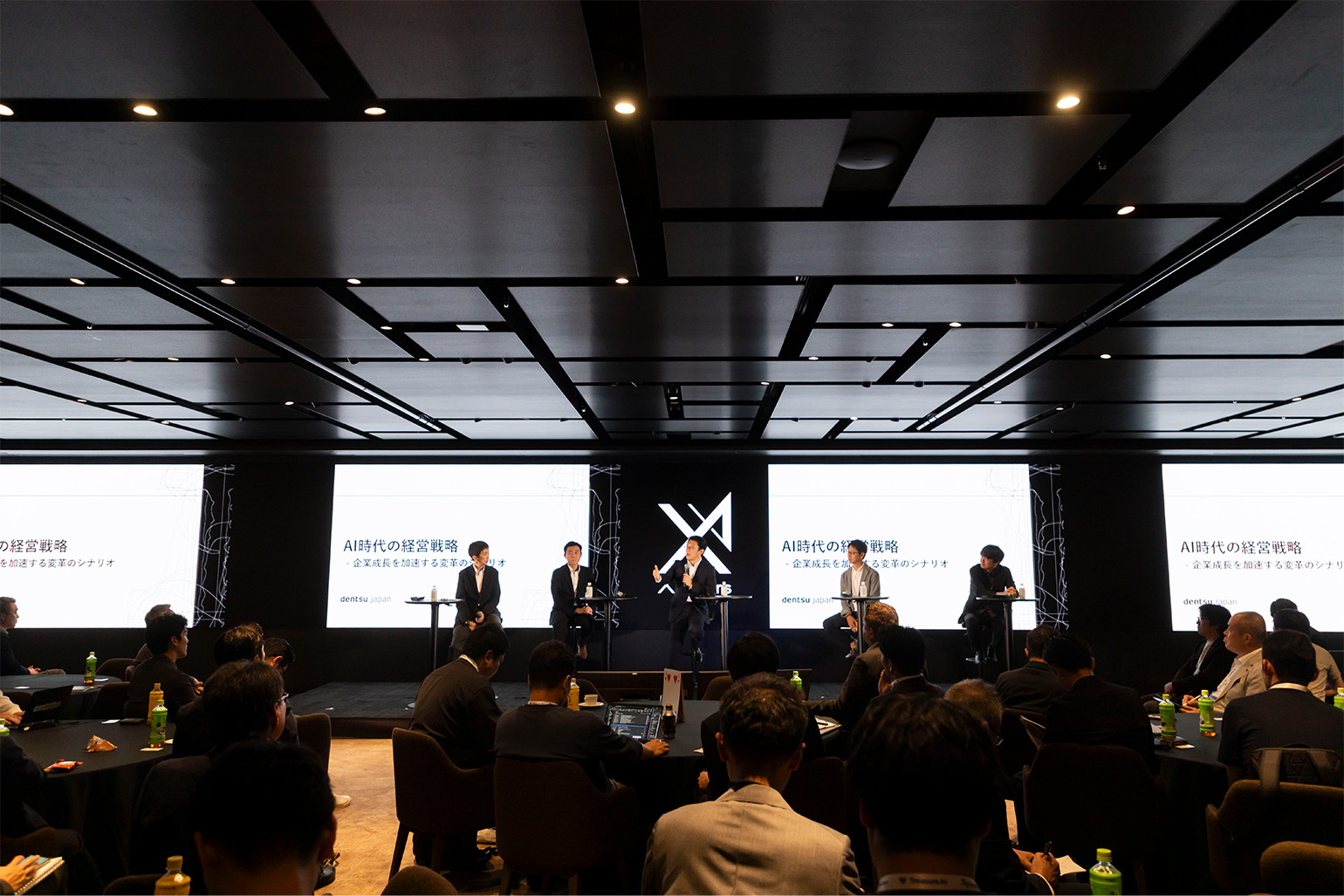
Finally, moderator Mr. Kato concluded the session by expressing his hope: “As AI transforms the nature of work, people, and organizations, we hope that companies will collaborate to support corporate transformation.”
Trends in the AI Era—The Role of HR Shifts from “Management” to “Designing Value and Relationships”
At the networking lunch titled “The Future of HR with AI,” Mr. Takahashi and Mr. Sasaki from Dentsu Inc. took the stage.
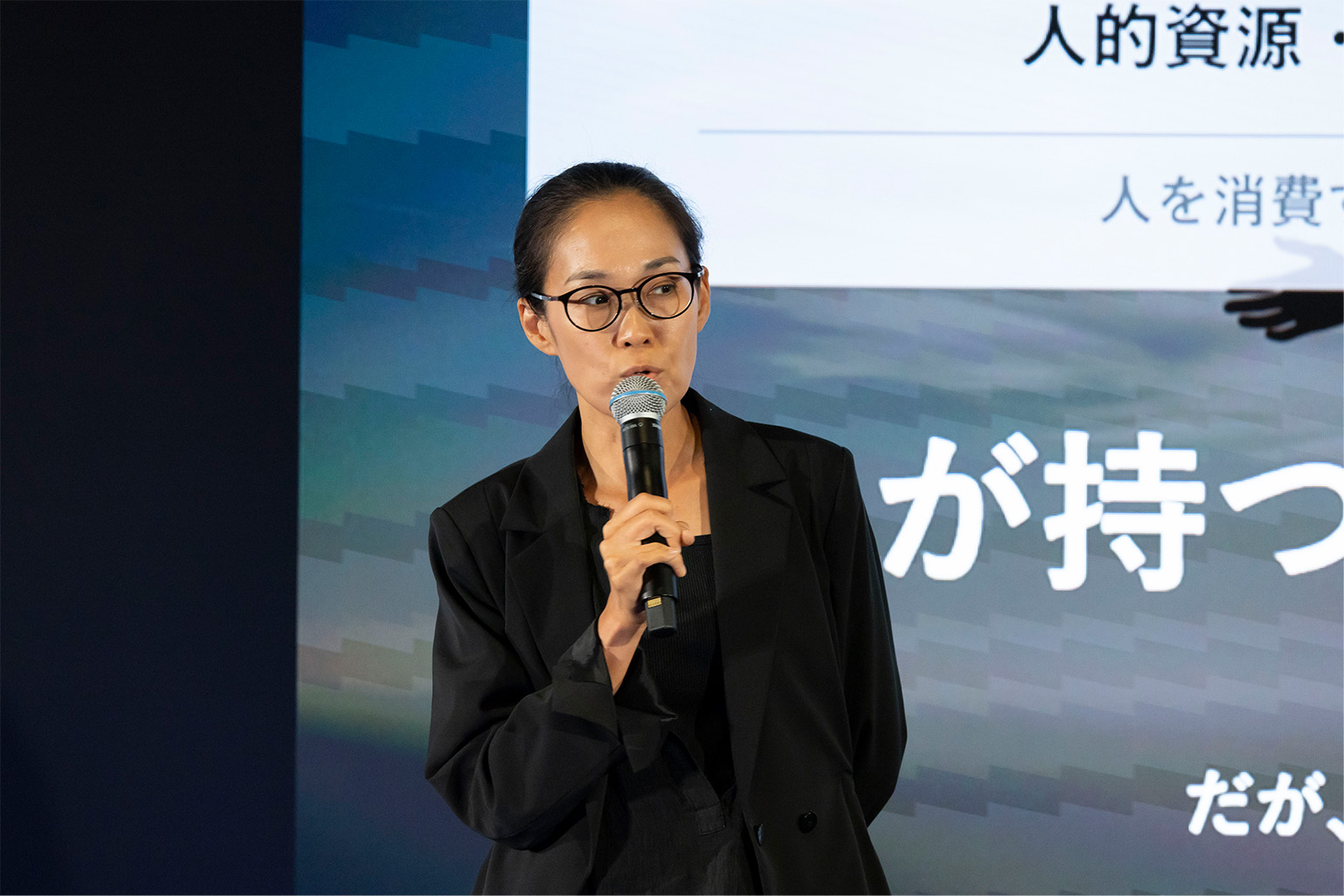
Mr. Takahashi began by explaining that the new Human Capital Growth Center, established in March 2026, is an organization designed to support “each and every employee in unleashing their motivation and capabilities.” He then touched on “human capital management,” which has gained prominence in recent years, pointing out that in today’s environment—where talent acquisition is becoming increasingly difficult and job satisfaction is prioritized—the very concept of human capital and the role of HR are undergoing significant changes.Against this backdrop, he noted that an increasing number of companies are facing challenges and concerns related to HR and human capital. Dentsu Inc. clarified its approach: leveraging its three core strengths—"Strategy," "AI and Data," and "Creativity"—and combining them with the company’s own real-world experience in corporate transformation and hard-won lessons to drive HR transformation for clients while drawing out the passion of its employees.
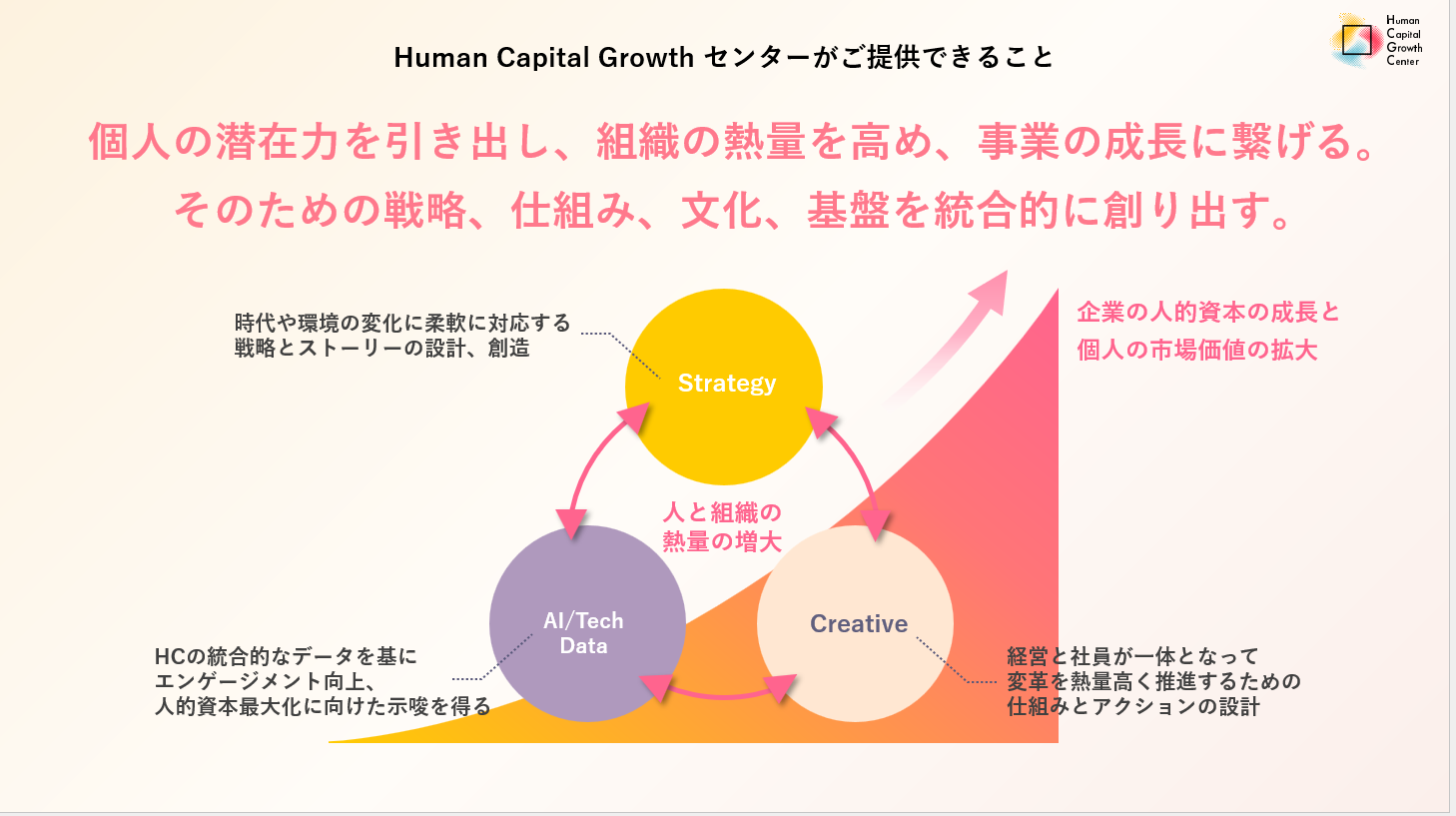
In closing, Mr. Takahashi defined the role of HR in the AI era as shifting “from a ‘manager of employees’ to a ‘force that redesigns human value—which AI lacks—and the relationships between people, between people and their work, and between people and the organization.’”
Mr. Sasaki, who took the stage next, explained more specific approaches, as well as practical examples and solutions from the Dentsu Group. Regarding AI-driven transformation of people and organizations, he emphasized the importance of a company-wide effort, stating, “Rather than isolated measures, it is necessary to advance multiple themes simultaneously.”
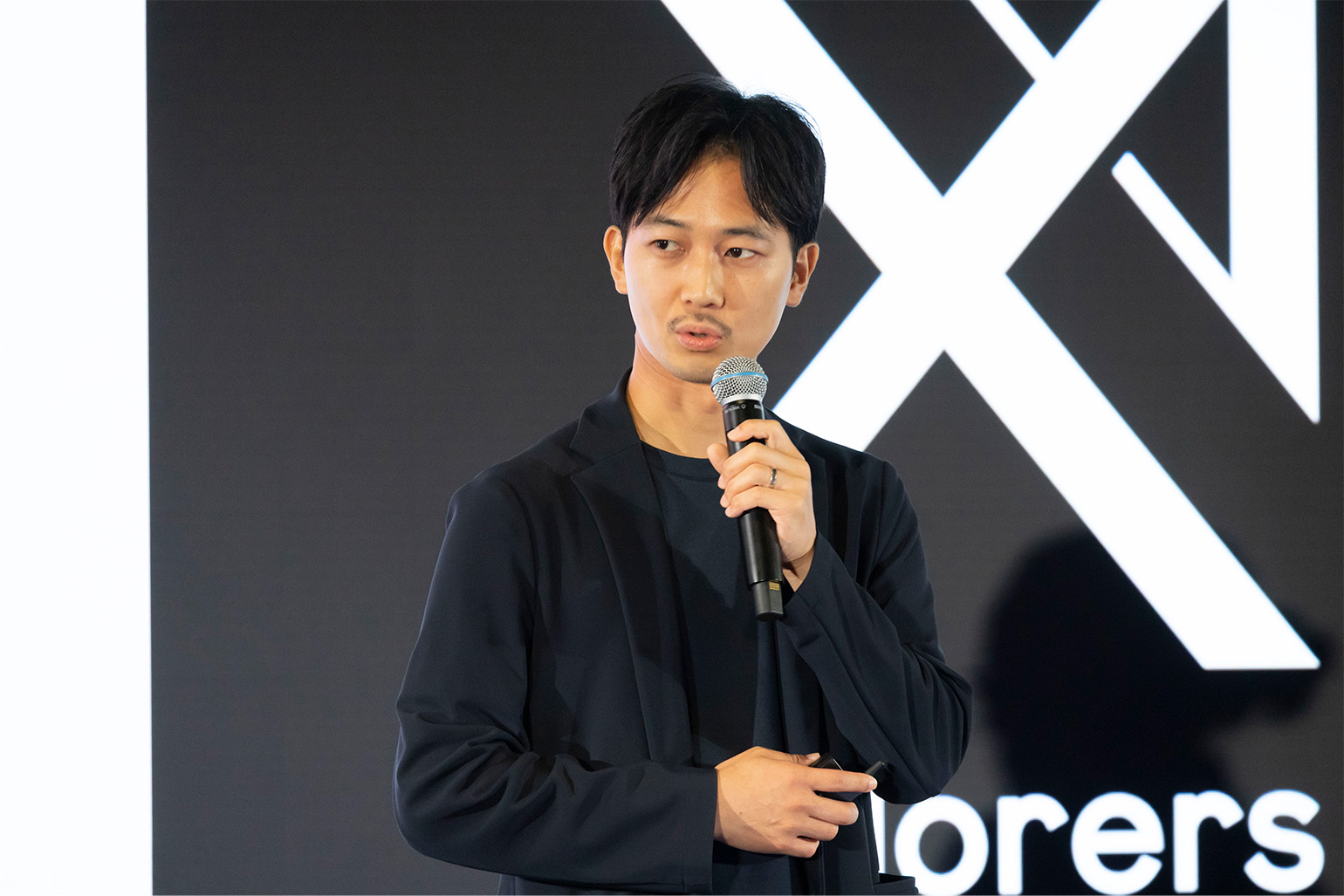
Mr. Sasaki cited “transforming business processes with AI” as the starting point for transformation. He explained that organizational performance can only be improved by leveraging the resources freed up by transformation for new operations and organizational structures, thereby generating new revenue and creating value.
Next, as practical examples from the Dentsu Group, he introduced initiatives such as visualizing trends in organizational communication and collaboration by leveraging Microsoft 365 data—while taking privacy and compliance into account—and a system for cross-departmental assignments facilitated by AI agents. Regarding the latter, he explained that individual skill data and work preferences are inputted into the AI, which then considers assignment proposals that balance project contributions with employee development.
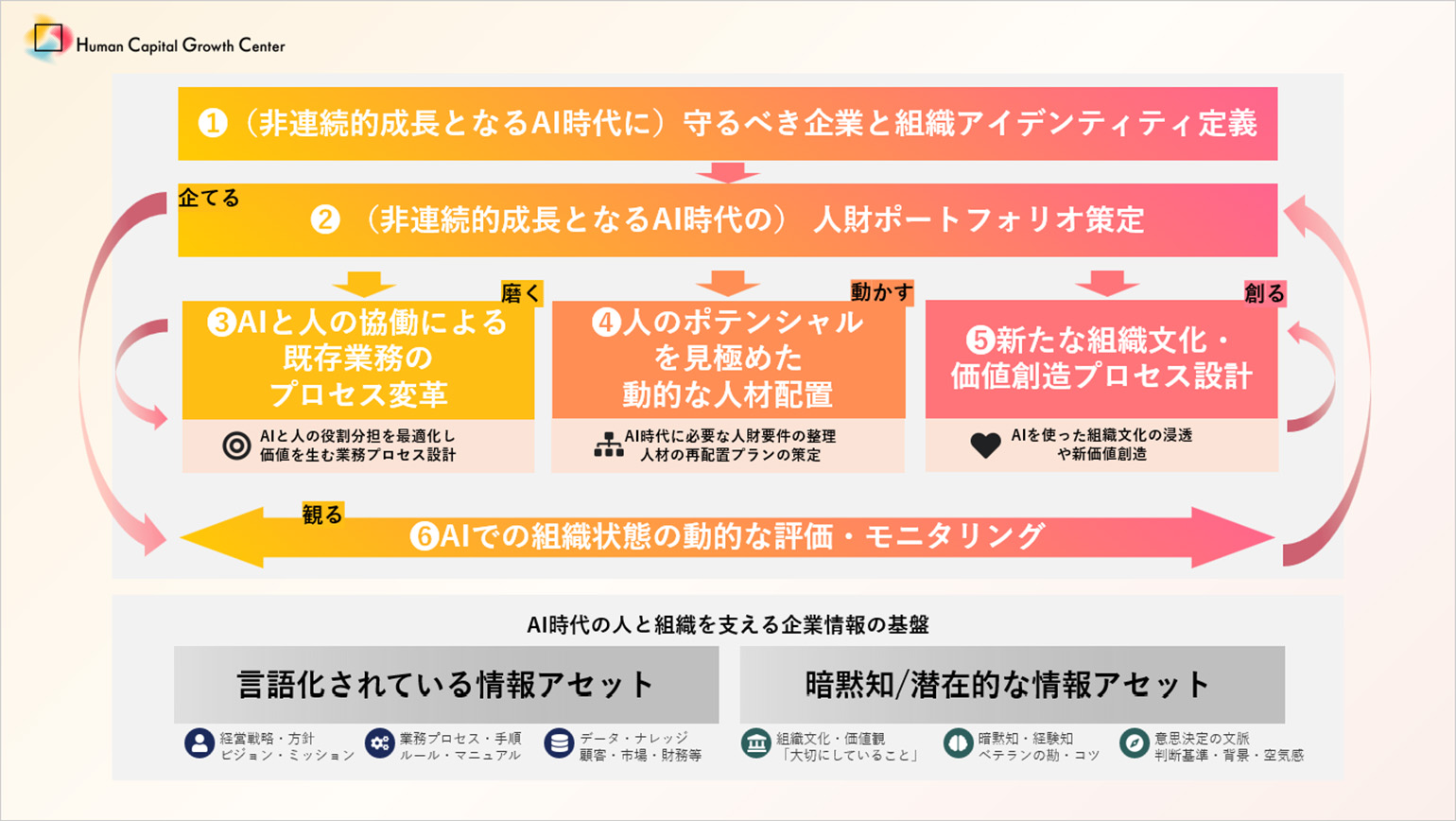
Finally, Mr. Sasaki concluded his presentation by suggesting the changes and possibilities that AI will bring to the HR field, stating, “In the AI era, HR will take on an unprecedented role that requires more advanced science and creativity.”
Microsoft, Microsoft 365, and Microsoft Azure are registered trademarks or trademarks of Microsoft Corporation in the United States and other countries.
Was this article helpful?
Share this article


