
Note: This website was automatically translated, so some terms or nuances may not be completely accurate.
 The Author of 'Experience-Driven Marketing' Speaks [2/2]
Toward the era of "Product + Service."
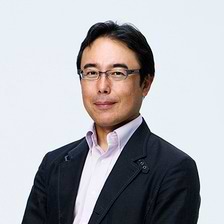
Takashi Asaoka
Delight Design Co., Ltd.
The book Experience-Driven Marketing, released by First Press on May 17, is drawing attention as a guide to marketing strategies focused on customer brand experiences. First Press editors interviewed its author, Takashi Asaoka, Senior Executive Officer and Head of Brand Consulting at Dentsu Marketing Solutions.
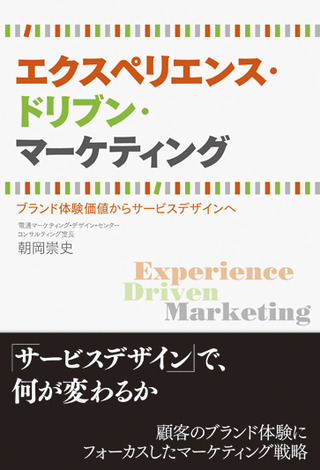
Experience-Driven Marketing: From Brand Experience Value to Service Design (Softcover, 256 pages, ¥1,500 + tax, ISBN 978-4904336779)
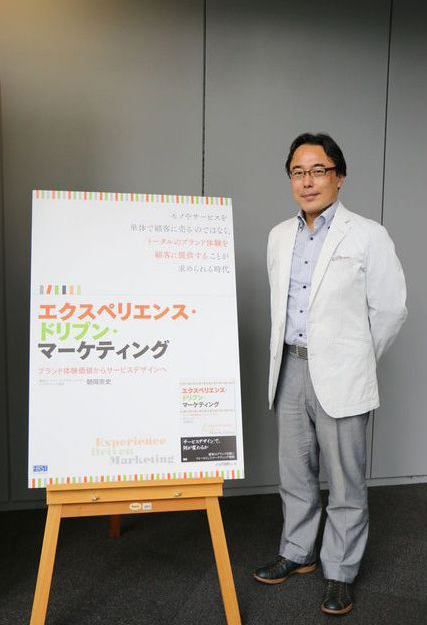
■From an erawhere "selling products was the goal"to an era where "the goal is how customers feel after the sale"
First Press: What prompted you to write this book?
Asaoka: The direct impetus for writing came from sensing that the nature of corporate challenges has changed with the spread of social media.
In the past, during what we might call the Marketing 1.0 or 2.0 era, if the 4Ps (Product, Price, Place, Promotion) or STP (Segmentation, Targeting, Positioning) weren't properly executed, a product wouldn't sell, no matter how high its intrinsic value. But recently, that's not necessarily the case.
When customers have an exceptionally positive experience with a product or service—what we call a brand experience—that exceeds their expectations, they spontaneously recommend it or give positive reviews. This then amplifies within social communities, driving sales of the product or service.
Until now, however, the power of such customer word-of-mouth remained vague and ambiguous when measured as brand value. While survey-based questionnaires could yield numerical results, they offered no insight into what resonated with customers, where the points of recommendation or satisfaction lay—in other words, the very motivation behind the word-of-mouth. The emergence of social media has made it possible to visualize and quantify this word-of-mouth.
One effect of a brand is its ability to generate sales momentum and sustain it. Therefore, if customer word-of-mouth consistently contributes to product sales, we reasoned it should be recognized as a positive brand asset and actively managed.
I believe executives at the heart of corporate management are keenly aware that selling products or services is no longer the sole goal. We've entered an era where how customers feel after the sale is critically important, and management must extend to encompass this aspect.

First Press: Amidst customers wielding ever-greater power, some argue that listening too closely to customer voices stifles innovation.
Asaoka: Customer feedback is certainly important, but it shouldn't be the sole basis for building all strategies. The correct approach to engaging with customers is for the company to responsibly realize its own vision. Customers then experience the brand, and the company assesses the level of that experience and explores what can be done to improve it. I believe the best way to effectively utilize customer feedback is through the verification process in the PDCA cycle.
As I wrote in my book, BMW, for example, communicated its brand vision of "Sheer Driving Pleasure" to customers about 50 years ago, long before the social media era. While BMW is a premium car, the idea of enjoying driving is fundamentally associated with sports cars. Bringing that context into the premium car segment was, in itself, a highly innovative positioning.
I believe a brand vision is a promise to customers and also something meant to resonate and evoke empathy.
When BMW declared "Sheer Driving Pleasure" 50 years ago, many people associated premium cars with the value of sitting comfortably in the rear seat and cruising smoothly on places like the Autobahn. On the other hand, there are people who value the sensual exhaust note of the engine they hear while gripping the steering wheel, or the exhilaration of cornering. Therefore, I believe the fundamental marketing approach a company should take is not to pander to each customer's individual values, but first to clearly define its vision and then increase the number of people who resonate with that vision.
I also often get asked on Facebook, "What should I do?" Social media is merely a tool. The vision and promise you offer customers must come first. Only when you can deliver on that can it become content, allowing you to share value with your customers.
■Shifting from "Product Value" to "Brand Experience Value": The Driver of Brand Differentiation Has Changed
First Press: Does company size matter for marketing that increases resonance with the brand vision?
Asaoka: I believe company size determined success or failure in the Marketing 1.0 and 2.0 eras. When co-creation with customers emerges, we must note that the driver of brand differentiation has shifted. What was once product value, deeply tied to capital strength, has now become brand experience value that customers tangibly feel.
When corporate executives aim to grow the top line, marketing that simply sells products and ends there is no longer viable. It has become necessary to skillfully package products and services together, like service design, and provide them to customers for use. I believe the key lies in whether companies recognize customer feedback and evaluations as Key Goal Indicators (KGIs) – metrics they consider far more important than sales figures.
First Press: Are there any good examples of overseas companies successfully differentiating themselves through brand experience value?
Asaoka: As mentioned in the book, Red Bull is doing it well. With traditional approaches, an energy drink might focus on tweaking ingredient ratios, revamping flavors, or updating packaging. Red Bull, however, has adopted a strategy to differentiate itself at the "extreme experience" layer of brand experience value. Despite being a latecomer in the energy drink category, I think this is an example where the strategy has really clicked. We should learn from this perspective.

■Opportunities lie at the intersection ofcustomer experience and data-driven marketing
First Press: In an era where all industries can be considered service industries, must manufacturers also focus more on services to survive?
Asaoka: In the era when selling a product was the end goal, focusing solely on physical differentiation—like the product or service itself—was sufficient. That approach worked up until Marketing 2.0. However, with the rise of social media, customers gained the ability to share their brand experience impressions through recommendations and reviews.
I believe companies must first consciously consider the essence of the brand experience value they provide to customers.
Data-driven marketing is popular now, right? Data-driven approaches are certainly important. However, I think it's difficult to expect that analyzing data alone will lead to truly surprising discoveries about customers or generate new strategies. Data, like purchase behavior data, is ultimately based on past events. Therefore, I believe it's essential to transcend that level – to make a creative leap or devise mechanisms to elevate the experience.
In this book, I also discuss the customer journey and experience design. Scrutinizing the customer journey to create the ideal customer experience is a highly creative process. Carefully and diligently executing this is crucial.
By combining the strengths of data-driven marketing with experience-driven marketing that focuses on the customer journey, I believe the likelihood of finding the optimal solution for a company increases significantly.
The intersection of data-driven marketing and customer experience will undoubtedly become a major theme in future marketing. I myself intend to delve deeper into this area as a key focus moving forward.
First Press: The intersection of data and experience is also a key challenge for corporate leadership going forward. Thank you for your time today.
※Experience-Driven Marketing® is currently under trademark application in Class 35 (marketing, marketing-related advice, etc.) as of June 2014.
Was this article helpful?
Share this article


Newsletter registration is here
We select and publish important news every day
For inquiries about this article
Author
Takashi Asaoka
Delight Design Co., Ltd.