
Note: This website was automatically translated, so some terms or nuances may not be completely accurate.
 Regional Revitalization and Traditional Crafts [1/3]
Corporate brand strategy will save traditional crafts.

Masanobu Nagao
Niigata University Graduate School
Hiroyasu Wakabayashi
Dentsu Inc.
In these times when regional revitalization is being called for, what is happening to "traditional crafts"?
How should traditional crafts engage with regional revitalization?
Is there a way for traditional crafts to survive?
Since its publication in 2009, 'Regional Brand Management ' has been supported by local governments and researchers seeking regional revitalization. Associate Professor Masanobu Nagao of Niigata University Graduate School and Hiroyasu Wakabayashi of Dentsu Inc. CDC, who co-authored the book, explore the path traditional crafts should take.
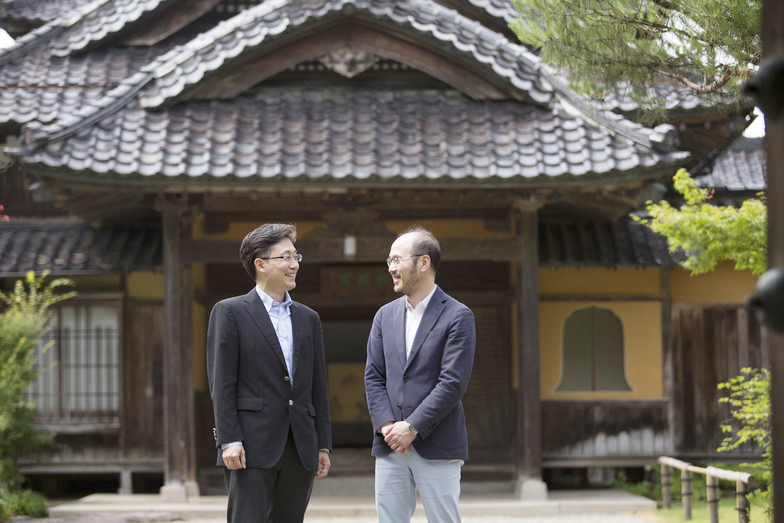
It is precisely in the crisis-stricken "traditional crafts"
the potential for regional revitalization
Wakabayashi: Looking at data on traditional crafts, production value and the number of artisans have rapidly declined since the Heisei era began. Generational succession isn't happening smoothly either. I feel a sense of crisis that Japanese traditional crafts might disappear if this continues. Within that context, my primary concern is: isn't there a way to revitalize them?
Nagao: That's right. Take paulownia chests, for example. They used to be essential wedding trousseau items. But today, such cases are few and far between, and they don't fit urban lifestyles. Homes have closets now.
Yet, the style remains unchanged from the past. It simply doesn't match modern needs. There lies a major challenge: we've fallen into the trap of the division of labor system. Makers just make; they leave market connections to wholesalers.
Consequently, makers rarely get information from wholesalers. They don't ask how living styles or usage patterns have changed. Eventually, sales drop, wholesalers disappear, and sellers vanish. Information stops flowing in, and distribution channels collapse.
And the production areas themselves keep shrinking. This is a trend seen across traditional crafts as a whole.
Wakabayashi: They probably believe that just because they've been making something all along, it will sell, rather than adapting to modern lifestyles.
Nagao: Alongside the market shifting, the failure to successfully pass down traditional craft techniques and the generational handover to successors also had a major impact. The number of practitioners decreased more than expected, and the industry shrank rapidly. That's the current situation. However, within the movement to reevaluate the merits of local communities and Japan itself, I think there's potential for regional revitalization through the revival of traditional crafts.
Alongside the "Kubota" brand,
handmade Japanese paper is growing
Nagao: While focusing on design can be a good starting point for revival, it often doesn't work out well. Initially, collaborating with designers brings a lot of attention, but afterward, the essence doesn't stay with the craftspeople, and they can't stand on their own. It ends up being just a fleeting thing, which is very unfortunate.
Wakabayashi: Such activities have their value, but they also come with their own challenges. You can't rely on them too much.
In that sense, the case of the sake "Kubota," introduced by Professor Nagao this time, was packed with various hints for revitalizing traditional crafts. Thirty years ago, under the concept of "returning to our roots" to convey the essence of Niigata, the president at the time decided to use handmade washi paper for the label. Even when technical constraints arose, they challenged themselves by involving the local community. This revitalized both the Kubota brand and the traditional craft of handmade washi paper.
This mechanism was unprecedented. Traditional craftsmanship was part of their effort to build their own brand. Moreover, it continues today and has expanded in various ways. Our interviews revealed that their business actions and philosophy came first, and this relationship with traditional craftsmanship has worked exceptionally well.
Nagao: So they've been experimenting with co-creating value for 30 years now. Kubota is truly a community movement with partners. Building this brand isn't just the sake brewery's job. Everyone is united in the belief that they are all stakeholders in brand creation. It's overflowing with the attitude that everyone is nurturing it together: the handmade washi paper artisans, the label printing company, the rice farmers, and the liquor stores across the country, especially in the Tokyo metropolitan area.

Wakabayashi: It's a perfect example of corporate and regional brands merging. I feel that as more relationships like this grow, regions will be revitalized.
Traditional Crafts in Today's Lifestyle
When dots connect, possibilities emerge
Wakabayashi: I also think the approach is incredibly important. In the folk craft field, places like Kogen-sha in Morioka and "Kurashi no Gallery" in Okayama have long been curating folk crafts and actively working to integrate them into daily life.
Another example: an editor proposed that tea brewed in Nanbu ironware tastes delicious, which became a catalyst for its sales. When Kubota introduced washi paper labels, it wasn't just about preserving traditional craftsmanship; they referenced it as a modern label, opening up new possibilities.
The Disney Japan Classic series, launched this past March, expresses the world of Disney characters through the craftsmanship of traditional artisans.

I believe that if more and more movements emerge to utilize traditional crafts from the perspective of how they should be used in modern times and within today's lifestyles, Japanese traditional crafts can advance to the next stage.
Nagao: It's not just about inheriting tradition, but expressing the present. If you trace history, even Sen no Rikyū expressed the traditions of his time as "the present."
Wakabayashi: To achieve that, we need mechanisms that connect the dots—the traditional crafts of each region—into a cohesive whole, leading to the proposal of new lifestyles. When regions collaborate across broader areas, it also opens the possibility of establishing new distribution channels.
Corporate brand strategies supporting "traditional crafts"
becoming a key point for regional revitalization
Nagao: Universities are also becoming involved in regional revitalization efforts. For example, Niigata has a traditional craft called Yasuda tiles, made from high-quality clay. It's a major production area for roof tiles. While tiles aren't commonly used in modern homes, they are said to be significantly superior to other materials in various performance aspects, such as insulation. Through joint research with academia, we can thoroughly demonstrate these benefits. If we can then communicate them effectively – as words, as stories – I believe this will build brand strength.
Wakabayashi: I believe it's crucial for companies to have discerning eyes, to love their local area, and to understand its culture.
And I strongly want to emphasize that whether they consider what can be done mid- to long-term, rather than just immediate profits, makes a huge difference. The cultural depth of a company should be a major factor in supporting traditional crafts. I don't think the specific industry matters for this.
Nagao: In that sense, "Kubota" might be a universal model. It has an impact like a dynamic force, bringing diversity to society and the economy, rather than relying on values centered on efficiency. Traditional crafts aren't just manufacturing; they're archetypes of communities woven from the land's nature, history, and the spirituality of its people.
Wakabayashi: Whether you're a maker or a seller, the more discerning you are, the better you can leverage the strengths and value of the region. The result is the creation of a vessel for a good community, right?
That becomes the corporate philosophy or vision, and that's where the difference in brand power emerges. That very difference in brand power is the key point for regional revitalization.
Nagao: Consumers resonate with that corporate stance. It spreads through word of mouth, deepening the fan base. That then expands globally.
Wakabayashi: Companies understand local culture and utilize it to create economic circulation within the region. This includes preserving traditions and generating employment. I really hope we see more of this happening.
After all, it directly reflects their brand value. I believe this is the ultimate CSV (Creating Shared Value). To achieve this, I strongly feel it's time for companies, local media, and others to unite and take action.
Was this article helpful?
Share this article


Newsletter registration is here
We select and publish important news every day
For inquiries about this article
Author
Masanobu Nagao
Niigata University Graduate School
Graduate School of Technology Management
Associate Professor / Ph.D. (Business Administration)
Hiroyasu Wakabayashi
Dentsu Inc.
Solution Creation Center
Creative Director
<主な著書>
2009 "Regional Brand Management" (co-authored, Yuhikaku)
2018 "Place Branding: From Regional to Place Branding" (co-authored, Yuhikaku)
2019: 'Art in Business: The Power of Art That Works for Business' (co-authored, Yuhikaku)
2021: Imagination Becomes a Weapon: An Introduction to "Art Thinking" (PHP Institute)