
Note: This website was automatically translated, so some terms or nuances may not be completely accurate.
 Regional Revitalization and Traditional Crafts [2/3]
Sake × Traditional Crafts: A "Chemical Reaction" ~Kubota, crowned with washi paper labels. Supporting Niigata's traditional crafts and guiding them to the next stage~

Masanobu Nagao
Niigata University Graduate School
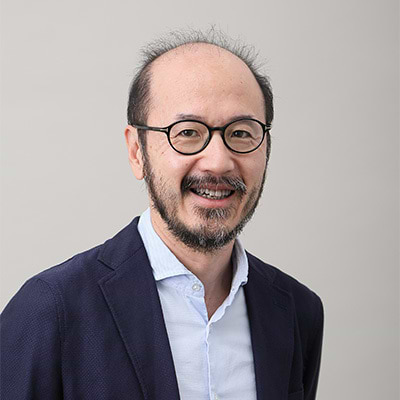
Hiroyasu Wakabayashi
Dentsu Inc.
Revitalization and development of traditional crafts.
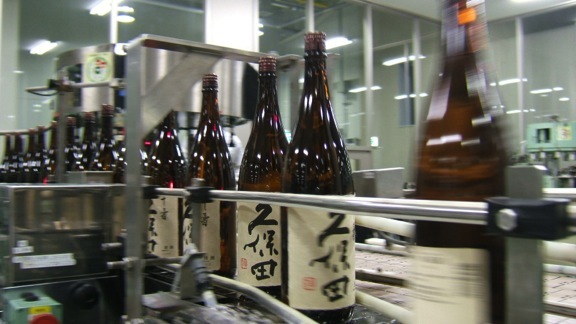
There is an example where this was unintentionally achieved during the process of establishing a proprietary brand and expanding nationwide. Kubota, Niigata Prefecture's representative sake. What characterizes Kubota is its refreshing taste described as "light and dry," and its logo, written in brush script as "Kubota," printed on a "Japanese paper label." Brands like Manju, Hekiju, and Senju are shipped domestically and internationally, and each of these labels is made from Niigata's traditional craft, "handmade Japanese paper."
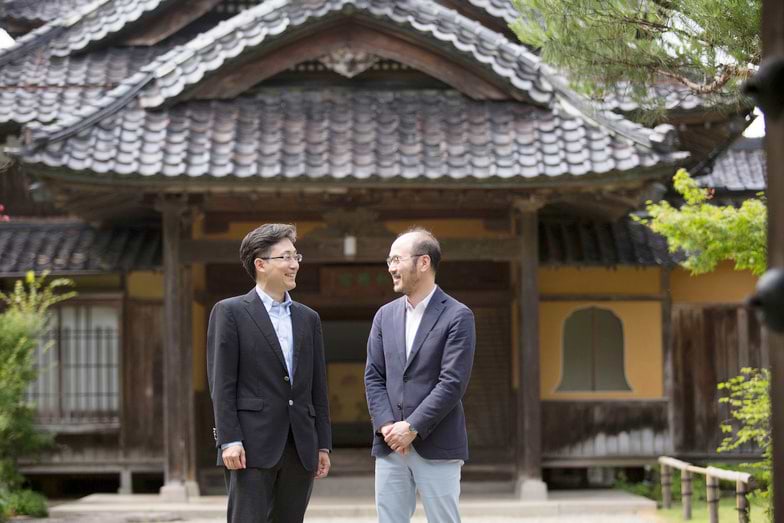
"Sake × Handmade Washi Paper." How did this "chemical reaction" come about? What was the path to its success? Associate Professor Masanobu Nagao of Niigata University Graduate School and Hiroyasu Wakabayashi of Dentsu Inc. CDC visited Asahi Shuzo (Nagaoka City, Niigata Prefecture).
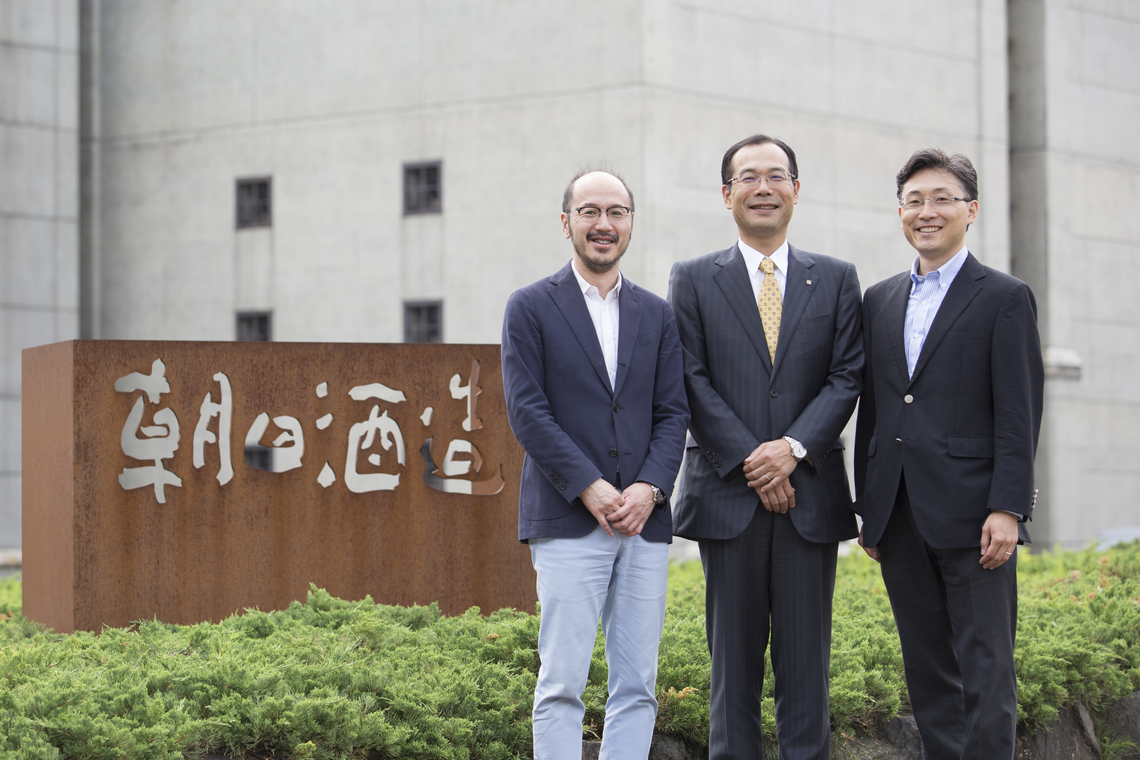
Approximately 30 years ago, during a slump in the sake industry.
Kubota was born from the concept of "returning to our roots."
Kubota-ya, the predecessor of Asahi Shuzo, was founded in 1830 (the first year of the Tenpo era). It became "Asahi Shuzo Co., Ltd." in 1920 (the 9th year of the Taisho era), boasting a history of nearly 200 years.
In the early 1980s, just before Kubota's birth, the environment surrounding sake was sluggish. While Asahi Shuzo, one of Niigata Prefecture's leading breweries, boasted the top share in the prefecture with its "Asahiyama" sake, it was by no means a national brand. As discount stores specializing in alcohol began to appear, its products sometimes found themselves being sold at bargain prices before they knew it.
It was the late Mr. Toru Hirasawa, the fourth president, who, under these circumstances, championed a return to the company's roots and led to the birth of Kubota, named after the original business name. He was utterly committed to communicating the excellence of Niigata's environment and terroir. Using Niigata's sake rice and brewing with Niigata's soft water meant it couldn't produce the rich, full-bodied sake that was mainstream at the time.
However, by packaging this as "light and dry" and putting it on the label, he transformed every perceived negative into a positive.
To truly "return to the origin," President Hirasawa chose Niigata's traditional craft, "handmade washi paper," for the label.
Handmade paper as the label. One man's
unprecedented challenge by one man was the beginning of it all.
At the time, art paper was the standard for sake labels. Even today, very few use handmade paper. The deliberate choice stemmed from a strategy to differentiate Asahi Shuzo from its past, appeal to a sense of luxury, and target white-collar workers in the Tokyo metropolitan area.
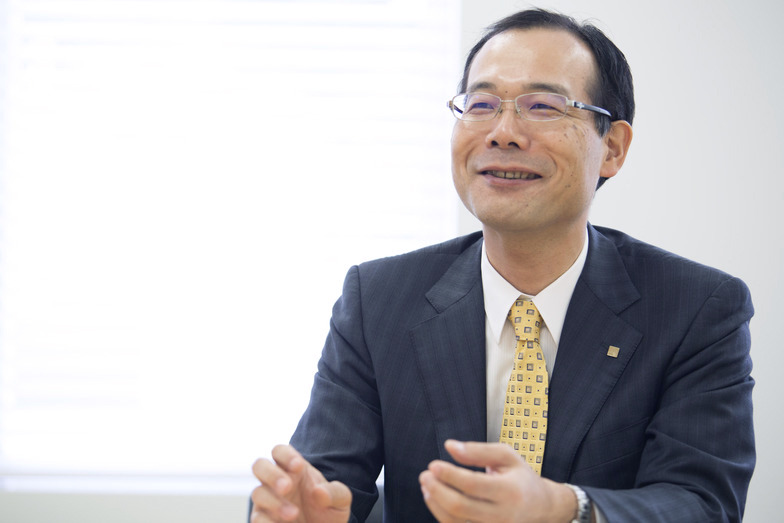
Current President Yasushi Hosoda explains:
"We wanted to return to our roots and communicate the excellence of Niigata. We aimed to deliver something different and premium to our customers, something that would express its value over the long term. It seems he had decided in his heart that washi paper was the only way to achieve this."
The washi paper is hand-made traditional Niigata craft washi, commissioned from a washi workshop. The Kubota logo was also created by a local Niigata calligrapher.
"I hear the calligrapher suggested using the characters from the original tokkuri bottle design," President Hosoda explains. "But I insisted, 'That won't do. Please create something new.' It wasn't just about inheriting tradition or returning to our roots. There was a strong desire to express the 'now' – the spirit of that time, 30 years ago, just before the product's launch."
Ultimately, the current calligraphy was selected from over 600 pieces written at that time. From the rice to the label creation, the concept was simply "returning to the origins," with an unwavering commitment to "the best of Niigata."
However, choosing washi paper labels created numerous challenges. At the time, handmade washi paper was in decline, yet a large quantity of labels was needed. Furthermore, the double-layered washi paper labels (nishōshi) varied slightly in thickness and size for each individual sheet. Printing and applying the labels proved to be a continuous struggle.
"Handmade washi labels don't lend themselves to mechanization," explains President Hosoda. "First, the edges aren't straight. That means you can't center them properly. This makes printing difficult and prevents straight application. They're also very thick. When applied with conventional labeling machines, the tension from the paper's thickness causes it to peel off because the bottle has a curved surface."
Initially, they couldn't use machines and applied labels by hand, one bottle at a time. Sake undergoes heat treatment during bottling. Naturally, the bottles are hot to the touch. It was work that risked burns. Even facing such challenges, they prioritized the washi labels over efficiency.
"After repeated trial and error, we achieved machine labeling in the second year. But I hear President Hirasawa at the time said, 'Adapt the machine to the washi paper!' That shows tremendous resolve. The employees must have endured immense hardship until the technical breakthrough. Since the machine has unique specifications, the initial cost at introduction was significant, and the cost of modifications was immeasurable.
But we were utterly committed to achieving an authentic texture. Since we deliver high-quality products, the packaging must also be authentic and high-quality. There was no alternative to washi paper." (President Hosoda)
Approaching liquor store owners and communicating information to customers.
The bubble era also provided a tailwind.
Kubota was born with the aim of promoting the excellent environment and terroir of Niigata to white-collar workers in the Tokyo metropolitan area and nationwide. However, gaining widespread acceptance required persistent effort. At the time, the brand lacked national name recognition and had no budget for advertising. Therefore, Asahi Shuzo's strategy was to build a "fan base" not in mass retailers, but in small neighborhood shops.
As information sources, the voices of liquor store owners carried significant weight. The company focused entirely on cultivating store owners who were trusted by their customers and who would genuinely say, "This sake is delicious."
Furthermore, the backdrop of the bubble economy provided a tailwind. The term "daiginjo" had become established, and a growing obsession with delicious sake emerged.
"It was precisely because of that era's mindset—where people were willing to try something even if it was expensive—that we saw such rapid growth within about four to five years of launch. The economic climate of the time definitely worked in our favor. Also, something that's commonplace now, but we started holding sake events 30 years ago where the brewery communicated directly with the people we had connections with," said President Hosoda.
The three parties involved in the label come together
The "Washi Label Research Group." Trial and error continues to this day
The trial and error with handmade washi labels continues to this day. The employees operate the labeling machines in the factory. While the process is basically automated, the adhesive formula is adjusted seasonally.
"Since no one else does this, we have no one to ask. The operators know it best. In a way, it's similar to sake brewing," (President Hosoda)
To achieve a unique texture, the washi labels deliberately retain the character and material feel of the raw kozo paper. If the printing of the manufacturing date and time lands on this part, it becomes difficult to see, rendering the label unusable. While sensors perform checks, final confirmation is done by human visual inspection.
This accumulation of daily experience over 30 years, and the fact that employees have inherited and share the "passion" for Kubota sake, has become a significant asset.
"This 30-year accumulation is significant, isn't it? We've gone from hand-applying to machine-applying. But there's still room for improvement," (President Hosoda)
Led by Asahi Shuzo, the "Washi Label Research Group" meets regularly each year. Here, not only Asahi Shuzo's on-site staff, but also representatives from printing companies and washi paper workshops gather together. They bring their respective on-site challenges and constantly seek further improvement measures. It's a gathering of "craftsmen" from various fields, united under the sake brand Kubota.
The success of "Kubota" has not only benefited the brewery itself but
but also, unintentionally, revitalized handmade washi paper.
This September, they will release the 30th Anniversary Sake "Kubota Junmai Daiginjo." Under the concept of "returning to the origins" from 30 years ago, they continue to craft products with meticulous attention to detail. What effects has this brought?
"It's not solely because we used handmade washi paper, but first, the process of achieving breakthroughs in tackling challenges fostered a sense of unity within the company. Since the product is the tangible result of overcoming those challenges, a natural sense of ownership has developed. Additionally, employees have grown to take a proactive stance in equipment development and maintenance, rather than simply relying on the machinery manufacturers. These are positive outcomes.
For our customers, I believe the strong support we've received stems precisely from the alignment between the product's concept, its substance, and its packaging." (President Hosoda)
Kubota also plays a significant role in revitalizing the traditional craft of "handmade washi paper." How do you view this aspect?
"Regarding washi, we spend more time thinking about how to sustainably maintain the current production.
We didn't originally set out to revitalize the local washi industry, but we've ended up helping one of the region's traditional industries remain viable as a business even today. We're creating jobs and making it a sustainable business. Otherwise, the paper makers would disappear. The washi workshops we work with employ young people too. They sometimes tell us, 'It's thanks to this label,' so I think we've been able to contribute in that sense.
Also, while the sake itself has tradition, customers probably aren't buying tradition. They won't drink it just because it's traditional, nor will they use it just because it's traditional. Even if what we create has a long history, we must constantly respond to the voices of today's, modern customers. I believe it's extremely important, even for traditional things, to always keep a firm eye on how they should exist in the present era. With lifestyles changing this much, it's not an easy answer to come by, but I feel we must continue to be conscious of this and keep challenging ourselves." (President Hosoda)
After the interview
Kubota is a movement that encompasses not only traditional crafts,
a community movement encompassing everything
Masanobu Nagao
Associate Professor, Niigata University Graduate School / Ph.D. (Business Administration)
Asahi Shuzo embodies the philosophy of coexisting with the community. Beyond its "Firefly Village Creation" initiative as part of environmental conservation, it established the public interest foundation "Koshiji Water and Green Association" to conduct awareness campaigns. The spirit of collectively maintaining rice paddies lives within the employees, and it resonates deeply.
I sense a strong sense of ownership among everyone—a feeling that they are the stewards responsible for nurturing the "Kubota" brand and protecting the natural environment that forms its foundation. This spirit is carried forward in the "Kubota Association," a gathering of sake retailers nationwide. I hear around 500 stores participate every year, and it has been going on for decades. There's a deep connection formed through shared feelings about the product and aspirations for future improvements.

In a way, Kubota is a product, yet it is more than just a product. It might be a community movement that encompasses everything—from the traditional craft of handmade washi paper, to printing companies, label-making equipment manufacturers, and even liquor retailers.
It's not merely about tradition; it's about considering how it should exist within today's lifestyles,
is key to revitalizing traditional crafts.
Hiroyasu Wakabayashi
Dentsu Inc. CDC / Creative Director
The "Kubota" case study introduced by Professor Nagao offered various insights for revitalizing traditional crafts. Thirty years ago, they decided to "return to the roots," to communicate the essence of Niigata, and to use washi paper for that purpose. Even though they chose washi paper, there were technical constraints, so they involved the producing region and took on the challenge. The company Asahi Shuzo also made a comeback with Kubota, and alongside the growth of that brand, the traditional craft of handmade washi paper also gained new vitality.
I believe this case is unprecedented. It wasn't about trying to revitalize traditional crafts; rather, when they sought to build their own brand, traditional crafts were already there. They wondered, "What if we incorporate handmade washi paper into modern labels?" It wasn't just about preserving tradition; they sought how it could exist in the present era and how to integrate it. This approach ultimately led to various expansions, and it was never condescending.

I got the impression that their business actions and philosophy are working exceptionally well.
I felt that pursuing how traditional crafts should exist within contemporary lifestyles is crucial for revitalizing them.
Was this article helpful?
Share this article


Newsletter registration is here
We select and publish important news every day
For inquiries about this article
Author
Masanobu Nagao
Niigata University Graduate School
Graduate School of Technology Management
Associate Professor / Ph.D. (Business Administration)
Hiroyasu Wakabayashi
Dentsu Inc.
Solution Creation Center
Creative Director
<主な著書>
2009 "Regional Brand Management" (co-authored, Yuhikaku)
2018 "Place Branding: From Regional to Place Branding" (co-authored, Yuhikaku)
2019: 'Art in Business: The Power of Art That Works for Business' (co-authored, Yuhikaku)
2021: Imagination Becomes a Weapon: An Introduction to "Art Thinking" (PHP Institute)