
Note: This website was automatically translated, so some terms or nuances may not be completely accurate.
 Regional Revitalization and Traditional Crafts [3/3]
The Encounter Between "Kubota" and Handmade Washi Paper. And so began a new challenge for the traditional craft of washi paper. ~ Visiting the Washi Workshop Crafting "Kubota" Washi Labels ~

Masanobu Nagao
Niigata University Graduate School

Hiroyasu Wakabayashi
Dentsu Inc.
Kubota sake ( manufactured by Asahi Shuzo) , which has shipped varieties like Manju, Hekiju, and Senju domestically and internationally, celebrates its 30th anniversary this year. The handmade washi paper labels affixed to each bottle are produced by " Echigo Monde Washi / Koshi no Kigami Kobo" (Kashiwazaki City, Niigata Prefecture) and the " Oguni Washi Production Cooperative " (Nagaoka City, Niigata Prefecture).
How did "Kubota" and the traditional craft of handmade washi paper come together, and what direction are they heading in for the future?
Masanobu Nagao, Associate Professor at Niigata University Graduate School, and Hiroyasu Wakabayashi of Dentsu Inc. CDC visited the two workshops to explore the current state and future of traditional hand-made washi paper.
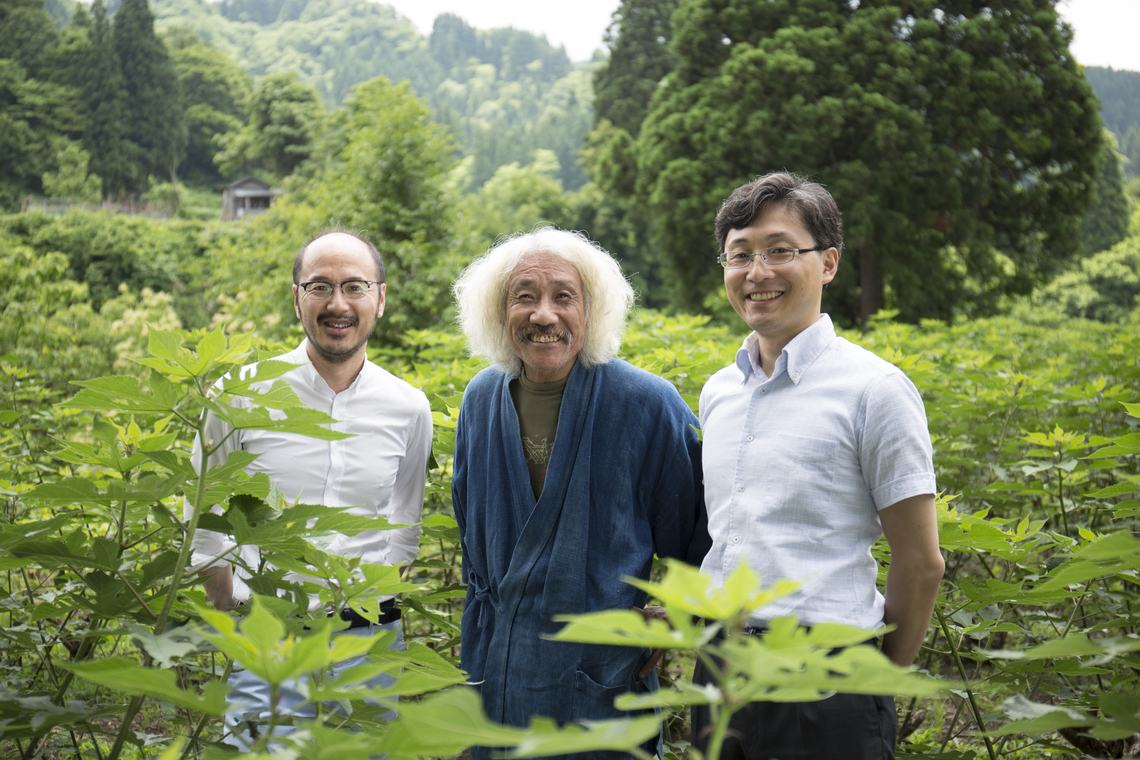
A massive order for washi labels.
But the president's passion made them resolve to proceed
On a snowy day in 1985, the year "Kubota" was born, the then-president of Asahi Shuzo, Mr. Toru Hirasawa (deceased), visited Echigo Monde Washi. He was the man who created "Kubota" to communicate the appeal of the local area by "returning to the roots" of Niigata's climate and environment, and who had decided to use handmade washi paper for the labels. Mr. Yasuo Kobayashi of Monde Washi recalls that time:
"Our biggest concern was simply the quantity. President Hirasawa envisioned an enormous volume. At the time, we had only three artisans, including myself. One was a foreigner who would return home after a year. Meeting that demand under those circumstances was no small feat.
However, President Hirasawa possessed a sincere passion to spread the authentic product to the world. We shared that same conviction. That's why we resolved to share our destiny with 'Kubota'."
The "Kubota" label is made of two layers of washi paper, known as nisōshi. Initially, they were applied by hand, but by the second year, machine-applied labeling began.
"Everyone said handmade washi paper couldn't be used because it wouldn't work with machines. It wouldn't feed through them. But when mechanizing the labeling, Mr. Hirasawa insisted, 'Make the machine to fit the paper.' No matter how many times we failed, he never once asked me to modify the paper." (Kobayashi, Monde Washi)
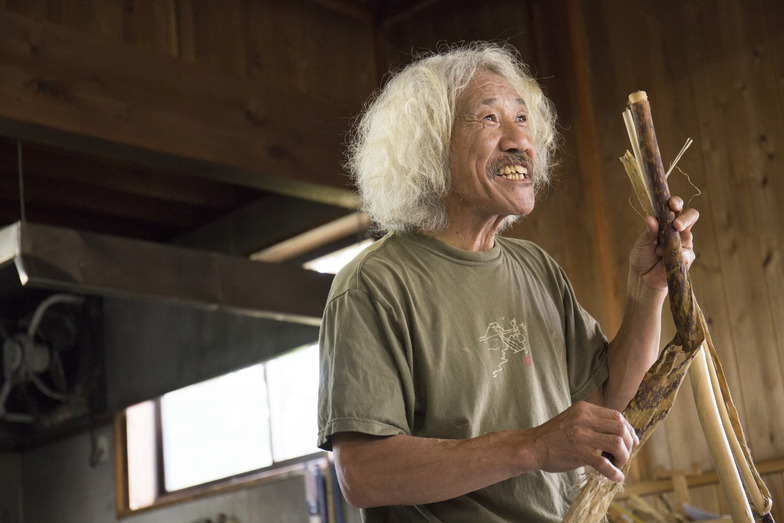
This reflects the passion of President Hirasawa at the time, who remained steadfastly committed to washi under the concept of "returning to the fundamentals."
A year later, the Oguni Washi Production Cooperative also began working on the "Kubota" washi label. Hiroaki Imai, who runs the workshop, explains the background.
"My father-in-law was learning hand-made paper at Monde Washi around that time. That connection led to our involvement. It was a large-scale project." (Oguni Washi, Mr. Imai)
Handmade paper labels express the excellence of Niigata.
This ultimately supported and nurtured traditional crafts.
Asahi Shuzo didn't just place an order for washi labels. They also provided generous support. President Hirasawa told Mr. Kobayashi of Monde Washi, "If you ever have any trouble, just let me know," and offered advice on matters like equipment investment.
The Oguni Washi Production Association arranged for papermaking tools to be provided. This was a significant help, especially as the number of toolmakers, like papermakers themselves, is declining.
Kubota, which championed a previously unseen crisp, dry flavor profile, soon saw production steadily climb. Alongside this growth, label orders increased. For the washi workshop, this became the foundation for establishing hand-made washi as a viable business.
"When you think about it, 'Kubota' is a miracle. They placed large orders from the very start. Moreover, Asahi Shuzo wasn't doing this as corporate patronage. They were doing it to make a living themselves. Selling sake rooted in the land. To do that, they packaged the entire land with it. That became a cultural project, or rather, it inevitably led to the revival of traditional crafts," (Mr. Kobayashi)
The birth of the "Kubota" sake, and its label, ultimately nurtured Niigata's washi workshops. Furthermore, it even created a framework that supported the purchase of kozo, the raw material for washi, which was on the verge of extinction in Kochi Prefecture.
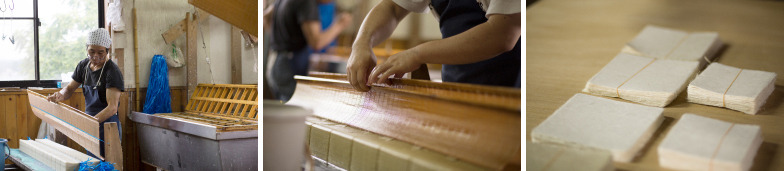
We want to nurture future users of paper
~ Oguni Washi Production Cooperative ~
At the Oguni Washi Production Cooperative, "Kubota" washi labels once accounted for about 90% of sales, but now make up around 60%. The fact that "Kubota" became routine work freed up capacity, allowing them to successfully expand their range of projects.
For example, kimono tag paper. Applying persimmon tannin to kozo washi paper increases its strength, making it resistant to tearing even when wet. This paper proved invaluable as "product tags" for writing product numbers on bolts of fabric, supplied to kimono-producing areas within the prefecture. As producers nationwide declined, orders began coming in from Kyoto as well. This paper also has demand as wallpaper. It gained attention because, while vinyl wallpaper tore during the Chuetsu Earthquake, this paper remained undamaged.
The Oguni Washi Production Cooperative is now aiming for the next step: cultivating the "future users of paper."
"Because my wife was a part-time lecturer at Nagaoka University of Art and Design, I wanted to nurture 'future users of paper' among young people. Japan is overflowing with paper, and even if someone wants pure kozo washi, most people can't find it.
This means our work isn't well known. I felt we had to do something, or hand-made washi might fade into obscurity in the future. That's why we started a paper-making club at the university," says Imai.
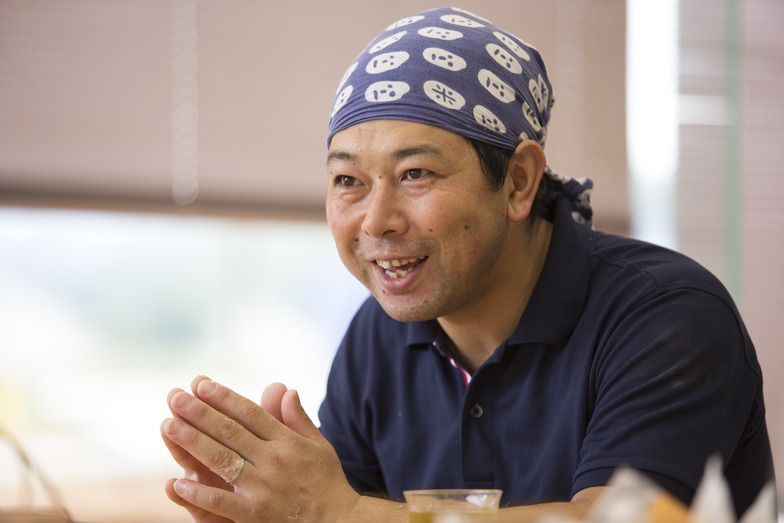
The club is now in its seventh year with over 20 members. Members actually make washi at this workshop and use it as material to create their own works. The Oguni Washi Production Association fully backs this activity, including providing materials. In return, students assist with workshops and other events.
Some students from this club have gone on to work at the workshop, helping cultivate successors. The workshop staff is also getting younger, with eight members in their 40s or younger. Among them, four are in their 20s or 30s.
"By having young people and various artists use our paper, new business opportunities emerge. We also receive cooperation from marketing specialists. We are working to expand this network. I feel that being able to take on such challenges is thanks to 'Kubota' existing," (Mr. Imai)
Indeed, the Oguni Washi Production Cooperative creates a wide range of washi products. Their lineup includes everything from lighting fixtures to wedding dresses made from washi.
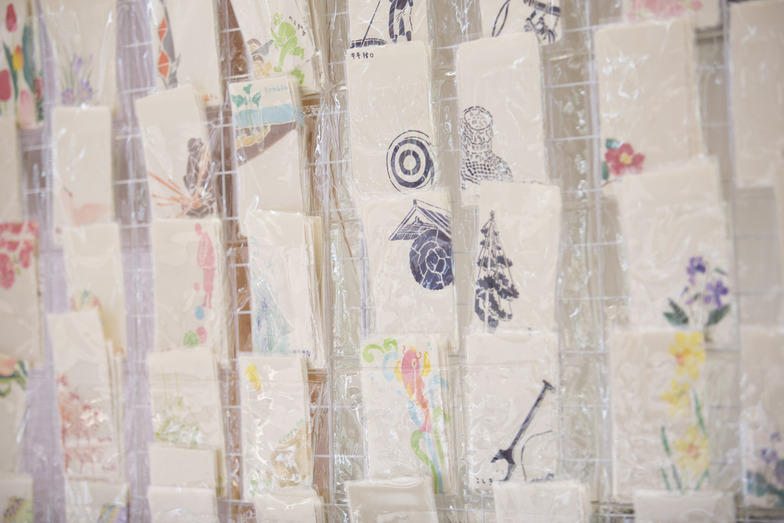
If one in a thousand people uses the real thing, traditional crafts will endure
~Echigo Monde Washi~
Mr. Kobayashi of Monde Washi is focused on elevating the hand-made washi paper industry in Niigata.
"Thanks to our customers, we're not struggling financially right now. But young people starting papermaking in Niigata Prefecture lack steady work and can't make it viable as a business. However, if there's a foundation—like using washi for university diplomas—it can connect. After that, it's up to their effort. I want to build that foundation," says Kobayashi.
Kobayashi emphasizes that his greatest wish is to expand the "outlets" and sales channels for products. He believes this will ensure a steady rotation of successors.
Indeed, many public high schools in Ogawa Town, Saitama Prefecture, use Ogawa washi for their graduation certificates. Similarly, numerous high schools in Tochigi Prefecture use locally produced Karasuyama washi for theirs. This forms the foundation supporting traditional crafts.
"Also, when it comes to the essential enjoyment of using washi, it's the shoji screens. There's nothing more poignant than paper you can see through. The thickness must be uniform. For the papermaker, it's something you can only do if you fully master the technique. Cheap shoji paper costs around 200 to 300 yen per sheet, while handmade washi paper can cost nearly 10,000 yen. But you can enjoy it for ten years. The paper breathes, allowing air to flow through, and the light filtering through is beautiful. It's far more functional.
When considering traditional crafts as a whole, it's vital that people consciously incorporate this culture into their lives. You can't be particular about everything in daily life, but being particular about washi paper, or particular about lacquerware. If just one in a thousand people were like that, scattered throughout society, it would be enough. If each person could be particular about just one thing, I feel that would allow craftspeople nationwide to at least sustain themselves, and somehow preserve Japanese culture." (Mr. Kobayashi)
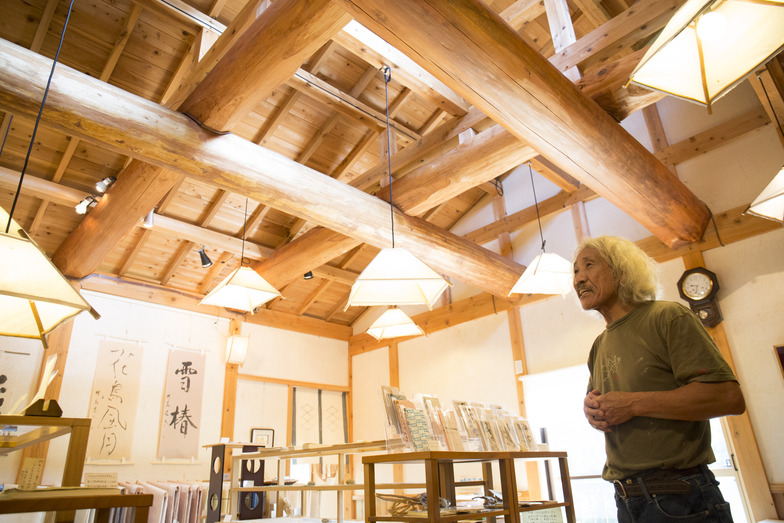
While demanding authenticity in everything is difficult, each person owning one cherished item is key. To achieve this, it's essential to reinterpret the appeal of the traditional craft era and disseminate it as new information.
After the interview
Innovation Rooted in Tradition
Masanobu Nagao
Associate Professor, Niigata University Graduate School / Ph.D. (Business Administration)
Rather than relying solely on the "Kubota" label, both workshops are challenging new possibilities with a sense of mission.
True traditional craftsmanship harbors innovation within. It is precisely because they believe in their skills and take pride in them that they can engage in respectful dialogue with others who share their convictions. They do not remain confined to familiar territory; they do not hesitate to engage in dialogue with users; they do not compromise on non-negotiable points; and they find ways to reconcile with the modern era.
They also express gratitude for the natural environment and raw materials that nurture traditional crafts, carefully ensuring their texture and functionality are maximized. It is labor-intensive. However, like Asahi Shuzo, there are many organizations and people who understand and support this. Indeed, every time I visit these two workshops, I meet such people. Many visitors come from around the world.

Craftspeople sharing this mindset surely exist throughout Japan. I hope their presence becomes widely known, connecting them with like-minded individuals to spark innovation.
The Beautiful Encounter of Craftsmanship and Traditional Arts
Hiroyasu Wakabayashi
Dentsu Inc. CDC / Creative Director
The key point of the "Kubota" case was positioning the use of washi paper labels at the core of the brand strategy. While this involved various hardships, the manufacturing team and the production region worked together, making continuous improvements to overcome the difficulties.
These efforts elevated Kubota's brand image and sales while simultaneously generating steady, ongoing orders for the washi paper producers. This helped preserve washi workshops facing decline. Furthermore, the stable income enabled the workshops to become self-sustaining, allowing them to pursue new ventures they had always wanted to undertake.
This passion and challenge, staking the survival of both the company and the region, went on to create a beautiful story. Beyond washi, Japan possesses numerous traditional crafts and assets.

If more high-level encounters between corporate brand philosophies and regional cultures occur, it will likely create more virtuous cycles for regional revitalization.
This case study offers rich insights for considering the relationship between companies and their regions.
Was this article helpful?
Share this article


Newsletter registration is here
We select and publish important news every day
For inquiries about this article
Back Numbers
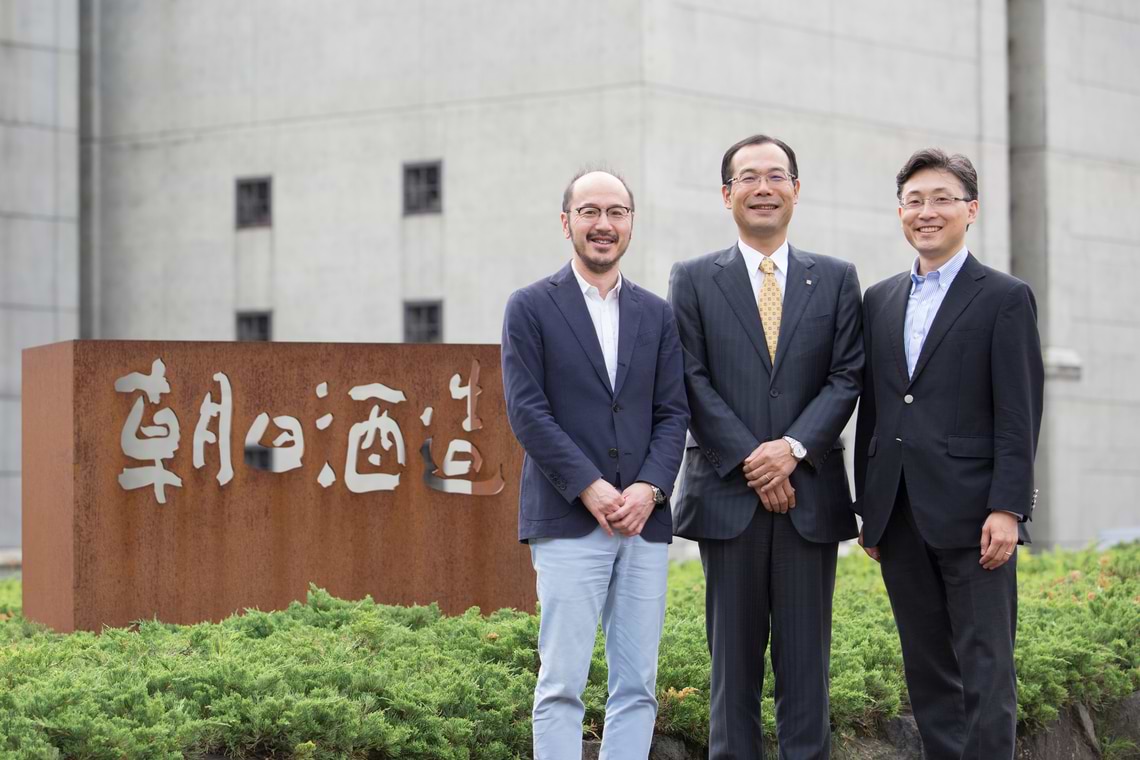
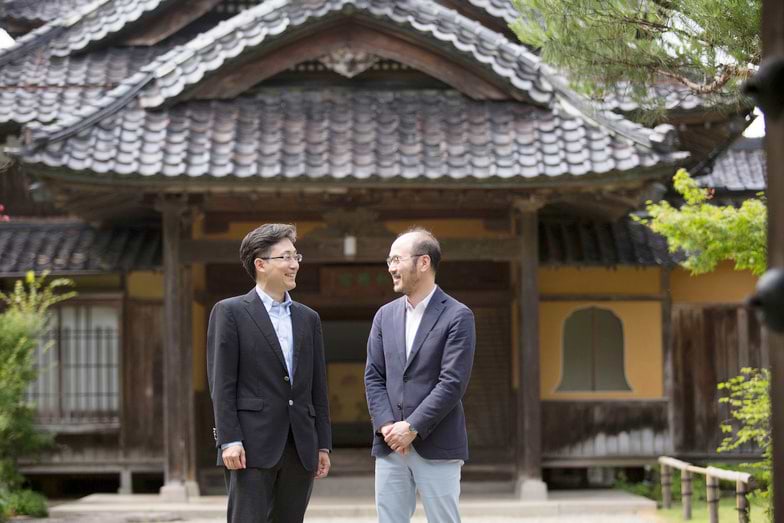
Author
Masanobu Nagao
Niigata University Graduate School
Graduate School of Technology Management
Associate Professor / Ph.D. (Business Administration)
Hiroyasu Wakabayashi
Dentsu Inc.
Solution Creation Center
Creative Director
<主な著書>
2009 "Regional Brand Management" (co-authored, Yuhikaku)
2018 "Place Branding: From Regional to Place Branding" (co-authored, Yuhikaku)
2019: 'Art in Business: The Power of Art That Works for Business' (co-authored, Yuhikaku)
2021: Imagination Becomes a Weapon: An Introduction to "Art Thinking" (PHP Institute)