
Note: This website was automatically translated, so some terms or nuances may not be completely accurate.
 The Evolving Marathon [2/2]
The Appeal of Citizen Marathons for Companies
The Evolving Marathon
The Appeal of Citizen Marathons for Companies
Marathon events continue to expand year after year. Companies providing support and sponsorship play a major role in these events. Not only sports-related companies, but also companies leveraging their own products, technologies, and expertise to try new programs are increasing. We spoke with representatives from companies supporting marathons about their motivations and the results of their efforts.

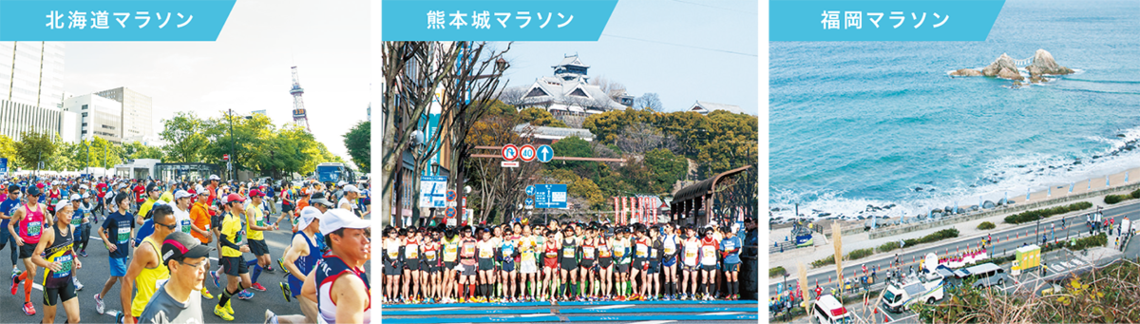
Dai-ichi Life Insurance launched its "Run with You" project last year, sponsoring 15 community marathons nationwide, including the Tokyo Marathon. With approximately 240,000 runners participating in the sponsored events, this represents the largest-scale runner support initiative by a private company in Japan. Ken Sakurai, General Manager of Public Relations at the company, stated, "Our founder, Kōta Yano, was a physician, and since our founding, we have focused on social contributions related to health and medicine.
Initially, this contribution focused on 'treatment,' then shifted to 'prevention,' and has now evolved to the next step: 'health promotion.' This led us to support community marathons, which anyone can easily start and enjoy while promoting their health. This year, we aim to support the health-building efforts of runners and others through 15 events nationwide, from the Hokkaido Marathon in the north to the Kumamoto Castle Marathon in the south. We also hope to contribute to regional revitalization by energizing these major local events."
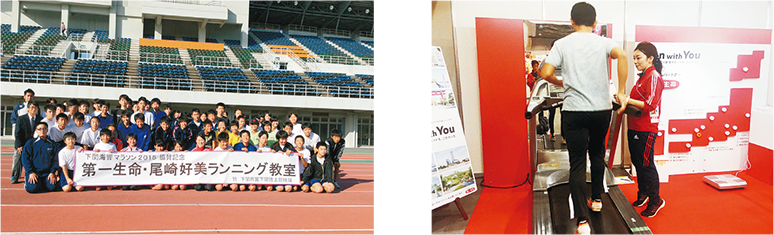
The company will set up booths at each event venue, offering health checks such as "body composition analysis" and "skin age measurement" for attendees. They will also provide health information utilizing research findings from their group companies and foundations. Additionally, the "running form diagnosis" sessions led by former company track and field athlete Yoshimi Ozaki, who competed for Japan at the London Olympics, are immensely popular, drawing long lines of runners at every event.
Yoshifumi Nakajima, Manager of the Advertising and Promotion Section in the company's Public Relations Department, expressed enthusiasm for the company-wide support effort: "Many employees from branches involved in marathon booth operations for the first time have said they want to participate again next year because the runners were so pleased with the booth. A marathon club has also been formed within the company, contributing to improved communication company-wide. We intend to continue these efforts with a focus on medium- to long-term sustainability."
K-Opticom, an IT and telecommunications company affiliated with Kansai Electric Power, has provided unique support as a communications provider since the inaugural Osaka Marathon in 2011. This support comes in the form of "Runners' Eye," an internet-based service. This groundbreaking program allows supporters to use PCs, smartphones, or tablets to check the predicted passing times of registered runners in advance. It simultaneously displays both the runner's and the supporter's locations, enabling supporters to get ahead and wait for the runner. This not only helps supporters avoid missing the runners as they sprint by, but also facilitates smoother movement for spectators along the course, providing significant assistance to the event organizers. Additionally, icons display the runner's condition based on the time difference compared to the previous section.
For runners, it functions like a pacing partner: it shows the location and status of fellow runners by name or bib number, and notifies them of water stations, food stations, and restroom locations along the course.
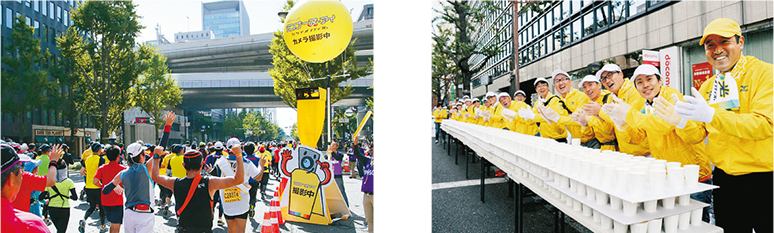
Kazue Nagai of the Corporate Communications Team, Management Strategy Group, Management Headquarters, who has been involved since the first event, states, "For the inaugural race, we had limited time between course finalization and race day. We started with meticulous tasks like confirming our network's availability along the route. It took a lot of effort to identify the optimal locations with the cooperation of many departments. With each iteration, we receive interesting proposals from across the company. We've even formed cross-departmental project teams to implement initiatives unique to a telecommunications company. Including supporters, over 1.35 million people participate in the marathon. For a company, it's a precious opportunity to challenge new technologies for such a large audience and see them delighted." "The number of employees participating as volunteers or runners grows each year, making it a major company-wide event where we share inspiration and a sense of accomplishment across departments. We provide invisible infrastructure in a visible way and will continue to energize and give back to our local community." This united, community-focused support from all employees seems poised to further enhance the appeal of the Osaka Marathon.
Growing Running Population Led by Those in Their 20s and 30s
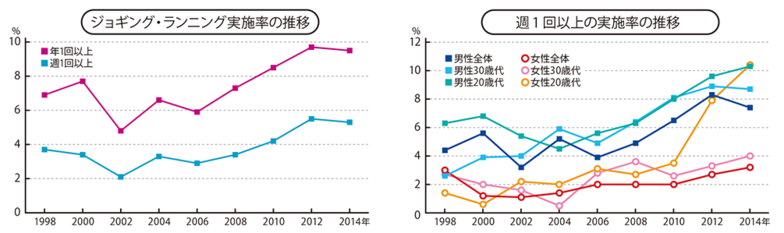
Currently, approximately 2,000 running events are held nationwide each year. The number of people habitually continuing running is also increasing annually. Data indicates that an estimated 10 million people jog or run at least once a year. Furthermore, it appears that those in their 20s and 30s are driving the current running boom. We hope they continue this habit into their 40s and 50s, creating new appeal for marathons.
Was this article helpful?
Share this article


Newsletter registration is here
We select and publish important news every day
For inquiries about this article
Author
The Evolving Marathon
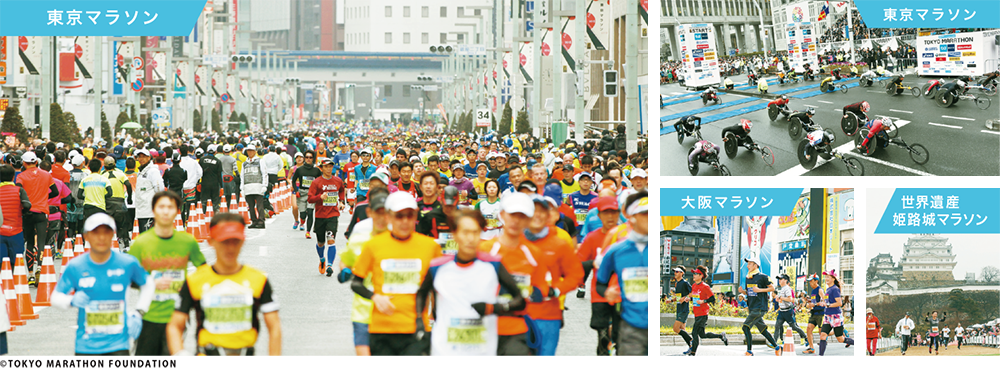
The Tokyo Marathon was first held in 2007. Over the following decade, the number of runners increased, and diverse races began to be held nationwide. In this series, we will speak with key event organizers and representatives from sponsoring companies.