
Note: This website was automatically translated, so some terms or nuances may not be completely accurate.
 Toward a New Tohoku [2/2]
Movements Toward Tomorrow, Sprouting in Disaster-Stricken Areas (Part 2)
Toward a New Tohoku
Five years have passed since the Great East Japan Earthquake. In the disaster-affected areas, where various challenges remain, efforts and explorations towards recovery continue to this day. New movements have also begun to emerge across diverse fields in these areas. To build momentum on this energy and aim for true recovery, now is the time to adopt an attitude of "creating the future" together with the affected regions. We will introduce some of these emerging new movements in two parts.
Fukushima Pride.
Safe, Secure, and Delicious
Promoting Agricultural Products Filled with Fukushima Pride
In Fukushima Prefecture, where the nuclear accident occurred, persistent unfounded rumors continue to significantly impact all sectors, including agriculture, forestry, fisheries, tourism, commerce, and industry. While inspection systems for agricultural products have been strengthened—such as farmland decontamination and full-bag inspections for all rice—market prices and distribution channels have not recovered to pre-disaster levels.
To overcome this situation, Fukushima Prefecture is actively promoting the safety, security, and deliciousness of its vegetables, fruits, rice, and other agricultural products nationwide through various initiatives. Since 2012, advertising campaigns featuring TOKIO in TV commercials and posters have emphasized safety and taste. Furthermore, since 2015, the campaign has focused on the dedication and passion of producers, using the slogan "Fukushima Pride." This embodies the sentiment that "Every delicious, safe, and secure ingredient, cultivated with immense care and abundant love, is filled with Fukushima's pride." The website "Fukushima Pride Mail" also allows consumers to purchase seasonal ingredients and processed goods from Fukushima Prefecture.
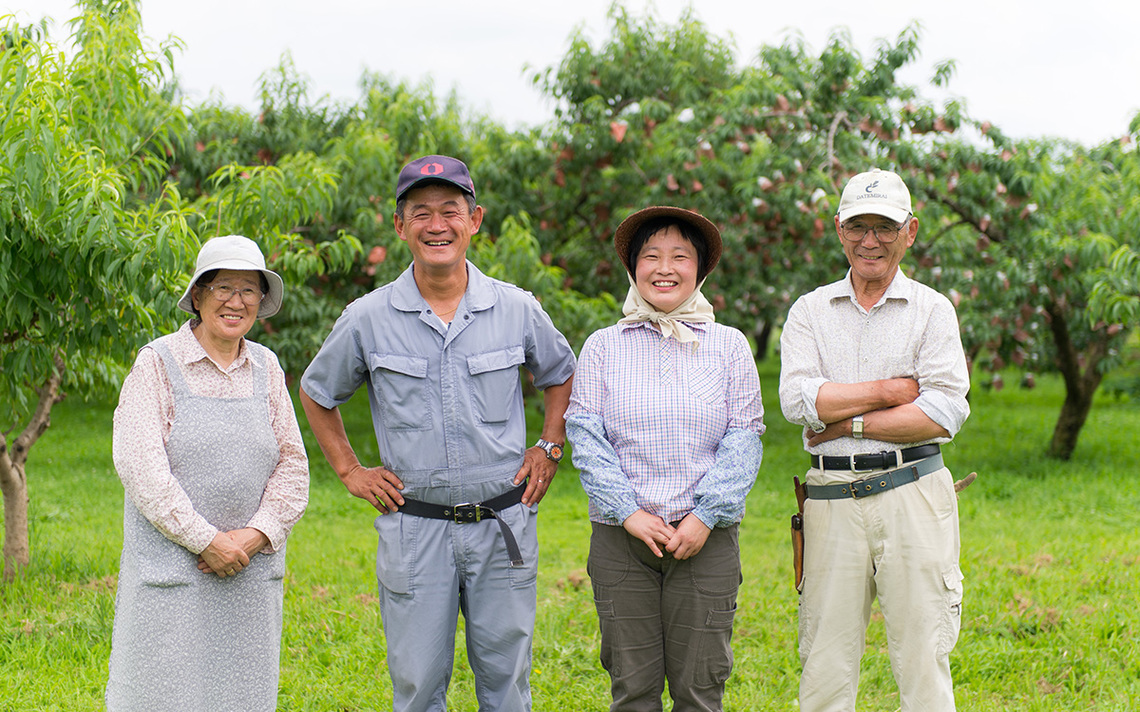
Takahiro Endo, Chief Inspector of Fukushima Prefecture's Agricultural Distribution Division, expressed his hopes: "For everyone to continue supporting us, it's crucial they understand and empathize. Through this phrase, which has the power to touch people's hearts, we want to convey the high quality and the producers' dedication. We especially hope businesses will continue to take an interest in Fukushima and create as many opportunities as possible for people to experience its appeal."
"Asubito Tomato"
Training Agricultural Managers in Advanced Vegetable Gardens
Minamisoma City, Fukushima Prefecture
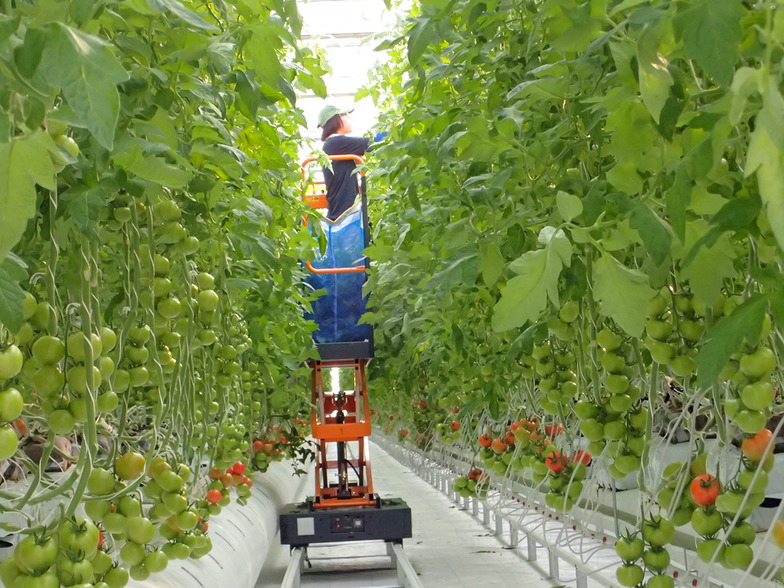
Minamisoma Tomato Farm in Fukushima Prefecture makes its first shipment. This state-of-the-art hydroponic tomato farm is operated by Minamisoma Recovery Agri, funded by York-Benimaru, Kagome, Dentsu Inc., and others. The harvested tomatoes will be shipped through Kagome. They are scheduled to appear on store shelves this March: as the private brand "Asubito Tomato" at York-Benimaru supermarkets, based in the southern Tohoku and northern Kanto regions, and as "Round Tomato" in other areas. The brand name "Asubito Tomato" was chosen with the hope of nurturing future talent for Fukushima's agriculture. Approximately 28,000 tomato plants are cultivated in the 1.5-hectare greenhouse. This large-scale tomato farm was constructed with support from the national Tsunami and Nuclear Disaster Affected Areas Employment Creation Subsidy for Business Location.
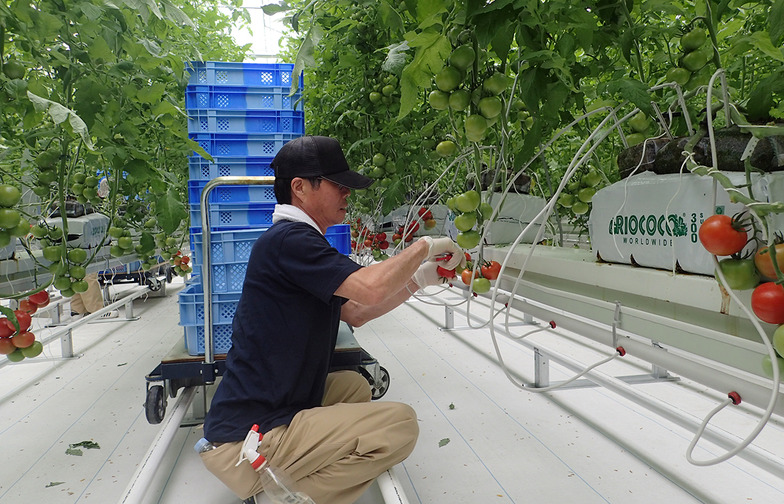
President Eiju Handa states, "Our primary goal is cultivating agricultural managers. Individuals who can manage with a love for farming while also considering marketing, branding, and cash flow will revive agriculture and transform it into a growth industry." The facility employs five full-time staff and 50 part-time workers, primarily from the local area, providing job creation opportunities.
"Five years after the major earthquake, there are concerns about fading memories, but the true recovery of the industry is just beginning. The region has capable leaders with proven track records. While it's difficult for us alone, partnering with companies expands the potential to create new value. The role of companies and value creation through business are becoming increasingly necessary," he emphasized.
"Kakeagare! Nippon" ("Stand Up! Japan") "Disaster Prevention and Mitigation Stamp Rally"
A project undertaken through industry-academia collaboration
"Kakeagare! Japan" was first held in Iwanuma City, Miyagi Prefecture, in September 2012, aiming to pass on the experiences and lessons of the earthquake disaster and to make evacuation actions habitual. Centered around a planning committee comprising the Tohoku University International Research Institute for Disaster Science, the Kahoku Shimpo newspaper, and Dentsu Inc., it involves collaboration with local governments, regional NPOs, and media. Using "Tsunami Evacuation Drill + Workshop" as its basic framework, programs tailored to regional characteristics are being implemented domestically and internationally, and it was also introduced at the UN World Conference on Disaster Risk Reduction.
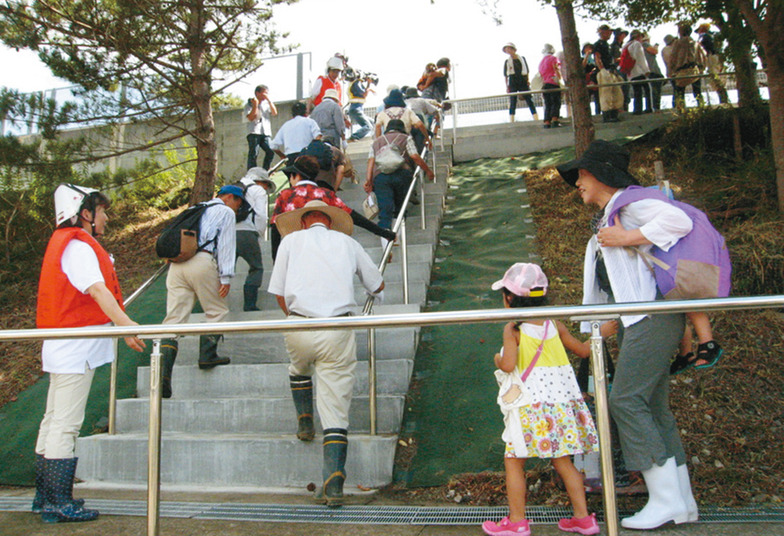
Additionally, Tohoku University's International Research Institute of Disaster Science, the Interdisciplinary Science Frontier Research Institute, and Shachihata jointly developed the "Disaster Prevention and Mitigation Stamp Rally." Participants advance by stamping answers to questions, reaching the goal evacuation shelter when all stamps are collected. There are no correct answers; the feature allows participants to enjoyably learn about disaster prevention and mitigation by observing their own response patterns and comparing them with friends. The stamp rally sheets come in two types: "paper" and "bag." The bag can be used daily and also transforms into a cold-weather/dust-proof hood during disasters or a sling for injured arms.

Dr. Fumihiko Imamura, Director of Tohoku University's International Research Institute of Disaster Science, expressed enthusiasm for the future: "We want to expand this as a unique initiative to ensure safety from disasters, involving companies and collaborating with local communities and schools. By incorporating the idea of learning through enjoyment, we can also expect new content and technological developments." (End)
Was this article helpful?
Share this article


Newsletter registration is here
We select and publish important news every day
For inquiries about this article
Back Numbers
Author