Note: This website was automatically translated, so some terms or nuances may not be completely accurate.
 Report on the Art Exhibition "ONE CREATIVE" by Dentsu Inc. Creators [4/5]
Traditional crafts are also evolving to match changing lifestyles.
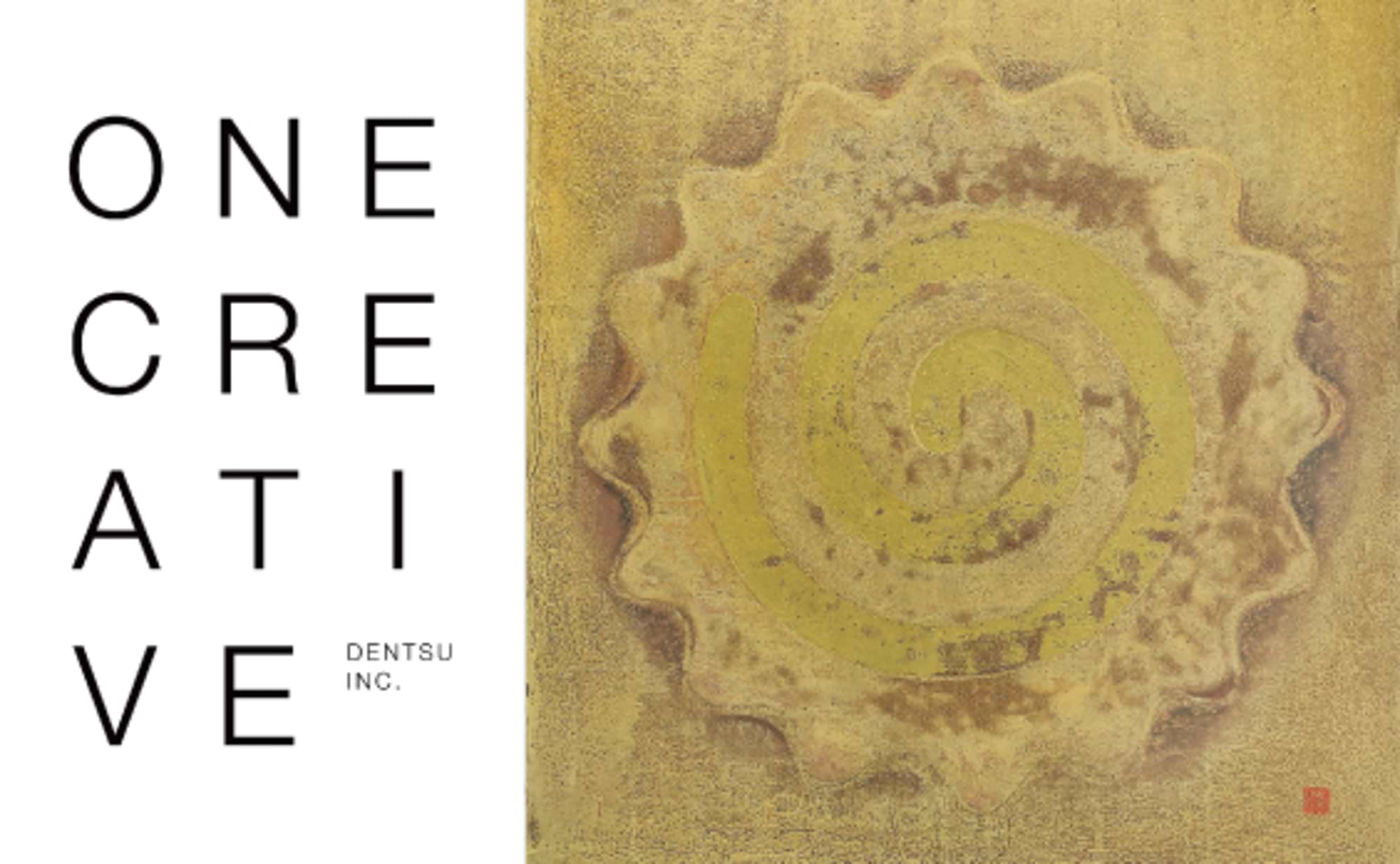
February 16–29, the art exhibition "ONE CREATIVE" Vol. 2 by Dentsu Inc. creators will be held at galerie H in Nihonbashi, Tokyo.
This project explores what happens when creators who normally make advertisements give shape to what springs from within them, rather than solving client problems. For the fourth installment in the series, we spoke with Art Director Emi Wakata of Creative Planning Division 1.
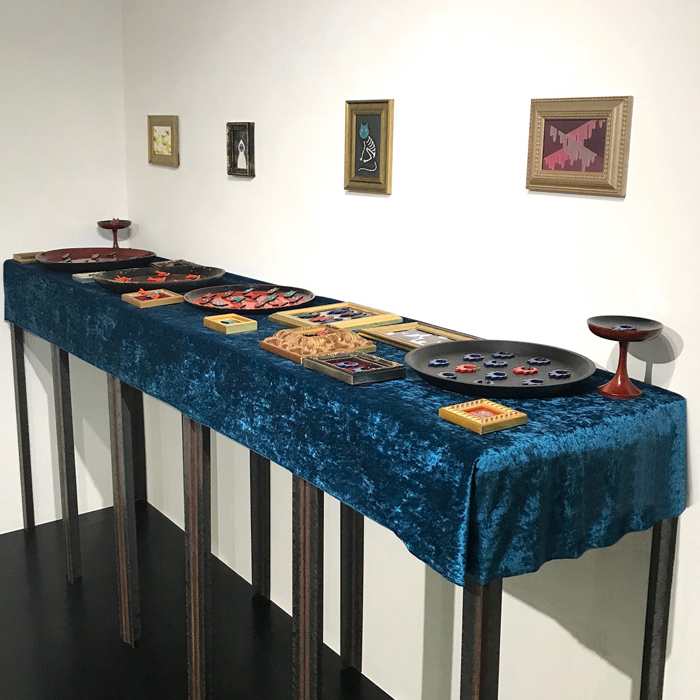
The tactile feel and the presence of a one-of-a-kind piece.
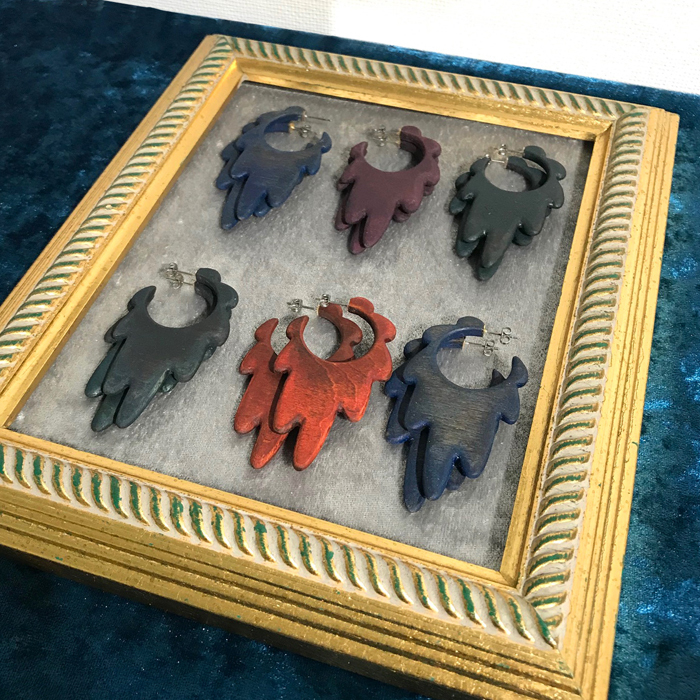
Just inside the gallery entrance, a corner exuded a unique atmosphere. Labeled "Created with Lacquer," the pieces felt completely different from the lacquer art I'd imagined—very casual.
──What inspired you to create these pieces?
I feel a sense of pleasure when I encounter something unfamiliar. From that perspective, I thought, "I want to see lacquerware that doesn't look like lacquerware." I wondered if it would be interesting to have something quirky made with lacquer. So, I decided to try making it!
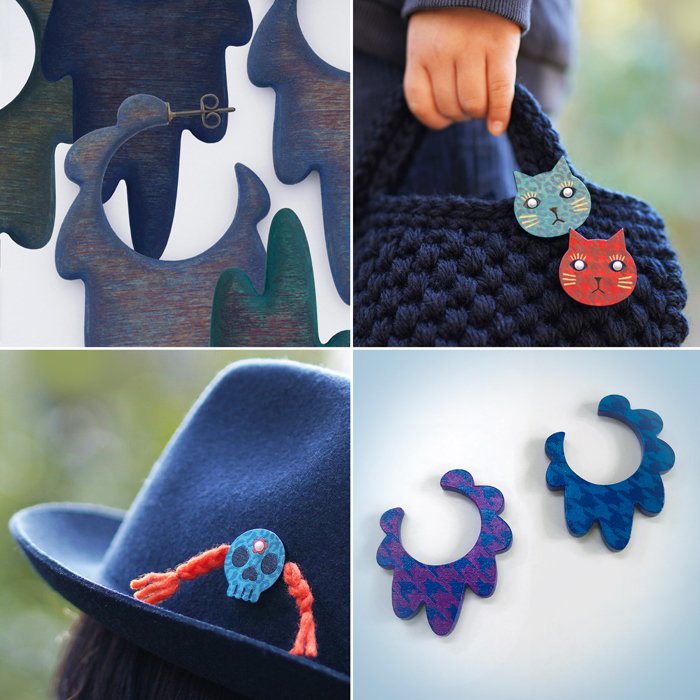
──I had no idea lacquer could express such a wide range of vibrant colors! Have you always used lacquer to create your works? Where does the inspiration for your pieces come from?
I don't have a set pattern for finding inspiration. I don't like putting myself into patterns... or maybe I just get bored easily. When I was a student, for assigned projects, I'd paint with brushes, make costumes, create videos, build large sculptures... I used various materials and media to express myself in whatever way felt right at the time.
Once I made something, I immediately wanted to do something different. That's why patterns never formed. Because of this nature, even throughout my four years at university, I couldn't decide what I truly wanted to do until the very end. So, I joined Dentsu Inc., a place where I felt I could try many things.
My work mainly involves art direction, which feels less tactile and involves mass-producing items. In contrast, I've grown increasingly drawn to the tactile appeal of crafts and the unique presence of one-of-a-kind pieces. I couldn't resist any longer, so I decided to knock on the door of lacquerware...
However, my fickle nature hasn't changed, so I don't know how long I'll stick with it. I'm also interested in glass, ceramics, and metalworking. Getting distracted before mastering something is a bad habit of mine, so I want to persevere with lacquer work and not let it end as just a passing phase. Lacquer is incredibly difficult to handle, and it's not a skill you can easily master.
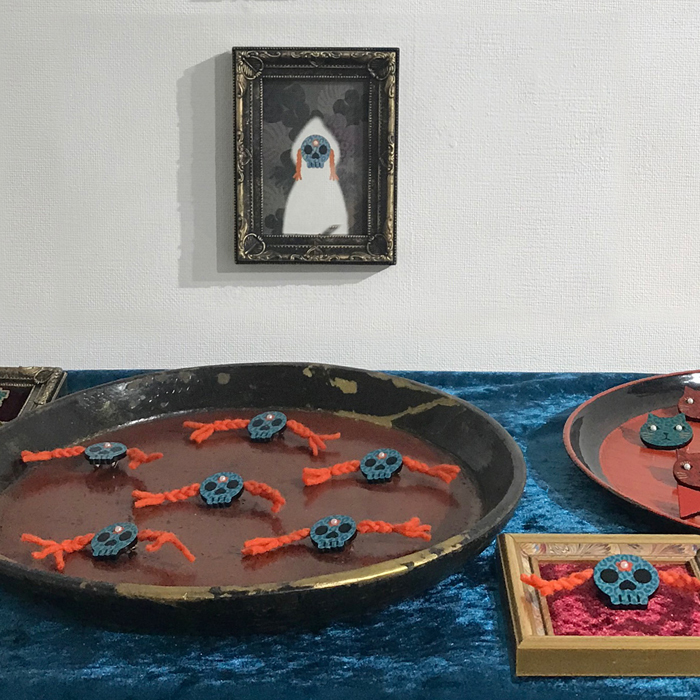
Bringing new designs to traditional crafts.
──Creating advertisements and crafting these works are both "making things," yet in that sense, they might be quite contrasting. I can understand how, when you keep making one thing for a long time, you sometimes get an inexplicable urge to try making the other! What did you focus on most when creating these pieces this time?
I hear about the current situation where traditional craft techniques aren't being passed down, and I think the root cause is that they "don't sell." So why don't they sell? What I often feel about Japanese traditional crafts is, "The technique is amazing, but the design is a bit...?"
Things like, "If this shape were just a bit different, it would be so much sexier..." or "The rounded corners feel clunky and wasteful..." or "This would look way cooler without the illustration here..." There are so many pieces ruined by just a tiny detail, and it's something I'm always thinking about.
If we move away from the notion that "traditional crafts = Japanese style" and instead update designs to fit modern lifestyles, or create expressions that feel more accessible, traditional crafts might lose their intimidating aura and maintain demand.
Lacquerware stands out among Japanese traditional crafts for its strong "Japanese-ness." Even those unfamiliar with lacquer know how difficult the technique is to master and how high the barriers are due to the material's properties. As a designer, if I could make traditional crafts fit into modern life, lacquerware—precisely because it has the highest barriers—would be the most rewarding and interesting challenge.
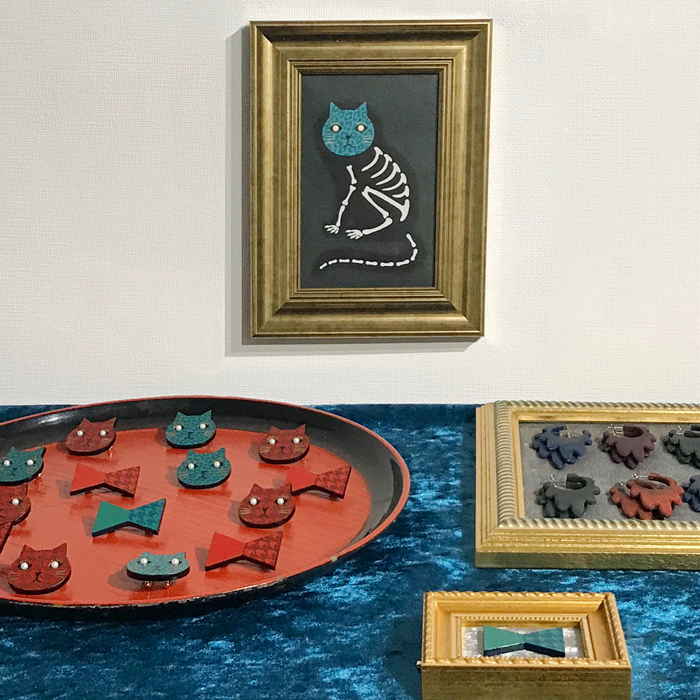
Initially, in typical Dentsu Inc. fashion (?), I thought it would be great to collaborate with master artisans as an art director to create products... but I realized it's really hard to tell an artisan, "I don't think that design will sell."
So, I concluded the only way was to handle everything from design to production to packaging myself... That was the thought process.
Actually working with lacquer, I deeply felt how long it takes to master the techniques. I know that separating production and design is more efficient and leads to better results. But spending time carving wood, sanding, and using brushes again after so long feels incredibly focused and satisfying. I want to keep doing it.
──That sounds like a wonderful change of pace. Could you tell me a bit more about the difference between your work as an art director and your "artist" activities?
I've never thought of myself as an "artist." To be honest, I'm not even sure what the definition of "artist" is.
If being an "artist" means conveying your own thoughts and assertions, then I don't have strong enough assertions to be one. So, I think of myself more as someone who "likes handicrafts." This applies to my work too; I have a strong desire to "make someone happy." For me, this is equally valuable as cooking for my family, cleaning, doing laundry, or doing handicrafts.
When there are customers with needs or challenges, I want to create something that fully meets them and brings them joy. That feeling is also deeply rooted in my non-work creations. I'm more strongly conscious of the "other person's perspective" – "How will someone who sees this feel?" – than my own "I want to make this." In my professional work, I overwhelmingly prioritize the latter. However, in my free creative pursuits, while I'm mindful of both perspectives, I slightly favor the latter. Creating things with a tactile quality offers a kind of "healing" not found in work, which is mentally very beneficial.
──Could you share any upcoming plans for your creative activities?
I'm reflecting on how to proceed based on the challenges highlighted during my work for ONE CREATIVE. That reflection is currently taking shape.
The difference from work is the absence of deadlines and the freedom to set my own themes and challenges. I thrive when given specific challenges and deadlines, so I was truly grateful for the opportunity to participate in ONE CREATIVE. In fact, I was able to produce significant work within a relatively short production period.
Currently, I have no plans for the next exhibition or similar events, so I'm hoping for another opportunity of some kind. Until then, I plan to take it slow, experimenting while exploring my own form of expression and enjoying creating pieces with a tactile quality.
──Thank you.
After viewing the exhibition
Mr. Wakata says he wants to "make someone happy." I thought the many wearable pieces like earrings and brooches exhibited this time might be an expression of that. Bringing a fresh breeze to a time-honored genre. It might not be easy, but I sensed great potential.
Dentsu Inc. creators each have their own unique methods of self-expression. Next time, we'll introduce the work of Emiko Kubota.
Was this article helpful?
Share this article


Newsletter registration is here
We select and publish important news every day
For inquiries about this article
Back Numbers
Author

Wakata Noe
Dentsu Inc.
Creative Planning Division 1
Art Director