
Note: This website was automatically translated, so some terms or nuances may not be completely accurate.
 Osamu Suzuki's "Now More Than Ever, TV is Exciting!" [1/3]
I want to be praised.
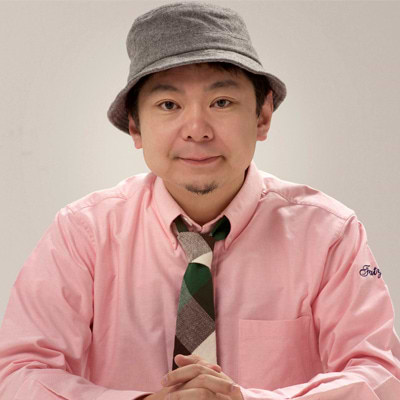
Osamu Suzuki
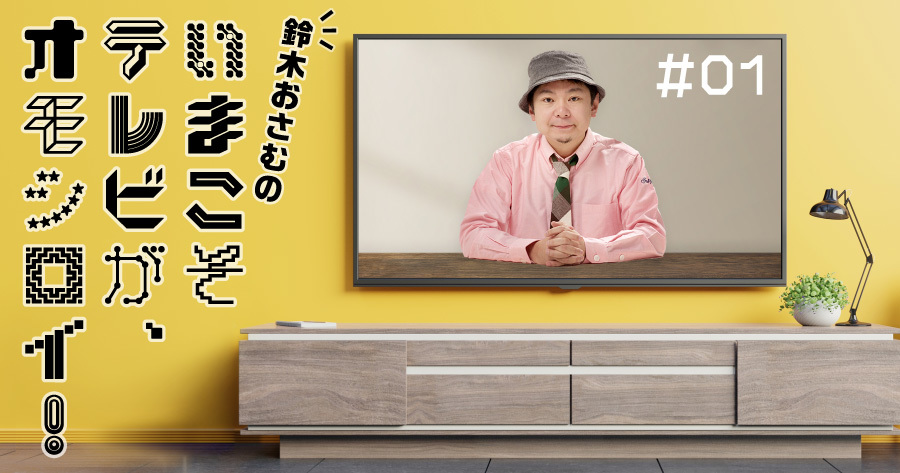
This project features Osamu Suzuki sharing his thoughts under the tentative title "Where is Television Headed?" It was realized through the unlikely yet perfect pairing of TVer and Dentsu Inc.
While weaving in bits about his highly anticipated new drama "Love and Flames" (scheduled to air on TV Asahi network on April 2nd and 9th), Mr. Osamu Suzuki generously shared his unique perspectives on television.
Rest assured. As part of Web Dentsu Tsushin's editorial policy, we won't produce a mundane article that leaves you thinking, "So, is this just a promo after all?" Stay tuned.
─This interview project was realized through the collaboration of TVer, Web Dentsu Inc., and Osamu Suzuki. While this is my first time meeting Osamu-san, I look forward to working with him.
Suzuki: Nice to meet you.
─Apologies for jumping right in, but could you tell us about the background and goals of your new drama "Love and Flames" (airing April 2 and 9 on TV Asahi)?
Suzuki: It started with an offer asking if we could create a romantic drama featuring Ikusaburo Yamazaki. Yamazaki is, of course, a musical star—I think he's a kind of perfect being. I thought it would be interesting to see him play a role unlike anything he's shown before, someone "consumed by jealousy." Like how Shohei Miura, with that sweet face, gradually became unhinged in the drama "Stealing Love, Winter."
─So that was the starting point?
Suzuki: Exactly. The genius doctor played by Ikusaburo Yamazaki becomes consumed by jealousy and gradually unravels. It perfectly fulfills the request for "a romantic drama starring Ikusaburo Yamazaki." Plus, it's the classic "genius doctor" role. But...
─That's where your signature direction comes in(laughs). I saw the trailer, and it seems like Yamazaki-san isn't the only one unraveling?
Suzuki: Miori Takimoto, Hayato Ichihara, Wakana Sakai, Dai Nagai... Everyone around Yamazaki-san breaks down. And not just within the expected limits either (laughs).

─Actually, I recall many cast members commenting along the lines of, "It was incredibly fun playing a role unlike anything I've ever experienced before."
Suzuki: That's wonderful to hear. I think every actor has that desire to do something truly extraordinary, to show a broader range of their acting skills. And to do that on terrestrial TV. Responding to that desire is also part of a screenwriter's job, I suppose.
─Still, terrestrial TV has its own constraints, right?
Suzuki: Absolutely. That's why we start with orthodox settings. As I mentioned earlier, we've properly delivered on the offer: "A romance drama starring Ikusaburo Yamazaki." But...
─You won't disappoint the actors, and above all, the viewers.
Suzuki: Rest assured. We're betraying expectations exactly where we should be betraying them (laughs).

─Well then. Now that the important "promo" is smoothly taken care of...
Suzuki: My apologies (laughs).
─The main theme of this interview is "Where is television headed?" To kick things off, could you share your thoughts on recent television or the TV industry in general?
Suzuki: If I had to point out something distinctive, it's that I get that question a lot more now (laughs). Like, "Say something on behalf of the TV industry." I guess they want some kind of "quotable soundbite." Like, "This is what's wrong with TV these days!"
─Like, "Bark for us instead of the interviewer!"
Suzuki: Exactly.
─Speaking of which, I've prepared a few "hypotheses" about "television" today. Would you mind hearing them?
Suzuki: Sure.
─The first hypothesis is this: the "magic box" called television created the "space" known as the living room. I think this much is often said, but looking back, I think there was this kind of "pleasure of being dominated by television." It sat right in the middle of the living room, and back then, you couldn't record anything, so you'd sit cross-legged in front of the TV waiting for your favorite show to start. We loved TV so much, we felt like we'd let it do whatever it wanted. In a way, wasn't that being "dominated by TV"?
Suzuki: Control, huh... I never thought of it as being controlled. Anyway, back then, "new and interesting things" could only be found on TV. You'd turn the channel, and one after another, things you'd never seen or heard of before would pop out. Yeah, it would take your soul. Maybe that's what "being controlled" means.
─For me, TV was like "school." You were ruled by the timetable, ruled by test scores and race results (ratings), and when you got hungry, you all ate your favorite school lunch together. It wasn't that I disliked it—it was just so much fun, I couldn't get enough. But then, one day, I was suddenly flung out of that "school" framework, and I was completely at a loss, wondering what to do.
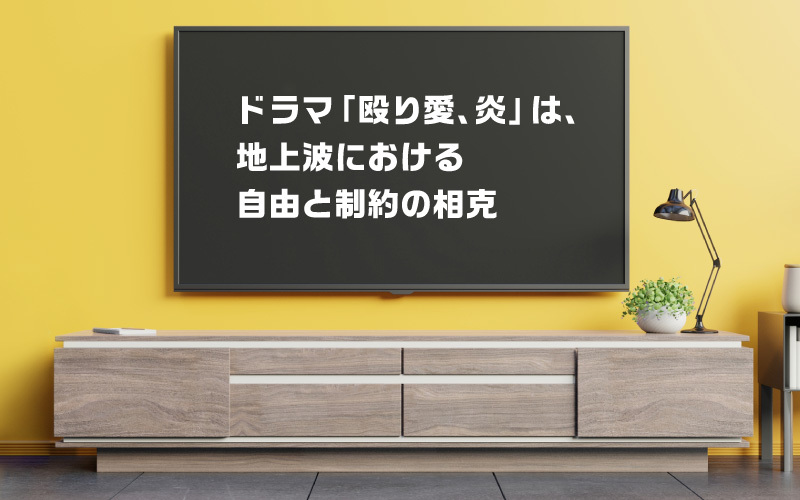
Suzuki: Speaking of frameworks, everything is different from the past. Take ratings, for instance. Back then, they were the sole metric for a program's performance, but that's no longer the case. It's not just about grabbing the F1 demographic anymore. How viewers in their 50s and 60s watch is now properly reflected in the numbers. This feels like a change on the scale of school rules being overhauled, or even the constitution being amended.
─In that sense, the boundary between real and unreal has disappeared too, hasn't it?
Suzuki: Both the viewers watching TV and the people appearing on the other side of the screen are real. When both sides are real, what happens is that, for better or worse, they start to "interfere" with each other. Criticism and insults are easy to imagine, but for example, a program that didn't get good ratings might see a huge surge in popularity when it gets released on DVD or adapted into a movie. In other words, monetization proves the quality of that content.
─That must be the ultimate reward for creators.
Suzuki: Exactly. It's not that I particularly want money. I just want to be praised. I want to say, "See? It was interesting after all." People are willing to pay to watch it. That's an incredibly clear and honest evaluation.
─Wanting to be praised is also a very pure motivation.
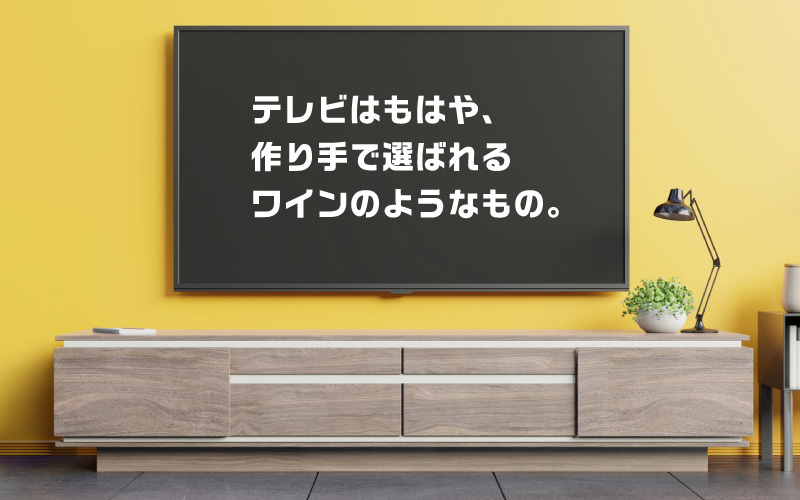
Suzuki: I feel like within variety shows, the ones with strong directorial "artistic vision" get chosen.
It's like "wine chosen by the winemaker." For a winery owner, there's nothing more gratifying. They crave praise, crave it so much they obsess over every grain of soil. That passion resonates first with the most discerning people.
─And from there, popularity slowly catches fire... That's exactly what defines this era.
Suzuki: But that makes it scary for creators. Having a discerning palate means they can tell when you've cut corners.
Suzuki: In that sense, I genuinely believe TVer holds the future of television—no flattery intended. It's not about becoming the new king of media replacing TV, but about holding the "key" to TV's future. It makes crystal clear what resonates with information-savvy people and how deeply it connects.
─I totally get that "key" nuance. At the start of this interview, I mentioned something like "the pleasure of being dominated by television as it once existed." But nowadays, both creators and viewers interact with media with this sense of, "Huh? There seems to be a keyhole here... Let's see, tickle tickle tickle..."
Suzuki: Exactly. And it's not just TV. It's the same with social media, and games too. People with high information sensitivity aren't just jumping on trends because they're popular. I think they just enjoy poking around at those keyholes.
─It's completely different from something like searching online.
Suzuki: Television remains overwhelmingly "new and interesting," just as it always has been. But unlike before, it doesn't aggressively push itself on you like, "Look, this is new!" or "Hey, this is fun!"
─Like, "It's a huge hit in living rooms! The ratings prove it!"
Suzuki: Honestly, when I'm writing a drama script, I catch myself asking, "How's TVer doing?" Half hopeful, half worried. I'm speaking for the TV industry here, but I think this is a common thing among us TV people.
(Interviewer: Web Dentsu Inc. Editorial Department)
[Editor's Note]
This was, of course, my first meeting with Osamu Suzuki. But about five minutes into the interview, I clearly understood: "Ah, this person is pure."
What does it mean to be pure? It means having absolutely no wavering in one's convictions. You might imagine someone stubborn and unyielding like a craftsman, but that's not it. For example, his statement, "I want to be praised!" It's like something a young boy would say. But then, Mr. Suzuki bluntly adds, "If it meant getting praised, I'd do anything."
Because he wavers not, his conclusions come swiftly. He acts fast too. In a way, he's very "television-like." This hasn't changed, whether it was the era when TV was the "magic box" sitting in the living room or now, when it's become a "magic compact" enjoyed in the palm of your hand. Because people, in every era, pursue things that are "television-like." I didn't have time to ask, but I'm sure Mr. Suzuki would answer like this: "If you want to enjoy something television-like, isn't TV itself the only place to go?"
For information on the latest drama "Love and Flames," written by Osamu Suzuki, click here.
Was this article helpful?
Share this article


Newsletter registration is here
We select and publish important news every day
For inquiries about this article
Author
Osamu Suzuki
Broadcast writer