
Note: This website was automatically translated, so some terms or nuances may not be completely accurate.
 Getting to the Core of the Athlete Business [2/2]
I'll take the reins. ~The CXOs Supporting the Athlete CEO Speak Candidly~

Hibi Akimichi
Dentsu Inc.
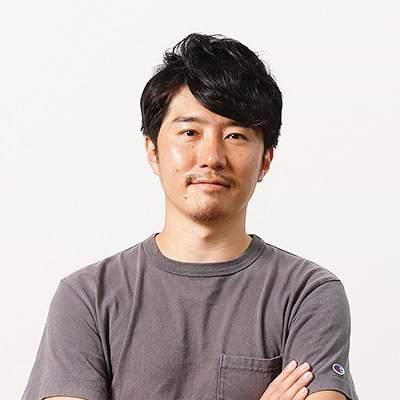
Kohei Shiraishi
Scrum Ventures
December 9, 2020. As part of the 'Athlete Brains' project, which creates new businesses based on athletes' insights, an internal Dentsu Inc. webinar titled 'Athlete × Business: Current Status and Future Potential' was held. This series, linked to the webinar's first and second parts, aims to sharply examine the essence of the athlete business revealed through the webinar, as well as the true feelings and ambitions of those driving it, from an editor's unique perspective.
In this concluding part, we examine the "present" and "future" of athlete business through the efforts of two CXOs supporting a prominent athlete-CEO.
Responsible Editor: Dentsu Inc. Editorial Department
"You can't run a business just by being an athlete" (Hiroshi Tamesue)
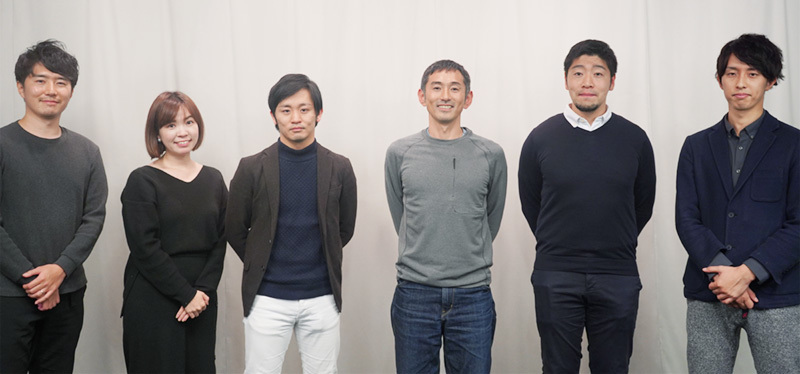
In the second part of the webinar, following the first session, moderator Dai Tamesue hosted a talk session featuring two guests: Yota Tsumura (center in photo: Co-founder of Cuore), known for his partnership with soccer player Yuto Nagatomo, and Kenichi Gokatsude (left in photo), PR Manager at Revive, a company founded by professional American football player Masato Maeda.
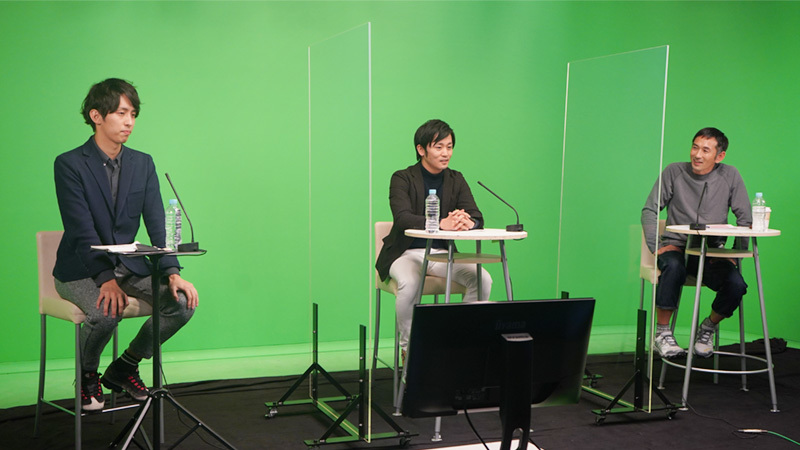
As in Part 1, the session began with Tamesue's pointed critique: "Outstanding physical ability, rigorous self-management, and the resulting performance. While these are undeniable facts born from solid technique and sports science, to the general public, they're just 'that's so Nagatomo' or 'that's so Maeda' – mere 'authenticity'."
What Tamesue meant by "characteristics" is essentially image. While image itself might be a pillar for a company, business cannot be sustained by image alone.
This is where the lesser-known "Tamesue Dai the businessman" truly comes into his own. Businesses built on selling image, exemplified by the portrait rights business, boast high profit margins and can be called lucrative ventures. After all, the initial investment is minimal, and guarantees like contract fees and appearance fees come in without requiring much effort.
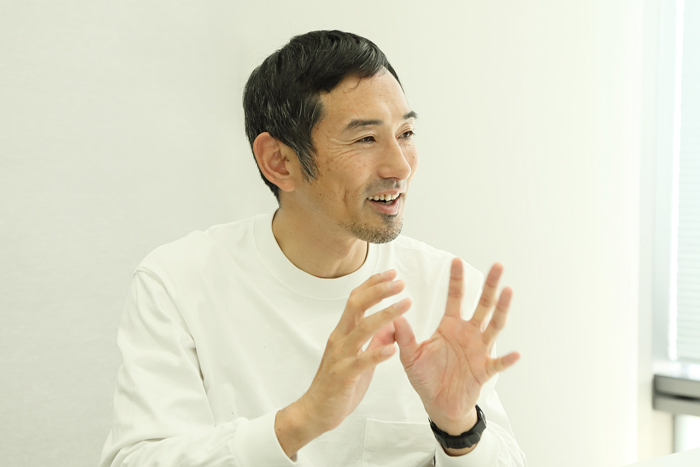
On the other hand, businesses selling "authenticity" have various weaknesses. One is that it's a popularity-driven business with intense ups and downs. Moreover, an athlete's career lifespan is short. If you rest on your "authenticity," the world will turn its back on you in the blink of an eye.
Furthermore, despite the blood, sweat, and tears poured into crafting that "authenticity," it often fails to resonate widely. It might strike a chord with core fans. But focusing solely on core fans limits the scale and potential of the business. How do you two overcome this dilemma? I'd love to hear your thoughts on that today. Tamesue's words gradually grow passionate.
"Our venture with Yuto Nagatomo is a grand experiment using the person of Yuto Nagatomo." (Yota Tsumura)
According to Mr. Tsumura, the corporate philosophy of Quore is "to tackle health challenges with products and services created from the value of athletes and sports." The theme of challenging business models that don't rely on celebrity likenesses is always at the forefront of his mind. "To borrow Mr. Tamesue's words, it's about generalizing the essence of Yuto Nagatomo, I suppose."
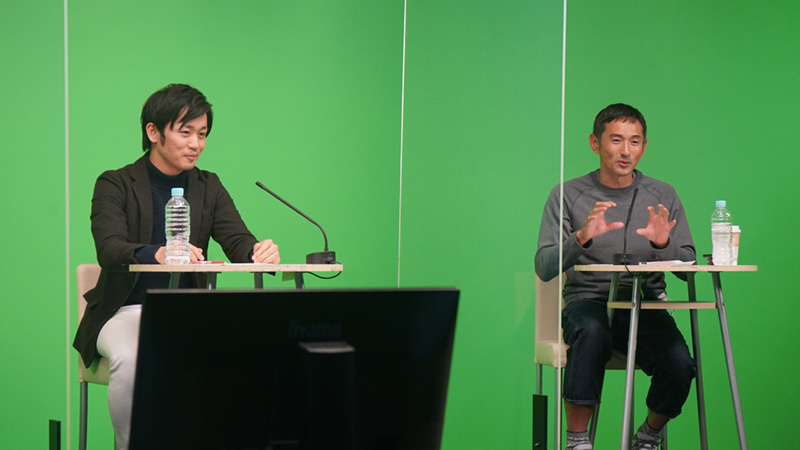
The business domains handled by President Nagatomo and Mr. Tsumura span a wide range, starting with the development of training menus and equipment born from athletic activities, and extending to food and health for the general public.
Particularly symbolic is their challenge in "food." Originally a project to enhance Nagatomo's athletic performance by bringing in a professional chef, it expanded into a business targeting the general public. "In that sense, the investment business Nagatomo is focusing on lately shares the same underlying philosophy. Nagatomo is a man who wants to base everything on evidence."
He focuses not on image, but on numbers and facts. Because this is how it is, the desired results will inevitably follow. People interested in what I want to do will definitely appear. This policy likely resonates with many. "Also, he understands very well that he can't do anything alone. That's why I support him. This feeling doesn't just come from being his high school classmate."
"I want to find something that multiplies with sports business" (Kenichi Gokatsude)
"Listening to Mr. Tsumura, I see many parallels with our company," says the other panelist, Kenichi Gokatsude. For example, "Vibes," which allows direct communication with top athletes. By leveraging such digital tools, we can make athletes feel more accessible and turn people into true fans. That's how Gokatsude explains his company's approach.
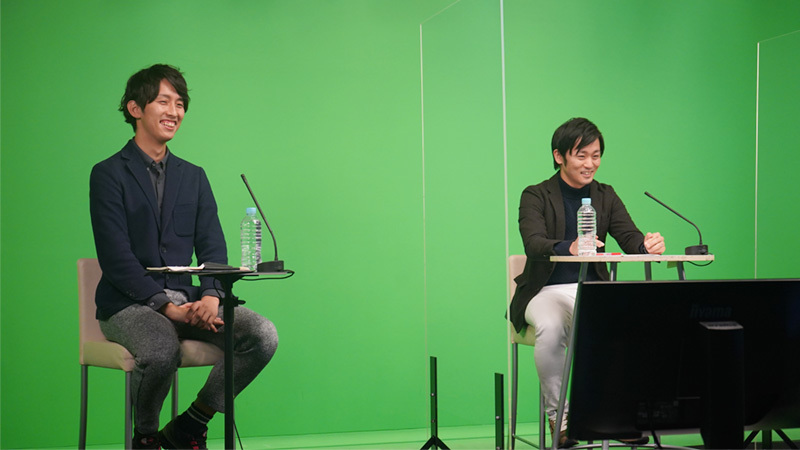
Tamesue's explanation made it even clearer. "The major pillars of the athlete business are spectator sports and participatory sports." While the term "supporter" is already commonplace, the actions of fans go beyond simply "watching and cheering." They participate alongside athletes, sharing the same time, ideas, and experiences. In other words, it's about "participating in sports." Of course, this "participation" doesn't narrowly refer only to playing American football. "Thinking about it that way, perhaps the future of athlete business lies in competing in areas beyond sports." According to Gokatsude, using digital tools enables "multiplication" with local, analog entities like regional areas and long-established companies. "That's the greatest appeal, and I feel tremendous potential there."
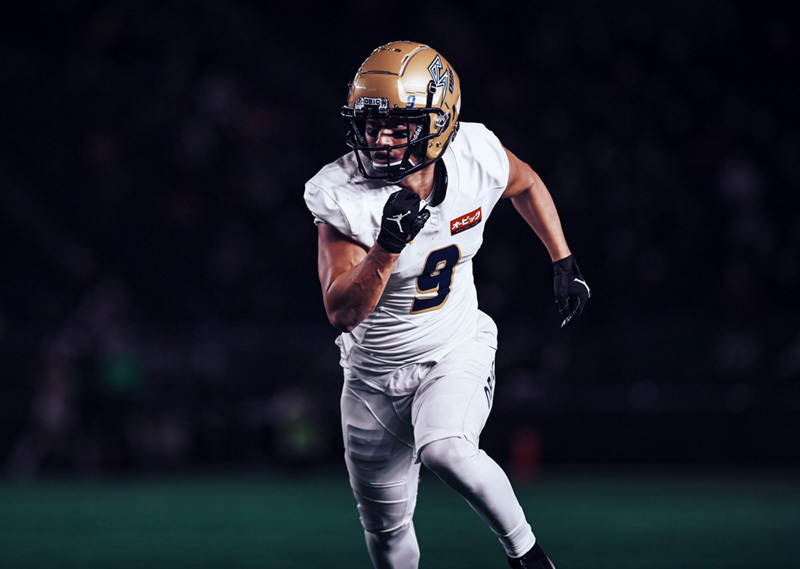
"Athletes can't see themselves objectively. I think that's both their biggest weakness and their biggest strength" (Hiroshi Tamesue)
During the discussion, one scene particularly intrigued me as an editor. "This is data compiled by a certain H company..." Mr. Gokatsude apologetically presented a panel. Tamesue immediately interjected, "Which company is H?" It struck me anew: the times have truly changed. In the industry, H refers to Hakuhodo, and D to Dentsu Inc. These two competing companies have, in a sense, behaved as if ignoring each other's existence. Hence the initial talk.
But when you think about it, their overarching goals should be the same—something like "making the world more vibrant." To achieve that grand goal, they should freely disclose and share necessary foundational data. True competition lies in the battle of ideas that comes after. "Isn't that precisely the difference between competition and co-creation?" I felt once again that Mr. Tamesue's ideal partnership is one where both sides complement and elevate each other.
As the tension eased among the panelists midway through, Mr. Tamesue fired off a slightly mischievous question: "Honestly, dealing with an athlete-turned-CEO who thrives on inspiration and talent must be tough, right?" "It's fine. The editorial team seems to handle that part well, cutting it out." "Well, to be completely honest, saying there are no difficulties would be a lie." The details of the ensuing discussion are omitted in accordance with Mr. Tamesue's gentleman's agreement, but to summarize the two panelists' comments in a single phrase: they seemed genuinely delighted to bring to life the unique intuition and drive characteristic of an athlete-CEO, even while being somewhat overwhelmed by it.
To achieve that, both agree they must study not just business administration, but marketing, creativity, digital—everything—and they want professional partners for that. "In short, I'm the one holding the reins of this wild horse. That's the deal," Tamesue concluded wittily, wrapping up the webinar that had run well over its scheduled time.
Read Tsumura's serialized column in Web Dentsu Inc. News here.
For details on "Athlete Brains," the team centered around Mr. Dai Tamesue that leverages athletes' cultivated knowledge to solve societal (corporate/social) challenges, click here.
This series was edited from the unique perspective of Web Dentsu News, under the supervision of Mr. Akimichi Hibi (Dentsu Inc. 3CR Planning Bureau) and Mr. Kohei Shiraishi (Dentsu Inc. Business Co-creation Bureau), the organizers of the webinar held on December 9, 2020.
Was this article helpful?
Share this article


Newsletter registration is here
We select and publish important news every day
For inquiries about this article

Author
Hibi Akimichi
Dentsu Inc.
Future Creative Center
Creative Director
Kohei Shiraishi
Scrum Ventures