
Note: This website was automatically translated, so some terms or nuances may not be completely accurate.
The "Small Giants Town" that produces cutting-edge companies through endogenous development
There is a town in Osaka called the "Town of Small Giants."
Well, to be precise, it was coined by some city officials and local business leaders. How did this "Small Giants Town" come to be? It emerged from refining a globally applicable "development model."
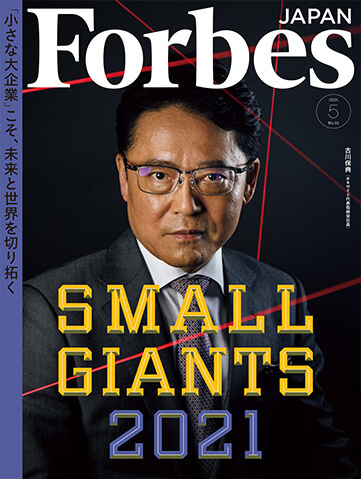
The term "Small Giants" originates from the "Small Giants Award" project, launched by Forbes JAPAN and Dentsu Inc. to discover promising small and medium-sized enterprises (SMEs) across Japan.
This series, in partnership with the project that began with regional competitions in 2020 and culminated in the national grand prize in 2021, features columns by Forbes JAPAN Editor-in-Chief Masaharu Fujiyoshi, Web Editorial Department's Akari Toku, and Makoto Sasagawa of Dentsu Inc. Solution Creation Center, a co-founder of Small Giants. The first installment is a contribution by Ms. Toku.
Planning = Makoto Sasagawa (Dentsu Inc.)
Examples of Open Innovation Through Regional Collaboration
In such times, the focus should be on community development through endogenous growth. Rather than relying on a single dominant company, the goal is mutual prosperity through loose connections between businesses and local governments.
First, let's examine successful overseas examples. We can learn from Bologna, the industrial city in northern Italy that gave birth to Lamborghini and Maserati. While its global brand power often draws attention to its automotive industry, it actually boasts world-leading technology in automatic wrapping machines. Similar to how a chocolate packaging machine manufacturer spawned a subsidiary making tea bag machines, the automatic packaging machinery sector has now grown to hundreds of companies. Firms specialize in specific tasks like tobacco or pharmaceutical packaging, creating a niche-based ecosystem within the region.
The Emilia-Romagna region, home to Bologna, achieved endogenous development through this industrial clustering, a methodology now known as the "Emilia Model." The region's "salon culture," where people exchange information across industry, government, and academia, also likely contributed to fostering open innovation.
In contrast to externally driven development, which seeks growth through attracting companies to enrich the regional economy, examples of endogenous development effectively utilizing local resources are also spreading within Japan. For instance, Fukui Prefecture has innovated its local industries—textiles, eyewear, and lacquerware—and gained strong global trust. Iwate Prefecture was quick to introduce an incubation system through industry-academia-government collaboration, developing an industrial park for the life sciences industry.
Yao City in Osaka Prefecture is beginning to build a new development model. Yao, which has produced numerous manufacturing giants like Kinjo Rubber (operating in rubber, civil engineering, and welfare) and Kimura Soap Industry (creating hit products through e-commerce), is drawing attention for cases where companies within the region connect and jointly develop innovative products.
However, unlike in Italy, Yao's coexistence and mutual prosperity didn't develop naturally. During the postwar period of rapid economic growth, its population surged, leading to commercial prosperity centered around Yao Station. This spurred the development of longstanding industries like casting and metalworking, transforming the area into one of Japan's leading manufacturing hubs.
Originally, Yao had many lone wolf-type company presidents and businesses, each going their own way. It was a single city hall employee who changed this "mind your own business" atmosphere.
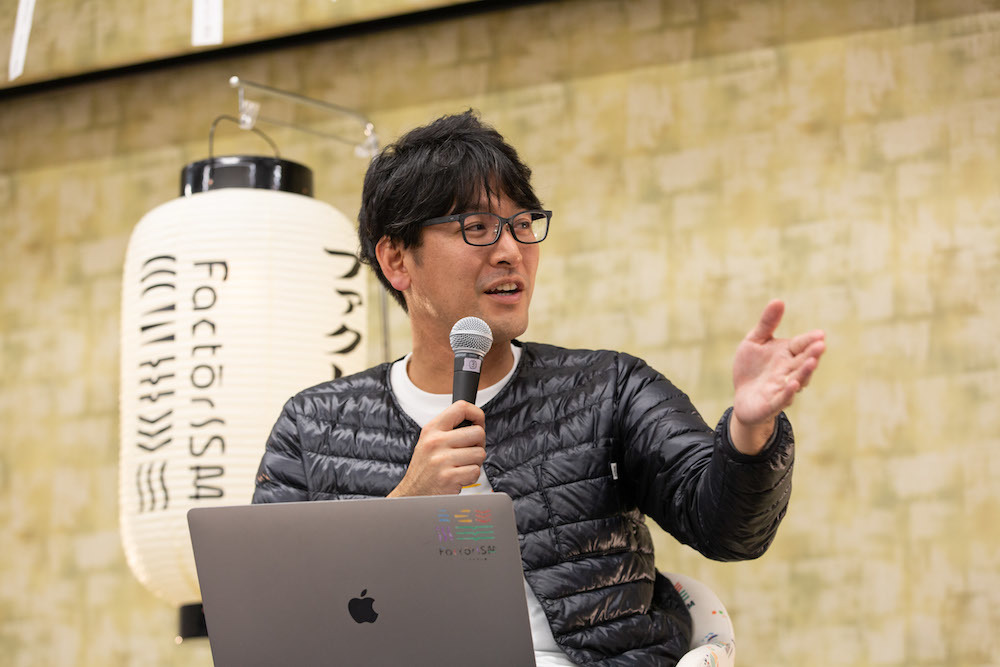
Osaka Manufacturing is Entertainment!
Yasutaka Matsuo, former section chief of the Industrial Policy Division in Yao City's Economic Environment Department, earned the nickname "Perverted Administrative Man" for his uncharacteristically proactive approach for a civil servant (since April 2021, leader of new business and PR at Tomoyasu Manufacturing).
Long dedicated to building networks among Yao's businesses, Matsuo established "Miseru Bayao" (Showcase Yao) near the station in 2018. This hub allows local SME owners to connect and share ideas, while also hosting hands-on manufacturing workshops for children. Starting as a voluntary group, "Miseru Bayao" incorporated in August 2020, with Shoichiro Kimura, President of Kimura Soap Industry, serving as its representative. Initially supported by only 35 companies, it now has 127 member companies.
In December 2020, an idea born from this hub led to the joint open factory event "FactorISM 2020: The Successors' Cultural Festival," involving five cities including neighboring Higashi-Osaka City and Sakai City. Centered around local "successor presidents," the event focused on factory tours designed to engage all five senses. It proved highly successful, attracting a cumulative attendance of approximately 3,000 people and 1,116 online participants for the factory tours.
While regional open factory initiatives exist nationwide—such as the "Tsubame-Sanjo Factory Festival" centered around Sanjo City and Tsubame City in Niigata Prefecture (held since 2013, canceled in 2020)—Yao City thoroughly researched these precedents. It then decided to emphasize Osaka's unique character by adopting the "Monotame" approach, which treats manufacturing as entertainment.
Taizo Ota, President of Kinjo Gomu and Chairman of the Executive Committee, shared an unexpected perspective.
"Yao has many B2B manufacturing companies, and there were negative voices saying things like 'It's troublesome, dangerous, and our know-how will be stolen' about letting the general public into factories."
Certainly, the risks aren't zero. However, opening manufacturing sites to the public also has the benefit of boosting employee motivation and fostering pride in their work. "Actually, the internal benefits are significant," Ota stated.
There's also a strategic purpose behind holding Facturism as a broad collaboration among five cities. With the 2025 Osaka-Kansai Expo in sight, the aim is to showcase Osaka's manufacturing prowess—and by extension, the appeal of Monotame—to the world, ultimately attracting visitors for industrial tourism. This is truly a regional collaboration for mutual prosperity, embodying the idea of "expanding not just points, but the entire area."
Aiming for Ultimate Sharing Through a Culture of Equality
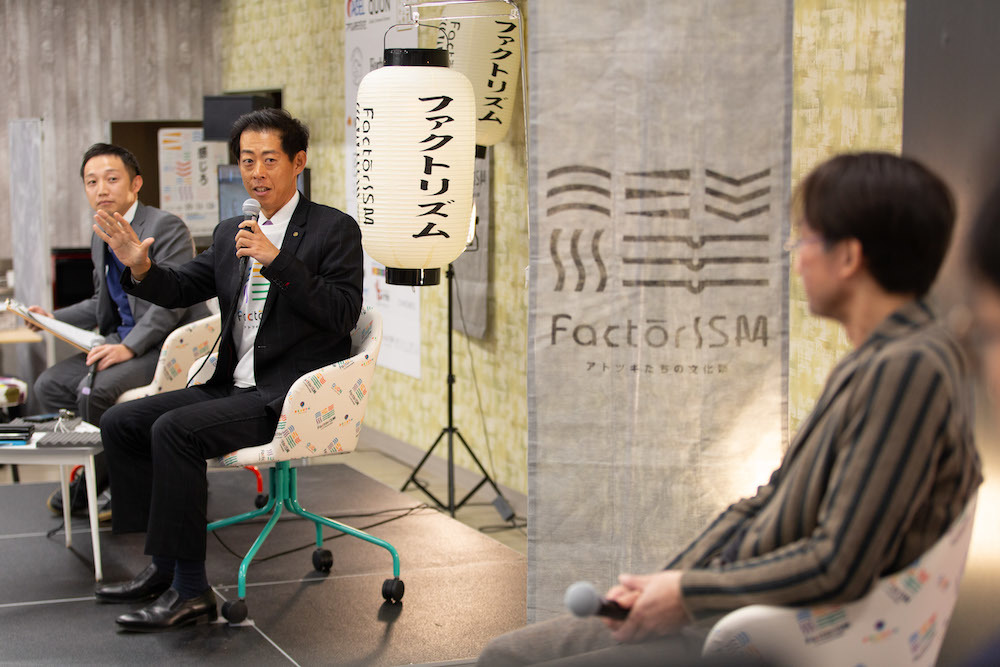
The establishment of the "Miseruba-yao" hub has fostered the sharing of knowledge, information, and ideas among companies in Yao. However, Ota has a vision that goes a step further.
The COVID-19 pandemic rapidly accelerated corporate DX and telework adoption, forcing manufacturing sites to make tough choices. Should employees still report to factories as before? Are facilities and staffing levels excessive? Is the working environment adapting to the wave of change? To solve these challenges, Ota is considering whether companies could share not just resources, but people and things – specifically, employees and equipment.
"Miseruba-yo has become a place where companies foster mutual trust by openly sharing information. To overcome the current challenges facing manufacturing in our region, we now aim for it to become the ultimate platform for sharing."
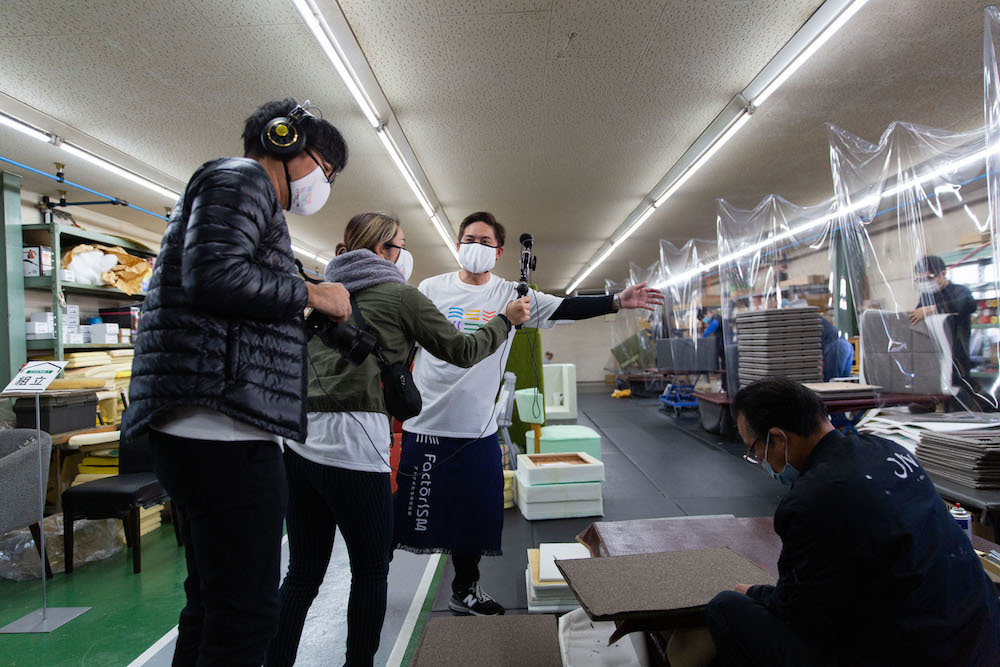
A moment that conveyed this inter-company "trust" occurred during a factory tour at O2, a commercial furniture manufacturer. As they opened their doors to the public for the first time, the factory was partitioned with transparent film to safely observe the traditional ironworks operations. "We purchased this transparent film from Tomoyasu-san's company," said President Hirotaka Kajiwara. Kajiwara explained that through connections made at "Miseru Bayo," he hit it off with Keinosuke Tomoyasu, president of Tomoyasu Seisakusho, which sells interior and DIY products, leading to collaboration on product development.
In Yao, the flat relationships between companies are also surprising. Take Kodama Glass, which handles glass and mirror sales and installation. On their YouTube channel, President Yuji Kodama explains Kimura Soap's "Mirror Scale Remover," a product from a neighboring company. Meanwhile, Fujita Metal actively incorporates other companies' products into its renovated office building. President Seiichiro Fujita shares his vision: "Eventually, I want to turn it into Yao's showroom." Yao's "culture of level playing field," reminiscent of Bologna's salon culture, connects people and information horizontally.
By sharing dormant local resources and internal management resources within the community, horizontal connections emerge, making it easier for different industries to collaborate. The administratively supported "Yao Model" is a prime example of endogenous development that other regions can easily adopt.
Was this article helpful?
Share this article


