
Note: This website was automatically translated, so some terms or nuances may not be completely accurate.
 Human Resources as a Management Strategy [3/5]
What exactly constitutes a "nourishing" HR function?
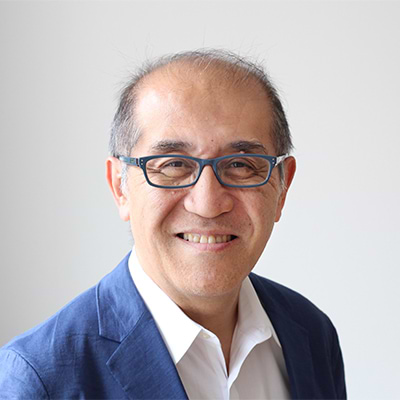
Akira Sakai
Creative Journey Representative
Mr. Yosuke Yagi continues to propose the ideal form and structure for companies, based on his own career. If we were to express the theme he advocates in a single phrase, it would be "human resources reform." Without human resources reform, sustainable corporate growth is simply impossible. Many companies proclaim, "Our people are our greatest asset." But are we letting that treasure go to waste? In preparing this article, I attended Mr. Yagi's webinar (*) and also conducted an exclusive interview.
Old and young, men and women, people from other countries. Diverse personalities gather within a single company. We wish to explore the meaning of this, the joy it brings, and the future it creates, drawing insights from the initiatives of Sycom Brains, where Mr. Yagi serves as an advisor. With the conviction that each of us is not merely a "tool" crammed into the "box" of a company.
Written by: Web Dentsu Inc. Editorial Department
(※) Webinar titled "Learning Essential for HR to Lead Future Companies: Winning in the Post-Pandemic World with Yosuke Yagi," hosted by Saicom Brains. Details here.
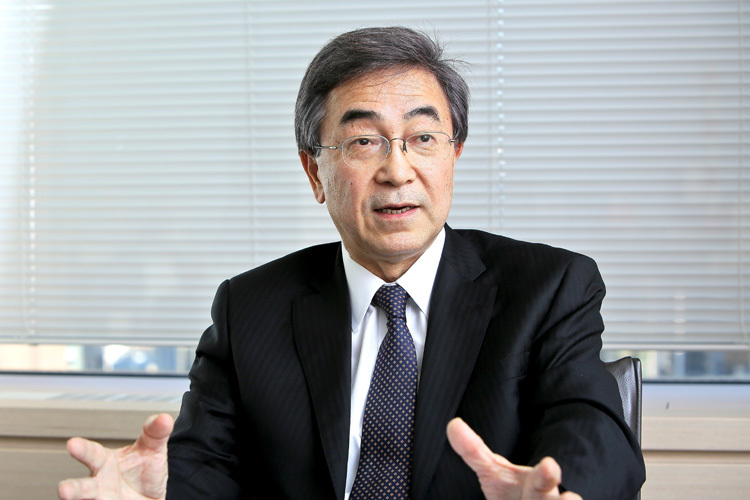
Representative Director, people first (Former Executive Vice President, LIXIL Group)
Advisor, Saicom Brains
After graduating from Kyoto University's Faculty of Economics in 1980, he joined Nippon Steel Pipe Co., Ltd. In 1996, he was seconded to National Steel, where he assisted the CEO. He joined GE in 1999, serving as HR leader across multiple businesses. In 2012, he became Executive Vice President of the LIXIL Group. He served as a director for Grohe, American Standard, and Permasteelisa. In 2017, he founded people first and became its Representative Director. Serves as Outside Director of TBS Holdings and Auditor of GE Healthcare Japan. Also serves as advisor to several other companies. Author of "Strategic HR Vision."

In our previous interview, Mr. Yagi offered the hint of "breaking free from the postwar regime." Using the analogy of the HR field (literally, "the human field"), this means first tackling soil reform on ancestral farmland bathed in sunlight. No matter how many seeds you sow on land long neglected, crops simply won't thrive.
Now, when it comes to creating a field, there's something everyone thinks of: water. Without securing abundant water, the field will dry up. Isn't there a sense of complacency or overconfidence here among Japanese companies?
To break free from the postwar regime, we must shed the assumption that this barren land can never yield significant crops. Instead, we must seriously confront the land's potential – the idea that perhaps papayas could grow here, or mangoes might bear fruit. This requires rethinking the "human resources field" not merely as a system, but as a comprehensive framework. In doing so, "water" emerges as a key point.

Strangely enough, many Japanese hold the assumption that water is practically free. Yet, consider the Warring States period: the most crucial element in nation-building back then was undoubtedly flood control. While securing drinking water and agricultural water is vital, the broader meaning of "flood control" – suppressing river flooding – is equally essential. Without this, farmland cannot function as a system. In modern terms, it means sustainability cannot be achieved without mastering water.
What does "water" represent in the field of human resources? It might be experience. It might be creativity. Or perhaps it's the skill to build the waterwheel that effectively harnesses these elements. If we view human resources as "a field for nurturing and cultivating people," then I believe it requires the experience, skill, and mindset of an agricultural worker who engages with nature. It's not just about water. You also apply fertilizer and replant. It's precisely because you don't shy away from this labor that abundant harvests are born.

Mr. Yagi points out that organizations, if left untended, will inevitably wither. When city dwellers see the serene landscape of fertile fields, they tend to think, "Ah, how peaceful," but that's a huge mistake. We must reflect on the immense labor required to maintain that richness. Isn't organizational reform much the same? It's not about making a few superficial changes and declaring, "Ah, the HR department's job is done."
Continuing with the water analogy, indiscriminate watering can cause root rot in certain crops. That's the difficulty of nurturing people. Of course, this series is far from over.
For Sycom Brains' training courses, see here.
●CCBP Development Program
~Developing transformational leaders who support individual careers and strengthen organizations~
●Next-Generation Strategic HR Leader Development Program
■Instructor Comment (Akira Sakai)
The phenomenon triggered by COVID-19 is called "Career Shock." Beyond the various environmental shifts surrounding work styles, being forced to work from home likely led many people to deeply contemplate their past and future lives and ways of working. Now, when everyone feels uncertain about their career, the role of those providing career support is becoming increasingly vital. This program addresses these needs. Through rich, multifaceted input from a diverse faculty unmatched by other programs, combined with stimulating collaboration among participants of varied roles and generations, you can update the mindset and skills essential for future career support professionals.
■Instructor Comment (Shu Yamaguchi)
In an era where past "correct answers" and "standard approaches" no longer apply, the qualities demanded of people have dramatically changed. What is needed now are individuals who can proactively identify problems – people with "meaning." Meanwhile, Japanese work styles have reached an abnormal state, ranking among the lowest globally in job satisfaction. The arrival of the unprecedented COVID-19 situation has brought these underlying issues to the surface. Now is precisely the time for career support professionals—those who leverage human resources, the greatest asset within companies—to step up. Sharing the philosophy behind this course, launched with this awareness, I am honored to participate as an instructor. I look forward to discussing ways to improve future workstyles and careers with all of you who share this aspiration.
For this article, we enlisted the writing skills of Yosuke Yagi and requested supervision from Akira Sakai (Creative Journey Representative / Dentsu Inc. Alumni Network Manager), a former Dentsu Inc. employee.
The website for Creative Journey, represented by Akira Sakai, can be found here.
Akira Sakai:
After joining Dentsu Inc., he worked as a copywriter, in sales (automotive division), and in the marketing promotion department. He was stationed in Singapore (Asia Regional Office) from 2004. After returning in 2011, he worked in the global division before moving to the Human Resources Bureau and the Career Design Bureau, where he was responsible for career development initiatives. He retired in March 2019 and started his own business in April.
The interview article featuring Mr. Akira Sakai and Mr. Daimon (then of Dentsu Inc. Career Design Bureau) on Alumnavi can be found here.
Was this article helpful?
Share this article


Newsletter registration is here
We select and publish important news every day
For inquiries about this article
Back Numbers
Author
Akira Sakai
Creative Journey Representative
Creative Journey Co., Ltd. Representative / Dentsu Inc. Alumni Network Manager