Note: This website was automatically translated, so some terms or nuances may not be completely accurate.
 The Secret of Why This Company is So Energetic Season 2 [23/42]
The Work of Creating Aspirations
This series follows Dentsu Inc. 'Company Design' team as they uncover the secrets behind vibrant companies with 'originality.' In the 23rd installment, we introduce SANU, a company offering 2nd Homes built in natural locations across Japan for a monthly fee of ¥55,000.
The term "vacation home" can feel a bit intimidating. It conjures images of someone living in a city mansion owning a whitewashed estate in a summer retreat like Karuizawa. However, President Gen Fukushima states that his "SANU 2nd Home" proposal is not about that. It's about "another home nestled within nature."
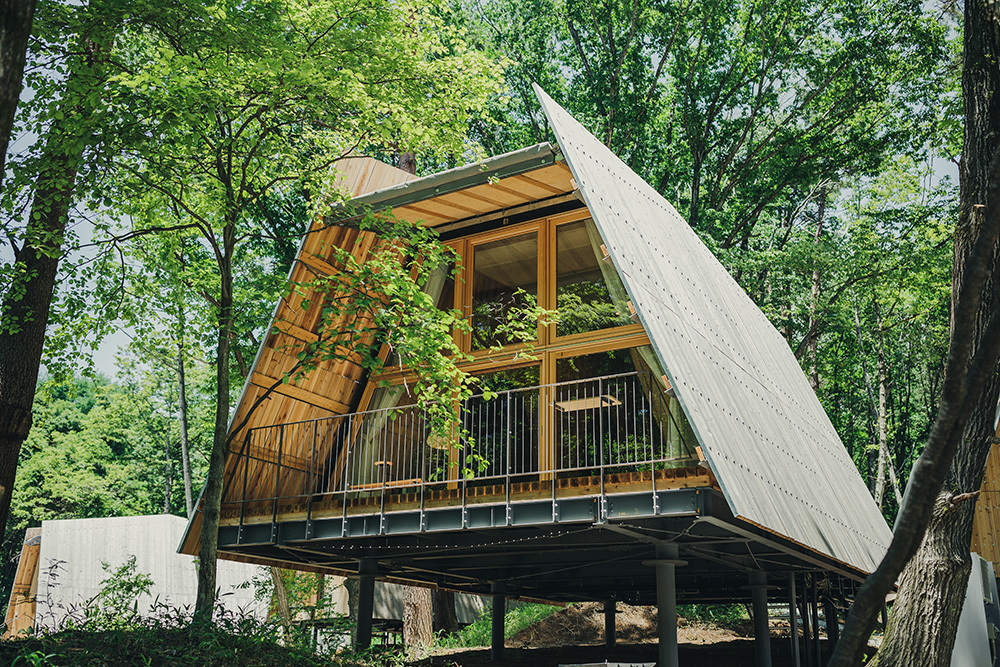
For a monthly fee of ¥55,000, you can subscribe to use a SANU CABIN, built in natural locations across Japan. Currently, there's a huge waiting list for subscription registration. As of July 2022, there are 50 cabins across 7 locations. The goal is 200 cabins across 20 locations by 2024. Compared to owning a vacation home, the price is remarkably low—even high-end fitness clubs don't charge that much. With that kind of money, you could dine at a three-star restaurant. So what is it that draws people in?
The term "work-style reform" has taken root in society to some extent. But when it comes to "lifestyle reform," it doesn't feel like it's progressed as much. SANU isn't proposing a luxurious resort. It's asking: How about enriching your daily life just a little? Could the answer lie in nature? It's about lifestyle, not resort; everyday life, not the extraordinary. I'd love to hear more about that.
Written by: Kazuhito Goto (Dentsu Inc. BXCC)
As a resident, into nature
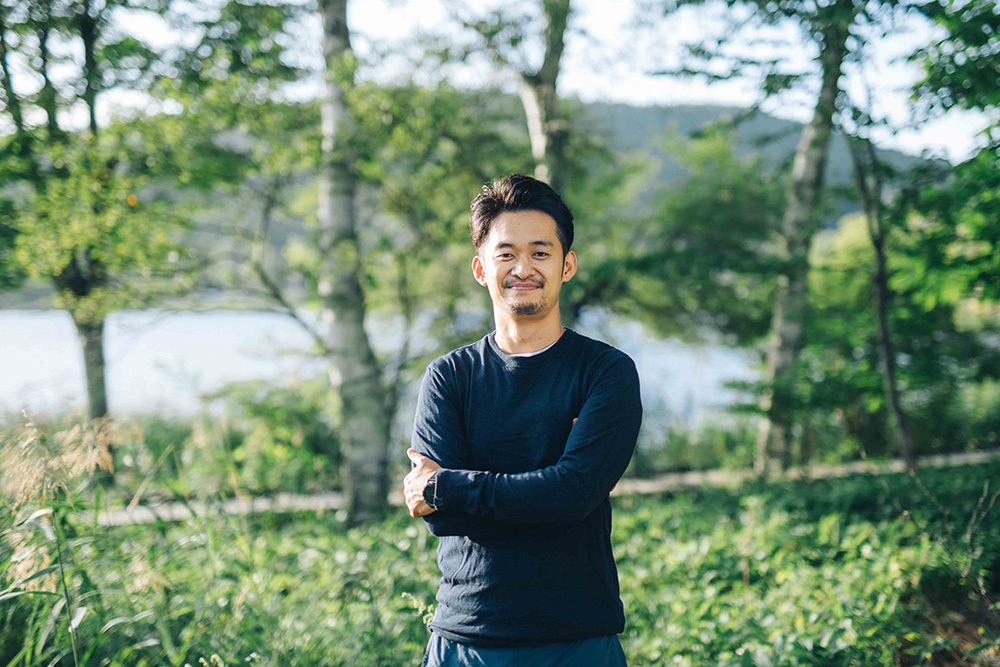
Founded in November 2019, SANU has consistently upheld "Live with nature." as its corporate mission. The company name SANU originates from Sanskrit. While the word carries various meanings—such as mountain peak, sun, or thoughtful person—what flows through it seems to be a feeling of reverence for nature, a sense of awe towards it.
The core members are President Fukushima, Founder and Brand Director Takahiro Honma, and architect Kotaro Anzai (representative of ADX), who handles the design and construction of their base. Fukushima, a "mountain lover"; Honma, a "sea lover"; and Anzai, who advocates "living with the forest" – even at this stage, it's clear this is a sustainable team.
"To unpack our mission a bit further," President Fukushima explains, "it's about 'bringing people living in cities out into nature as everyday people.'" The key point is "as everyday people." "What we want to offer isn't an extraordinary, luxurious resort. It's about experiencing nature as an extension of daily life, as part of their routine. That's why we call it SANU 2nd Home. It means 'another home within nature.'"
Building with Lightness
The theme of "environmental circulation" consistently underlies SANU's second home offering, "SANU CABIN." Environmental circulation, eco, sustainable... these are words we hear often these days.
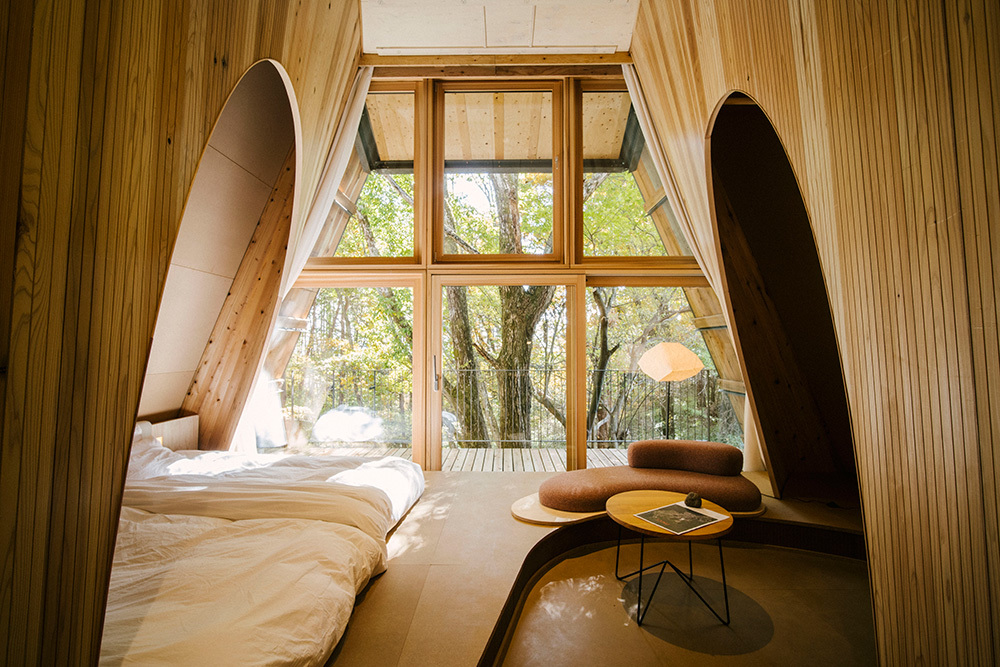
But when President Fukushima said, "It's about building lightly," I immediately understood and nodded in agreement. "Lightly" carries many meanings. First, it's easy on the wallet. Even those in their 30s can experience living in nature without financial strain. "Normally, you dig a big hole and pour concrete to make the foundation, right? But that puts a burden on the ecosystem. Just digging the hole damages the roots of important trees, and pouring concrete disrupts the balance of microorganisms."
What surprised me was President Fukushima's statement: "We build cabins with the premise that they'll be dismantled in 50 years." To achieve this, they use iron piles instead of concrete to support the cabins. "When they're no longer needed, we can pull out the piles and either reuse the building materials or return them to nature. I don't know if I'll still be alive 50 years from now, but thinking about 100 or 200 years ahead, living lightly with nature in the present—isn't that what sustainability is all about?"
The only criterion is: Would I want to live there?
I asked about location selection. "We believe the most important thing is whether we ourselves would want to go there, to live there. Forests are entities far beyond human understanding, so imagining life there is incredibly difficult. Even now, it's a constant process of trial and error. People often say diversity is important, but forests are treasure troves of diversity. It's full of discoveries like, 'Oh, so this is what happens!'"
Ah, so that's why architect Mr. Anzai is involved, I immediately understood. "The lifestyle each client seeks is different. We want to produce living spaces. Spaces where you can enjoy this environment however you like. Hotel living spaces are basically designed around the bed, right? In our case, the base is four elements: the bed, a place to work, a space to cook and eat, and the wet areas." He preempted my question: What's the difference between an extraordinary hotel and an everyday second home?
The sense of "living on Earth" is crucial
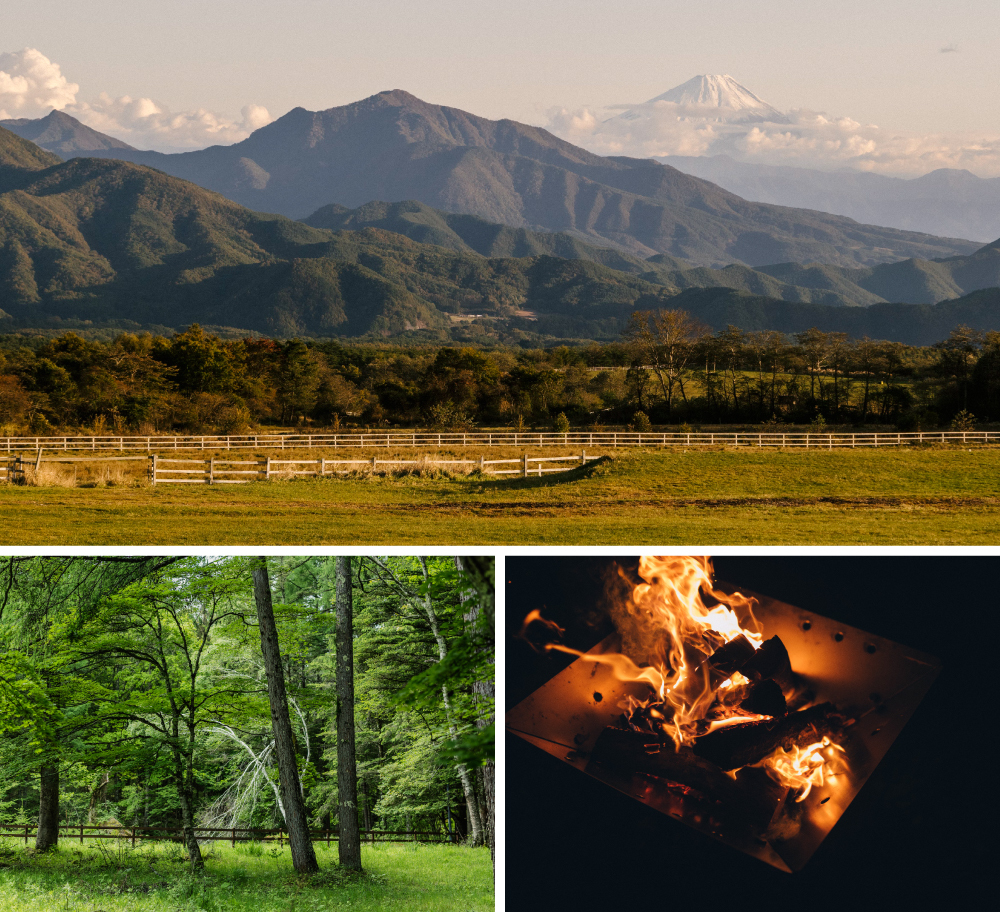
President Fukushima explains that SANU's motto, "Live with nature," has two meanings. "One is to increase the number of people who connect with nature and grow to love it. The other is to pass on rich natural environments to the next generation. For the first part—connecting people, especially urban dwellers, with nature—we have two approaches. One is bringing city dwellers out into nature. The other is bringing nature back into the city. The latter is incredibly difficult, isn't it? It's not something a company like ours can achieve alone. That's why we're starting with the former approach. Lately, I've been thinking: children raised in cities without much contact with nature might believe the city's concrete is the surface of the Earth. I don't deny concrete's value, but concrete isn't soil. Only when you stand on soil do you truly feel, 'Ah, I'm living on Earth.'"
To help people truly feel and connect with this, President Fukushima says it's crucial to create a specific, small group of "accomplices" – people who conspire with us. "If we told everyone living in the city, 'Let's live with nature. Let's have a second home in nature.' Right? So how do we spread 'Live with nature.'? First, we build a small group who resonate with this vision through the SANU 2nd Home project. Then we engage deeply with them. And each person brings in the next. That's how the chain of resonance expands. To put it dramatically, I believe this could change the way people live in this country."
The term "accomplice" felt quintessentially Fukushima. It conveys that sense of "Let's conspire together to do something fun and right." The company SANU itself was born from such a journey and continues to this day.
Creating an Exciting "Everyday"
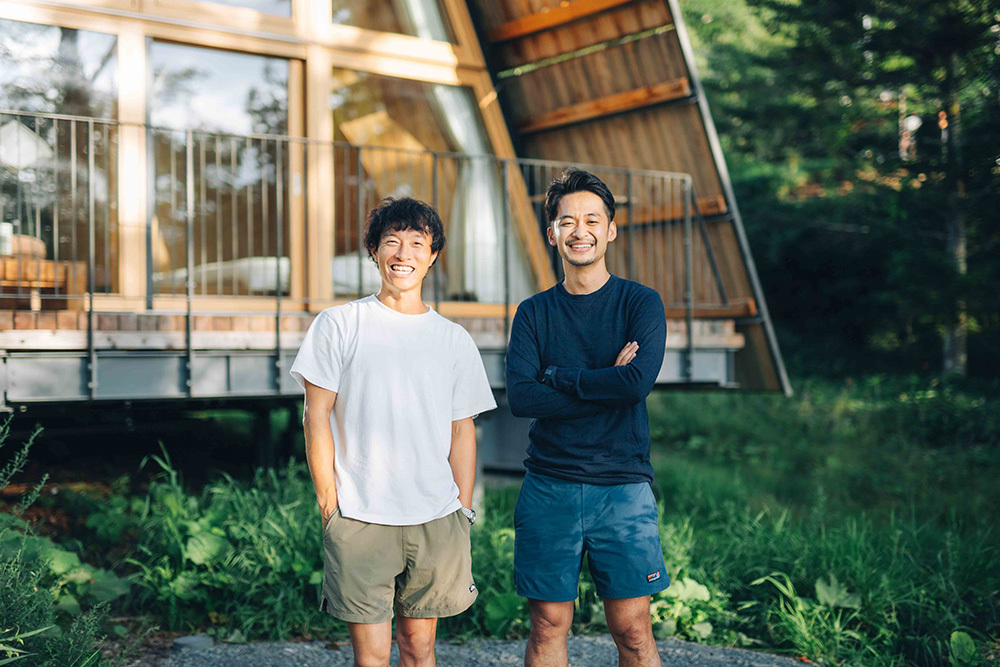
When I asked, "So, in a way, your company's work is about 'creating aspiration,' right?" in response to his statement about wanting to create accomplices, he replied, "Ah, yes. In the sense of creating people who want to live a lifestyle like SANU 2nd Home, that's exactly right. Lately, I often hear debates about city versus countryside, but I believe the city's future is bright. Architect Louis Kahn said, 'The city is where a child can encounter everything they aspire to become in a lifetime,' and I truly agree. However, as animals, humans need contact with nature, something hard to get in the city. The lifestyle I want to propose through SANU 2nd Home is what I call pivot living..."
Pivot is a fundamental technique used by basketball players. "The image is like keeping your pivot foot fixed in the city while freely moving the other foot to experience various natural environments like the sea or mountains. I want to propose a new way of living that affirms urban dwellers while embracing life alongside nature."
President Fukushima concluded the interview by emphasizing that mobility is crucial for supporting this "pivot lifestyle." "Call it a second wave of motorization—the ability to casually escape the city center for nature within 1.5 to 3 hours. Maybe it's just me, but when driving on the Chuo Expressway toward Yamanashi from downtown, don't you get this inexplicable sense of transgression? Like, 'I'm speeding away from the big city right now.' But the moment you see the Yatsugatake Mountains, that sense of transgression vanishes completely. You've returned to where you belong. It's that feeling of 'I'm home.'"
In the word "sense of transgression," I felt I glimpsed the deeper meaning behind President Fukushima's words: "Build lightly."

SANU's website is here.
 Season 2 of the series where Dentsu Inc.'s 'Company Design' team explores the secrets of 'vibrant companies' with 'originality.' Episode 23 introduced SANU, a startup gaining attention for its 'lifestyle revolution' offering second homes & second lives for a monthly fee of ¥55,000.
Season 1 of the series can be found here:
The "Company Design" project site is here:
[Editor's Note]
Even elementary school students know that 67% of Japan's land area is forest. Yet, I don't recall ever learning how to interact with those forests, trees, birds, and animals. Studying such things wouldn't get you into a good university or land you a job at a prestigious company. Listening to President Fukushima speak, I realized: Ah, that's the root of the problem.
Within agriculture, forestry, and fisheries, we can somehow picture "agriculture" and "fisheries" even without direct involvement. But "forestry" remains elusive. This despite forests covering 67% of the land. Mountains exist, forests exist, abundant water flows into rice paddies, and that water flows to the sea, nurturing fish. It's all interconnected.
Experiencing the earthquake, floods, and COVID-19 made the entire nation ponder: "Why do people live?" and "How can we live happily?" We're still in the midst of that contemplation. Amidst this, SANU's initiatives offer a significant clue. Owning a second home isn't the only answer. But President Fukushima's point—that if we don't enjoy daily life itself, isn't life a waste?—made me pause.

Was this article helpful?
Share this article


Newsletter registration is here
We select and publish important news every day
For inquiries about this article
Back Numbers
Author
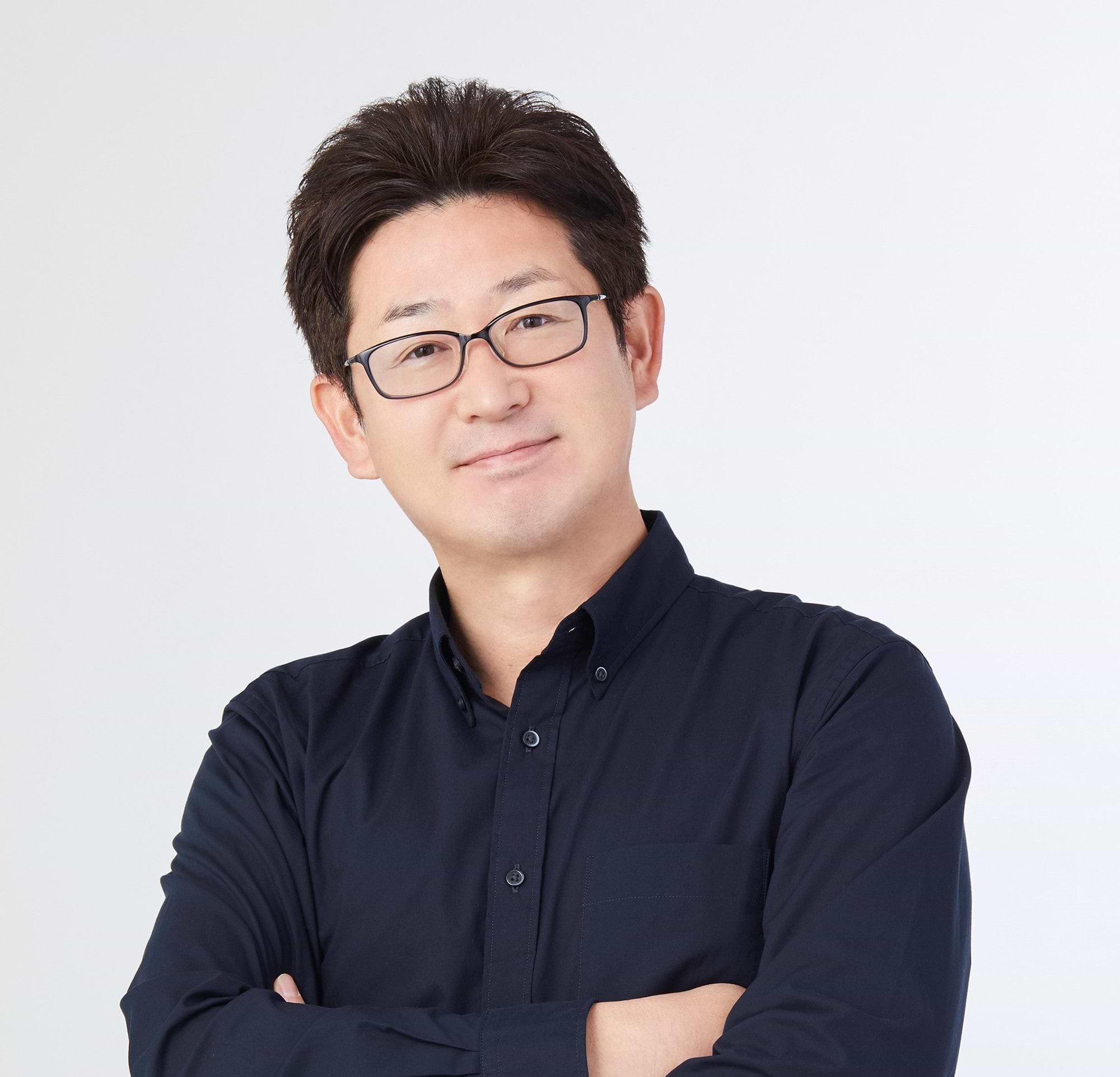
Kazuhito Goto
Dentsu Inc.
BX Creative Center
Director, Executive Creative Director