
Note: This website was automatically translated, so some terms or nuances may not be completely accurate.
 The Present and Future of Design and Innovation by frog [33/49]
What is the "Technology Radar" needed in the digital age?

frog
This article presents content originally published in "Design Mind," a design journal operated by frog, under the supervision of Mr. Noriaki Okada of Dentsu BX Creative Center.
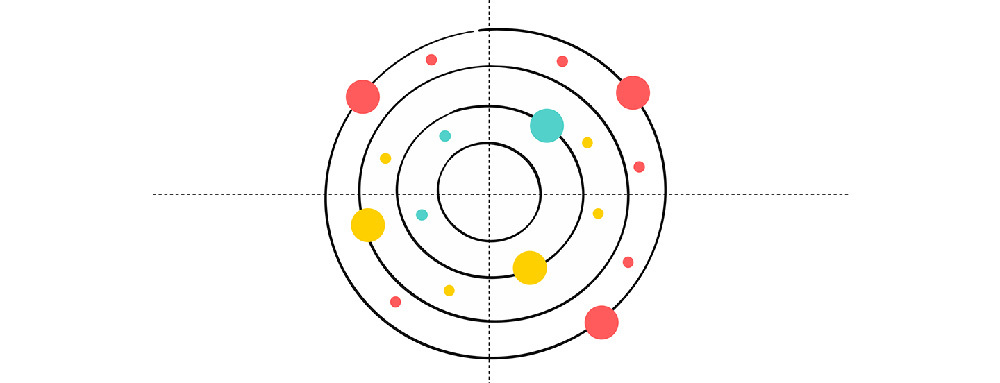
Ensuring transparency and clarity in your technology stack is crucial in the digital age
When you begin working with a new agency or partner, you will likely seek answers to at least one of the following questions:
- Which cloud platforms and technology stacks (*) are reliable?
- Which programming languages and frameworks are recommended?
- Which tools or methods should we use for business automation?
- What criteria should guide the selection of technologies to use or test?
Companies are evolving to become digital-first organizations, and new companies are emerging based on the selection of specific, trusted technologies. Ensuring transparency and clarity in the technology stack is now more important than ever.
※ = Technology Stack
A combination of tools, applications, and services used to build digital systems and software
frog's "Technology Community of Practice (CoP)" aims to make software development methods completely transparent and bridge the gap between technology/software development methodologies and other departments within the company. As a creative-minded group of technologists, we believe the constant evolution of digital technology should be widely shared and understood, serving as a reference when formulating technology strategy.
However, technology is changing rapidly today, and many of you are likely managing multiple projects simultaneously. In such an environment, how can you quickly and easily find answers to such important questions?
This is where the "Technology Radar" proves useful.
What is a Technology Radar?
A Technology Radar is a categorized list of technologies, tools, and methodologies that are either directly relevant to the challenges of a specific team or organization, or have been identified as important from an industry-wide perspective.
These technologies are grouped by function and evaluated based on their maturity, relevance, and usage at the time the radar is created. Items closer to the center of the radar (also called "blips") are considered to be more deeply understood and widely used by the target audience.
How the radar is designed—what it represents, how groups are categorized, and how relevance is shown—is entirely up to the team creating it. For example, it doesn't have to be limited to just technologies. Some organizations create radars representing broader themes like innovation. Half the fun of creating a radar lies in deciding how to select and prioritize the items included.
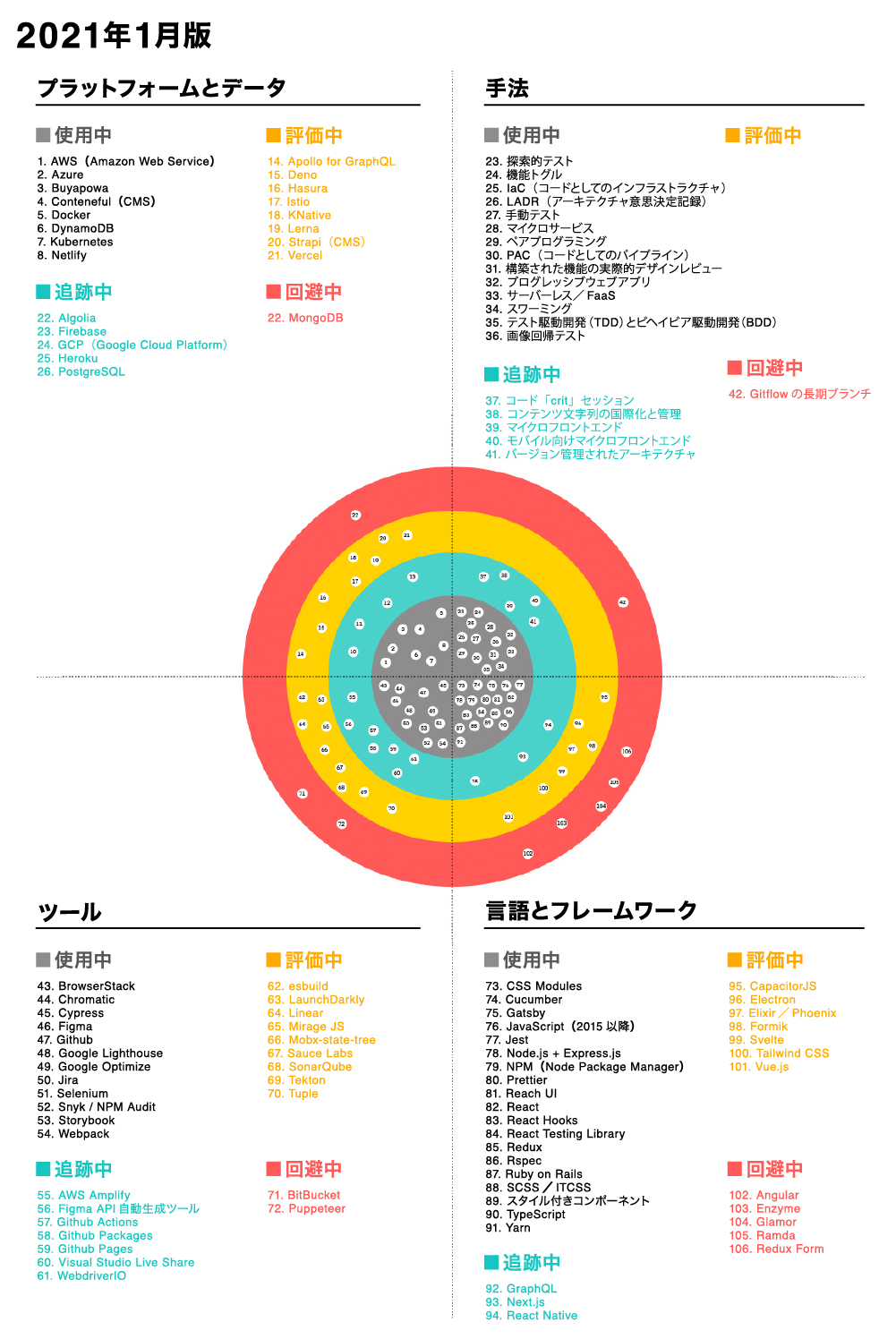
Four Lessons Learned from Creating Technology Radars
At our company, we use the Technology Radar as a guiding framework and a list of recommended technologies when selecting technologies prior to the (re)development of specific digital products or building features for internal platforms.
Using the Technology Radar enables us to:
- Make informed choices and amplify learning:
This radar helps our engineering teams align technologies and engineering practices across projects. It also encourages valuable feedback on lessons learned and experiences. Many technologies we now trust are included in our proprietary Technology Accelerator, enabling teams to rapidly build and release rich digital experiences. - Creating a space for review and discussion independent of project requirements:
Creating the Technology Radar established a space to review and discuss each item without being constrained by the requirements of a specific project. Particularly in the "Platform and Data" category, proposals included things some people had never heard of or only knew by name.
There were also instances where project teams had differing opinions. For example, one team preferred CSS Modules over styled components. Both ended up in the "In Use" category, but it will be interesting to see how these opinions evolve over time. - Thinking Strategically with Foresight:
The purpose of the Technology Radar is not only to represent the technologies relevant at the time of its creation but also to look ahead. Internally, we actively encourage proposals for new tools, platforms, and approaches that could further improve how we build future digital experiences. - Having a shared community goal:
In recent years, as everyone began working remotely, the Technology Radar provided a common goal for the entire community to collaborate on. This radar serves as the reason community members gather—to share knowledge and opinions, or to develop something new that might help someone.
Why We Recommend Creating a Technology Radar
Perhaps your team or organization wants to finalize technology choices and consolidate opinions on recommended technologies or standards applicable across most operations? Or maybe you have a solid grasp of your current tech stack but need to track promising future technology developments?
If so, start by creating a technology radar.
A Technology Radar makes the work ahead much easier for software development teams and roles closely aligned with technical/IT functions. That said, its usefulness isn't limited to technical departments. Visualizing digital assets makes these methodologies and knowledge accessible to other departments within the company.
Many of our partner companies are now taking the initiative to create their own technology radars. We can also collaborate with you to co-develop a framework tailored to the needs of your team or organization.
What are the three key points for creating your own Technology Radar?
Based on our experience creating Technology Radars within our tech community, we recommend proceeding as follows:
- Organize a series of short virtual workshops for your entire internal technology community. Invite all members to propose technologies or methodologies they are currently using, evaluating, or are interested in researching.
- Create a space for in-depth discussion and healthy debate about the relevance, maturity, and adoption status of each proposed item.
- Use a virtual voting system to formally decide which technologies to include on the radar and the categories to assign them to at the time of creation. Note that the positioning of each item may change over time.
Our Technology Radar has served as a community of practice, helping us generate perspectives on technologies relevant to our company and anticipated future scenarios.
Today, when questions arise like, "If we restarted Project X now, would we make the same choices or replace certain technologies?" or "It seems new features have been added to this platform. Should we reconsider that aspect?", we no longer wonder where to find the answers.
Our current version of the Technology Radar was just released, but we already have many ideas for evolving not only the updates to the items covered but also the experience itself. You can also use the attached form to register to receive notifications about future Radar updates.
If you have suggestions for items to include or feedback on our current technology selections, we'd love to hear from you. And if you're interested in creating your own radar, please get in touch. We'd be happy to share our experience and assist you in the process of creating and releasing your technology radar.
This article is also published in the web magazine "AXIS".

Was this article helpful?
Share this article


Newsletter registration is here
We select and publish important news every day
For inquiries about this article
Back Numbers


Author