Note: This website was automatically translated, so some terms or nuances may not be completely accurate.
 What can long-range drones do? [1/1]
Our drone will change the skies around the world.
You might not believe this at first. But by the end of this article, you'll see this isn't just tall tales.
<Table of Contents>
▼Bringing niche RC airplane technology to drones
▼Introducing an ultra-high-performance drone capable of long-range flight!
▼A drone combining the best features of rotary-wing and fixed-wing designs
▼Successful joint experiments with companies. Aiming to benefit people worldwide
Bringing niche RC airplane techniques to drones
While working as a Creative Director at Dentsu Inc., I was privately immersed in high-end aerobatic competitions with radio-controlled airplanes. If you compare it to cars, it's the world of Formula 1. For over 20 years, I honed diverse knowledge and expertise—not just piloting skills, but aerodynamics, aircraft design and construction, tuning, maintenance techniques, meteorology, and more.
Then came the era dubbed the "Drone Industrial Revolution." In other words, the time had arrived when drones would serve society and become a viable business. Since drones are unmanned aerial vehicles, weren't my planes drones too? I was filled with an indescribable sense of excitement—my ultra-niche hobby world had somehow become central to the times.
Dentsu Inc. had an internal cross-functional lab called the "Dentsu Robot Promotion Center." Since drones are essentially robots, I approached them about joining. My reasoning was simple: if my personal uniqueness could create value for the company, that would be ideal.
After that, I decided to start my own business as a Creative Director. I left Dentsu Inc. at the end of 2020 and entered into a business contract with the group company, New Horizon Collective, G.K. I continued to participate in the "Dentsu Robot Production Center (current name)" as an external staff member.
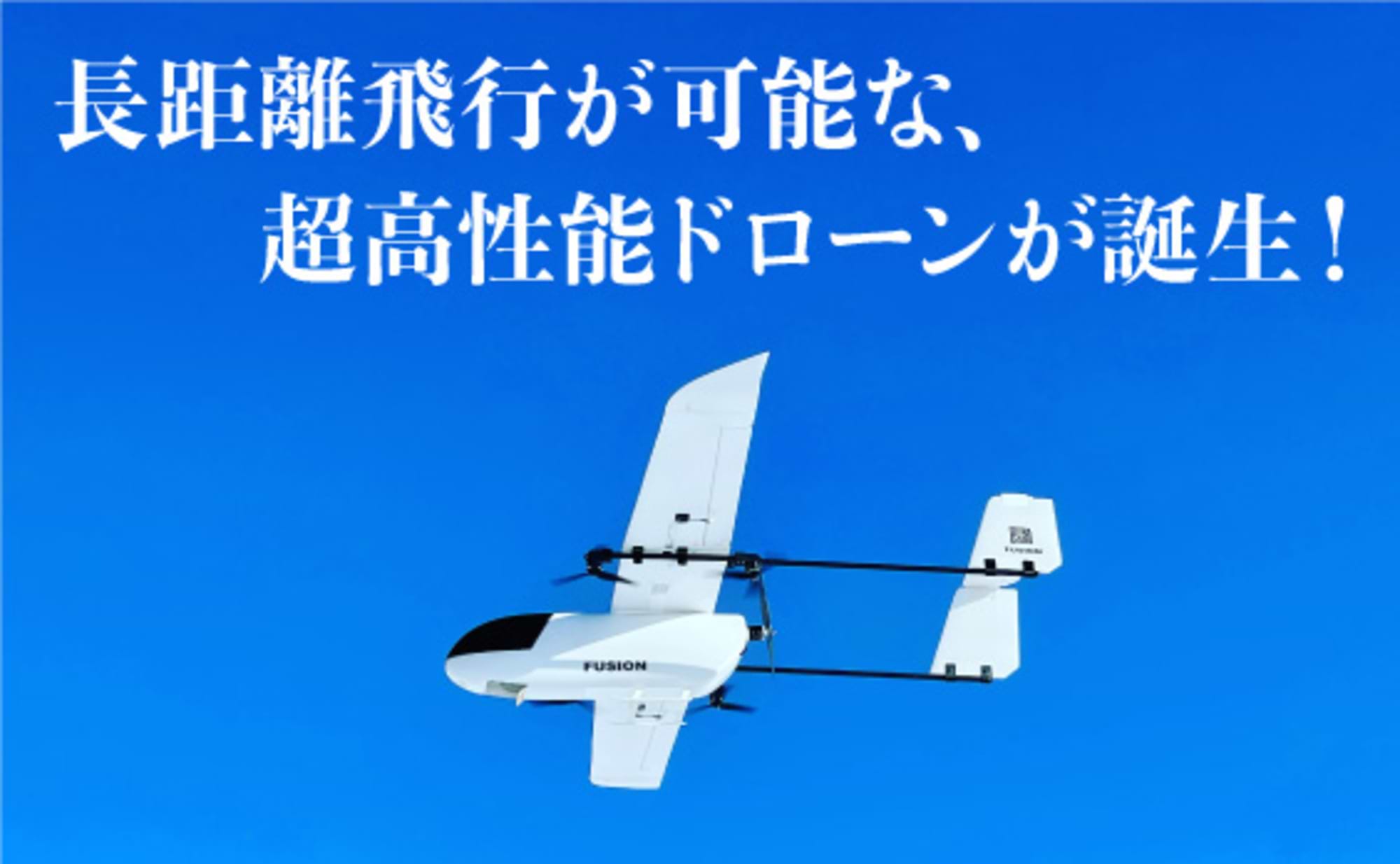
A super-high-performance drone capable of long-distance flight is born!
Shortly after, an old RC hobbyist friend made me this offer: "We've developed a groundbreaking industrial drone. Want to start a company together?" He's a world champion in aerobatic competition and an expert in aircraft design. I rushed to check out the prototype. It was incredible.
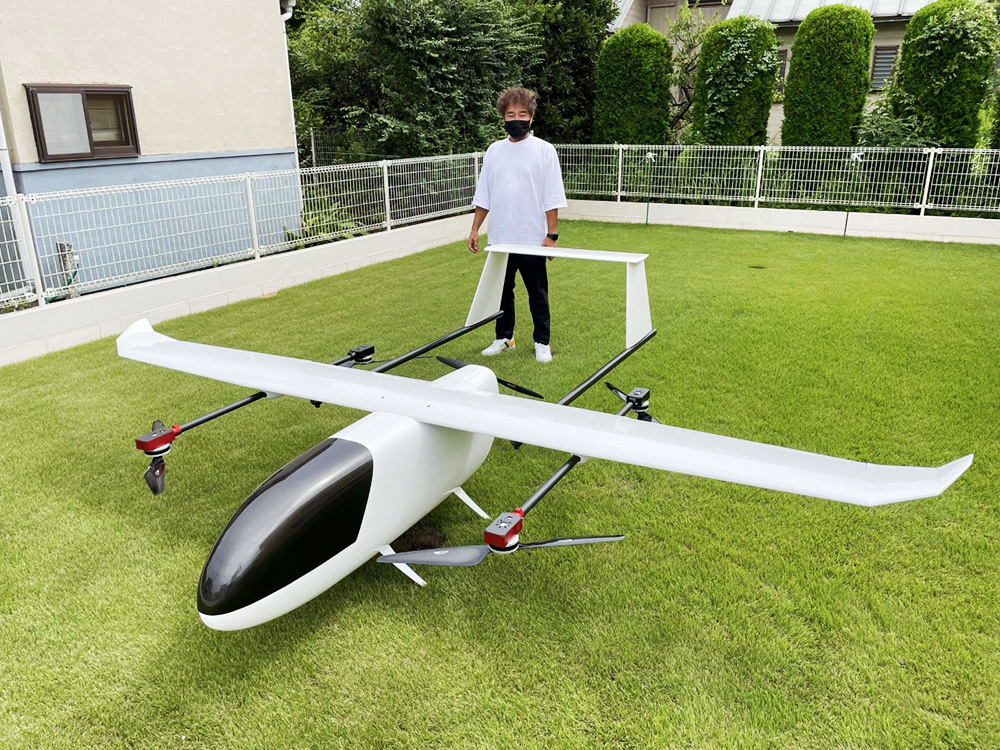
It was a fixed-wing drone with a 2-meter wingspan, capable of vertical takeoff and landing (VTOL). It could fly for up to 2 hours over 120km, with flawless flight stability. In April 2021, we launched the drone venture " Sora Kai Co., Ltd. " and conducted our own proof-of-concept test in July.
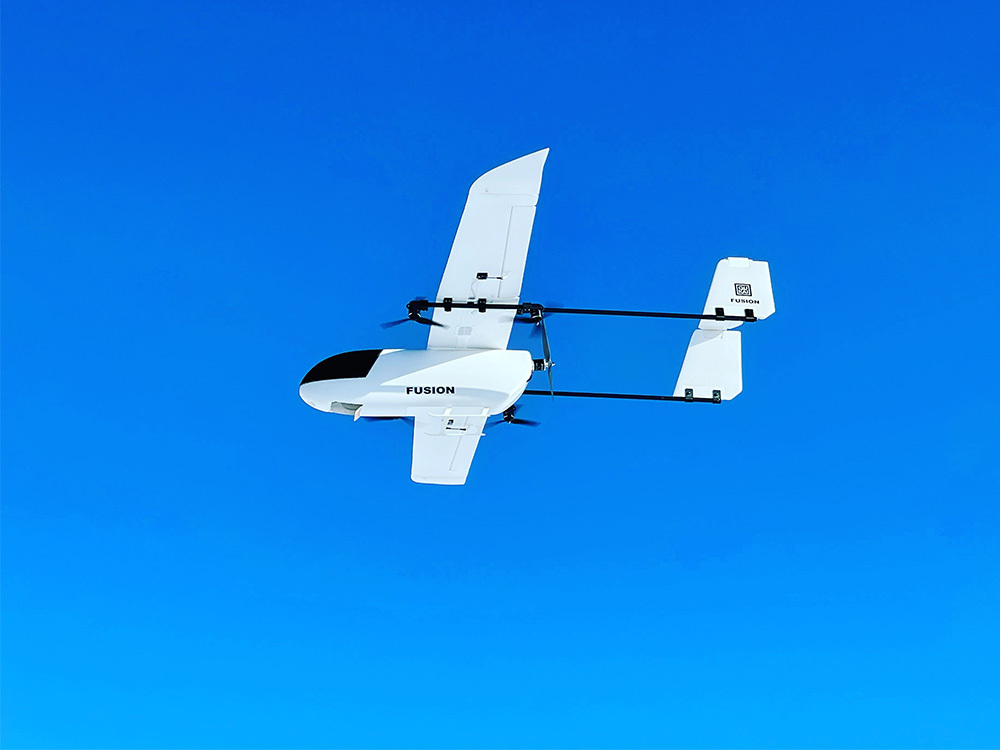
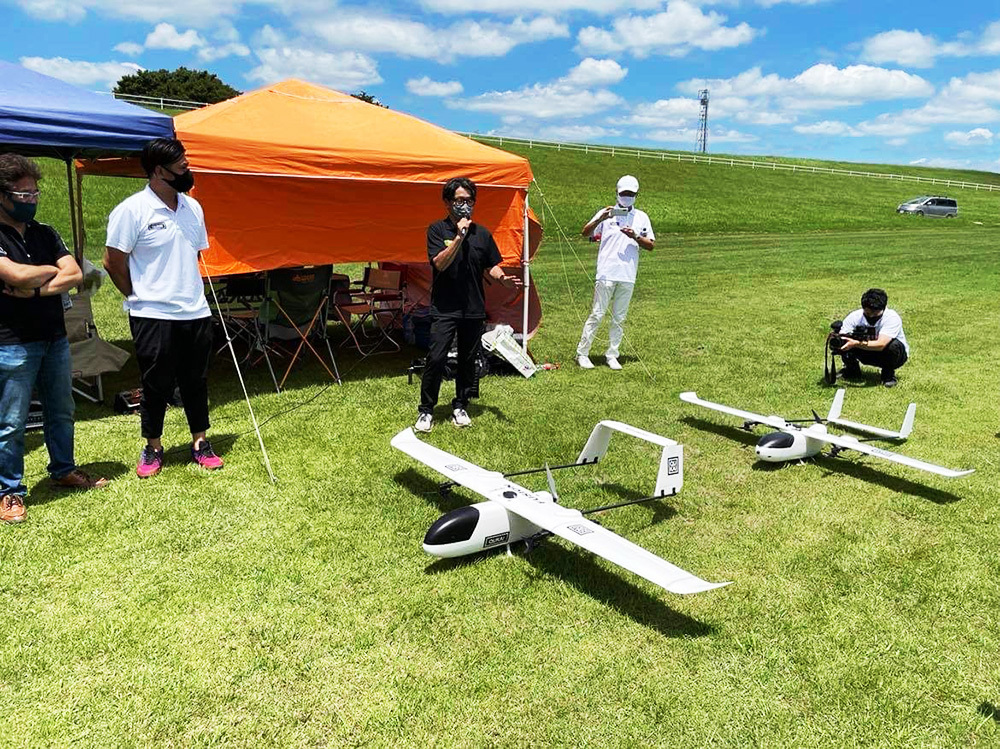
We successfully completed an autonomous flight covering 62 km over the Tone River, from Choshi City to Kawachi Town in Ibaraki Prefecture. The payload included emergency supplies like medicine, mobile batteries, vitamins, and masks. This set the record for the longest flight distance by an electric drone in Japan. I believe this sense of speed stems from the fact that all four founding members are experts in radio-controlled aircraft.
A drone combining the best features of rotorcraft and fixed-wing aircraft
Let's properly explain drones here.
When most people hear "drone," they typically picture the multicopter type with four propellers attached to each corner. That's the kind of drone commonly used for filming. Advanced sensor control and the management of four motors enable highly stable flight, making them relatively easy to pilot. Larger models can even carry cargo. You often see articles about drone delivery trials, and you can assume they're using this type of drone.
Existing even before multicopter drones came along are single-rotor, helicopter-type drones, long used for pesticide spraying and aerial photography. However, piloting them requires considerable skill. That covers rotary-wing drones. Now, what's currently attracting tremendous global attention is the fixed-wing type, essentially airplane-shaped drones.
Airplanes have wings, enabling them to generate lift through airflow. This means they can glide. Unlike rotary-wing drones, which spin propellers to forcibly (?) generate lift, fixed-wing drones can fly longer distances using less energy.
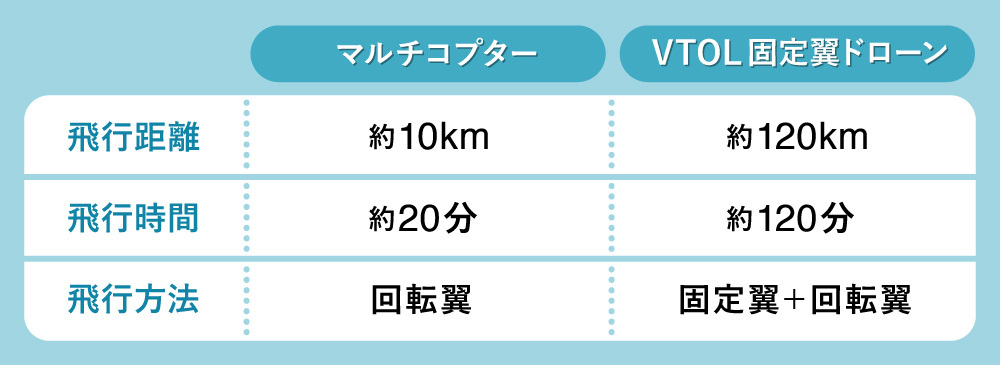
While multicopter drones are limited by battery life to about 10km and 20 minutes of flight, fixed-wing drones can fly around 120km for about 2 hours. They're also faster. As you can probably tell, fixed-wing drones are the clear choice for transport tasks.
However, fixed-wing drones also have drawbacks. They require a runway of considerable length for takeoff and landing, and cannot perform maneuvers like hovering (stationary flight) or backward flight, which rotorcraft can. Both have their pros and cons. So, the idea behind VTOL fixed-wing drones is to combine rotorcraft and fixed-wing elements to create a drone that "combines the best of both worlds."
This way, it operates like a multirotor drone during takeoff and landing, and like an airplane during level flight. It doesn't need a runway and can fly long distances for extended periods. While the mechanism is different, think of the Osprey. It's no wonder development is being pursued so intensely worldwide.
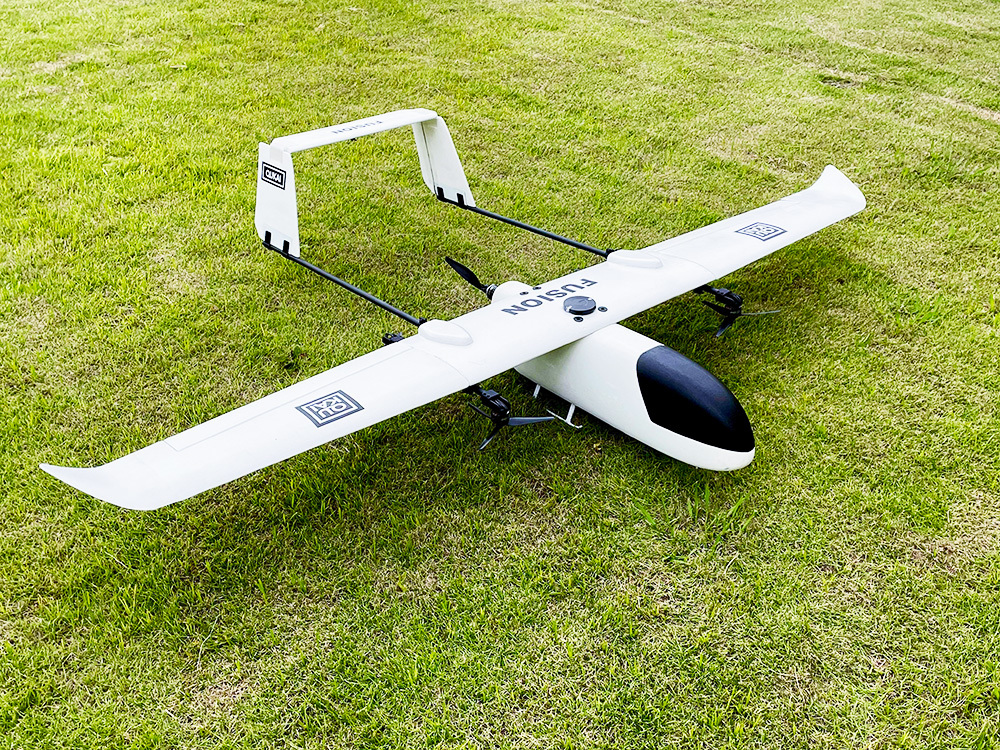
That said, only a handful of VTOL fixed-wing drones are commercially available worldwide, and they are extremely expensive. Their flight performance also didn't feel particularly outstanding. We set the goal of commercializing a VTOL fixed-wing drone that was "high-performance and less than half the price," achieving this in October 2021. Our focus was on weight reduction; the insight that lightness itself drives performance came from our experience with radio-controlled airplanes.
Successful joint experiments with companies. Aiming to benefit people worldwide
Subsequently, "Kūkai" achieved successive successes in joint experiments with companies. Starting in November 2021, we collaborated with Yamato Transport, TS Alfresa, and NTT Docomo for approximately two months on a proof-of-concept experiment in Wake Town, Okayama Prefecture, aimed at building a pharmaceutical delivery network. We flew over challenging routes, including mountain passes, and performed pinpoint landings in residential gardens.
In March 2022, during the large-scale reed burning at the Watarase Flood Control Reservoir, it completed extensive fire suppression confirmation over a 20km area in a short time through flight. In June, a joint experiment with NTT Docomo in Okinawa successfully transported supplies along a 42km maritime route from Tomigusuku City to Zamami Village. Utilizing NTT Docomo's high-precision positioning system, landing accuracy reached a level with an error margin of just a few centimeters. Additionally, the company is exploring entertainment applications, such as drone-based smoothie delivery on Miyako Island.

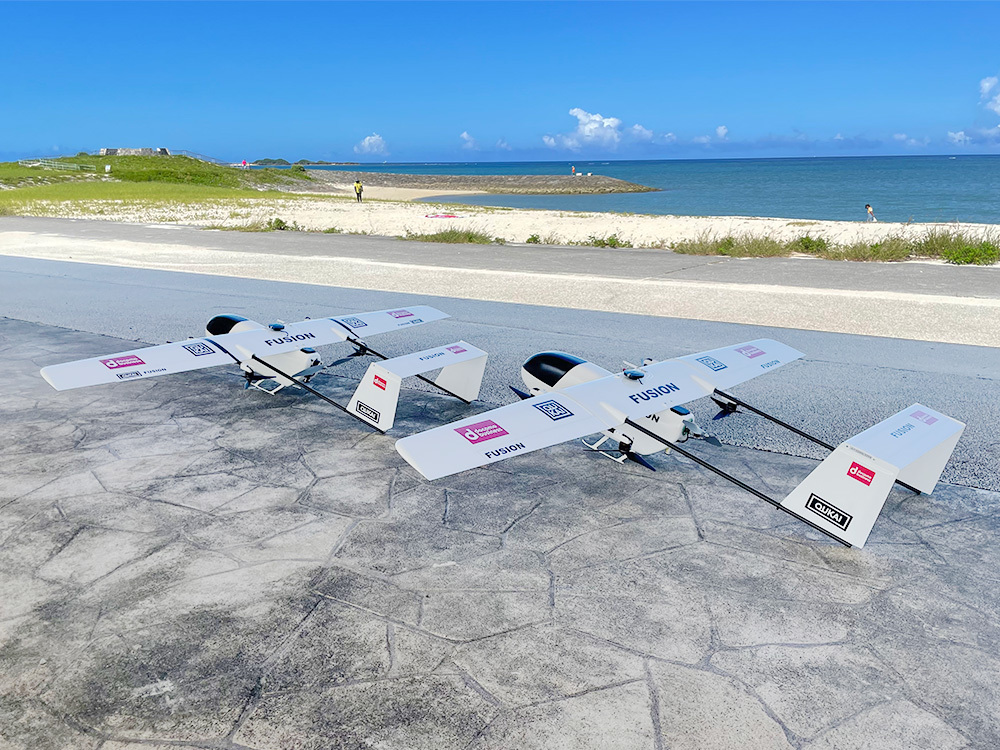
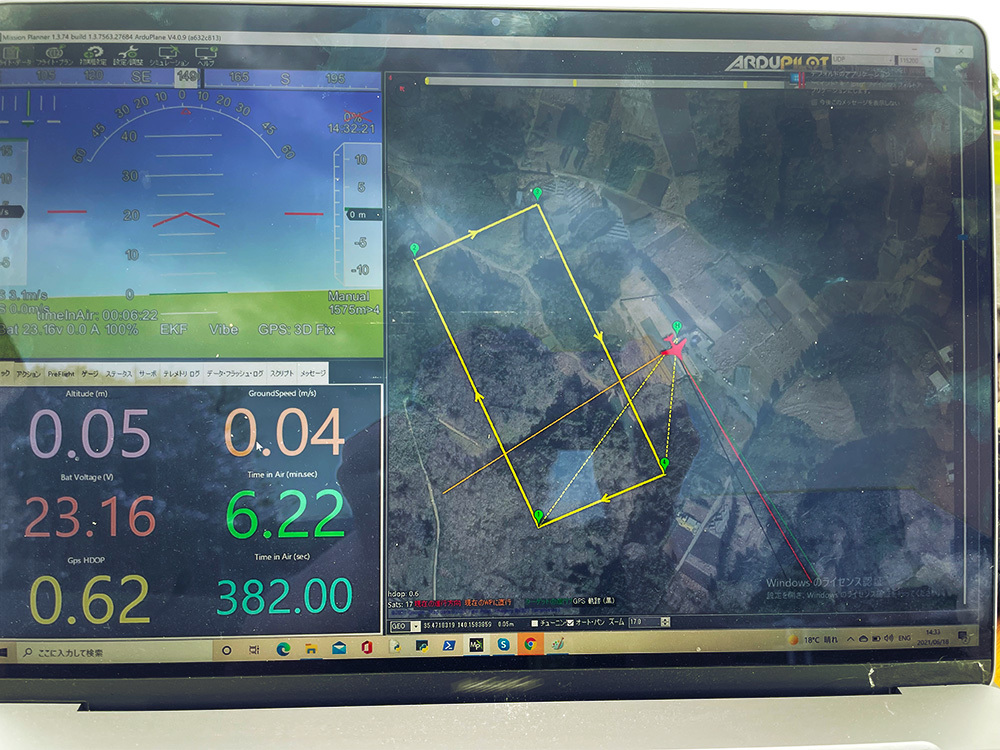
Currently, we are developing a large aircraft with a wingspan of 3.5 meters, aiming for a flight range of over 300 kilometers. If this becomes practical, it could connect islands like the Okinawa Islands in the Nansei Islands and the Izu Islands. In the future, it might also be useful for island nations like Indonesia and the Philippines. Long-range flight opens up previously unimaginable solutions. Moreover, since it requires no human transport, flies with minimal energy, and is contactless, CO2 emissions are low.
That said, numerous challenges remain. First is regulatory framework. Drones cannot fly freely anywhere. The revised Aviation Act, set to take effect in late 2022, warrants close attention. Further updates to the aircraft are also essential. For societal implementation, security, reliability, and durability must be rigorously pursued. Enhancing societal acceptance of drones is crucial, with safe and secure operation being key. Overcoming the perception that drones are scary or dangerous will require time and effort.
Currently, we are exploring new solution businesses in alliance with Dentsu Inc. Robot Production Center. This includes collaborating with local governments worldwide to transport supplies to remote areas, islands, and disaster zones, aiming to improve the quality of life for those with limited mobility. We are also considering applications like long-duration aerial surveillance and search operations along coastlines. Furthermore, we aim to bring to life unique and innovative ideas that are distinctly Dentsu Inc.-like – ideas that wouldn't naturally emerge from the drone industry itself. These include concepts like Drone × DX (Digital Transformation), Drone × Entertainment, and Drone × Education. We hope you'll look forward to these developments. If you're interested, please feel free to contact the Dentsu Inc. Robot Production Center.
We don't know if it's possible, but we're seriously considering it.
Someday, we will serve people worldwide. Someday, we will transform the skies.
<Contact Us>
Dentsu Inc. Robot Production Center
https://forms.office.com/r/aQZbzbbMr9

Was this article helpful?
Share this article


Newsletter registration is here
We select and publish important news every day
For inquiries about this article
Author
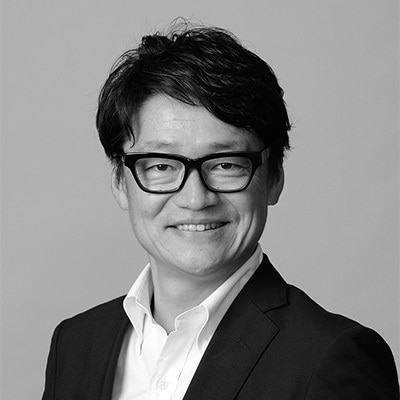
Naoki Morita
NMINC Co., Ltd.
CEO and Creative Director
Sora Kai Co., Ltd. Representative Director and CMO New Horizon Collective, G.K. Professional Partner