Note: This website was automatically translated, so some terms or nuances may not be completely accurate.
Space Business for Everyone: The Potential Brought by Space Tech Evolution (Part 1)
Have you ever heard the term "spacetech"? It's a portmanteau combining "space" and "technology," referring to initiatives that seek to bring new value to daily life, business, and social activities through space-related technological development. Currently, satellite technology is particularly central to this field. As the number of satellites increases, technological development advances, opening up new business possibilities.
On the other hand, for many people, the image of space is very limited, perhaps seen as something detached from daily life, as in "space means space travel." While recent examples of private citizens traveling to space have made it a slightly more familiar topic, many likely still think "it doesn't concern me." However, the "space business" expanded by Space Tech holds immense potential that can impact the lives of ordinary people.
This time, we interviewed Mr. Toshihiro Katayama of Dentsu Inc., who is engaged in space-related business development. We asked him about the overview of space business, its potential, and the innovations emerging from it.
Spaceports: The Key to Japan's Future Economic Growth
Q. What led you to become involved with "space"?
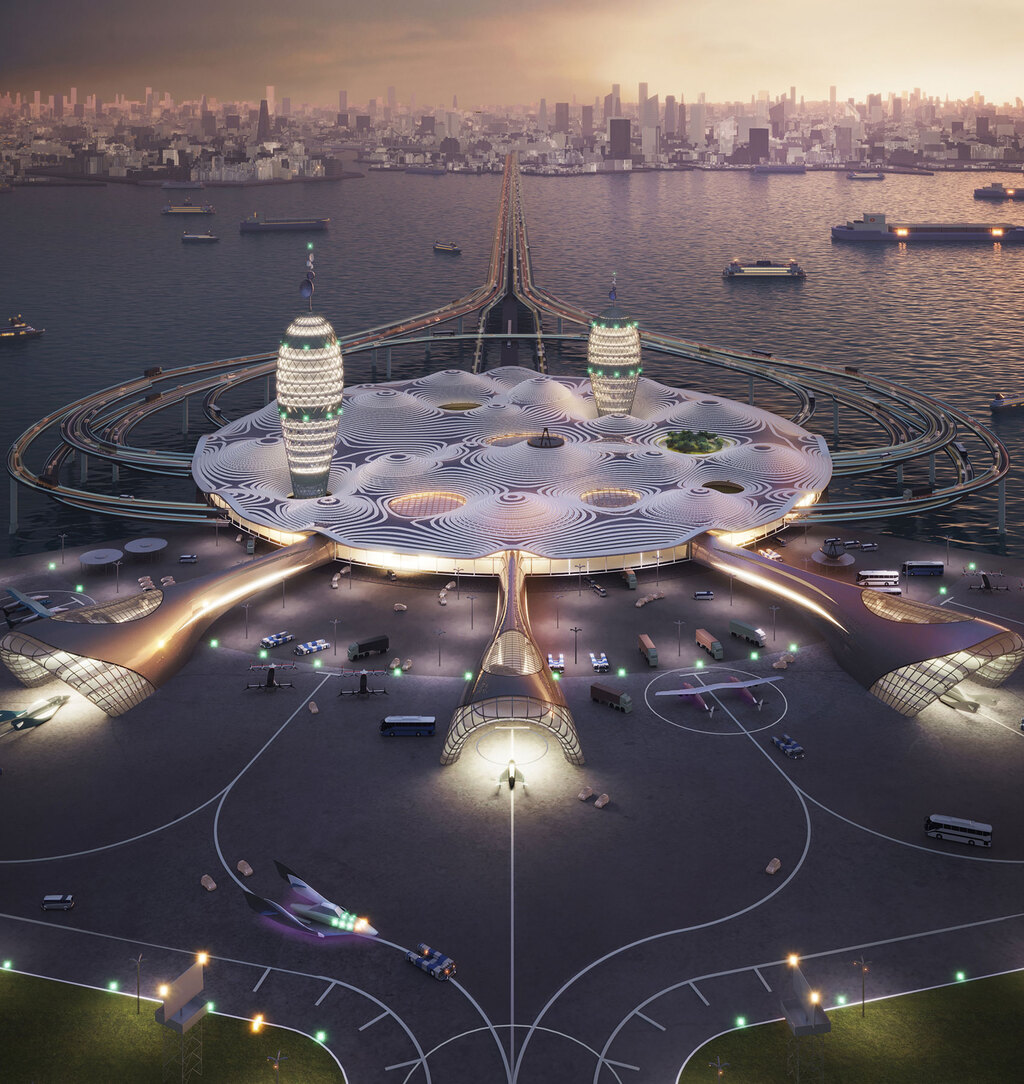
Katayama: It started when I worked on a project for a large international exhibition event, where we created a pavilion themed around space. At the time, it was purely coincidental that the theme was space. However, during that process, I learned that while the era demanding "spaceports" is approaching, Japan currently lacks them. A spaceport is the ground base for going into space. Just as we call the gateway to the sea a "port" and the gateway for airplanes an "airport," the gateway for rockets and spacecraft going into space is called a spaceport.
Do you remember when "hub airports" – airports functioning as central hubs concentrating air routes from various regions and relaying people and cargo to other airports – were an economically crucial factor? For example, according to OAG's "Mega Hub International Index 2018," which handles aviation data, the airport with the most international transfers was London Heathrow Airport at number one. In Asia, Singapore Changi International Airport ranked 8th. Following were Jakarta's Soekarno-Hatta International Airport (10th), Kuala Lumpur International Airport (12th), Hong Kong International Airport (13th), Bangkok's Suvarnabhumi International Airport (14th), and Incheon International Airport (15th). Japan's Haneda Airport ranked 21st, while Narita Airport placed 42nd. Japan had not established a strong presence in Asia. In other words, it had fallen significantly behind in the "hub airport strategy."
Amidst this, I learned that the next key in the space business is "spaceports." To be honest, at the time, I wasn't particularly fond of space, nor did I have any special attachment to it. However, if no movement to realize "spaceports" emerged here, Japan might fall behind the world again, just as it did with hub airports. Furthermore, while called "spaceports," they are physically built on the ground, making them a form of "urban development." Recognizing this as meaningful work I could be involved in, I started a movement to "build spaceports in Japan" alongside like-minded individuals who shared this sense of urgency.
A key milestone in this movement was the establishment of the Spaceport Japan General Incorporated Association in 2018. This organization, led by astronaut Naoko Yamazaki as its representative director, promotes collaboration with domestic and international companies, groups, and government agencies to rapidly open multiple spaceports in Japan. It is advancing collaborations with companies developing and operating spaceplanes—aircraft capable of vertical takeoff and landing—and manned rockets, while also engaging industries that previously had no connection to space.
Q. I hadn't really heard the term "spaceport" before. Could you tell me more about what kind of facility it is?
Katayama: When thinking of ground bases for space travel, you might picture "rocket launch sites" like the Tanegashima Space Center or the Kennedy Space Center. In addition to these, "horizontal-type" spaceports have recently emerged. These involve aircraft carrying rockets with satellites, taking off horizontally from a runway and launching the rockets from the air. This makes it possible to utilize regular airports as spaceports without needing to build dedicated rocket launch sites. One area in Japan where preparations for a spaceport are particularly advanced is Oita Airport. Virgin Orbit, an American company engaged in satellite launches, has announced plans to utilize Oita Airport as a horizontal-type spaceport. Additionally, Sierra Space, another American company, has formed a partnership to explore using Oita Airport as its Asian base for its space shuttle. Beyond these, locations like Taiki Town in Hokkaido, Kushimoto Town in Wakayama Prefecture, and Shimojishima in Okinawa Prefecture are also developing spaceports and exploring new business opportunities stemming from them.
Rockets often utilize Earth's rotation to launch toward space, making it impossible to launch if cities or national borders lie in the east or south—the direction of flight. This is precisely why the Kennedy Space Center is located in Florida—it meets these various constraints. This geographical condition makes it difficult for countries with southeastern borders to build spaceports. China, for instance, launches rockets from the middle of deserts or deep inland mountain ranges. Against this backdrop, Japan is a miracle location for spaceports, completely open to the sea on both the east and south sides.
As satellites continue to proliferate, the demand for launching rockets to deploy them will only increase. In other words, the need for spaceports is undeniable. The competition will be over which spaceport can capture that demand. Japan's spaceports—Hokkaido Spaceport, Spaceport Kii, Spaceport Oita, and Shimojishima Spaceport—all boast excellent conditions. Unlike locations in the middle of deserts or deep mountains, they are close to urban areas and also possess aspects as tourist destinations, featuring hot springs and beach resorts. This is why they are attracting attention from overseas.
Spaceports stimulate the "ground economy"
Q. You mentioned that building a spaceport expands business possibilities. What specific opportunities does it open up?
Katayama: Consider a new bullet train station opening. What happens then? People come, so hotels and restaurants open. Offices follow, and the town grows.
Similarly, if a spaceport is built, people involved with rockets and spaceplanes will live nearby long-term. Eventually, technicians will be stationed there, and offices for related companies will open. As the population grows, restaurants and entertainment facilities will likely increase too. An industrial hub forms, people gather there, diverse needs emerge, and business expands. This flow is the same for both spaceports and Shinkansen stations.
Space tourism is one business that will be revitalized by spaceport development. In 2021, a well-known Japanese entrepreneur's trip to the International Space Station generated significant buzz. Space tourism offers various options: stays at the ISS, multi-day Earth orbits, or trips to the Moon. All are said to cost billions of yen, making them extremely expensive. Plans have also emerged for more affordable options costing tens of millions of yen, essentially offering a few minutes in space as a kind of attraction. While still quite expensive, demand already far outstrips supply. If prices drop further, space tourism could explode.
For example, there was a previous proposal for a "space wedding" product, which might become a reality soon. This plan involves boarding a spaceplane, traveling to space at an altitude of 100 km, holding the wedding ceremony and exchanging rings there, staying in space for about five minutes, and then returning to Earth. Along with the bride and groom, a few guests would board the spacecraft. The ceremony would be live-streamed to family and friends on Earth. After returning, a reception party would serve as the wedding celebration. If implemented today, packaging the entire experience would likely cost around 400 million yen. There are many wealthy individuals around the world who are enthusiastic about space travel and think, "I could afford that." As these affluent people gather at spaceports, there will be demand for luxury hotels in the surrounding areas, opening up possibilities for various resort destinations and services.
Now, looking at overseas spaceports, many are located in remote areas like the middle of deserts. Since most space travelers are wealthy individuals, they often arrive by private jet, so access isn't a major issue. However, while space travel itself is exciting, the spaceport itself might not be particularly enjoyable. If this were in Japan, surrounded by the sea, we could place the spaceport near hot springs, beach resorts, and areas with delicious food. This would make the area around the spaceport very enjoyable too. Don't you think that would be competitive?
Once a spaceport is built, how might it develop into facilities and a city? What related industries and services could emerge? Spaceport Japan has released the "Spaceport City Concept Diagram," illustrated with diagrams to help visualize these possibilities clearly. Take a look, and you'll likely sense the diverse potential a spaceport could unlock.
Q. I see. Building a spaceport isn't just about "going to space," but about "seizing an opportunity for Japan as a whole to grow through new business." And since this opportunity could become fiercely contested globally, we must act proactively, right?
Katayama: Establishing a spaceport means developing massive infrastructure. Therefore, it's a project that requires public-private collaboration. However, unless people truly understand the value and potential of a spaceport, opinions like "We should spend the budget on other things before building a spaceport for the wealthy " might emerge. I hope you've sensed this from my explanation so far: Spaceports are not only the foundation for future massive industries, but they are also crucial matters concerning national security and geopolitics. I want to convey that this is an extremely important theme.
Currently, when the theme of "space" is covered, for example, on television programs, it is often presented as a topic that seems somewhat dreamy and exciting, but ultimately lacks realism for the general public. However, I believe space development is "national strategy itself," and spaceports are a theme Japan must seriously pursue as a nation.
We've seen that the development of space businesses, including space tech, contributes to the growth of the "earthly economy." The era where we, living on Earth, reap the benefits of space business may be just around the corner. Furthermore, the mindset of public-private collaboration to attract "spaceports" seems poised to become a crucial factor driving Japan's future growth.
In the upcoming second part, we will delve deeper into the impact of space business on soft content and explore further prospects.
The information published at this time is as follows.
Was this article helpful?
Share this article


Newsletter registration is here
We select and publish important news every day
For inquiries about this article
Author

Toshihiro Katayama
Dentsu Inc.
Business Producer