Against the backdrop of trends in sustainability management and human capital disclosure, more companies are focusing on IR communication. IR activities are now a critical factor in enhancing corporate value. Nevertheless, many companies still struggle to effectively communicate non-financial value that resonates with stakeholders.
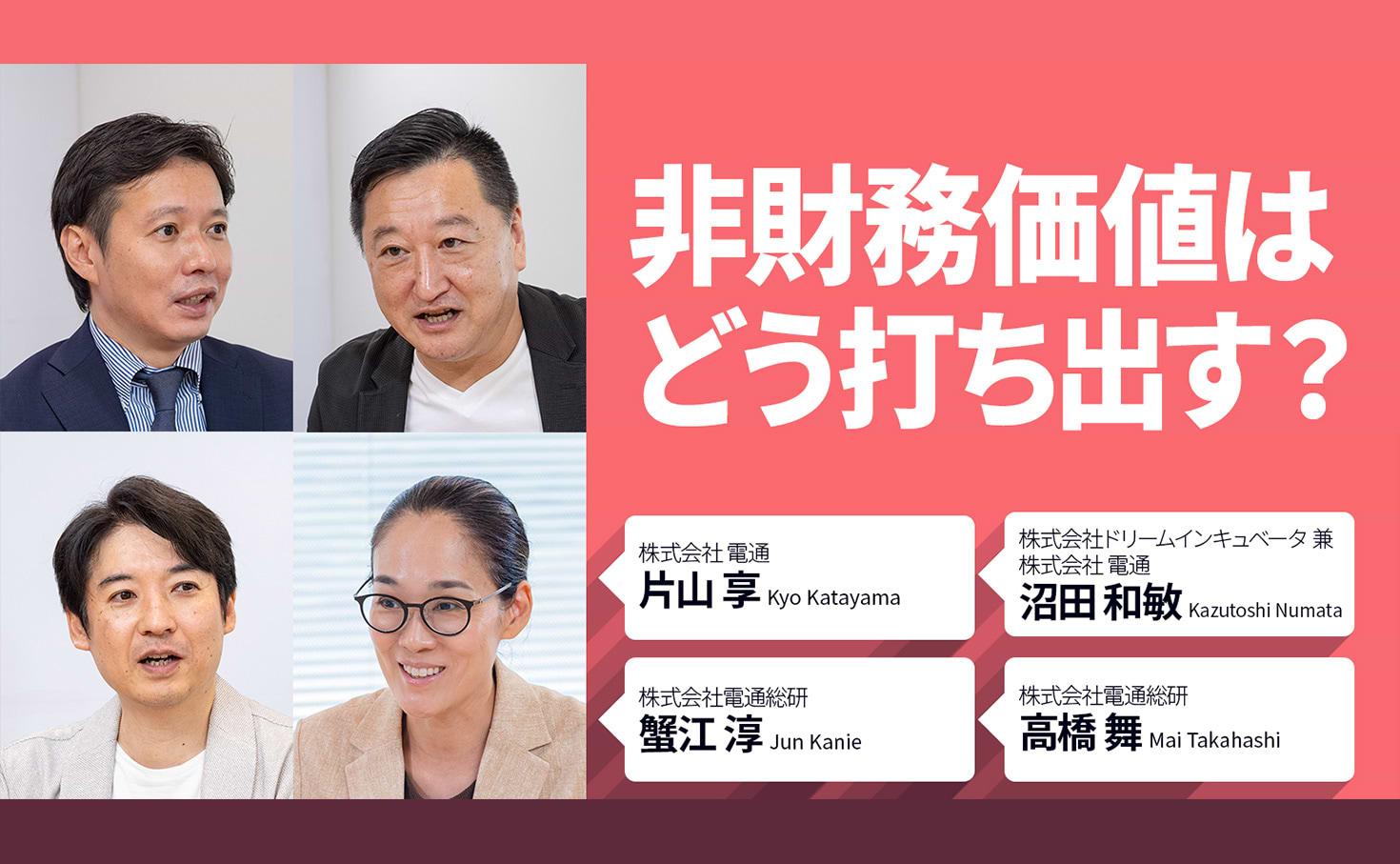
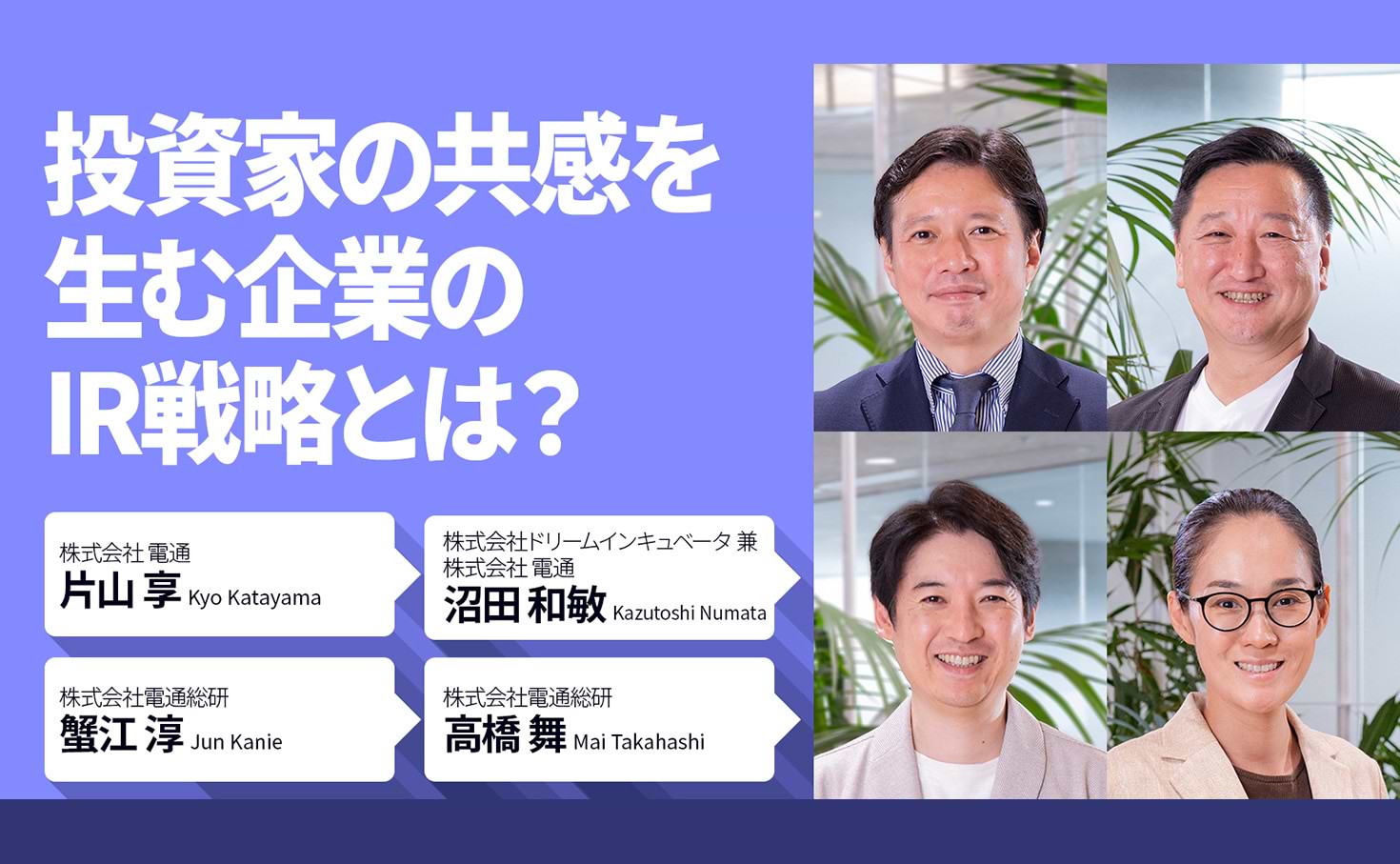
To address these challenges, the Dentsu Group in Japan (dentsu Japan ) has launched "IR For Growth," a program that supports companies in enhancing their long-term corporate value. This program combines IR support with consulting services covering both financial and non-financial aspects. This project involves the participation of Mr. Takashi Katayama, General Manager of the Business Transformation Division at Dentsu Inc.; Mr. Kazutoshi Numata, Executive Officer at Dream Incubator Inc. and also of the Dentsu Business Transformation Division, who supports the creation of new businesses and industries and corporate growth; and Mr. Jun Kanie of the Consulting Division at DENTSU SOKEN INC., who has developed consulting menus focused on enhancing both financial and non-financial value . Joined by Mai Takahashi from DENTSU SOKEN INC.'s DENTSU Consulting Inc., who has handled numerous human capital management projects, we discussed approaches to enhancing corporate value from an investor's perspective.
Why? The Reason Sustainable Corporate Value Enhancement is Being Reevaluated from an IR Perspective
Q. Why is IR being reevaluated now from the perspective of sustainable corporate value enhancement?
Katayama: In March 2023, the Tokyo Stock Exchange requested listed companies to improve their management practices with a focus on capital costs and stock prices. Subsequently, measures and considerations for investor-focused management were published, clarifying the specific requirements. Additionally, changes to the TOPIX (Tokyo Stock Price Index) selection rules have made listing standards increasingly stringent each year. For companies hovering near the listing maintenance threshold, and indeed for all firms, elevating corporate value has become an urgent priority, capturing significant management attention.
Amidst this, IR (Investor Relations) that contributes to sustainable corporate value enhancement is gaining critical importance. Japanese companies have traditionally placed less emphasis on IR. However, the relationship between business activities and IR activities is indispensable for enhancing corporate value. We believe it is paramount to clearly demonstrate to stakeholders the narrative that "non-financial value drives financial value, enabling sustainable corporate growth."
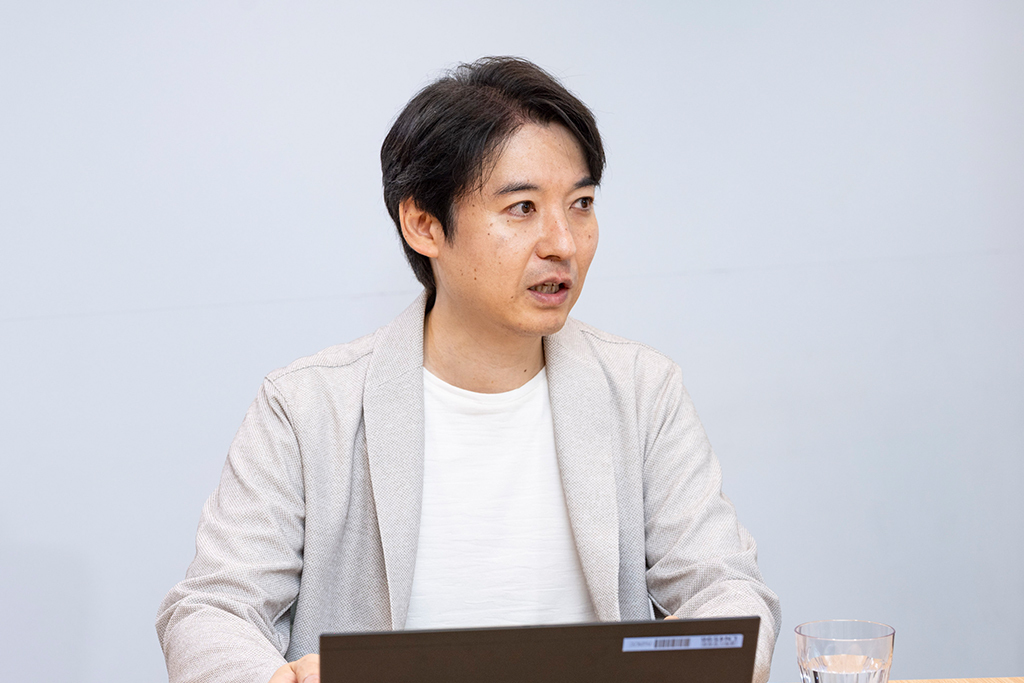
Mr. Toru Katayama, Dentsu Inc.
Q. Currently, about half of listed companies face the so-called "PBR (Price Book-value Ratio) 1.0 barrier," where their stock price falls below their net asset value per share. Could you explain the reasons for this and the challenges Japanese companies face?
Katayama: In Japan, where the population is declining due to a low birth rate and aging society, the market is shrinking. Against this backdrop, there is a strong demand for streamlining business operations, transforming business models, and creating new ventures. By July 2025, the market capitalization of the top nine entertainment companies surpassed that of the top nine automotive companies, highlighting differing investor expectations across sectors. The more established the company, the greater the need for significant transformation of its business domain. I believe many companies are currently undertaking this challenge.
Q. What approaches can be considered to raise PBR?
Katayama: "PBR = ROE (Return on Equity) × PER (Price-Earnings Ratio)." PER is said to reflect market expectations regarding a company's future potential. IR communication that resonates with investors leads to higher PER. To increase expectations for sustainable growth, I believe it's crucial to strengthen human capital and drive the entire company toward its purpose with unified effort.
Numata: To boost ROE, we want to create new revenue pillars. Many companies considering new ventures share this mindset. While we consultants do receive such inquiries, simply launching a new business isn't enough. Obviously, it must sustain operations, generate profits, and only then contribute to ROE. Despite this understanding, ventures sometimes end prematurely due to various circumstances without achieving sufficient profitability, resulting in disappointing outcomes.
While Dream Incubator Inc. excels at supporting business creation, we've recently been increasingly proposing reviews and growth strategies for existing businesses. Many companies likely believe, "We know our own existing businesses best." However, there may still be untapped potential, and innovation can be sparked even within existing operations. Challenging yourself with a new venture is commendable, but I also believe it's crucial to revisit your existing business domain.
Kazutoshi Numata, Dream Incubator Inc. and Dentsu Inc.
A Growth Story Integrating Financial and Non-Financial Value to Resonate with Investors
Q. You interact daily with many corporate executives. What challenges do you frequently encounter?
Katayama: We often hear that while existing business profits are solid, stock prices and PBRs struggle to grow. We also receive consultations about companies investing heavily in non-financial areas and human capital management, yet failing to effectively communicate that value to investors. Many companies publish mid-term management plans, but we frequently see cases where divisional mid-term strategies and corporate-level human capital strategies are developed separately, resulting in inconsistent narratives. Amid this fragmentation between business operations, HR, and IR, we're increasingly being approached by Dentsu Inc. to play a role in unifying these departments, ensuring consistency by weaving a cohesive mid-term vision and growth story.
Kanie: I also sense a shift in how corporate value is perceived within companies. Traditionally, shareholder primacy dominated, emphasizing financial value: how to grow the business, generate profits, and communicate that effectively. Recently, however, multi-stakeholderism has gained prominence, demanding the provision of social value. Consequently, corporate goal-setting is changing, and awareness of enhancing non-financial value is gradually permeating across departments.
Mr. Jun Kanie, DENTSU SOKEN INC.
Numata: Responding to activist shareholders is another topic that comes up. I think executives are constantly challenged to consider how to address the tough criticisms raised by activists. I've heard concerns like: despite reforming existing businesses and launching new ventures to boost financial value, stock prices aren't rising as hoped, leaving them wondering what to do. While it's hard to generalize due to varying circumstances, a common pattern is the failure to decisively allocate resources to the business with the greatest potential for profit impact. This often strikes me as a missed opportunity.
Takahashi: I often speak with corporate HR officers and directors. Those with a broader perspective view employee-facing HR communications, investor-facing IR communications, and external PR communications as interconnected. I advise job seekers to review the integrated reports of companies they want to work for on recruitment sites. Some companies even publish Human Capital Reports primarily targeting employees. Breaking down the barriers between HR, IR, and PR could be a key move to enhance corporate value.
Furthermore, as Mr. Katayama mentioned, I believe it's crucial to consider what story we tell investors. How do we demonstrate that each department is organically connected and that the entire company is working together to enhance value? For instance, even in HR, I feel there's a growing need to tell stories from a broader company-wide or business perspective, rather than just promoting issues and initiatives confined to the HR domain.
DENTSU SOKEN INC. Mai Takahashi
Strengths of dentsu Japan's One-Stop Support
Q. Against this backdrop, the Dentsu Group developed the strategic IR support program "IR For Growth." What are its strengths?
Kanie: "IR For Growth" is a strategic IR support program that aims to enhance corporate value by integrating financial and non-financial value and communicating it consistently, appropriately, and effectively. When companies craft their growth story, clearly demonstrating the appeal of non-financial value is crucial. "IR For Growth" offers the comprehensive strength to visualize the value of initiatives in the non-financial domain, backed by data-driven evidence, and effectively communicate it leveraging the power of the Dentsu Group.
Katayama: The Dentsu Group's uniqueness lies in our ability to consistently accompany clients from defining future value propositions all the way to the final relationship. First, we visualize future potential starting from current corporate value, establishing the value the company can deliver in the future—its North Star. Then, we develop a strategic growth story: formulating the business and financial strategies to reach that destination, defining the supporting non-financial strategies needed, and identifying the actions required. A major feature is our one-stop support, leveraging the strengths of each Dentsu Group company. This includes embedding this strategy with employees, communicating it to investors, and using branding to attract new investors and customers.
Due to revisions in the TOPIX selection rules, the current approximately 2,100 constituent companies are expected to decrease to around 1,200 by July 2028. Amid this demand for enhancing corporate value, "IR For Growth" provides end-to-end support—from IR assistance to financial and non-financial consulting, and the creation and dissemination of growth narratives. This process also provides an opportunity to clarify your company's strengths and challenges. If you're interested, why not consult with us? In the second part, we'll introduce successful case studies that integrated financial and non-financial value to drive corporate value enhancement.
He has long been in charge of a major telecommunications group at the Business Production Division. He has produced numerous projects end-to-end, from service concept design to the execution of branding and campaigns. In recent years, he has been engaged in production work in the BX field, supporting corporate and business transformation for clients, and has held his current position since January 2026.
Executive Officer, Dentsu Inc. / Transformation Produce Bureau, Integrated Transformation Produce Division 1
Strategy and Installation Practice Leader, Graduate School of Shizenkan / Specially Appointed Associate Professor
Starting January 2025, concurrently serving as Business Development Director at Dentsu Inc., Transformation Produce Bureau. At Dream Incubator Inc., engaged in business production for various large corporations and venture companies, formulating growth strategies and new business strategies, and launching and supporting new businesses by involving/collaborating multiple large corporations and venture companies.
Jun Kanie
DENTSU SOKEN INC.
Consulting Division Future Business Development Unit
Unit Leader
With extensive experience in strategic planning and business transformation/BPR (Business Process Reengineering) across diverse industries including manufacturing, publishing, and restaurant chains, he also has broad involvement in solving people and organizational issues such as talent management and organizational revitalization. He transforms businesses by addressing both the value creation process and the human/organizational aspects, supporting clients in enhancing their value delivery capabilities. In recent years, he has intensified his focus on advancing sustainability management, economic security, and cybersecurity initiatives.
After leaving Dentsu Inc. in 2010, she moved to the United States. Following the completion of her MBA and the birth and raising of her child, she returned to Dentsu Inc. in 2018. Drawing on extensive business experience—including her time as a systems analyst at a bank and her role in corporate strategy planning at an automotive company—she supports corporate transformation.