Against the backdrop of evolving digital technologies, enhanced value of real-world experiences, and the diversification of fan engagement, the sports industry is entering an unprecedented phase of growth.
Against this backdrop, in July 2025, SEPTENI HOLDINGS CO.,LTD. (hereinafter “SEPTENI HD”) and Dentsu Inc. formed a business alliance to begin offering digital solutions specialized for the sports sector. They provide comprehensive digital support to sports federations, clubs, teams, sponsors, and others, thereby contributing to the growth of the sports industry (press release here).
In this article, Daisuke Sueto (President and CEO) and Ryosuke Sumitomo (Director) of SEPTENI CO.,LTD, along with Yudai Tanabe (General Manager of the Sports Business Solution Division) of Dentsu Inc., discuss the current state of the sports business, the initiatives of both companies, and their future outlook.
"Digital" Holds the Key to the Sports Industry’s Growth
──First, could you tell us about how SEPTENI CO.,LTD and Dentsu Inc. are each involved in the sports sector?
Sueto: SEPTENI CO.,LTD is a marketing firm specializing in the sports and entertainment sectors, established in January 2025 by SEPTENI Holdings, a company whose core business is digital marketing.
Sumitomo: We are focusing on the sports and entertainment market, which is expected to grow significantly in the future, and we provide various services and solutions based on our expertise in digital marketing.
Tanabe: Dentsu Inc. has been involved in the sports business for many years. I believe we have made significant contributions, particularly in securing corporate sponsors and in the business of broadcasting rights, primarily for terrestrial television.
I am currently a member of Dentsu Inc.’s Sports Business Solution Division (hereinafter referred to as the SBS Division). In addition to supporting the marketing activities of sports federations, clubs, and teams, and proposing sponsorship opportunities to companies, the SBS Division aims to solve corporate challenges through sponsorship. We take a broad view of stakeholders in the sports sector—including athletes and fans—to provide diverse solutions.
──As you engage with the sports sector, how do you view the current state and challenges of the sports business in Japan?
Tanabe: The sports market is predicted to grow dramatically over the next decade. At the same time, however, since the Tokyo 2020 Olympic and Paralympic Games, the value and significance of sponsoring sports have been re-examined, and I feel we have reached a “turning point.” In this context, sports organizations, teams, and athletes supported by sponsorships will need to find ways to generate revenue without relying too heavily on sponsorship in the future.
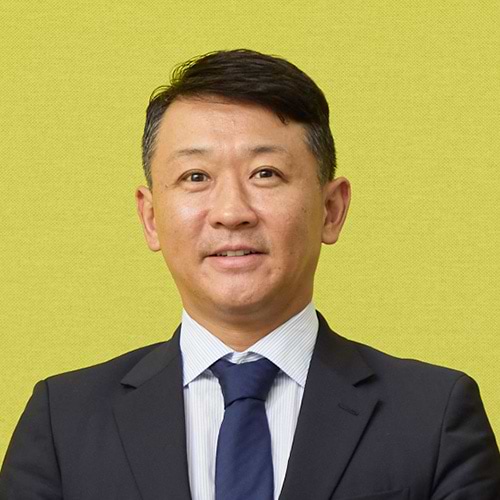
Dentsu Inc., Mr. Tanabe
Sumitomo: I often watch sports myself, and every time I experience their appeal, I feel that their business value is not fully appreciated in Japan. Just looking at ticket prices—for example, in Japan’s top soccer league—they are overwhelmingly cheaper compared to overseas markets. Furthermore, for events like the Super Bowl in American football, a 30-second commercial slot is said to be valued at around 1 billion yen. Even when compared to Japan’s economic scale on the global stage, the market value of sports cannot be said to be commensurate.
Furthermore, even in major sports, when viewed at the club or team level, resources such as funding and personnel are quite limited. We need to pay more attention to these challenges.
Sueto: That’s right. Working directly with clubs and teams, I feel there is a need for reform in the sports industry’s work culture and labor conditions. I’ve been involved in global business at SEPTENI CO.,LTD, and while the entertainment industry is making remarkable strides overseas by leveraging content IP, I feel the sports industry faces significant challenges on the business side.
──What about the relationship with fans?
Tanabe: I feel there is significant room for growth here as well. The J.League was established about 30 years ago, and as the philosophy of community engagement took root, the relationship between fans, clubs, and players has improved. Professional baseball is also becoming an increasingly major business. However, I feel there is still more we can do regarding how we build relationships with fans and supporters, or how we leverage their passion for business purposes.
I believe that digital initiatives are where we can truly demonstrate our strengths in solving these various challenges facing the sports industry. This includes using data to visualize the value of sponsorships and improve our ability to explain them, or having sports organizations use digital marketing and DX to expand their business as a single entity. I believe that how effectively we can incorporate digital elements will be a watershed moment for the development of the sports industry.
What is “On-Off Integrated Marketing,” which combines the strengths of both companies?
Mr. Sueto, SEPTENI CO.,LTD Sports & Entertainment
──How will Dentsu Inc. and SEPTENI CO.,LTD address the challenges facing the sports industry?
Sueto: There are two main areas. First, we will evolve the sports business by combining SEPTENI CO.,LTD’s capabilities in the digital domain with Dentsu Inc.’s expertise in marketing and the sports sector.
The second is that Dentsu Inc. has long been involved in sponsorship business and supporting leagues and sports organizations. Behind these leagues and organizations are clubs and fans, so we aim to build a system that provides comprehensive support to all stakeholders involved in sports.
Sumitomo: To be more specific, we aim to implement “integrated online and offline marketing” for the sports market. For sports organizations, this includes integrating online and offline marketing and audience engagement. For example, while local broadcasters air sports programs, we also plan to produce and distribute web programs tailored to internet users, as well as use data to deliver content to viewers watching terrestrial broadcasts.Furthermore, for our corporate sponsors, we believe they will see new benefits through online initiatives in addition to offline measures such as stadium signage. Going forward, we want to take on the challenge of collaborating with Dentsu Inc. to design new approaches and value propositions for sponsorship in this digital domain.
──Could you tell us a little more about the benefits of “online-offline integrated marketing”?
Sumitomo: This isn’t limited to the sports sector, but in past marketing campaigns, it was not uncommon for the same company or brand to have inconsistent brand identities or messages between offline and online advertising. One reason for this was that different companies were handling the online and offline campaigns. By partnering with SEPTENI CO.,LTD and Dentsu Inc. to pursue integrated on- and offline marketing, we can enhance the consistency of advertising, which is expected to create synergistic effects.
Tanabe: In the sports sector, for example, many regional teams focus heavily on promotions such as commercials on local TV stations. To address this, we are leveraging Dentsu Inc.’s data platform “STADIA360” (*)—which is based on actual TV viewership data—to pursue integrated online-offline strategies, an approach that has seen few implementations in the sports sector until now.
Specifically, this includes delivering ads tailored to audiences who have watched TV commercials versus those who have not. Furthermore, we can serve digital ads for the teams where national team players are based to viewers who watched nationally broadcast matches of the Japanese national team, thereby aiding the teams’ promotion. By leveraging viewing data, we are tackling challenges unique to the sports sector—such as expanding opportunities for cross-promotion between leagues, clubs, and the national team.
*STADIA360 = Japan’s largest marketing platform, provided by Dentsu Inc., based on actual TV viewing data obtained with user consent. By linking actual TV viewing data with digital behavioral data, it enables integrated online-offline analysis.
──Do you have any examples of “omnichannel marketing”?
Sumitomo: We have assisted several sports teams with their marketing efforts, and I’d like to highlight the case of “Avispa Fukuoka,” a J1 soccer club based in Fukuoka City. Avispa had conducted almost no digital marketing initiatives and had barely utilized the “J.League ID” up to that point. Although their catchment area was large, their attendance figures were among the lowest among J1 teams.
Tanabe: By the way, “J.League ID” is a common membership ID provided by the J.League to all participating teams. It’s a system where all fan activities—such as purchasing tickets and merchandise—are linked to a single ID. Dentsu Inc. supports the operation of the “J.League Official App,” which utilizes the J.League ID.
Sumitomo: We began our marketing support for Avispa by first using the J.League ID to track attendee trends.We analyzed how many new attendees came through digital channels and how many returned. We also calculated the ROI (return on investment) relative to the advertising budget. The results showed that the advertising costs could be recouped in just one match. Furthermore, we discovered that with proper targeting, we could attract new attendees more efficiently, yielding valuable insights for designing future initiatives.
Furthermore, while the team’s marketing activities had previously relied primarily on offline initiatives such as billboards near train stations, after strengthening digital advertising, average attendance per season surpassed 10,000 in 2025 for the first time in nine years, and the number of new attendees continues to grow.
Tanabe: Strengthening our digital presence and advancing the integration of online and offline efforts yields various benefits. By collecting and analyzing data to gain a clearer understanding of the team’s fan base, we can present a more compelling case to sponsors for their support.
Furthermore, not just in the J.League, but in general, when club and team management becomes stable, people who love sports and possess digital and management skills will want to join. This creates a virtuous cycle where the club or team grows as a corporate entity. For example, the Hokkaido Nippon-Ham Fighters have become a popular company representing Hokkaido, and it feels like they attract a lot of talented people.
Demonstrating sponsorship value to corporate partners through data
—Listening to you, I feel that “integrated on- and off-field marketing” particularly highlights the need to strengthen the digital domain. What benefits do sports sponsors gain by incorporating digital initiatives?
Tanabe: Many companies are now rigorously scrutinizing the return on investment for their advertising. Simply stating that “the event was a success and our sign was displayed there” is no longer sufficient. Linking sponsorship value to data—such as the number of spectators and the demographics of the audience—becomes extremely persuasive.
Sumitomo: Currently, the sponsorship value companies receive is mostly derived from offline elements such as billboards and logo displays. Against this backdrop, we are working to create new sponsorship value in the digital realm, drawing on the expertise of Dentsu Inc., which has long been involved in the sponsorship business. Through this, we aim to lay the groundwork for implementing integrated online-offline marketing for our sponsor companies.
Mr. Sumitomo, SEPTENI CO.,LTD Sports & Entertainment
──Finally, could you share your outlook for the future?
Tanabe: In traditional mass media promotions, the “double sponsorship” issue was a major constraint, so it was common for sports organizations, teams, and sponsoring companies to run their own separate advertisements. However, online, multiple organizations and companies can collaborate to realize diverse promotional campaigns.
For example, this includes tie-in advertising involving sports organizations, teams, and multiple sponsoring companies, as well as initiatives such as “showing ads from sponsoring companies to people who have seen the team’s ads.” This infinite synergy, leveraging the strengths of each stakeholder, should broaden our ability to create touchpoints with consumers and expand the range of our approaches.
Sumitomo: Working in collaboration with Dentsu Inc., we aim to support all stakeholders in the sports sector through integrated online and offline marketing, transforming the excitement and joy generated by sports into tangible value. We also hope to contribute to the overall development of the sports business.
Sueto: Through initiatives that utilize integrated on- and off-field marketing, we plan to support more sports organizations and teams in establishing monetization methods that do not rely excessively on sponsorships. We hope to bring about positive changes to the structure of the sports industry as a whole.
Joined SEPTENI CO.,LTD in 2005 as a mid-career hire. Leveraging his deep expertise in digital marketing, he has led the expansion of overseas operations since 2012. Currently, as Group Executive Officer and CGO of the SEPTENI Group, he is driving the development of relationships with key clients.
He also serves as Representative Director of SEPTENI Sports & Entertainment Co., Ltd., contributing to the development of the sports industry.
Ryosuke Sumitomo
SEPTENI CO.,LTD.
Director
In 2013, he joined SEPTENI CO.,LTD as a new graduate. After gaining experience in sales, he worked on media algorithm analysis. He subsequently established the AI Promotion Office and the Data Business Division, serving as the head of each. In January 2025, he was appointed to the Board of Directors following the establishment of SEPTENI Sports & Entertainment.
Yudai Tanabe
Dentsu Inc.
Director, Sports Business Solution Division
Since joining the company, he has primarily worked in the Digital and TV divisions, handling major broadcasters and platform providers.
I led the development of business models and the establishment of rules during the early stages of media transformation, such as the dawn of digital advertising in the 1990s and the launch of digital broadcasting in the 2000s. I was also seconded to a smartphone-based broadcasting station, where I spearheaded preparations for its launch as well as programming and production. Currently, I am part of the SBS division within the Sports Department, where I am responsible for providing solutions that help address the challenges faced by clients and society.
Also read
"Integrated Online-Offline Marketing" Will Accelerate the Sports Business