
Note: This website was automatically translated, so some terms or nuances may not be completely accurate.
The Future of Persona Marketing — New Possibilities Brought by dentsu persona hub
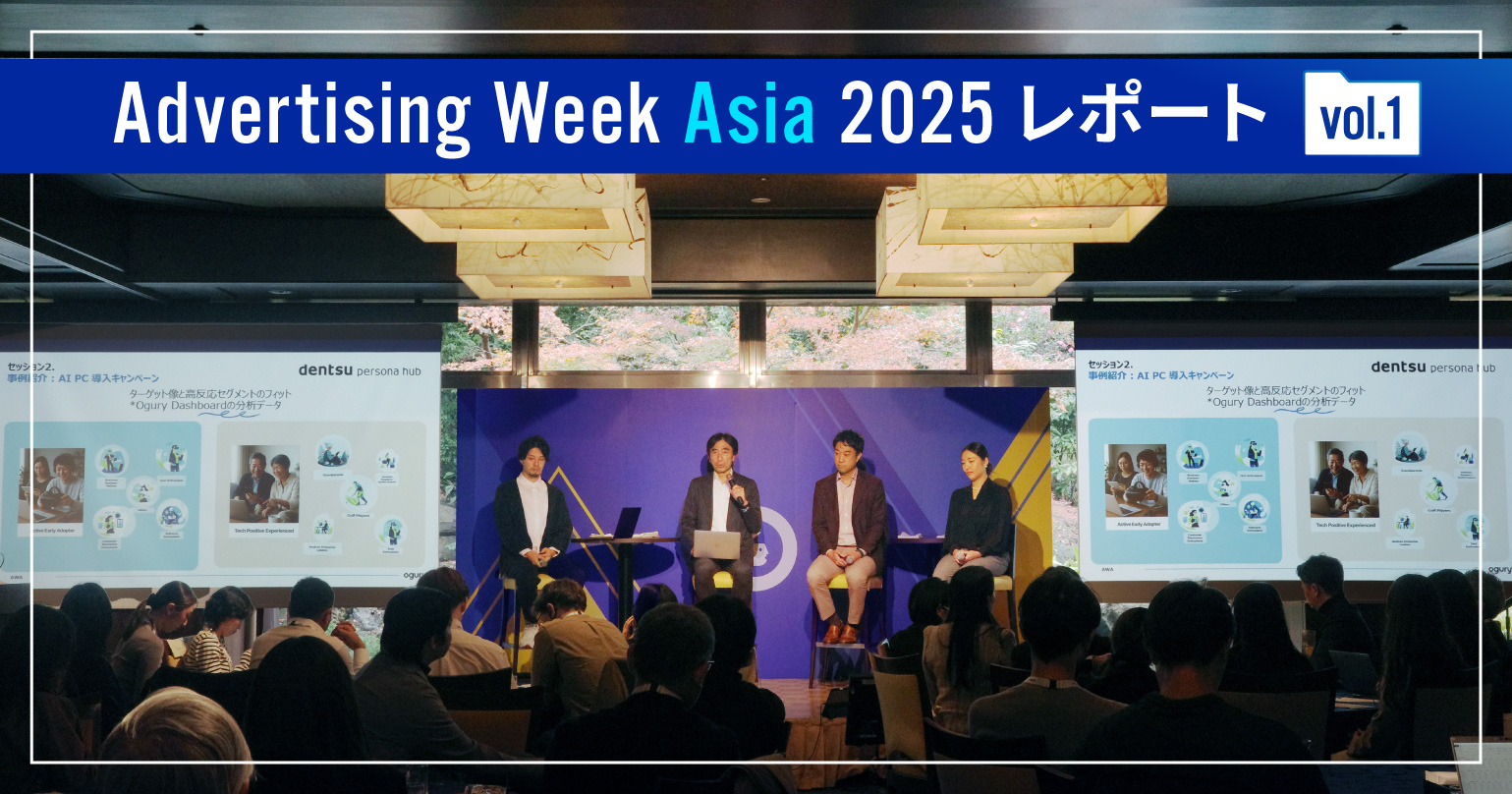
As devices and platforms continue to diversify, audience behavior is becoming increasingly fragmented and segmented. In this environment, marketers face the challenge of “how to deliver consistent results across an increasingly complex array of channels.”
At Advertising Week Asia 2025 (held over three days from Tuesday, December 2 to Thursday, December 4, 2025, in Tokyo), Ogury and Dentsu Inc. took the stage together. As one solution to this challenge, they discussed the theme of “Persona Marketing” and explored how personas are transforming marketing through three sessions.
Session 1: What Is Persona-Driven Marketing?
Session 1, themed “What Is Persona-Driven Marketing?”, was moderated by Sachiko Kawamoto of Ogury Japan, with panelists Tsugumu Kinjo, Marketing Manager at Bacardi Japan, and Shinsuke Hayashi, Branding Director at Ogury Japan.
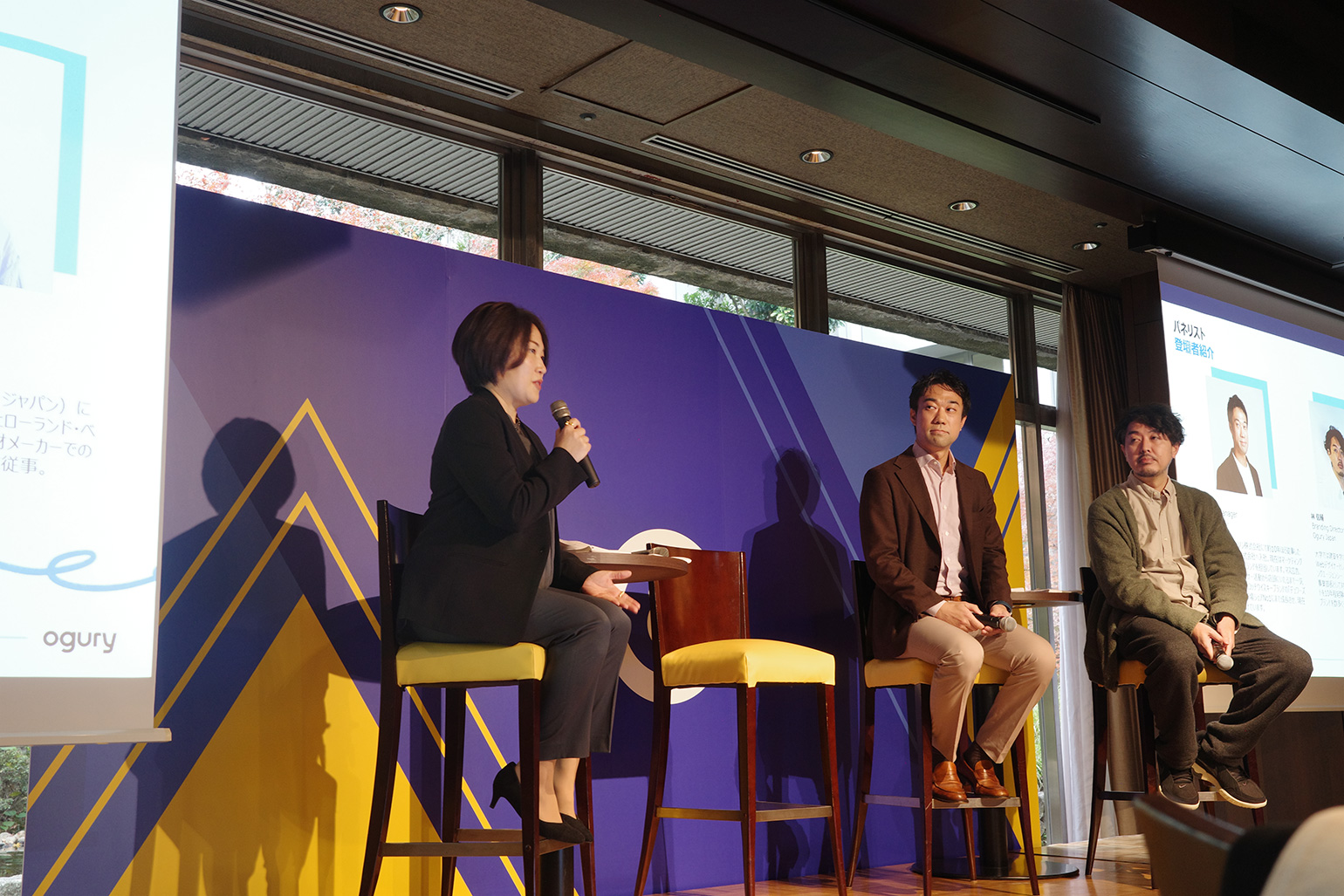
When asked at the outset how he views personas, Mr. Kinjo stated, “By creating personas, we can form hypotheses about the type of people we want to consume our products, which helps us identify gaps between our assumptions and reality. This leads to the next set of initiatives and ultimately results in products that make the brand the preferred choice.”
Mr. Hayashi noted, “The defining characteristic of a persona is that it represents a single individual,” explaining, “By narrowing it down to a single person, it serves as a bridge between marketing and creative teams, allowing us to concretely imagine the customer’s emotional journey.” Mr. Kawamoto added, “It is important to view them as a three-dimensional individual.”
Mr. Kaneshiro cited the example of the Scotch whisky brand “Dewar’s” to illustrate how he came to realize the importance of personas. “Back when we were primarily targeting izakaya, whether the product was on the menu was the key factor. However, with the rise of highballs and the impact of the COVID-19 pandemic, as our reach expanded to bars and premium whisky, we needed to consider who was choosing that drink and what mindset they were in,” said Mr. Kaneshiro.
In bars, a common scenario arises where regulars order by brand name, while those accompanying them simply ask for “the same.” Mr. Kaneshiro stated, “Considering the mindset of the person being accompanied is the starting point for delving deeper into the persona,” and Mr. Hayashi added, “Ordering at a bar is the moment when how one wants to present oneself comes to the surface. That is precisely where the persona manifests.”
Dewar’s personas are defined by delving deep into values and attitudes toward alcohol. Mr. Kaneshiro stated, “They choose what they like without worrying about others’ opinions. That mindset is crucial,” and Mr. Kawamoto added, “Because we’ve mapped out the values behind their actions, we can create consistent communication.”
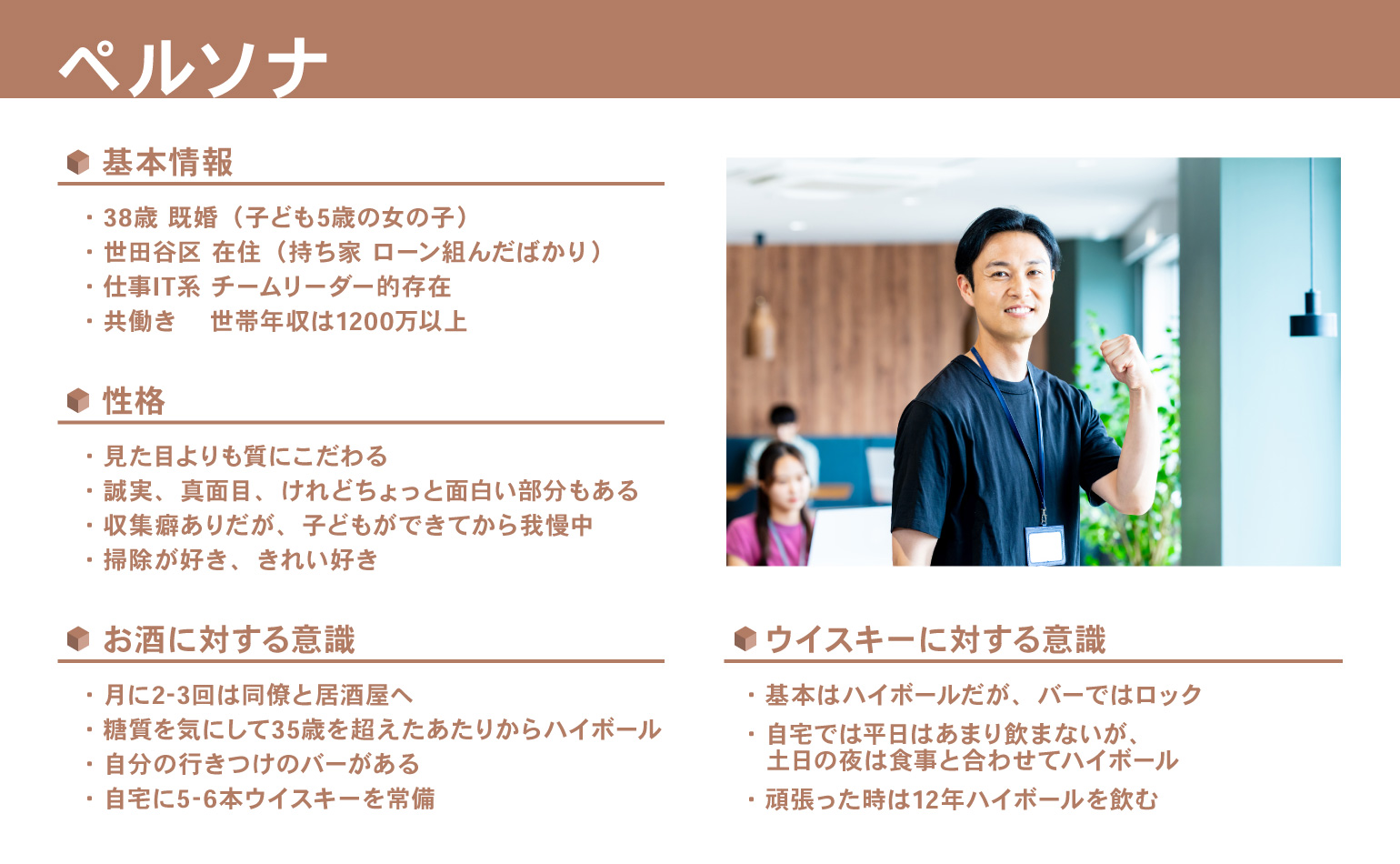
Finally, regarding key considerations in persona creation, Mr. Kaneshiro cited “always visiting the field to gather firsthand information” and “discussing and synthesizing ideas with a team.” Mr. Hayashi added, “A completed persona isn’t a static photo; it must be dynamic, like a moving image, to be useful.”
In conclusion, Mr. Kawamoto stated, “It is not just numbers and theory, but understanding the reasons why customers chose a product and their values that enhances the quality of marketing,” bringing the session to a close.
Session 2: Case Studies Utilizing dentsu persona hub
Session 2, themed “Case Studies Utilizing dentsu persona hub,” was moderated by Tomoya Mikami of Ogury Japan. The panelists included four speakers: Tsugumu Kinjo of Bacardi Japan, Yusuke Yokota of Dentsu Japan International Brands Inc., and Momoka Goto of Dentsu Digital Inc.
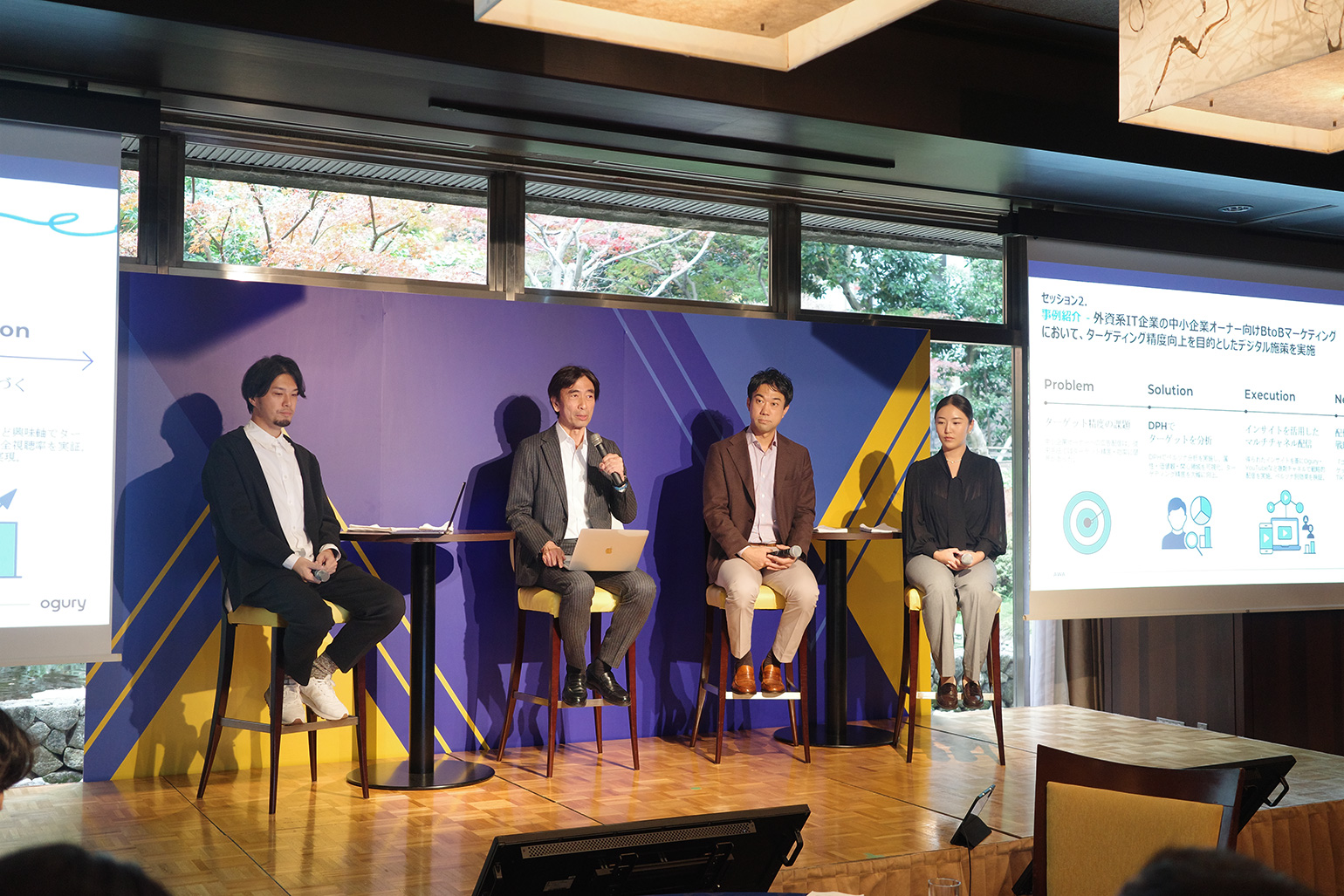
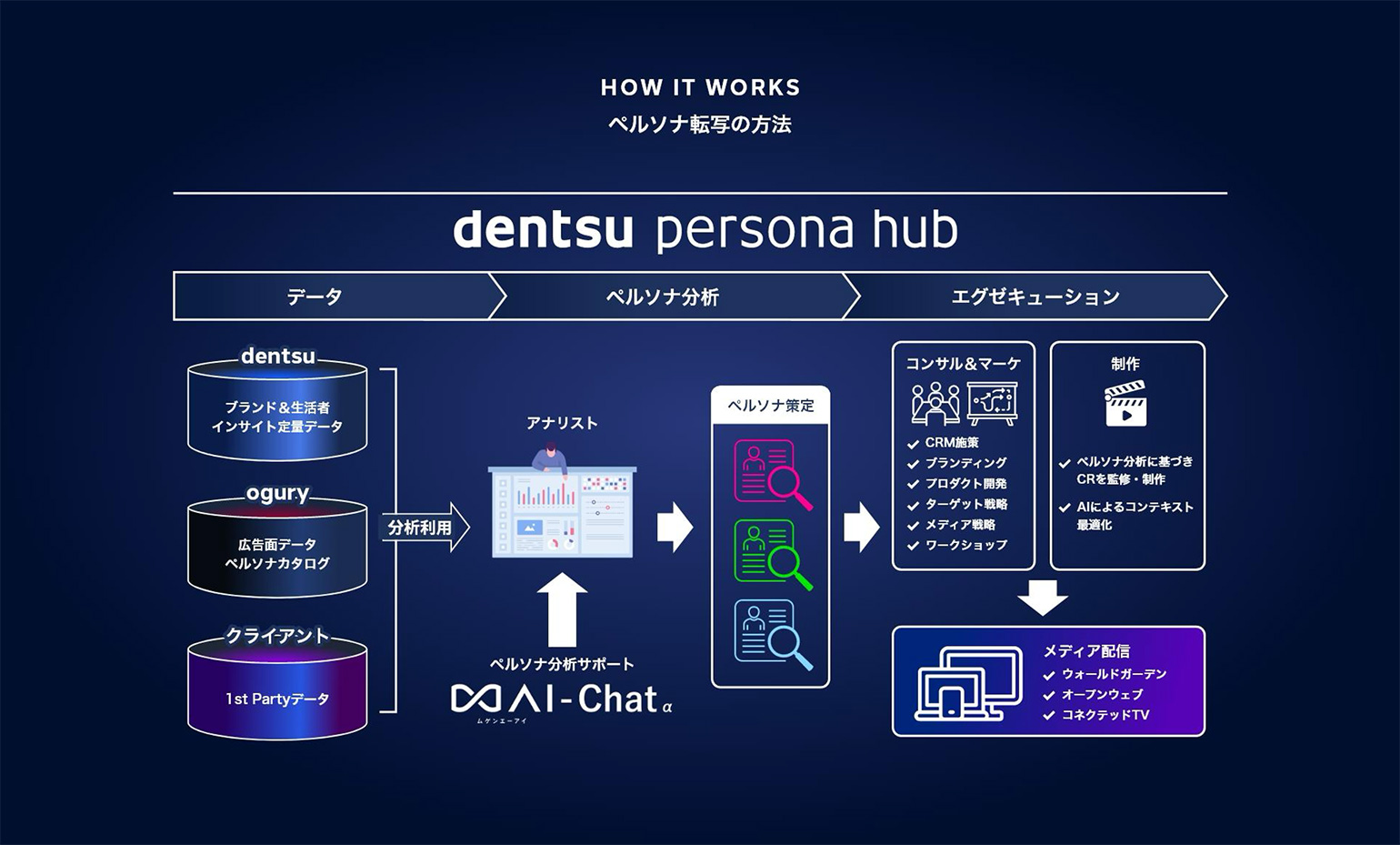
At the outset, Mr. Mikami described dentsu persona hub as “a system that supports digital marketing based on personas.” He explained, “We design personas by leveraging survey data, consumer data, and first-party advertiser data held by the Dentsu Group, and then refine them using ∞AI (Mugen AI) while incorporating human input.“A key feature is that we ultimately deliver ads based on the same personas across social media, major video platforms, and the Ogury network,” he stated.
A specific case study presented was the marketing for “Bacardi Rum,” Bacardi’s flagship product. Mr. Kaneshiro focused on the classic cocktail, the mojito, and explained that after thoroughly considering “what kind of people drink it and in what settings,” he arrived at the persona “less than a party animal.”
*Both this campaign and this persona design are based on adult consumers aged 20 and older.
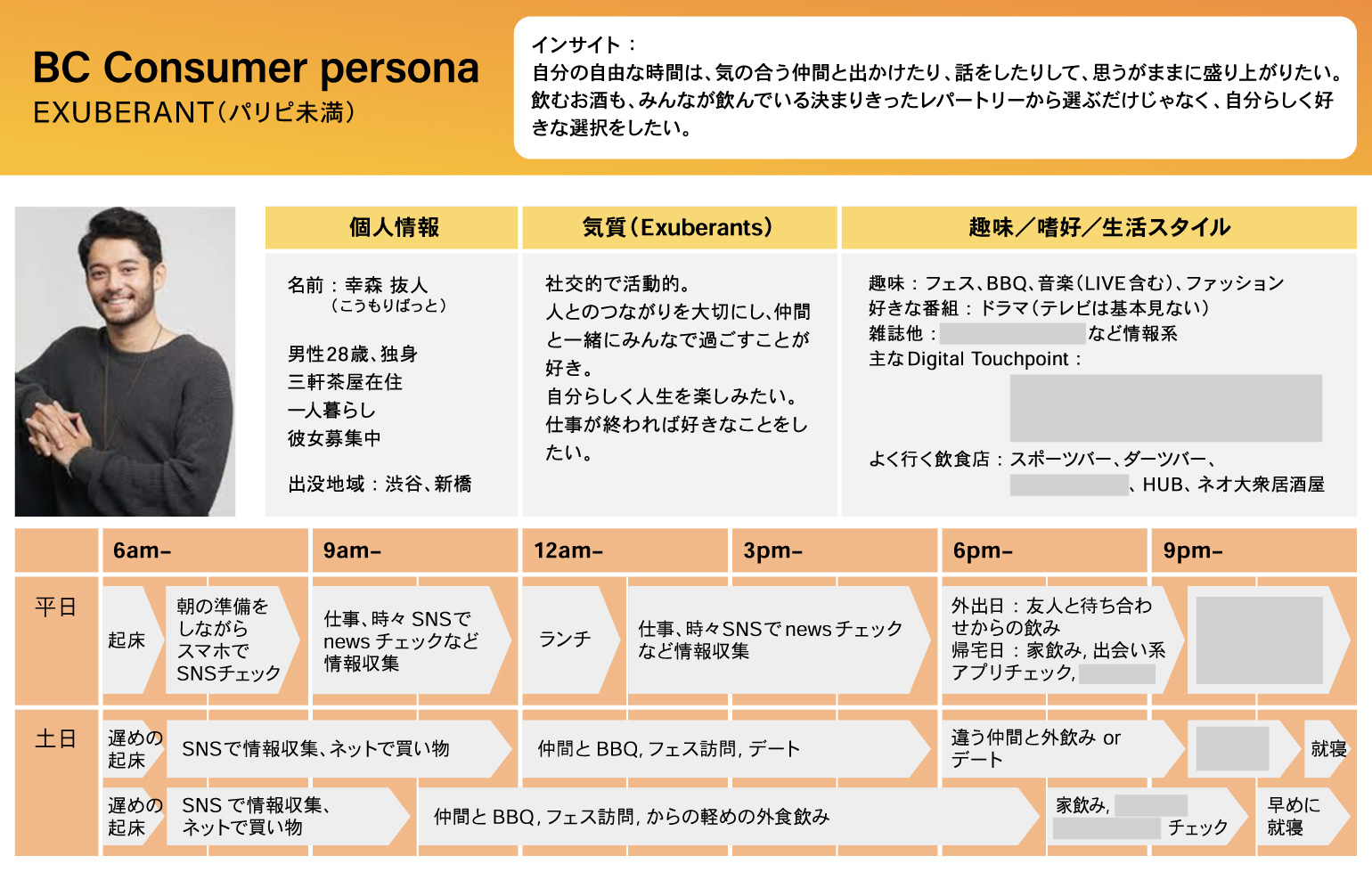
This persona was first sketched out as a hypothesis by the team, then refined through repeated internal discussions, and finally validated through quantitative research as needed. “It’s crucial to develop the persona to the point where internal stakeholders are convinced it could actually exist,” Mr. Kinjo emphasized.
The created persona is utilized as the core of all initiatives—not only for ad delivery but also for event design, communications, and proposals for the drinks to be served. Mr. Mikami added, “In this case, dentsu persona hub played a role in translating the persona into data and bridging the gap to optimal targeting for each media channel.” Mr. Kaneshiro praised this, stating, “A major benefit was being able to view effectiveness measurement—which tends to be fragmented by media channel—in a unified manner.”
In the latter half of the session, a case study was presented on the additional use of personas in a B2B campaign. Mr. Goto explained an initiative targeting small business owners for a foreign IT company, stating, “When we analyzed the data using dentsu persona hub, unexpected interests such as golf and fishing emerged.” The campaign recorded a higher complete view rate than traditional targeting based solely on occupational attributes, and he noted, “We were able to visualize which personas contributed to the results, which was highly valued.”
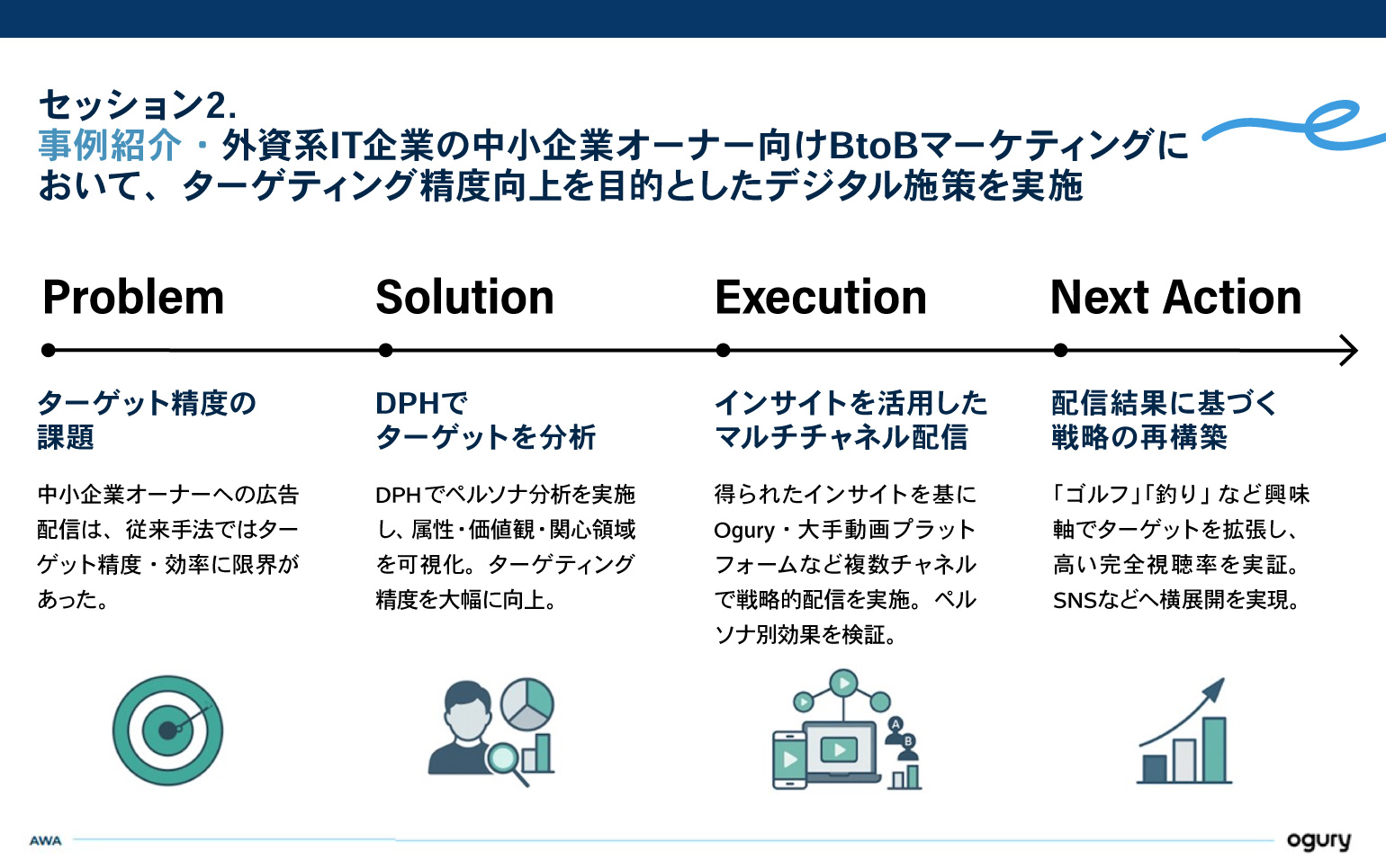
Mr. Mikami concluded the session by stating, “The value of dentsu persona hub lies not only in creating personas but also in providing end-to-end support—from execution to verification—through data.”
Session 3: Future Prospects Utilizing dentsu persona hub
Session 3, themed “Future Prospects Utilizing dentsu persona hub,” was moderated by Mr. Mikami of Ogury, with Mr. Takuji Akabane and Mr. Shun Maekawa of Dentsu Inc. taking the stage.
Mr. Akabane began by introducing initiatives in the APAC region. He noted that in Southeast Asia, broad-based advertising targeting based solely on attributes such as age, gender, and region remains the mainstream approach. Among the examples presented was a case study involving a home appliance manufacturer in Thailand.“Our proprietary research revealed that expectations for the product and usage scenarios differed by region within Thailand, so we created personas for each area. Through our collaboration with Ogury, we implemented targeted advertising and messaging tailored to these regional personas,” said Mr. Akabane.
When Mr. Mikami remarked, “I had the impression that the use of personas was more advanced overseas,” Mr. Akabane emphasized, “While it is accepted in Europe and the U.S., it is still in the early stages of adoption in APAC. The fact that we were able to actually implement this in this case study is highly significant.”
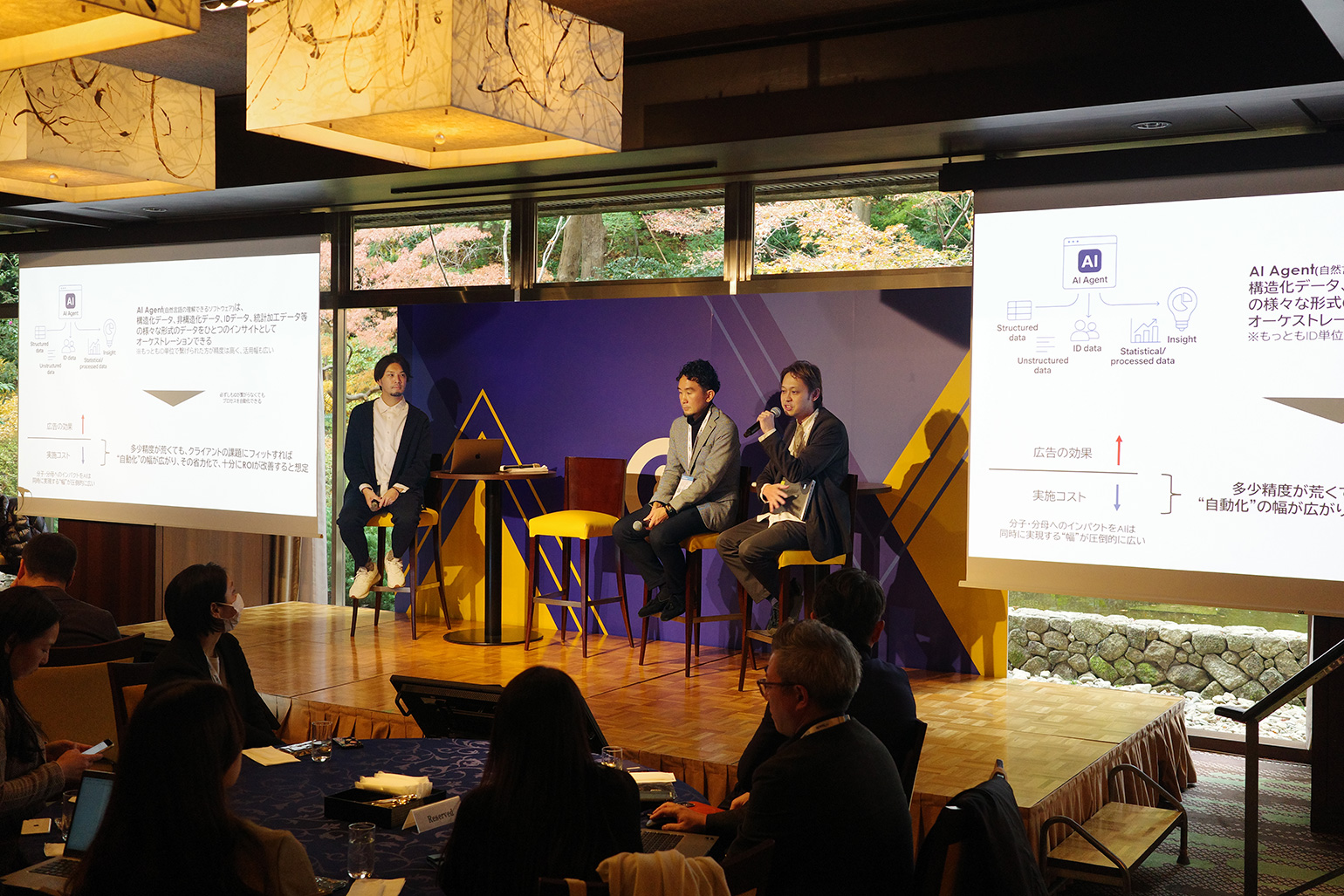
Next, Mr. Maekawa addressed the “importance of training AI on first-party data” as AI adoption advances. Dentsu Inc. has launched “Tobiras Shared Garden (TSG),” which utilizes a data clean room. A key feature of this initiative is “Semantic Matching”—a mechanism that leverages Ogury’s contextual data to enable AI to interpret the meaning and context of personas and convert them into targetable parameters for various media.
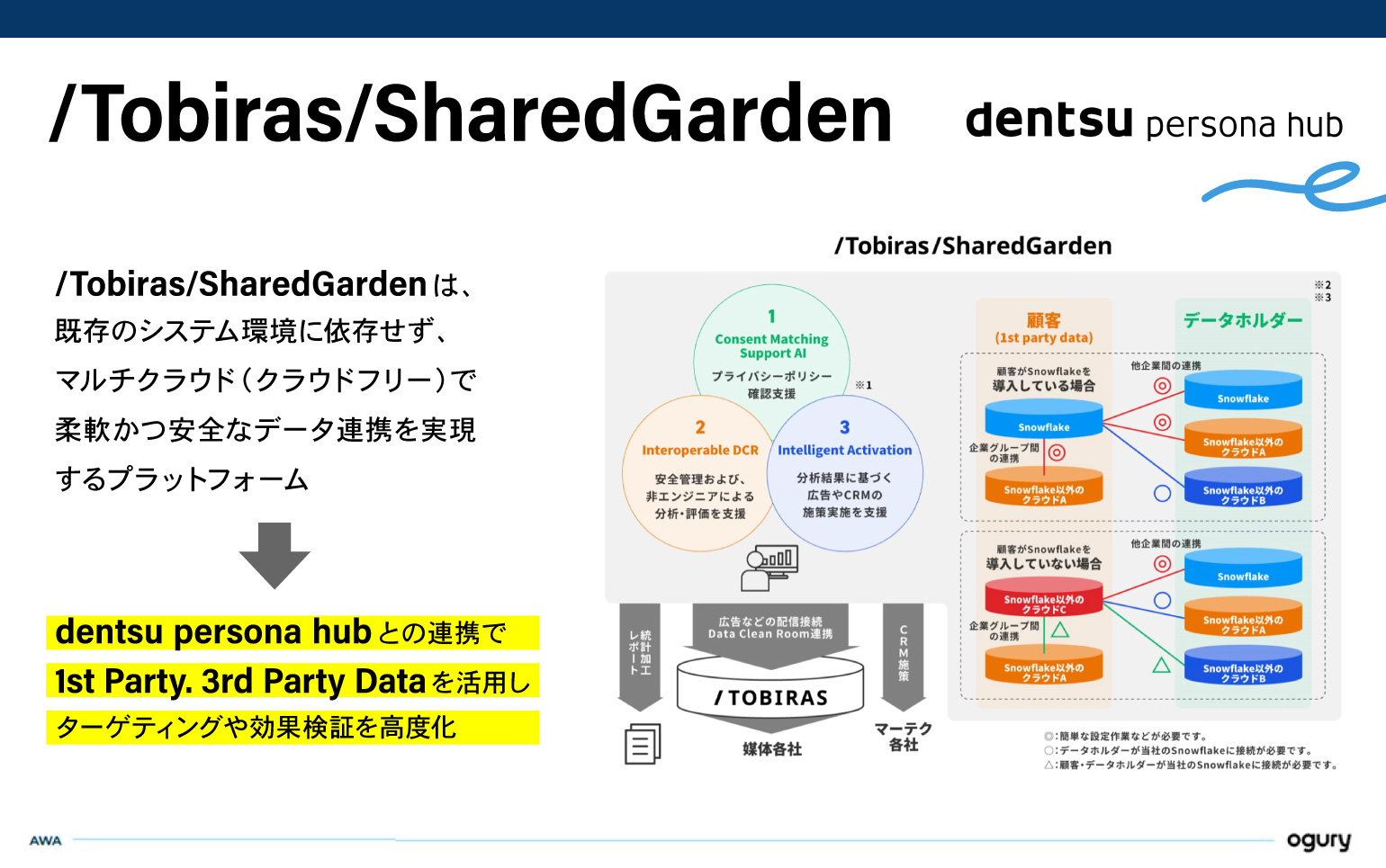
Traditionally, matching based on user IDs was the mainstream approach, but this faces challenges related to privacy regulations and scalability. In contrast, using AI-driven semantic matching allows the system to automatically suggest optimal targeting candidates based on statistical and contextual information. “There is potential for AI to streamline and enhance the cumbersome manual settings that operators previously had to perform,” Maekawa stated.
Maekawa also mentioned the importance of verifying effectiveness as a future challenge, stating, “To verify whether persona-based delivery is truly leading to results, Ogury and Dentsu Inc. are exploring a measurement mechanism that securely integrates TV viewing data and purchase data using a data clean room.”
“It’s not just about accuracy; the ability to measure is what matters,” summarized Mr. Mikami. He concluded the session by stating, “dentsu persona hub will continue to evolve beyond Japan, encompassing global expansion, AI utilization, and measurement capabilities.”
Was this article helpful?
Share this article


