
Note: This website was automatically translated, so some terms or nuances may not be completely accurate.
A New Advertising Model for Branding and Purchasing Realized by Amazon and SeenThis
As advertising and e-commerce rapidly converge, we have already entered an era where video ads directly drive purchases. At the center of this shift is SeenThis, a technology company based in Sweden. In particular, the company’s adaptive streaming technology is attracting significant attention in the advertising industry due to its unique ability to deliver video content within static ad slots.
With this current landscape in mind, a session at “Advertising Week Asia 2025” (held over three days from Tuesday, December 2 to Thursday, December 4, 2025, in Tokyo) featured Kohei Hayashida of Dentsu Inc.’s Business Producers Division 9, Setsuko Iijima, Head of Sales at SeenThis Japan, and Kosuke Oka of Dentsu Innovation Initiative as moderator.They delved deeply into the potential of “Brand × E-commerce × Video”—a concept symbolizing the future of advertising—using case studies to explore the impact that SeenThis’s technology will have when combined with Amazon.

What Is SeenThis’s Technology That “Delivers Video in Still Image Spaces”?
At the start of the session, Ms. Iijima introduced the features of SeenThis. The company was founded in Sweden in 2017, and its Japanese subsidiary launched in 2024. It is a video distribution technology company used by over 5,000 companies across more than 50 markets worldwide.
Mr. Iijima described SeenThis as “the world’s only technology capable of transforming static ad slots into video ad slots.”
Conventional video ads require the entire video file to be downloaded before playback, leading to UX challenges such as display delays, large file sizes, ad slot constraints, and inconsistent user experiences due to varying network conditions. In contrast, SeenThis employs a streaming method that delivers video data in small packets. “By sending only the minimum necessary data, we can display videos as quickly as static images,” he explained, emphasizing that the technology simultaneously achieves high quality, low load, and fast display.
Furthermore, the company demonstrated that this technology contributes to sustainability by reducing unnecessary CO2 emissions through a mechanism that minimizes wasteful data transfer.
The Significance of Utilizing Video Advertising in the Growing E-Commerce Market
The discussion then shifted to “The Current State of E-Commerce Platforms.” Based on data from the Ministry of Economy, Trade and Industry, Mr. Oka explained that the e-commerce market is estimated to reach approximately 26 trillion yen in 2024, having more than doubled in size over the past decade. He highlighted that the share of e-commerce within the overall retail sector is also steadily increasing. He then raised the question of how video ads can demonstrate their value within e-commerce platforms.
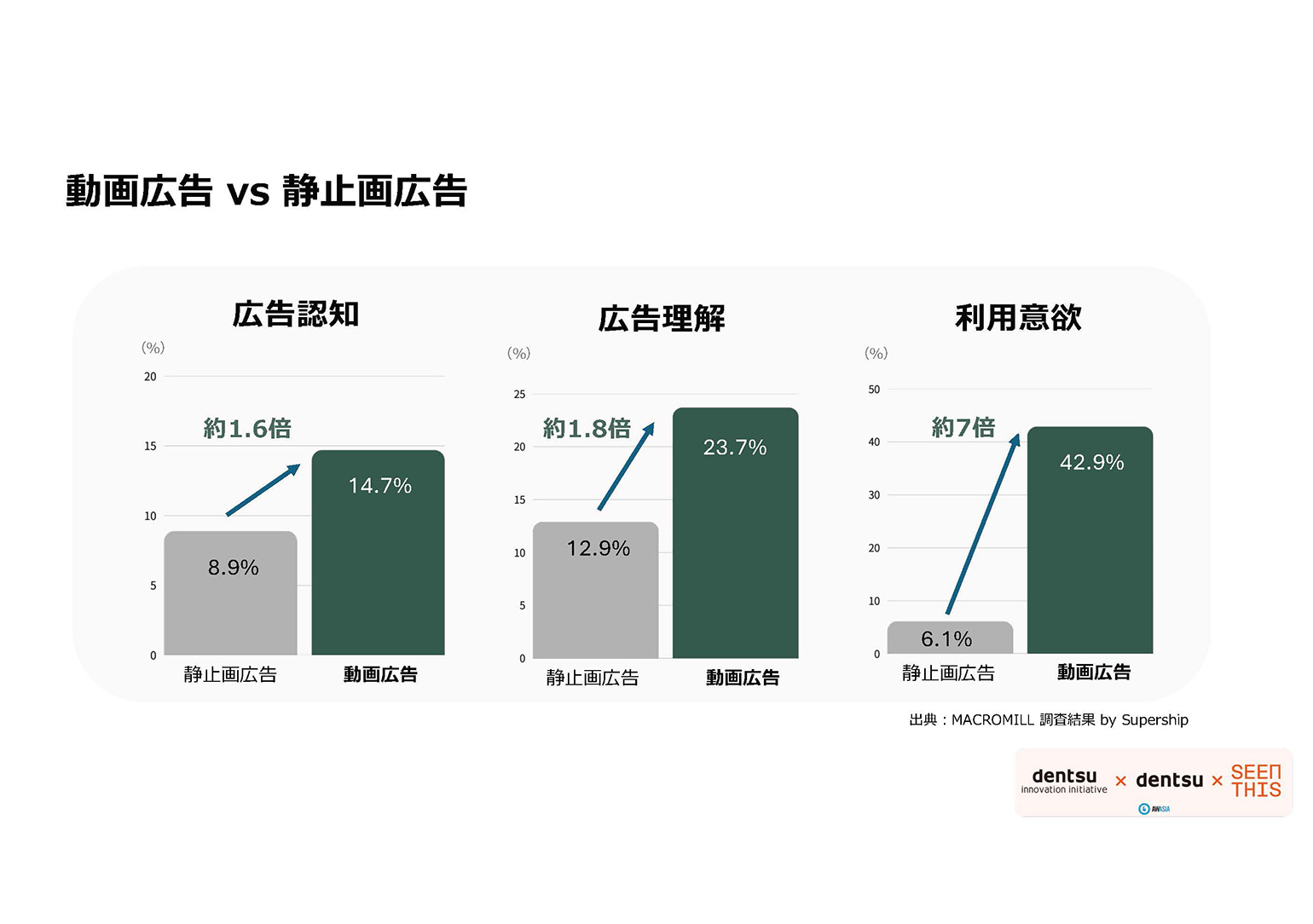
In response, Mr. Iijima cited survey results comparing static and video ads, explaining that video ads are more effective than static ads in terms of awareness, understanding, and purchase intent. He further noted that in SeenThis’s streaming video environment, attention levels were approximately 1.7 times higher compared to standard (download-based) videos in the same setting, demonstrating that improving video quality leads to better results.
The discussion then shifted to advertising on Amazon’s marketplace pages. Mr. Iijima summarized the situation by stating, “While there is an abundant supply of ad inventory on Amazon’s marketplace pages, the vast majority of slots are for static images, and video ads are limited to areas such as search results.” He then highlighted a current challenge, noting, “Video ads are generally limited to sellers on the Amazon e-commerce site, meaning there are advertisers who want to run them but cannot.”
In response to this situation, SeenThis offers a solution that combines video and static images to create innovative creative content tailored to campaign objectives, leveraging its proprietary technology. Its strength lies in the ability to run video ads within static image slots regardless of whether the advertiser has a store on Amazon, effectively integrating the immediacy of static images with the understanding and goodwill generated by video. Mr. Oka also praised this as an “epoch-making approach that simultaneously achieves branding and performance.”
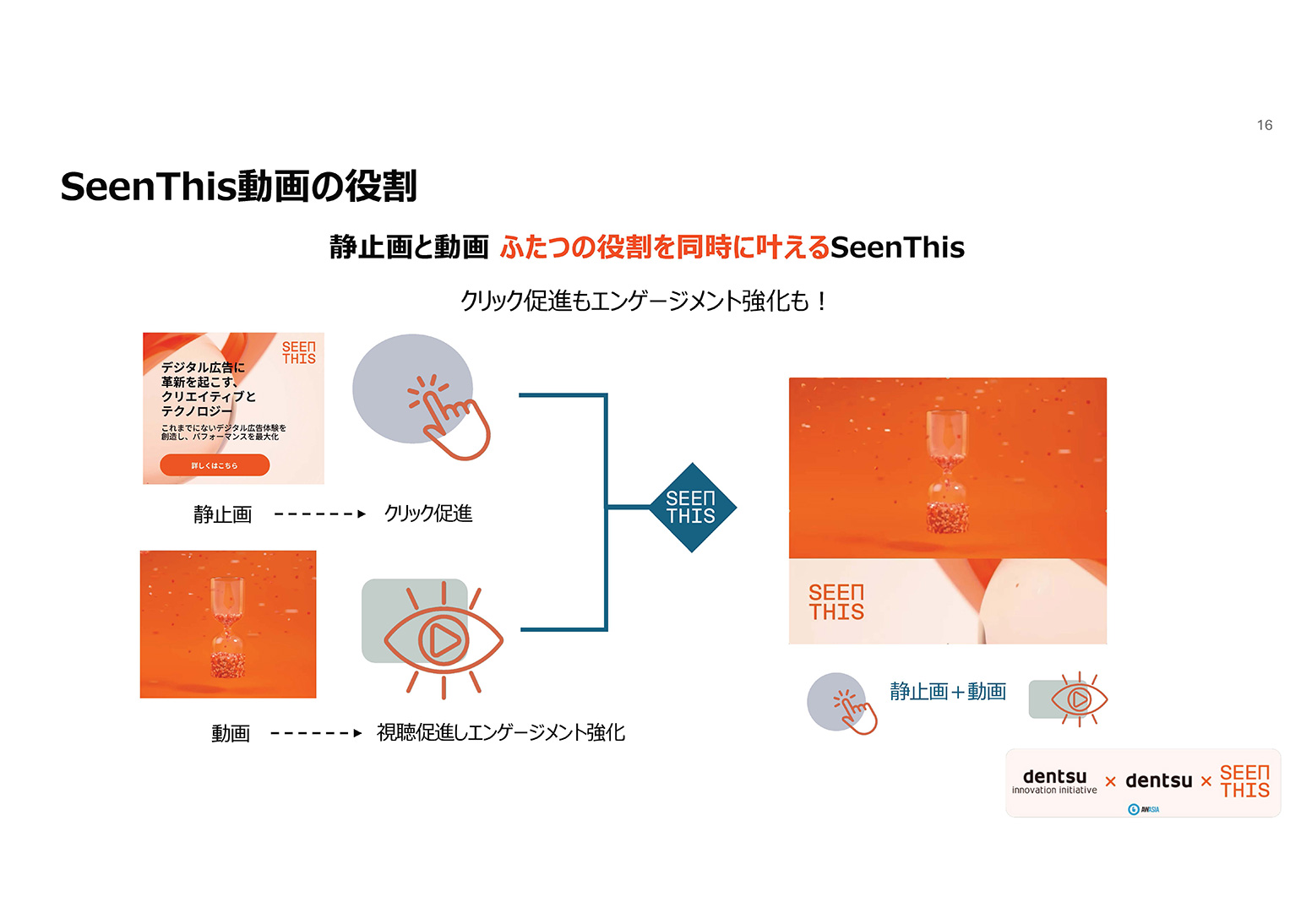
What challenges does SeenThis video address?
Next, media planner Mr. Hayashida discussed the real-world challenges and possibilities in the advertising field. Mr. Hayashida cited “the collapse of the funnel” and “impulsive purchase paths triggered by watching short-form videos” as current trends. Drawing parallels with the contexts of TikTok and YouTube Shopping, he stated, “Today’s purchase paths do not necessarily follow a linear funnel-down trajectory as they did in the past.” He then likened the value of advertising on Amazon to the fact that “everyone is viewing the screen with a shopping cart in hand,” positioning the platform’s inherent value as a gathering place for users in a buying mindset.
On the other hand, he noted that traditional Amazon marketplace ads had limitations such as “limited reach,” “restricted to sellers,” and “in principle, video ads cannot be run unless you have a store,” and praised SeenThis as a solution that addresses these challenges.Hayashida noted that the value lies in the fact that it simultaneously generates “TV commercial-style branding value” and “contribution to the bottom of the funnel—purchases” within Amazon, highlighting the potential to “cover the entire process from awareness to arousing interest, comparison, and purchase in a seamless manner.”
Interpreting the Effectiveness of SeenThis Videos from Delivery Results
The highlight of this session was the validation of hypotheses based on actual results from ad campaigns delivered on Amazon’s marketplace. Mr. Iijima presented the results of testing three hypotheses using SeenThis creatives that combined static images and video.
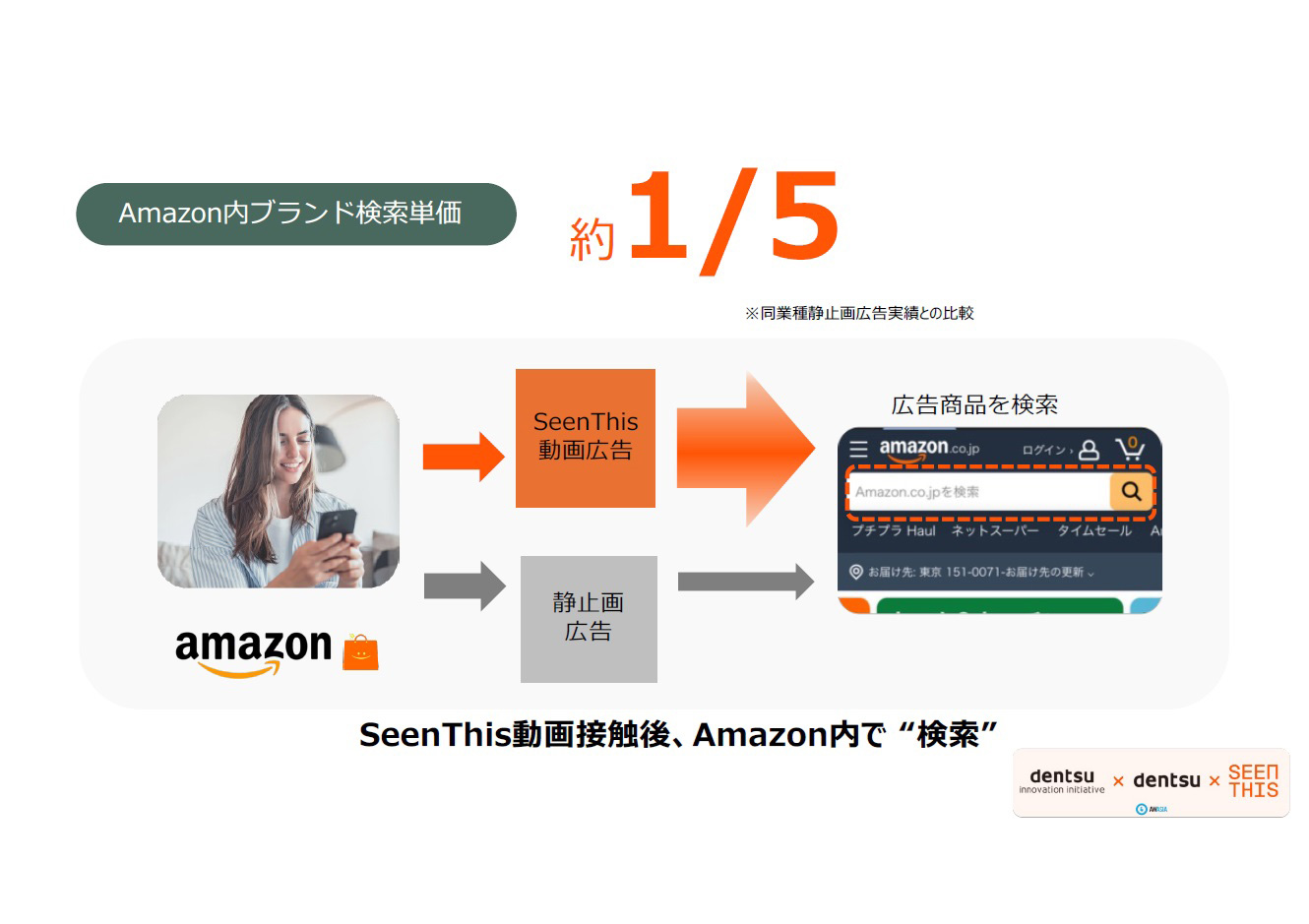
Hypothesis 1: “Can SeenThis videos contribute to user actions?” Using brand searches (searches that leave a history on Amazon) after ad exposure as a metric, the cost per search improved to about one-fifth that of static image ads. He interpreted this as meaning, “Because the video leaves a lasting impression, it led to the user action of searching.”
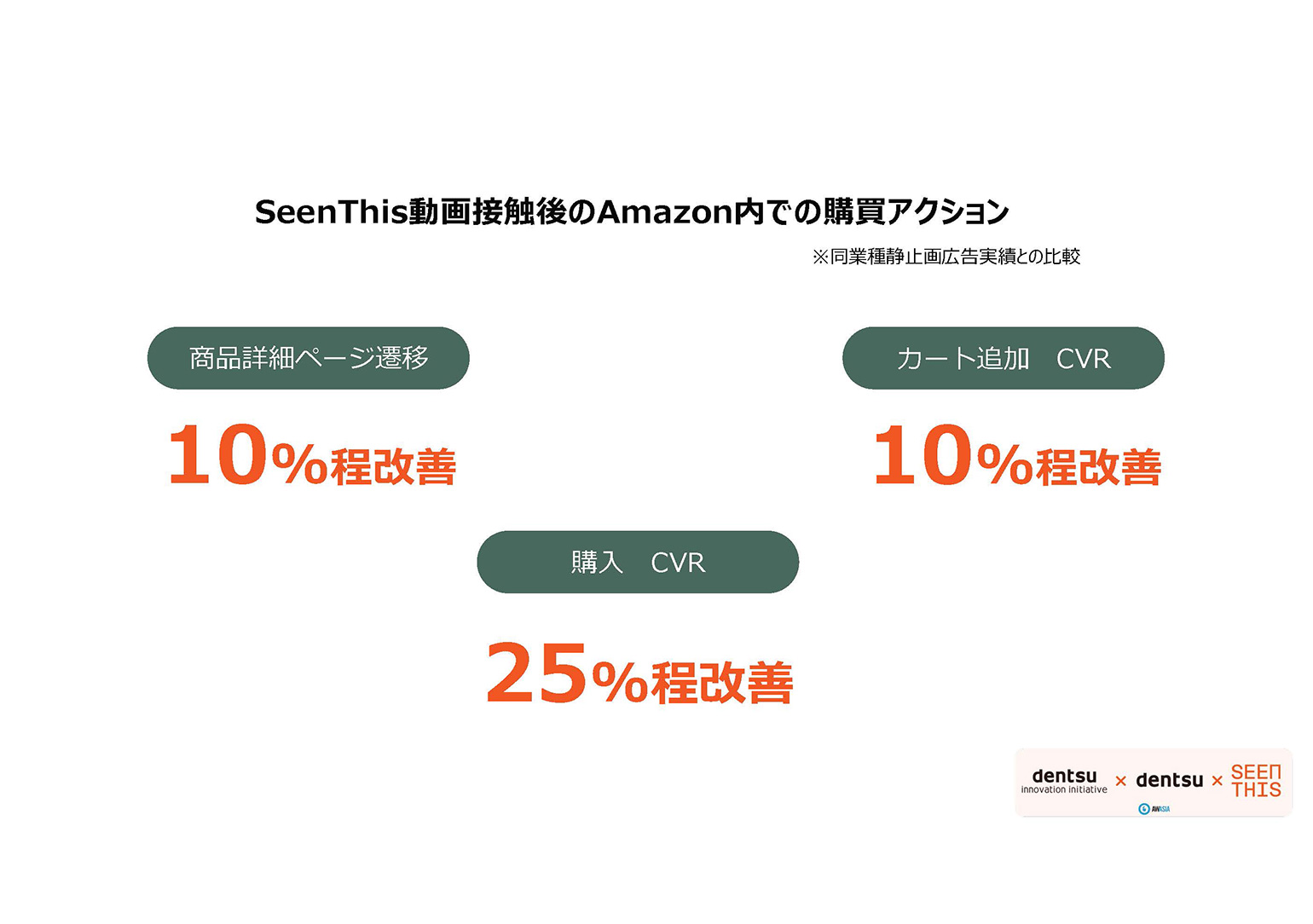
Regarding Hypothesis 2, “Can SeenThis videos contribute to purchasing behavior?”, he noted that transitions to product detail pages, the conversion rate (CVR) for adding items to the cart, and the purchase CVR all improved. He also mentioned the possibility that this helped reduce “cart abandonment”—where users leave the cart without completing the purchase.
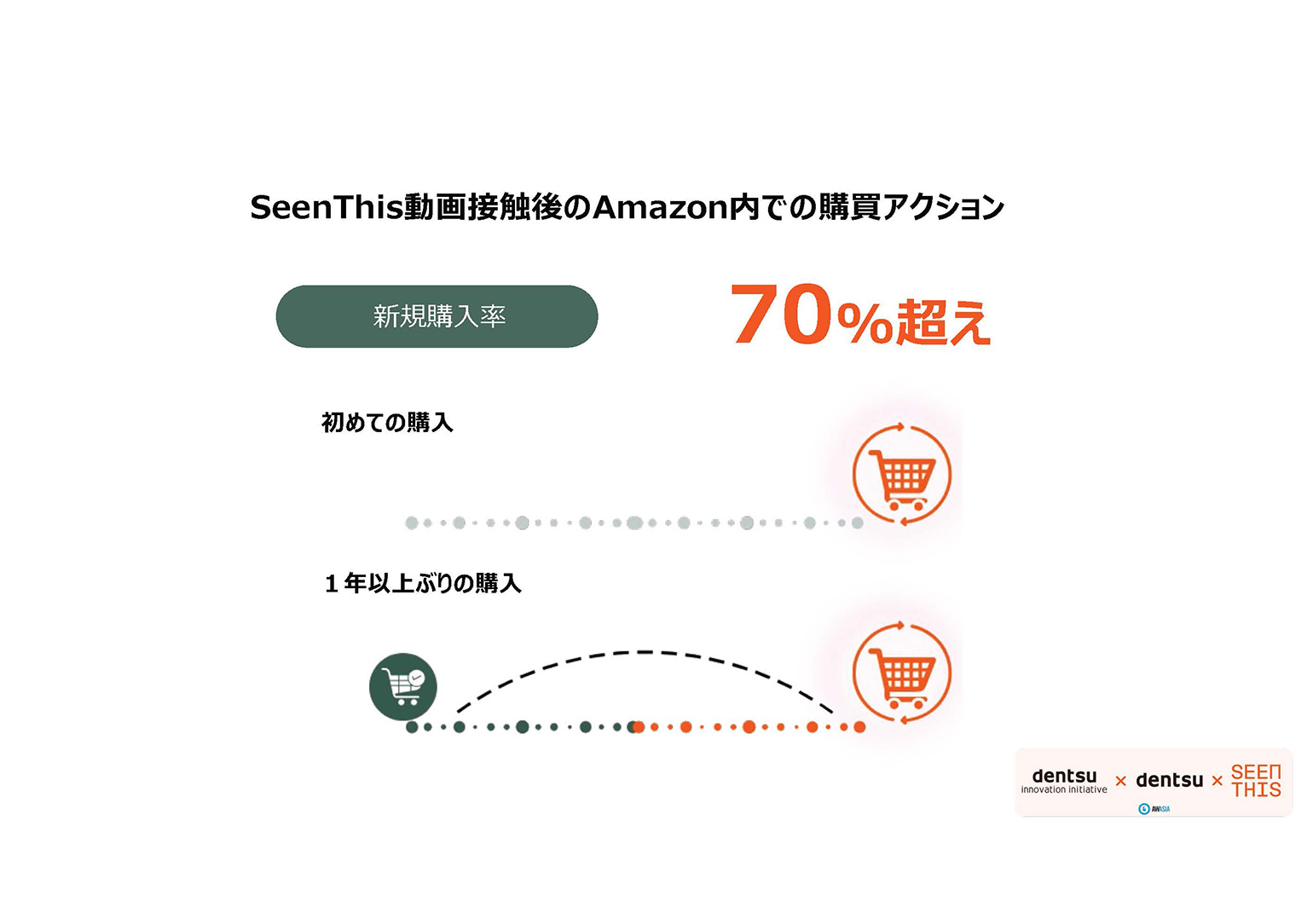
What instantly shifted the mood in the room was the new purchase rate. Mr. Iijima revealed, “We defined a ‘new purchase’ as a first-time purchase or a purchase made after more than a year, and that rate exceeded 70%.” Mr. Oka could not hide his surprise, calling it “an amazing figure,” while Mr. Hayashida interpreted it as, “The synergy between video and Amazon allowed us to bypass the funnel and instantly create a path leading to purchase.”
The final hypothesis, Hypothesis 3, was: “Can SeenThis videos contribute to brand lift?” Mr. Iijima presented survey results showing that, while Japanese consumers tend to rate products between 2 and 4 on a 5-point scale, they focused specifically on the highest rating of “5.”
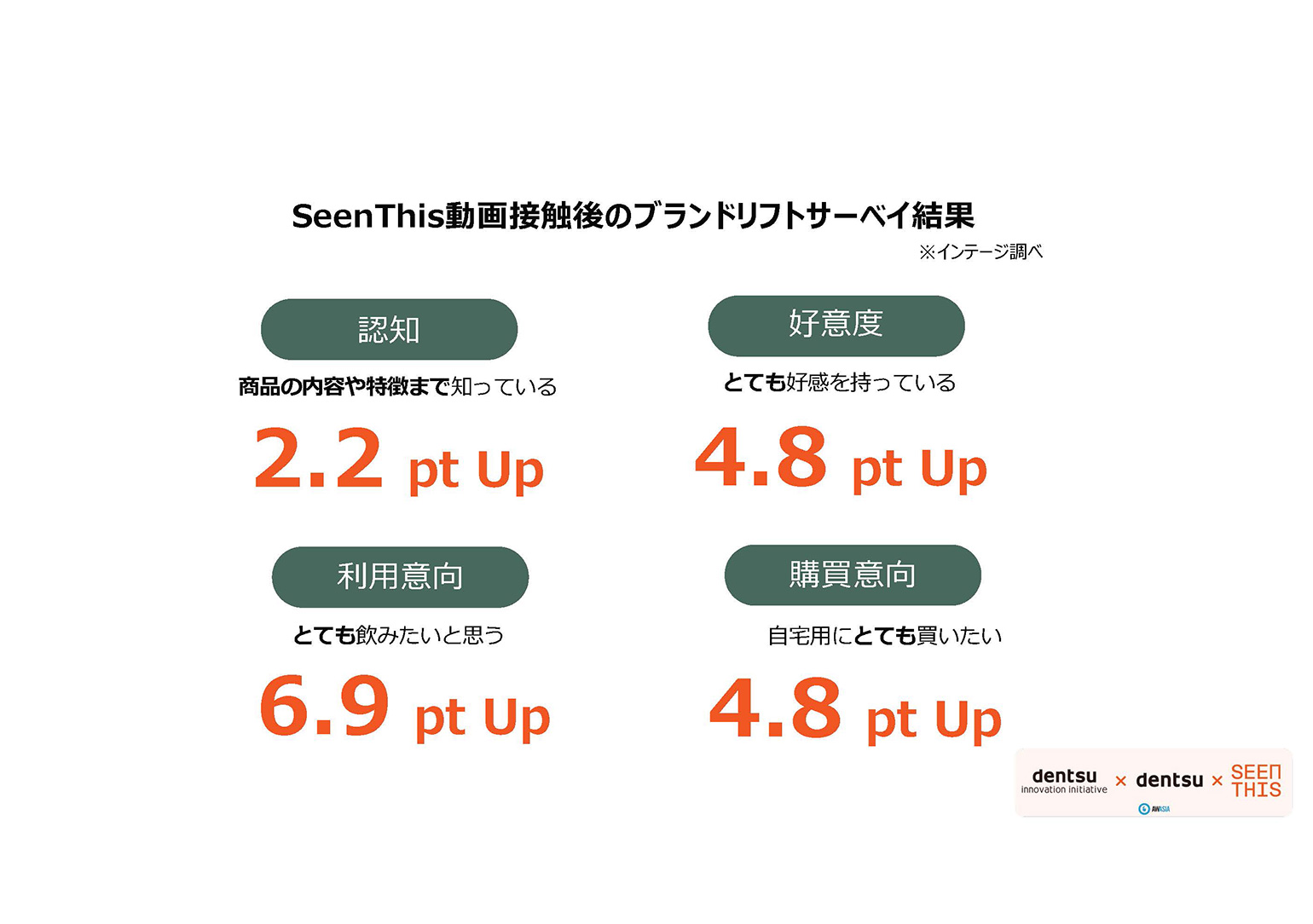
In response, Mr. Oka stated, “This proves that branding and performance can be achieved simultaneously,” summarizing the results as reaffirming the value of video advertising through SeenThis.
The Value of Retail Media × Video Advertising Lies in “High-Quality Attention”
Toward the end of the session, the potential of “Retail Media × Video Advertising” was discussed from a broad perspective. Mr. Hayashida pointed out that while video exposure is increasing through Connected TV and social media, the sheer volume of content makes it “difficult to capture attention for ads.” He stated, “What matters is not the number of impressions, but how much attention we can capture.”
In this regard, he explained that retail media has the advantage of being viewed when consumers are in a highly purchase-ready state, and that search and browsing history have a lasting impact over the medium to long term. Mr. Oka agreed, saying, “Retail media is the final destination,” and shared his impression: “I got the sense that the customer journey is being compressed closer to the point of purchase.”
Toward an Era Where Branding and Performance Can Coexist
In summary, Mr. Iijima pointed out that when the conditions align, advertising can become valuable information rather than a “nuisance.” To achieve this, he explained that “who, when, where, and how” the message is delivered is crucial, and that SeenThis can serve as a key component in enhancing advertising value. He emphasized that the company’s strength lies in its ability to quickly deliver creative content that balances branding and performance to the right places, offering a new option even for advertisers who previously found video distribution on Amazon challenging.
In closing, Mr. Hayashida also discussed the significance of these three elements—"the ability to deliver high-quality videos that capture attention at incredible speeds within the vast Amazon media ecosystem"—amidst major shifts in the digital landscape. He shared his outlook, stating, "We are moving away from an era where branding and performance are discussed separately toward a world where a single solution can address both."
Mr. Oka summarized by stating, “Advertising truly fulfills its role only when it can achieve both branding and purchase promotion,” and concluded the session by remarking, “It was an inspiring session that made me want to continue working in advertising.”

Was this article helpful?
Share this article


