
Note: This website was automatically translated, so some terms or nuances may not be completely accurate.
 On-site Report! Cannes Lions 2013! [2/3]
What problem does it solve in the world?
Yoshihiko Kyoi
It's hard to believe, but the first four days of Cannes have already come to a close. The direction pointed to by the legendary jury members I mentioned last time is starting to become clearer...
Yes, looking at the initiatives being recognized in the awards ceremonies so far, I feel there's a common perspective across all categories.
To put it bluntly, it's whether the initiative itself "solves something in the world." Not the client's problem. Of course, that's a given – it's about the world.
While I haven't interviewed them directly, several jury presidents mentioned phrases like "Make the world a better place!" during the award ceremonies, so I'm pretty sure that's the case.
For example, in the first half of the awards ceremony, the Australian railway "Metro Trains" won an overwhelming number of awards for their accident prevention awareness anime song "Dumb Ways to Die."
Anyway, it won the Grand Prix in three categories: PR, Direct, and Radio. Add in the Golds and other awards, and well... I can't even count them all. It's likely to show up in the film category later too.
The anime song's content introduces various stupid ways to die, culminating in the punchline that the stupidest way is getting hit by a train. By packaging gruesome content into a cute, catchy tune, it exploded in popularity. At the venue and nearby restaurants, tons of people were humming it. No wonder it spread like wildfire.
But the song's popularity isn't the core of its impact. The result was a 21% year-on-year decrease in injuries and deaths from accidents. In other words, this anime song became a solution for society, actually saving many lives.
Another initiative was "Smart Communications," a project by a Philippine telecom company that won the Grand Prix in the mobile category. Filipino children were facing serious health issues, like spinal curvature, from carrying heavy textbooks to distant schools every day. While wealthier countries might introduce electronic devices, the Philippines' economic situation made that unfeasible.
Therefore, in collaboration with schools, they digitized textbook information onto mobile phone SIM cards. They leveraged unused mobile devices lying around in households to distribute them as electronic textbooks. This reduced the children's burdens, improved their grades and attendance rates, making it another excellent solution contributing to children's health and future.
Then there was the organ donor registration campaign called "Immortal Fans" by a Brazilian soccer team, which won the Grand Prix in the Promo & Activation category.
This involved organ recipients pledging to become fans of the team afterward. Supporters reportedly signed up enthusiastically—over 50,000 people—thinking, "If a part of my body can remain a fan forever..."
This idea perfectly tapped into fan psychology, solving a major societal problem and saving many lives.
In this way, it's no longer just about agencies solving client problems. What's demanded now is for companies, brands, and users to collaborate in tackling societal challenges and unleashing creativity to achieve that.
I believe not only the legendary jurors but almost everyone participating in Cannes genuinely believes that "the power of creativity can make the world a better place."
Meanwhile, the Japanese contingent made a huge splash in the Design category. Dentsu Inc. and other agencies racked up Gold awards one after another. It was a real celebration.
But why do Japanese initiatives receive so much recognition in the Design category?
Of course, I think they're looking for solutions to real-world problems here too, but the Japanese entries that get recognized seem to focus more on fixing small, everyday imperfections.
So, my take is that Japan really is a great country.
In short, there are fewer major, visible social problems. So, Japan's commendable creativity tends to shine more in solving peripheral everyday issues rather than in the kind of socially impactful work that gets recognized in other categories. That's how I see it.
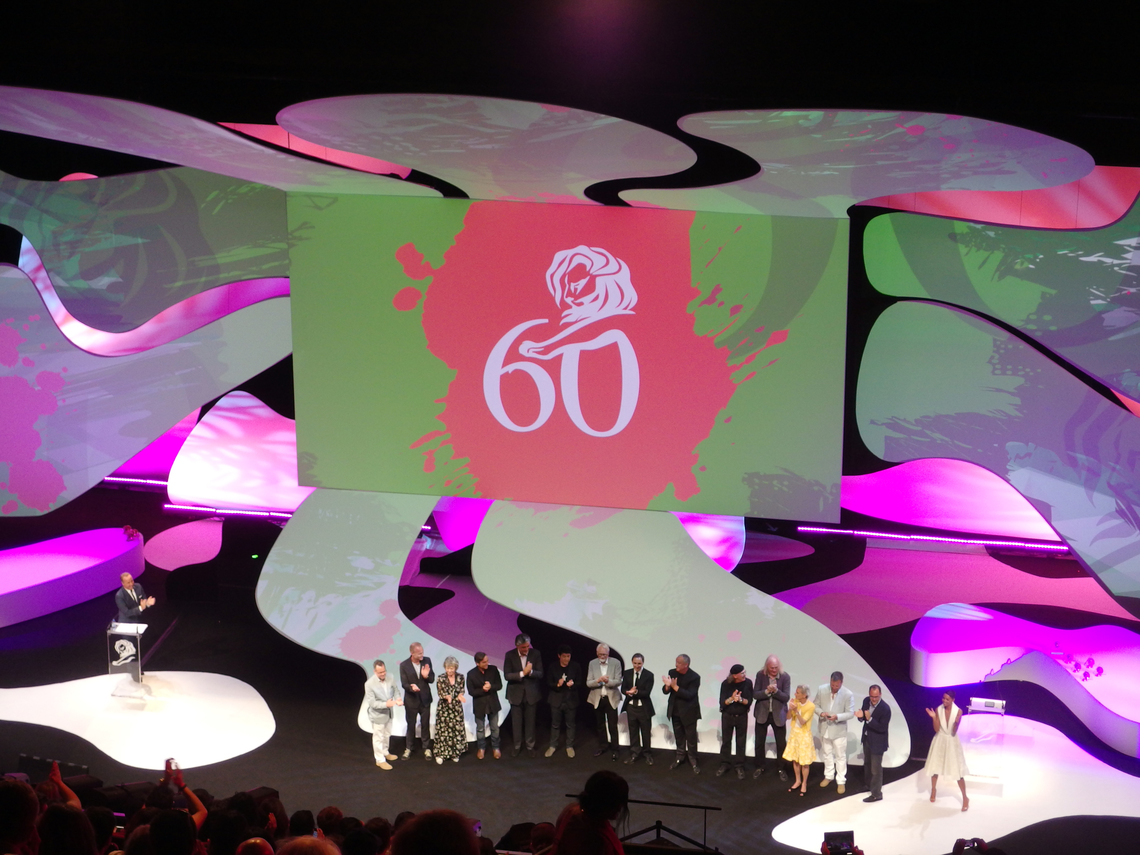
So, the second half is still ahead. Will this year bring more "wow" developments? It's getting harder and harder to look away. By the way, the photo shows the award ceremony venue with all those legendary jury chairs lined up. It's truly incredible...
Was this article helpful?
Share this article


Newsletter registration is here
We select and publish important news every day
For inquiries about this article
Author