
Note: This website was automatically translated, so some terms or nuances may not be completely accurate.
SAYONARA National Stadium FINAL③, "FOR THE FUTURE" Final Ceremony for the Future
On May 31, the "SAYONARA National Stadium FINAL 'FOR THE FUTURE'" event took place at the National Stadium in Shinjuku, Tokyo. The memorial event, which began early in the morning, featured the "Final Fun Run Day ~Thank you National Stadium~" with approximately 2,000 citizen runners, the "Legend Match" featuring soccer and rugby legends, and the Blue Impulse demonstration flight – the first in 50 years since the Tokyo Olympics. The event concluded with the "Final Ceremony."
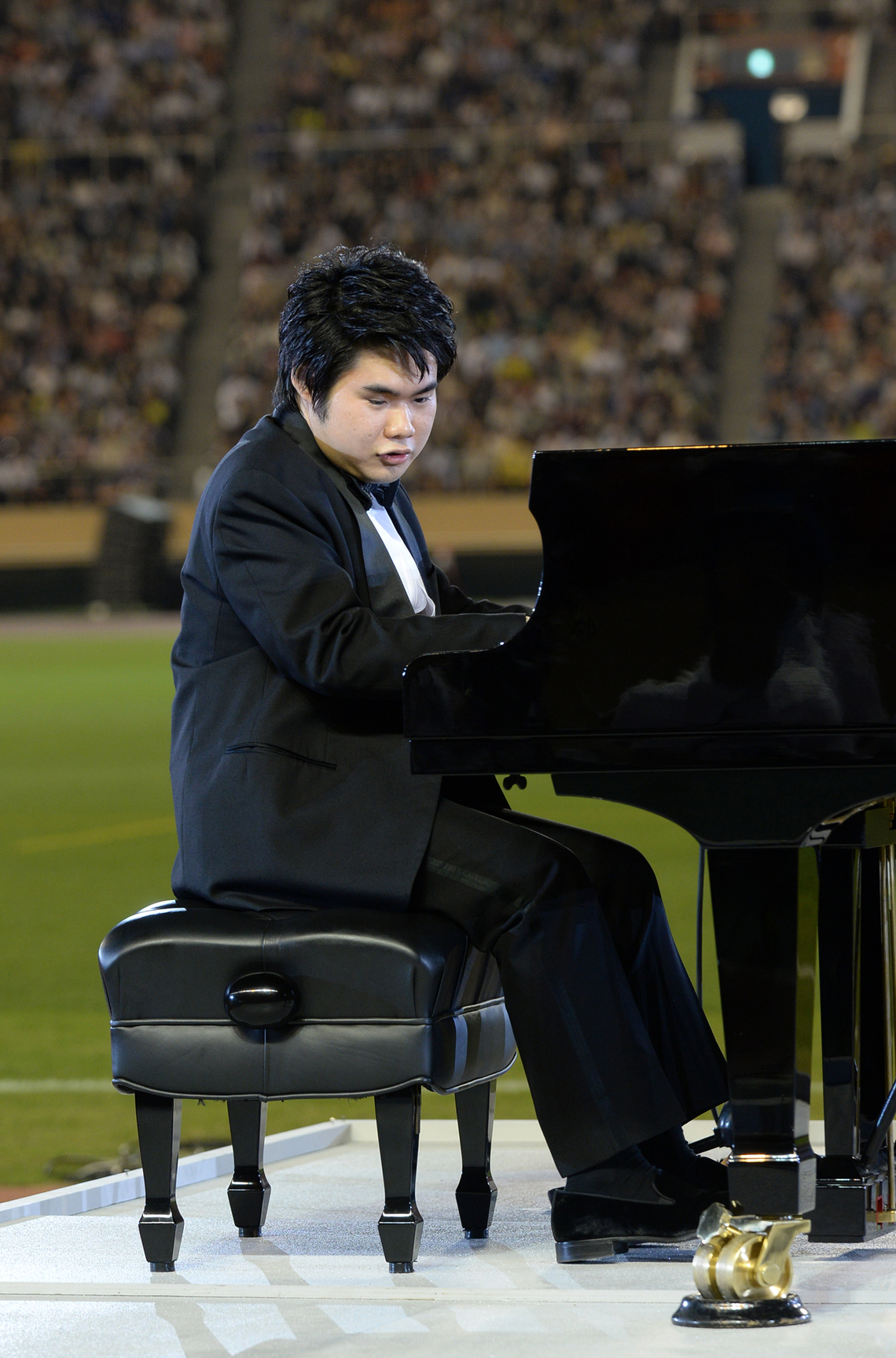
First, a grand piano was brought onto the field. Pianist Nobuyuki Tsujii appeared dressed in a black tuxedo. He passionately performed the "Tokyo Olympic Fanfare," played at the Tokyo Olympics opening ceremony, and Chopin's "Heroic Polonaise." The powerful tones resonated throughout the venue, stirring the hearts of the audience. Amid thunderous applause, he stated, "I played with gratitude and respect for the National Stadium and the heroes who gave us so many moving moments. This was my first time performing in such a large venue. It's sad to think it might be my first and last, but I look forward to a new future," prompting even greater cheers.
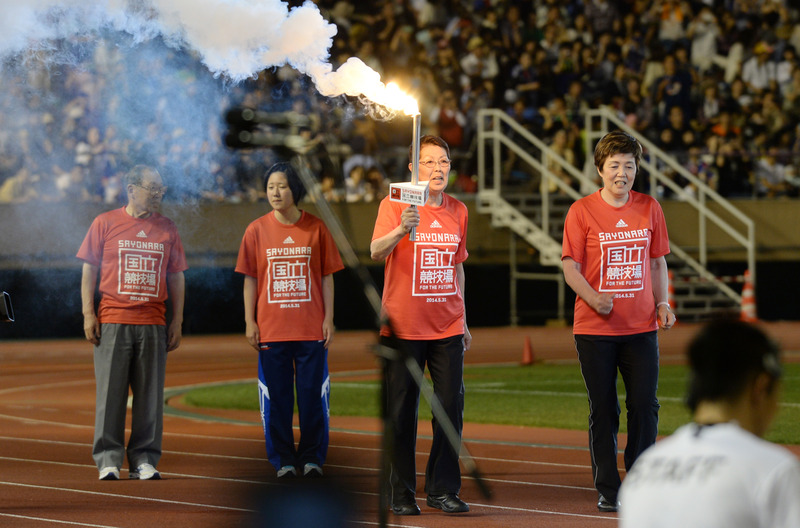
Following this, the Olympic torch relay took place, featuring past Olympic athletes. Torchbearers included Takashi Ono, the Olympic gymnast who won gold medals in three consecutive Games and was famously called "a demon with a club, Ono with a bar"; Kinuko Tanida and Yoshiko Matsumura (both maiden names), known as the "Eastern Witches" who won the women's volleyball gold at the Tokyo Olympics; and Daichi Suzuki, the Seoul Olympics swimming gold medalist.
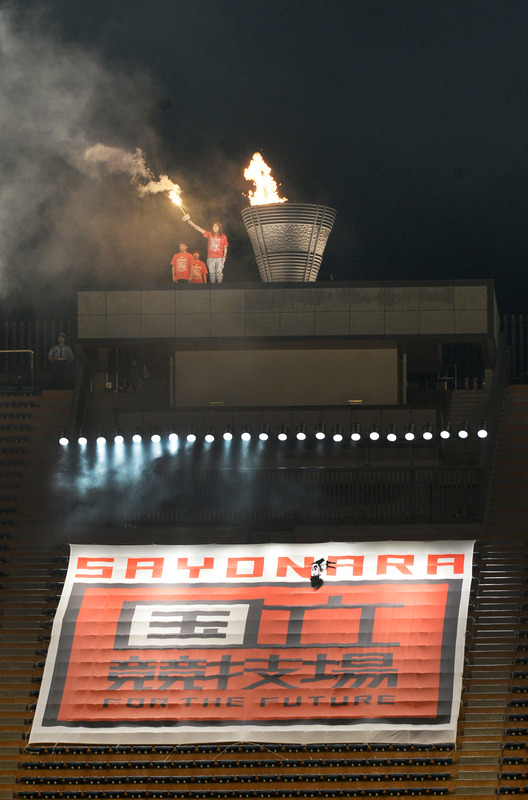
The final torchbearer was women's wrestler Saori Yoshida, who achieved a three-peat at the 2012 London Olympics. Holding the flame high, she ignited the cauldron, lighting the final flame.
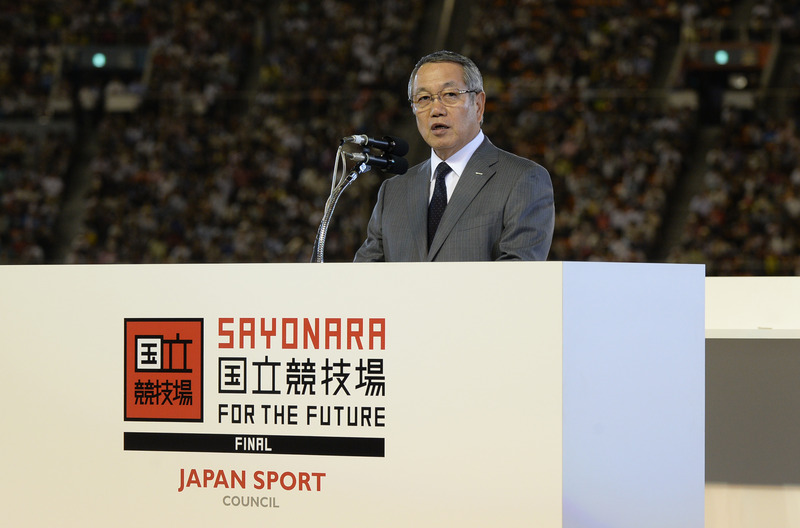
Representing the organizers, Ichiro Kono, Chairman of the Japan Sports Agency, delivered the opening address. "Since its birth in March 1958, the National Stadium has served as the stage for athletes' dreams for 56 years and 2 months, 20,517 days, hosting countless memorable competitions. Many records, dramas, and legends were born here. Each time, we drew strength from sport and renewed our gratitude and respect for the athletes. It is precisely because of this history, where athletes and spectators united to expand the possibilities of humanity, that it became a symbol of postwar reconstruction and came to be called a sacred place for sports. It transcends being merely a stadium; it is a special place with social and historical significance. For the 2019 Rugby World Cup, the 2020 Tokyo Olympic and Paralympic Games, and the future beyond, we must once again create a new sacred place. The construction of the new National Stadium is the work of 'creating the best'. Its significance lies in establishing a base for communicating to the world about recovery, sports, and culture. Sports have the power to change society and transform a nation. Today marks the prologue to once again pool Japan's strength to build a better country through the power of sports," he emphasized, calling for further cooperation and support.
Next, Yoshiro Mori, Chairman of the Tokyo Olympic and Paralympic Games Organizing Committee and Chairman of the SAYONARA National Stadium Executive Committee, expressed his thoughts on the reborn National Stadium: "The torch's flame will soon be extinguished, but I hope you will keep it burning in your hearts and rekindle it brightly in the cauldron once more for the 2019 Rugby World Cup and the 2020 Tokyo Olympic and Paralympic Games."
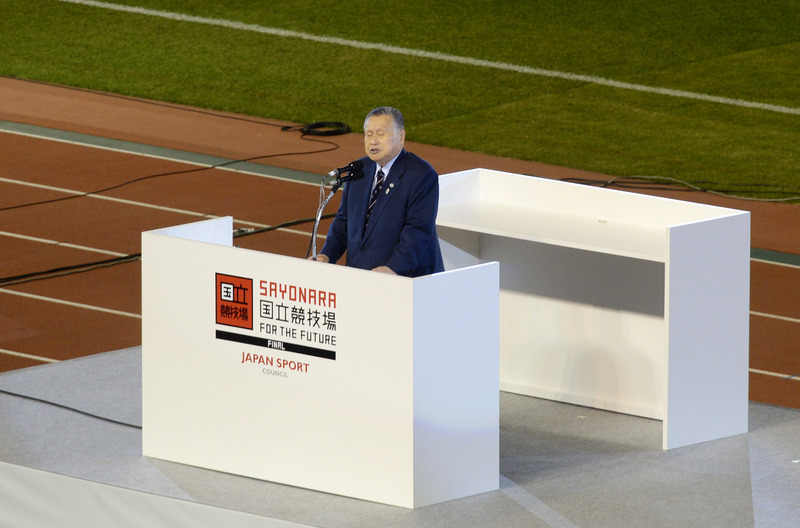
Following the equipment transfer ceremony and the Groundkeeper Award ceremony, singers Shinji Tanimura and Ryoko Moriyama performed. Tanimura passionately sang "Subaru" with the audience, while Moriyama performed "Sayonara Kyou no Hi" (Farewell to Today).
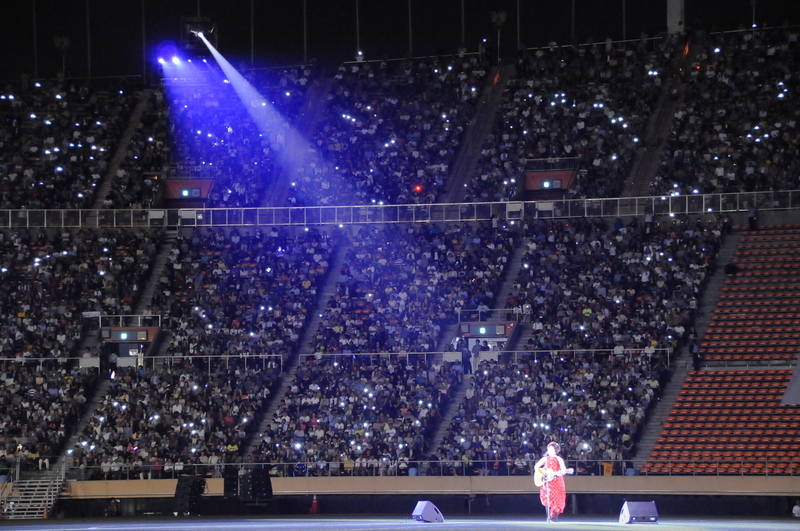
After bidding farewell to the National Stadium with a full-venue chorus of "Hotaru no Hikari" (The Light of the Firefly), conducted by composer Shunichi Tokura, the finale began. Breaking the silence and darkness, the giant screen positioned directly beneath the cauldron launched "FOR THE FUTURE," a visual and technological rebirth of the stadium's 56-year history.
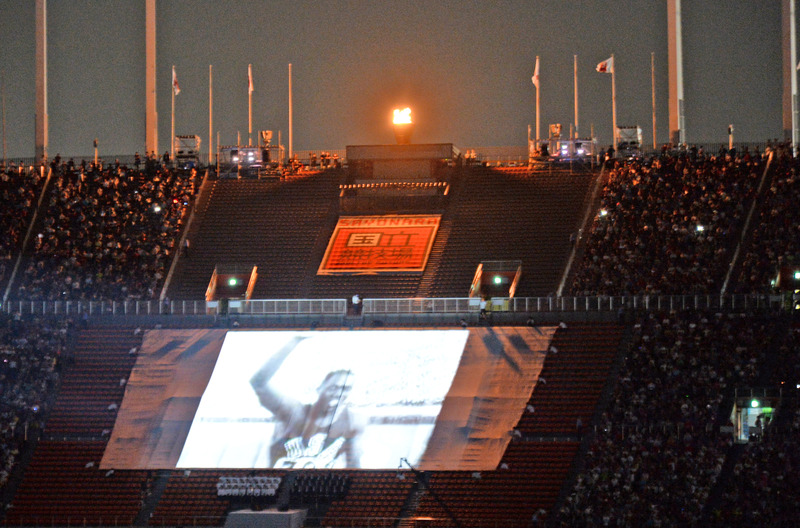
It revisited great records and memorable matches from track and field, soccer, rugby, and more – moments still etched in many people's memories – while celebrating the athletes' courage with the words: "8,798 winners were born, and 8,798 losers were born. Only those who dared to challenge were allowed to be here." It featured Carl Lewis's world record in the men's 100m set at the 1991 World Championships, Sergey Bubka's pole vault victory at the same event, and Kazushi Kimura's legendary free kick from 40 meters out in the 1985 FIFA World Cup Mexico final qualifier against South Korea. Laser beams projected the athletes' movements and the ball's trajectories onto the actual field, recreating these iconic scenes with light in a live performance.
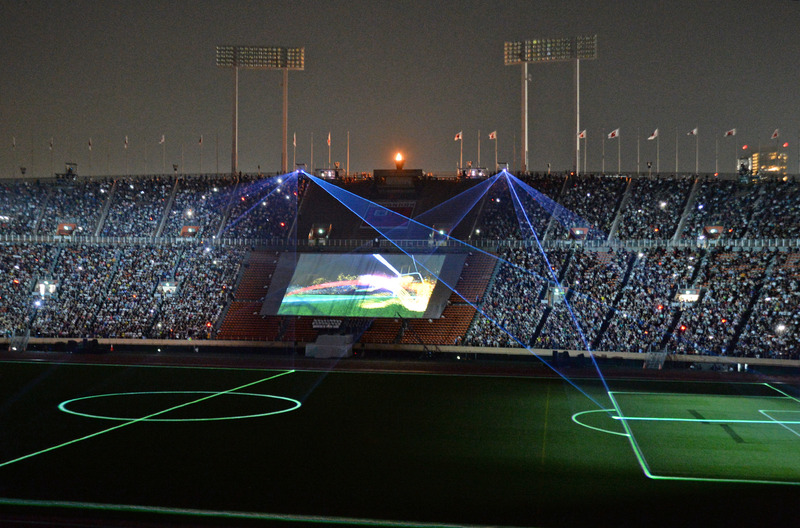
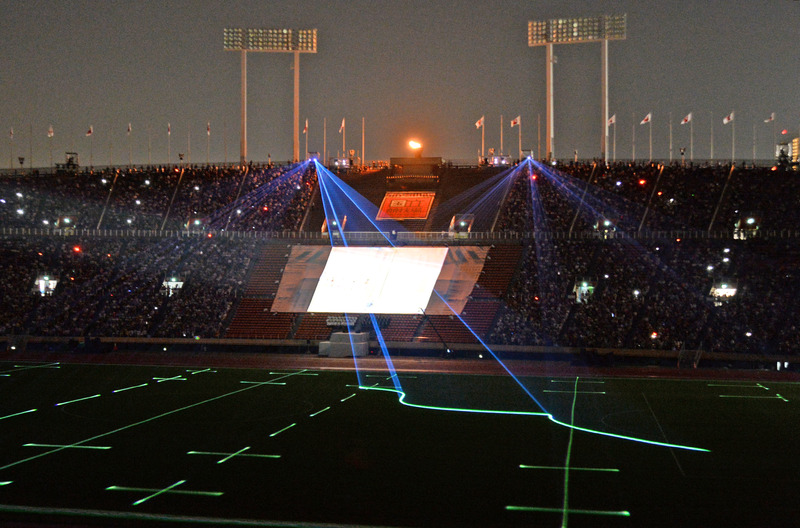
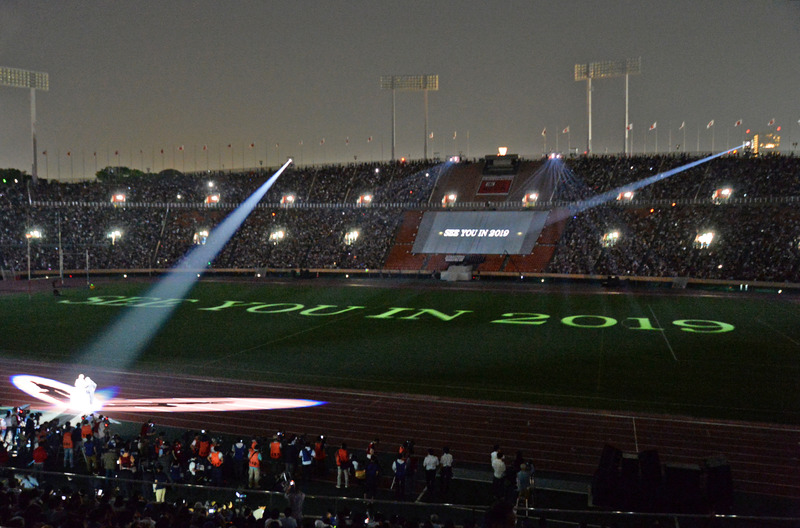
As the message "Today, the National Stadium closes its doors. With gratitude to all athletes and the miracles they created. THANK YOU." appeared on the screen, the Olympic flame was extinguished. After a moment of silence, a message of hope for the future was conveyed: "This history does not end. Five years from now. New challenges begin from a new stage." A cheer for the future was sent, and the words "SEE YOU IN 2019" appeared large on the screen and pitch. Fireworks were launched grandly, expressing gratitude and respect for the history left by the National Stadium, and carrying dreams and hopes for the beginning of a new history, bringing the ceremony to a close.
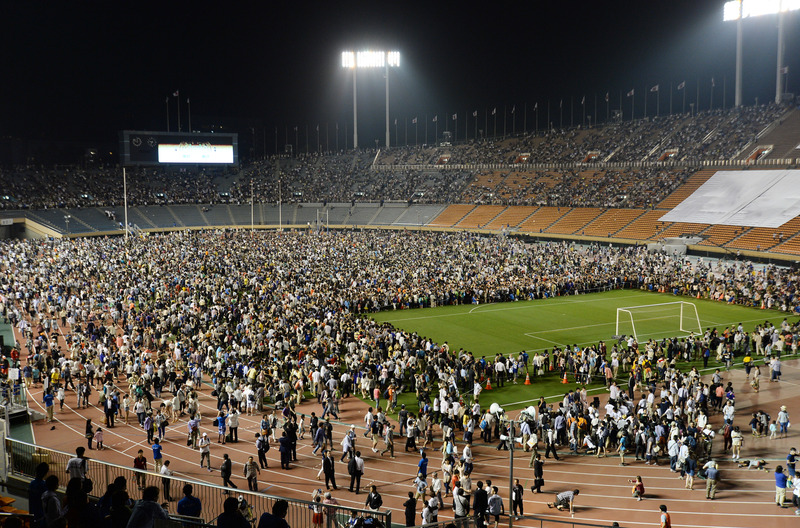
After the ceremony, the pitch was opened. Many fans who witnessed this historic moment took off their shoes, stepped on the grass, or lay down, imprinting the feel of the pitch and track onto their bodies.
Attendance was 36,116. Admission tickets were serial-numbered "FOR THE FUTURE TICKET: Future Ticket to the New National Stadium." Registering the number at the provided URL would secure an invitation to a preview event upon the stadium's completion. Sports lovers would return to this place in five years.

【 Related Articles 】
・SAYONARA National Stadium FINAL①: 2,000Attend Final Fan Run Day [2014.06.06]
・SAYONARA National Stadium FINAL②: Legends Return, Blue Impulse Performs First Exhibition Flight in 50 Years[2014.06.06]
・SAYONARA National Stadium FINAL④: The Light of Hope Spreads Nationwide[2014.06.11]
Was this article helpful?
Share this article


