
Note: This website was automatically translated, so some terms or nuances may not be completely accurate.
 The New Value Brought by the Internet [5/6]
[Ryo Tateishi × Ken Magun Dialogue] Athletes and the Internet (Part 1)

Ken Magun
Dentsu Inc.

Ryo Tateishi
[Part 1] What Does the Internet Mean for Athletes? Information Gathering Explained
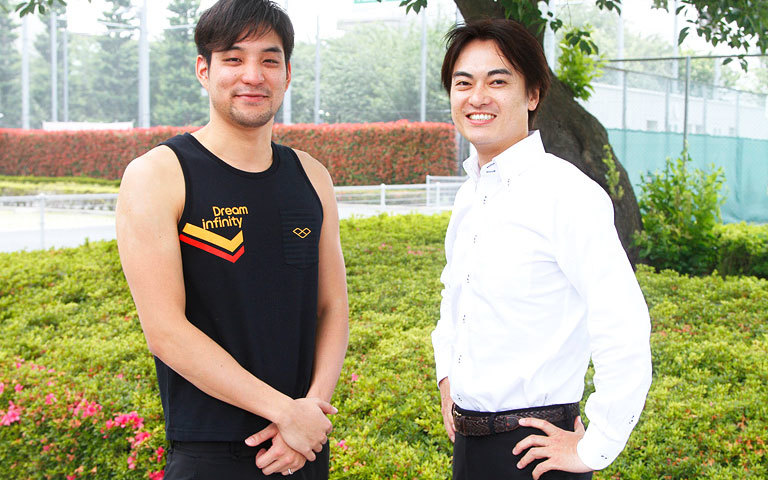
Two swimmers who once trained together at Keio University's Dai-Nichi Co., Ltd. campus. One went on to become the bronze medalist in the 200m breaststroke at the London Olympics, actively using social media for information gathering and sharing while excelling as an athlete. The other became a producer in the communications business world, handling social media promotions and more. What does the internet mean for athletes, and what has it brought them? We present a two-part conversation between competitive swimmer Ryo Tateishi and Ken Magun, from Dentsu Digital Inc.
In just 10 years, information gathering methods have changed dramatically!
Magori: It's already been two years since the London Olympics. You won that thrilling bronze medal in the 200m breaststroke during your senior year of university, right? I'm still involved in competitive swimming now as a university coach, but I also work as a producer at an advertising agency handling digital projects. So, this time, I'd like us to have a candid chat about the theme of the internet for you, Ryo, and for athletes in general.
Tateishi: Sure thing. I'm a bit nervous talking to someone ten years my senior (laughs). I'm 25 now, and you're 35, Magun-san. Over these past ten years, the ways athletes gather and share information must have changed significantly. Personally, I'm one of the swimmers who actively uses the internet and social media, so I'll mainly talk about myself and my circle, but feel free to ask anything.
Magori: About 15 years ago when I was still competing, the only way to watch the Japanese Championships was through NHK broadcasts. For results from the U.S. or European Championships, you either had to be there in person or wait for the specialized magazines published about a month later. But now, you can watch all the Japanese Championships preliminaries on Ustream, and results from overseas meets pop up on YouTube almost instantly. You can see rivals' results, form, and rankings in real time, and you also get a sense of where your rivals—both domestic and international—are training and what kind of practices they're doing. For you, Tateishi, this is probably just the norm you grew up with, but to me, it's remarkable progress and change. In this era, how do you interact with the internet and social media?
Tateishi: One way is for planning my schedule. For example, I train in the US for at least one to two months every year. I exchange questions and requests via email and SNS with my American coach and other local people there. By letting them know in advance what kind of training I want to do, based on my current condition, they can incorporate some of it. Another way is gathering information when thinking about training methods. Specifically, this means looking into new techniques and training approaches. I research what training methods are trending globally and what I personally lack. Information just keeps coming up. Beyond text, I look at photos, YouTube videos, and observe how overseas athletes and swimmers like Kosuke Kitajima swim and train to identify which techniques I need to improve.
Magori: Do you gather all this information entirely on your own, proactively? Or do you consult with Coach Naoki Takagi (who has been coaching you since 2010) and others? I'd also love to hear how you filter and utilize the information you discover.
Tateishi: For information gathering, it's probably about half and half. Sometimes I actively research things myself. Other times, because I train regularly at the National Training Center, I hear about new training methods from Coach Takagi and other national-level coaches, and we share information with each other. Of course, I still need to carefully evaluate whether a method is suitable for me.
Magori: Tachiiwa has had strong opinions since he was quite young. Because he thinks for himself, he has the ability to gather information from social media and YouTube, digest it, and make it his own.
He actually tests the information he gathers and keeps what works for him.
 |
Tateishi: Honestly, I sometimes rely on others for gathering information, but when it comes to technique, I have to see it myself. That's why I watch a lot of videos related to swimming research. However, there are athletes around me who are like maniacs, gathering even more information than I do. But does that mean they all swim fast? Not necessarily. Being a maniac alone won't make you faster.
Magori: Even if you train at a school or swimming club instead of the National Training Center, if you have personal interest, you can access more information. I think the future will increasingly favor athletes who can wisely utilize information.
Tateishi: Personally, I've never really had coaches tell me much about technique; I've always done things freely. Because I'm self-directed, I'm not great at doing exactly what a coach tells me 100%. That's why I feel internet information, which allows you to pick and choose, really suits my personality and style.
Magori: Honestly, connecting with the world through the internet has definitely raised the level of competitive swimming both domestically and internationally. But for that level-up, discerning what information to use is still crucial, right?
Tateishi: Various training methods come in via the internet. For example, in terms of the diversity of land-based training (outside the pool), the US has about twice as many options as Japan. You can't start without trying them out. Whether they suit you or not is an individual matter, and of course, physical ability differs. Either way, I think internet information is having a positive effect, not just for competitive swimming, but for all sports.
Magori: Do you also gather information beyond technique, like health management or dietary restrictions?
Tateishi: When it comes to swimming, I tend to think quite logically, but my personal life is the opposite. I don't want to restrict my diet (laughs). I tried something like dietary restrictions once, back in high school. Not being able to eat what I wanted, having to eat things I didn't want to eat – that became stressful, and I couldn't stick with it. So, I'm pretty indifferent to that kind of information.
Magun: So that's a matter of personal choice, then.
Tateishi: Some athletes gather massive amounts of information from around the world about daily meals and sleep. But when you go overseas, can you really eat exactly as planned? Sometimes ingredients are missing, or even if they're available, they taste awful. My stance is that as long as I eat normally and in moderation in my daily life, it's fine. I believe that if I practice with confidence, using the information I've chosen, I won't feel anxious during competitions.
(Continued in Part 2)
Was this article helpful?
Share this article


Newsletter registration is here
We select and publish important news every day
For inquiries about this article
Back Numbers
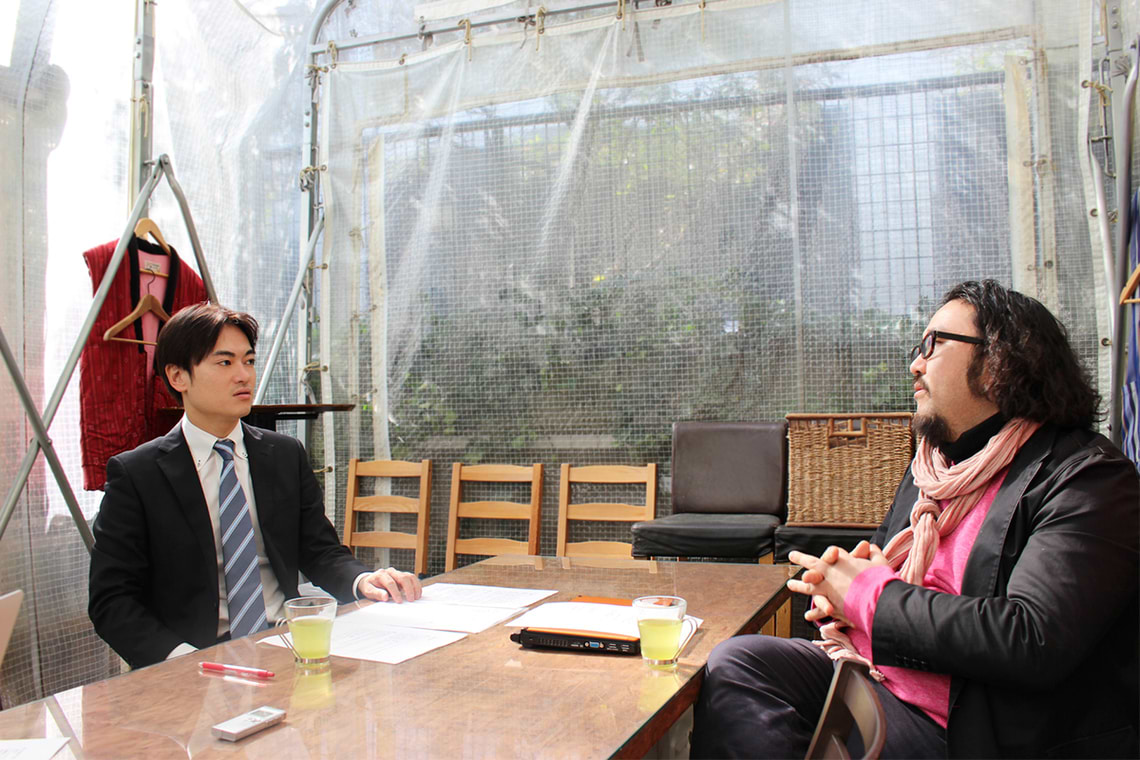

Author
Ken Magun
Dentsu Inc.
Digital Business Bureau