
Note: This website was automatically translated, so some terms or nuances may not be completely accurate.
 The New Value Brought by the Internet [4/6]
[Hima Furuta × Ken Magun Dialogue] Has SNS Changed Human Connections? Part 2
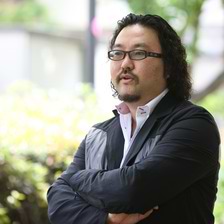
Furuta Himaru
umari Inc.

Ken Magun
Dentsu Inc.
[Part 2] Humanity's Responsibility Grows Heavier
In this dialogue series featuring Himari Furuta, CEO of umari Inc., who collaborates with us on the "Like! JAPAN Project," the first part explored the potential for community building expanded by Facebook, while also addressing the point that "SNS doesn't inherently create communities." The second part delves deeper into how digital technology will influence human connections moving forward.

The true test for humanity: What should we truly choose?
Magun: Earlier, we discussed how SNS platforms like Facebook are ultimately just tools. Does that apply to digital technology as a whole?
Furuta: I think it's the same. There's often debate about "how digital technology changes humans," but I feel that notion of changing humans is slightly off. Whenever groundbreaking tools emerge, such discussions inevitably arise, and their drawbacks are often loudly proclaimed.
Magun: Precisely because possibilities are expanding, we need a sharper eye to see what's truly essential.

Furuta: Precisely because technology is evolving, I believe we're being challenged to consider what we should truly choose.
For example, in the past, we could only "fry in a pan," but now we have ovens, microwaves, and steamers. Yet, the latest cooking method isn't always the best fit. The person sitting right in front of you might be happiest with meat simply pan-fried.
Now that we have access to all these digital technologies, haven't we entered an era where humans need to raise our level even higher? It's less about convenience and more about humanity as a whole bearing an additional responsibility.
Magun: I see. Just as using cars safely requires moral judgment, the same applies to digital technology.
Furuta: Exactly. We've seen this kind of situation many times before; it's not actually new.
Moreover, things like crowdfunding and social projects, which seem to have emerged because digital technology makes it easy for everyone to connect, were happening everywhere in the past too, like people saying, "Hey, let's all fix this broken shrine together."
Ultimately, if we trace it far back, people in ancient times might have connected telepathically with the gods. Now, being able to connect instantly with anyone, anywhere, is almost like telepathy. Thinking about it that way, perhaps our current digital society also has an element of returning to our roots, getting closer to our fundamental human senses.
Magun: We've come full circle.
The multitasking lifestyle brought by Facebook
Furuta: We've been discussing the impact digital technology has on humans, but I feel this conversation involves a much larger timeframe. I sense that our current era is a time of paradigm shift, a period where humanity is changing. Much like the Meiji Restoration.

Magun: You really like the Bakumatsu period, don't you? (laughs)
Furuta: I absolutely love it (laughs). Human society goes through several phases: periods of creating new societies, periods of maturation, and periods of paradigm shifts where the old ends and we contemplate the next. When technology emerges that fundamentally changes society, that's when the world transforms. So, by tracing how new tools and information flow changed back then, we might glimpse the role digital will play going forward.
Magun: Speaking of new tools back then...
Furuta: Newspapers. Meiji-era intellectuals created a medium that said, "We'll pass on what we've just heard."
Magun: But even without that, they managed to meet up with people they'd never seen before to overthrow the shogunate, or deal with the arrival of the Black Ships. That's impressive. Thinking about that, I feel we should be able to take on even greater challenges.
Furuta: Honestly, when you think about that era, it makes you feel like there's no idea today that can't be realized.
Another fascinating aspect of our era is how hierarchical relationships between people are being redefined. Facebook allows connections like "this person is a CEO, but they're my friend" without being bound by social status hierarchies. You could say this is a return to basics too.
Magun: I see, that's certainly true.
Furuta: For example, at work, someone might be your boss, but at a local festival, you've been involved longer, so at the festival, your boss is the junior member using polite language. That kind of multitasking lifestyle probably existed long ago, but Facebook has brought it into sharper focus.
So, why can women thrive in today's era? It's because women have always been multitaskers, unlike inflexible men. They have this horizontal processing ability – doing laundry while raising kids, taking care of their husbands, and handling neighborhood association chores.
Fundamentally, there is a feminine side within men and a masculine side within women. Beyond gender, I think people can now move more flexibly between, say, urban and rural areas, or juggle corporate work with freelance activities.
Magun: With SNS making diverse lifestyles visible, I feel we can pursue our own happiness more freely—doing what we love. In my work, I tend to focus on how to use new technologies, but I want to think more flexibly about what kinds of play and happiness we can build on the possibilities digital technology has opened up.
Furuta: At this turning point in history, we've been given this new thing called digital. How can we, as humans, grow through it? I feel this question is being posed to me personally, and at the same time, I find it incredibly exciting.
Was this article helpful?
Share this article


Newsletter registration is here
We select and publish important news every day
For inquiries about this article
Back Numbers

Author
Furuta Himaru
umari Inc.
Project Designer
Ken Magun
Dentsu Inc.
Digital Business Bureau