
Note: This website was automatically translated, so some terms or nuances may not be completely accurate.
 The New Value Brought by the Internet [2/6]
Southeast Asia: Internet in the Third District

Ken Magun
Dentsu Inc.
I took advantage of the year-end break to visit Kuala Lumpur, Malaysia, and Ho Chi Minh City and Hanoi in Vietnam. Within digital work, the potential of emerging markets and offshore development (producing websites and apps overseas) are often discussed. I'd been pretending to know about these things from hearsay, social media, and news reports, but I felt increasingly embarrassed and guilty about not having seen them with my own eyes. This time, I want to write about what I saw and heard in these two countries and three cities.
Looking at the demographics, Malaysia and Vietnam are very young countries. Colleagues, juniors, and friends stationed in these cities have always told me they are "vibrant places." True to that description, what strikes you first is the proportion of young people and their sheer energy.
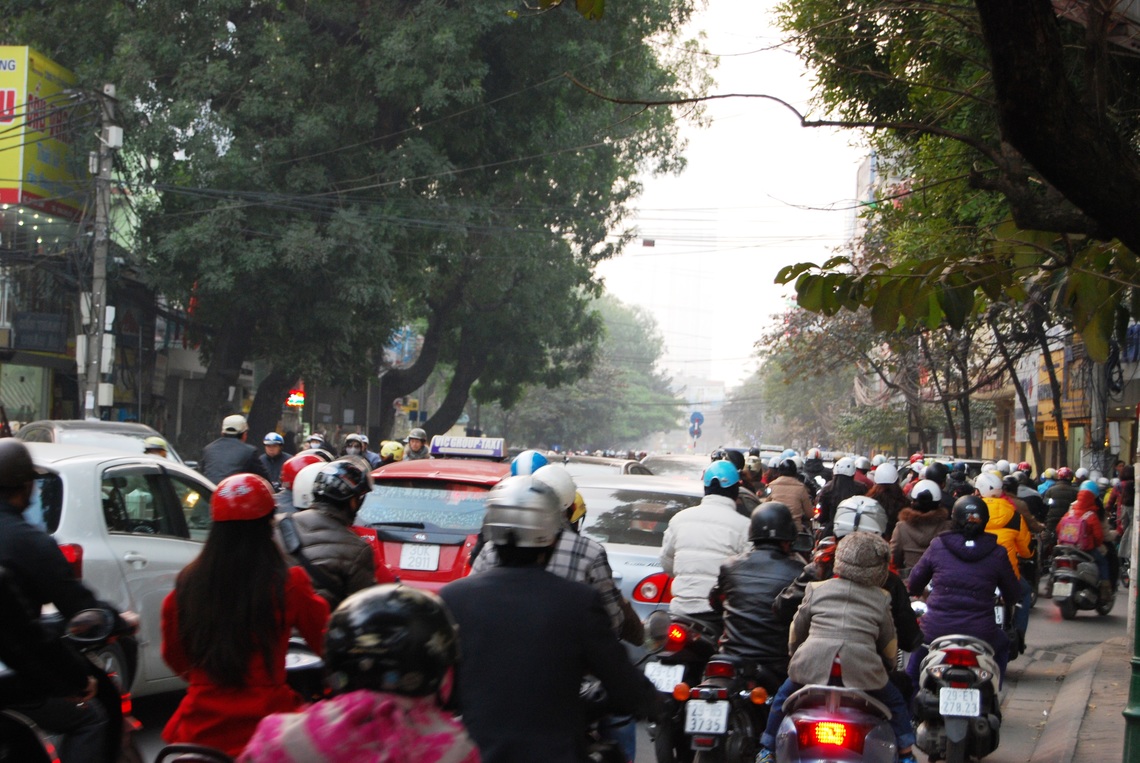 |
(Central Hanoi, Vietnam) |
While each city has its own distinct character, they're all overflowing with cars, scooters, and people. This photo is from central Hanoi, but it's not a special sight—it's a common scene everywhere. A Japanese executive running an offshore company remarked, "It reminds me of Japan around the time of the movie 'ALWAYS: Sunset on Third Street.'" The chaotic yet vibrant atmosphere of the early high-growth era might be exactly what Southeast Asia is like today.
Digital and the Internet Know No Borders
The major difference, however, is that internet infrastructure is well-established, and high-speed mobile networks are rapidly expanding—much like in developed nations. While not yet universally accessible, PCs and smartphones are steadily permeating society. It's easy to imagine how difficult it was to obtain information from developed countries in 1950s Japan, but here, accessing the internet grants immediate access to cutting-edge knowledge. Smart young people, armed with this new worldview, continue challenging themselves to reach greater heights.
Moreover, the internet and digital technology offer another valuable opportunity. Without needing to travel to developed nations they've never seen, they can create applications and software by working with programming—a universal language—and deploy them on platforms like smartphones. This allows them to challenge the world from Southeast Asia without incurring significant costs or risks.
Smartphone Apps as Branding
In Kuala Lumpur, Malaysia, I was introduced to an interesting taxi app called "My Teksi." Unfortunately, the quality of taxis operating in Malaysia varies greatly. (I once had a driver who, after about five minutes, feigned confusion: "Huh? Where was I supposed to go again?") To call a safe and comfortable taxi, you use this app.
Enter your current location and destination, and it contacts registered taxis nearby. Once matched, it displays the driver's photo, name, mobile number, car number, and estimated fare to your destination. Linked to GPS, you can track the pickup car's real-time location. Then, just get in and go. Occasionally, a car with a different photo or license plate number might show up, but reporting this results in the driver losing their registration, ensuring quality is maintained. Furthermore, even in the unlikely event of an incident, both the passenger and driver apps transmit their GPS location, allowing women to ride alone with peace of mind.
The app's payment system is also well-designed. Users pay 2 ringgit (≈60 yen) per booking—a safety and security fee. Meanwhile, taxi drivers pay a referral fee. One driver mentioned that using this app doubled his daily earnings, making the fee negligible.
Registered taxis prominently display a "MyTeksi" app sticker on their windshields, and the app is also advertised in the back seats.
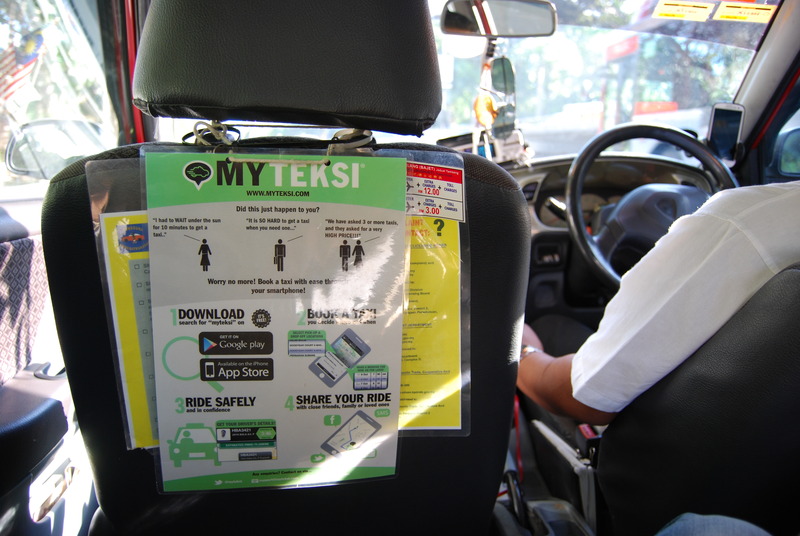 |
In other words, this app functions as a guarantee of safe and secure taxis and as a branding tool. Drivers without smartphones cannot even enter this arena and will inevitably lose customers over time. I discovered a new way of using smartphones, apps, and the internet, along with new values, unique to a country in its growth phase.
As a side note, I used local websites and travel apps like TripAdvisor to venture into restaurants I'd never have dared enter alone. Social reputation-building never fails. You shouldn't judge a restaurant by its entrance or location. The food was undoubtedly authentic. This too is thanks to the internet/digital world.
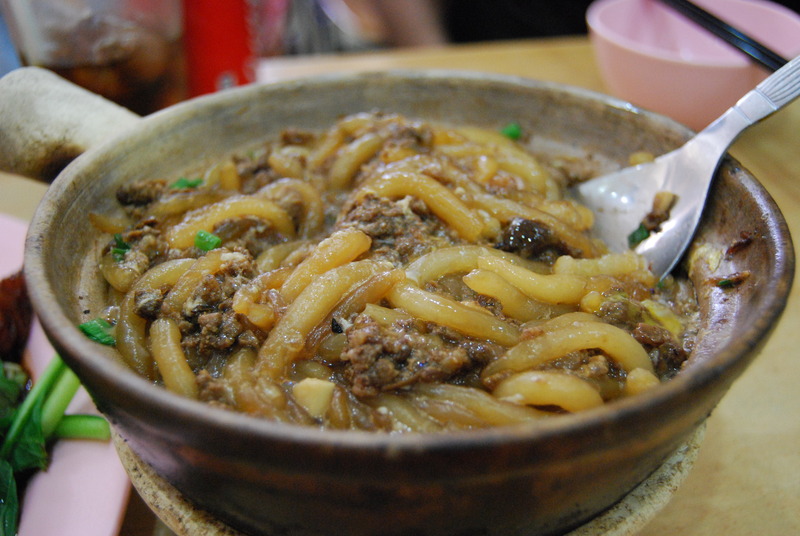 |
(A delicious lunch like udon: "Hokkien Mee") |
The internet/digital world in the country of "ALWAYS: Sunset on Third Street" is also bringing new values and gradually guiding society in a better direction.
| Collaboration Dentsu Inc. Media Vietnam (Ho Chi Minh City) Wataru Matsumoto Dentsu Inc. Media Malaysia: Ms. Cai Xiushuan |
Was this article helpful?
Share this article


Newsletter registration is here
We select and publish important news every day
For inquiries about this article
Author
Ken Magun
Dentsu Inc.
Digital Business Bureau