
Note: This website was automatically translated, so some terms or nuances may not be completely accurate.
 The schemer plots three times [2/13]
In our private lives, everyone has their own schemes.

Satoshi Umeda
In our previous column, we explained that planning is a method for solving problems. Many of you probably thought, "We already know that!" However, this concept is the foundation and essence of planning, so we wrote it as the starting point for our discussion.
Now, here's the main point. What exactly does it mean to "scheme" a plan rather than simply "create" one?
The word "scheme" might sound complicated at first, but it's actually not difficult. Why? Because everyone schemes in their daily lives. Bring that scheming from your personal life into your work. Doing so will make the plans you create even stronger, giving them the power to move the world.
Imagine a birthday party, for example.
Friends who haven't seen each other in a while due to work or family commitments gather again, sharing updates on their lives. The venue might be someone's home, or perhaps a familiar restaurant or cafe they often visit. After the meal, a cake is brought out from the back.
"Happy Birthday!" That moment is joyful, even if it's not a surprise party. Then, everyone hands over their gifts. Opening one reveals the exact bag you've been wanting. "Wait, how did you know?" The attendees exchange knowing glances, as if declaring it a huge success, and mysteriously whisper, "It's a secret." The truth is, one participant spotted a photo you casually posted on social media and suggested it as a gift.
This captures a slightly special moment from everyday life. You might have had a similar experience yourself. And within this small episode lies the difference between "planning" and "scheming."
Throwing a birthday party is incredibly simple if you just know the person's birthday. You might even liven things up by reusing a gag that went over well at someone else's birthday party before. But as you know, that alone won't truly move the birthday person or those around them.
But in the earlier example, there's a scheme at play: "giving her the gift she'd wanted for a long time." This small difference is precisely what becomes a major factor in moving people's hearts.
Breaking down this unconscious action reveals it consists of two elements.
They are "knowing the other person well" and "exceeding their expectations."
If a birthday party is being held, she probably expects cake and presents to be prepared. Simply giving her cake and presents might make her happy, but to put it bluntly, she might not feel anything beyond that. This holds true even for a birthday party with close friends.
If that person were a company, product, or brand they'd never heard of before... well, it's not impossible that their reaction would just be "Hmm..." and that would be the end of it.
In this column, focusing on the two points mentioned earlier—"knowing the other person well" and "exceeding their expectations"—I want to uncover the true nature of "scheming" and explain how to bring scheming into your work.
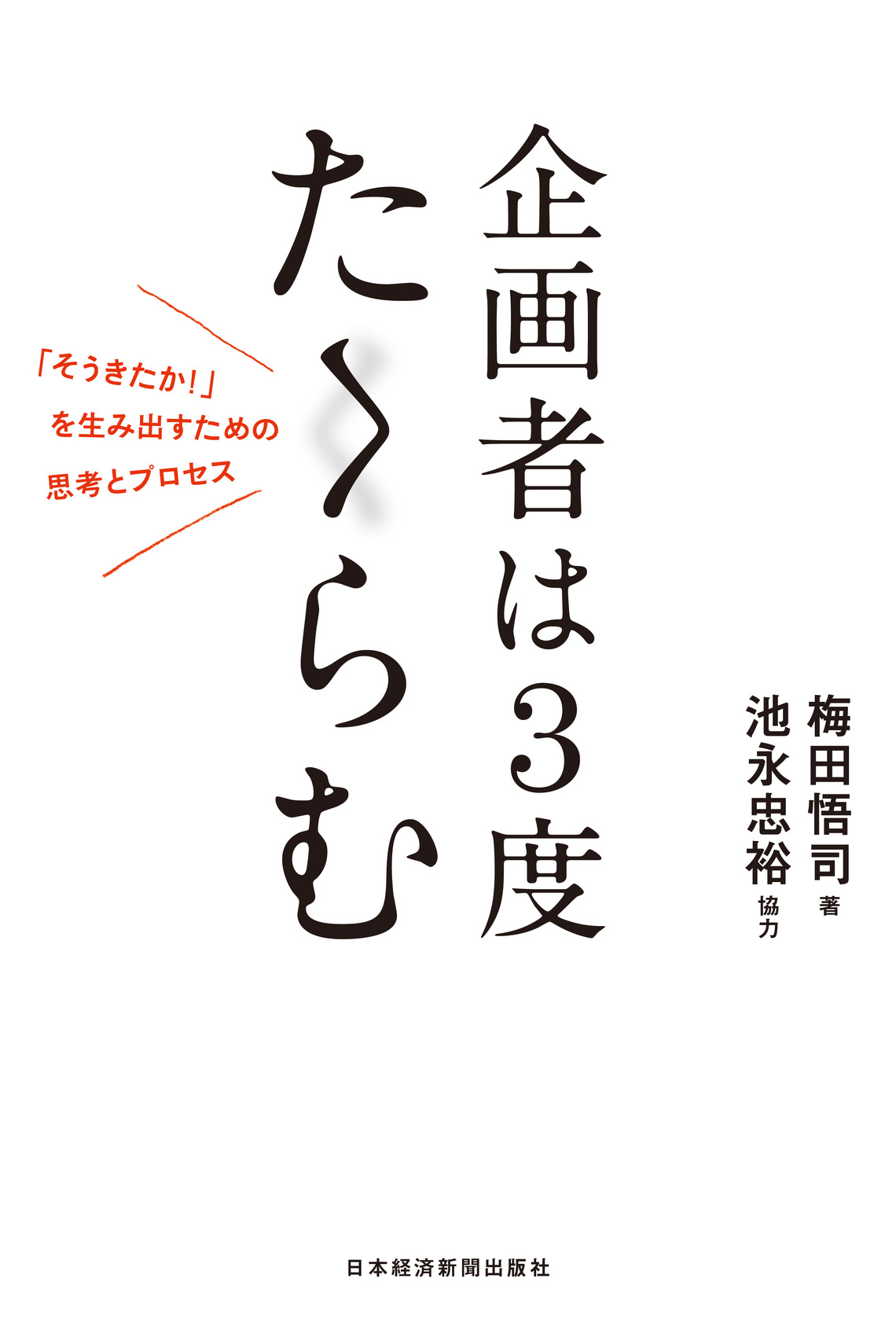
However, the core of planning remains problem-solving. The idea behind the book title 'Planners Scheme Three Times' is that scheming three times during this problem-solving process makes the plan stronger.
I'll explain these three points in more detail later, but for now, let's focus on developing our understanding of "scheming." Please bear with me for a while.

Was this article helpful?
Share this article


Newsletter registration is here
We select and publish important news every day
For inquiries about this article
Author