
Note: This website was automatically translated, so some terms or nuances may not be completely accurate.
 Dentsu Inc. Smart Platform [18/23]
When do young people of the smartphone generation actually want things?
Introduction
Hello, I'm Sugihara from Dentsu Inc. Smart Platform. This might be sudden, but have you recently made a purchase that made you genuinely think, "I really want this!"?
Since smartphones arrived, people are constantly bombarded with a flood of information, everywhere and all the time. Ads, articles, recommendations from social media posts, reviews on comparison sites. As long as your phone is glued to your hand, you're always connected.
And with this increase in information, haven't we developed a habit of finding reasons not to buy things in our everyday consumption? In other words, hasn't that genuine feeling of "I really want this!" towards objects started to fade?
Young people of the smartphone generation, who are adept at using smartphones, are often said to have "lost their desire for things." They seem to have little interest in cars or brand-name goods, choosing items that won't make them stand out from their peers, appearing almost negative about consumption. But they do have things they genuinely want. It's just that the process leading to that "I want this!" feeling is different.
So how can we spark strong consumer desire ("I want this!") in them?
Led by young planners at Dentsu Inc. Smart Plus, this series focuses on smartphone-generation youth, primarily teens and twenties, to answer the question: How has the smartphone changed the way people's desire to consume is formed?
First, we aim to grasp the reality, and eventually, we hope to explore the new triggers for consumer desire in the smartphone era.
The Mechanism Behind "I Want This!": "Self-Centered Perspective" vs. "Peer-Centered Perspective"
Fundamentally, when young people agonize over purchases, two perspectives are always present. One centers on the self as the subject. The other is conscious of others' reactions. These two perspectives constantly interact as a pair, triggering our "I want this!" feelings.
Let's call the former the "Me Perspective" and the latter the "Peer Perspective." I'd like to explore each in more detail.
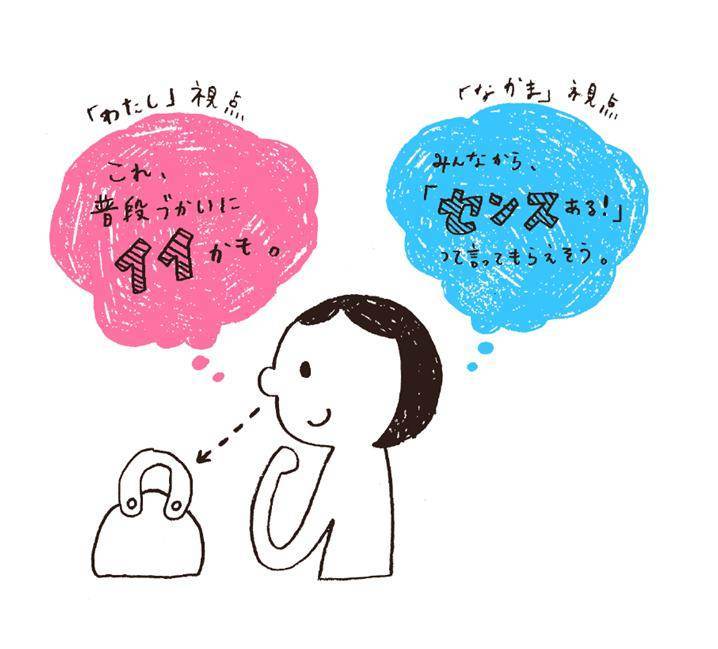
・ "Me Perspective"
The "I Perspective" is about whether something feels "good" to you personally. It's something people of all generations and eras possess. Furthermore, since "I" is shaped by one's experiences and memories, each person has their own unique standard.
・ "My Group Perspective"
Next, the "Peer Perspective" is the viewpoint of "peers" – acquaintances and friends belonging to a close-knit community (here, we're referring to small groups rather than the broader public). This perspective clearly embodies a characteristic of our current era. With the spread of the internet and social media, we've come to find our place within the circle of our immediate, real-life community – our "peers" – rather than within the larger narratives of society or the public sphere as portrayed by the media. Communication based on real, relatable empathy – like sharing "This is great, right?" – builds and reinforces these "group" relationships.
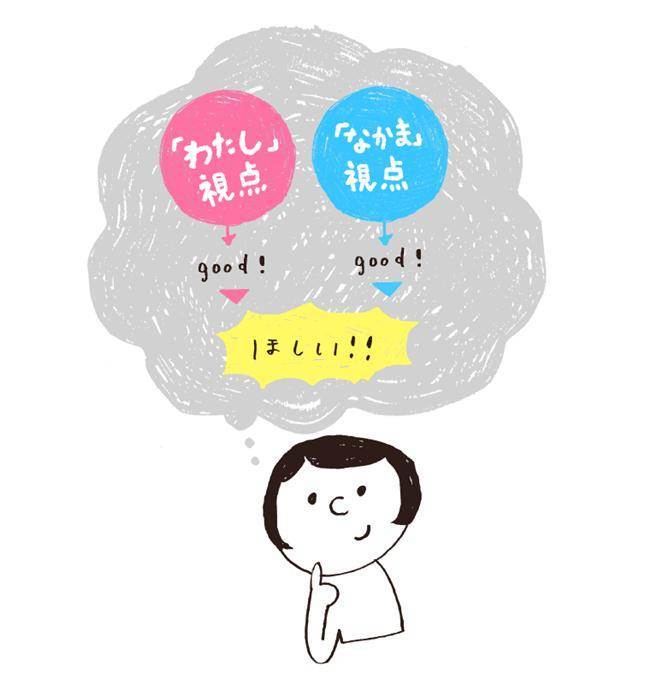
Judging things from this "I-perspective" and "buddy-perspective," and only when they are fully convinced, do young people feel "I want this!"
Changes in the Smartphone Era
So, how have these two perspectives changed with the spread of smartphones and SNS?
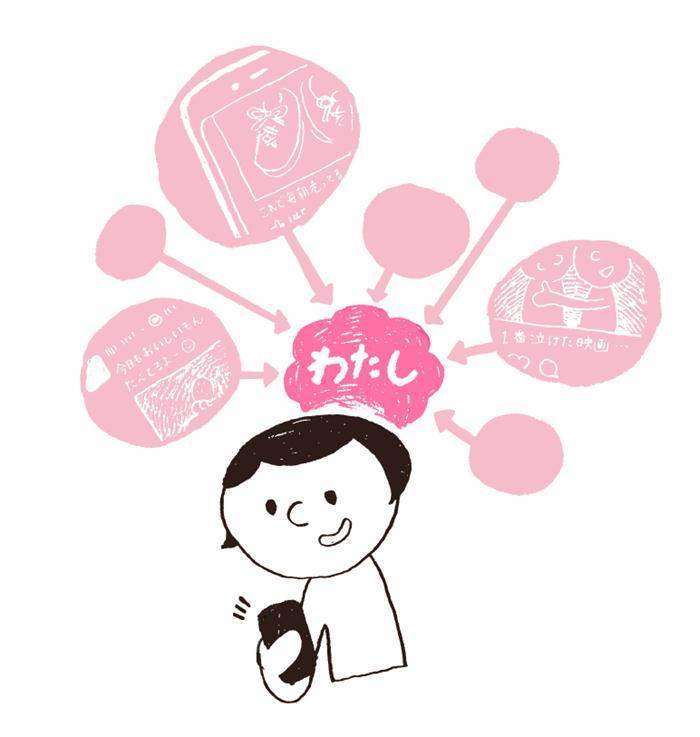
Change #1: "What do I truly want?" The "I-perspective" is shaped by vicarious experiences.
With the proliferation of smartphones, we can now input vast amounts of detailed information using the device itself, without actually investing time, money, or effort into experiencing things firsthand. From information about celebrities or admired friends to stylish posts by people we've never even met, we can feel as if we've experienced it ourselves.
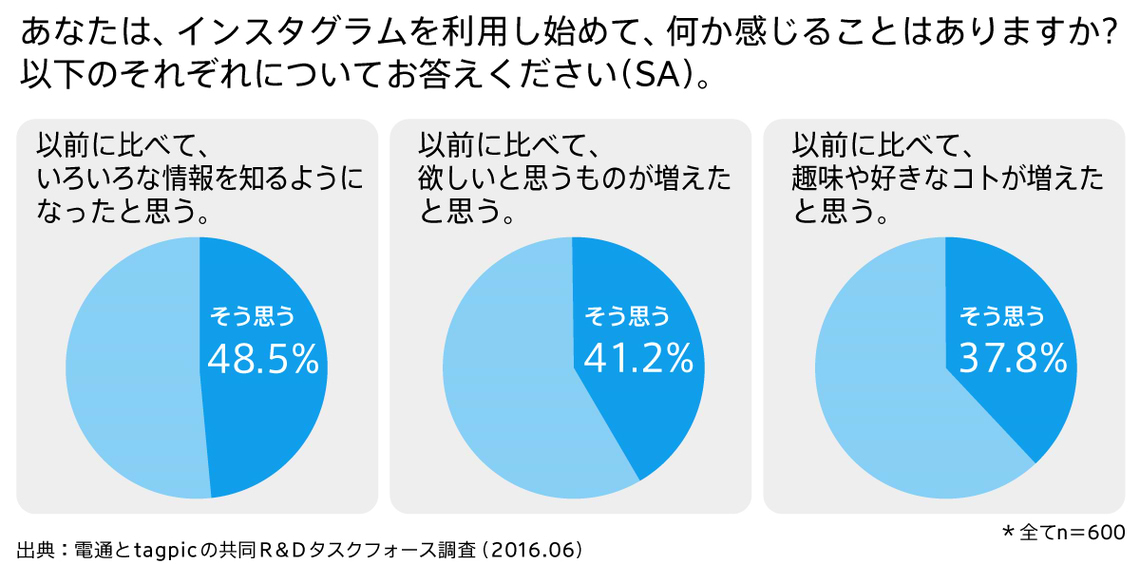
For example, you can discover beautiful scenery from around the world without spending money or time traveling there yourself. You can research the history and worldview of a famous brand, feel like you know it, and be satisfied—without actually visiting their store, talking to a salesperson, or even making a purchase. It's also common to see your favorite celebrity share their attractive lifestyle on Instagram, completely resonate with that style, and start wanting similar products.
Nowadays, our "personal perspective" is constantly being significantly swayed by vast amounts of information we've picked up from somewhere.
Change #2: "Recommendations and endorsements are a given. Which one should I really choose?" ~ The Filterization of the "Peer Perspective" ~
Young people, constantly connected to social media via smartphones, are acutely aware of being under the gaze of their "peer group." They learn daily how to conduct themselves in social media interactions and posts. Articles and posts flowing through their feeds all come with visible evaluations (comments, reviews, likes!), enabling instant selection.
In other words, young people constantly hold the perspective of how well something will be received by their "friends" ("This will get compliments!", "This won't make me stand out", "This could be good conversation fodder", etc.). Furthermore, they've become adept at instantly predicting how they'll be evaluated by their "friends" within each of the multiple communities they belong to, and acting accordingly.
This increasingly strengthens the presence and importance of "friends," and it has become the primary filter in the process of generating young people's "I want this!" If something doesn't pass through this filter first, no matter how good the product or service is, consumers will perceive it as just another piece of information flowing by.
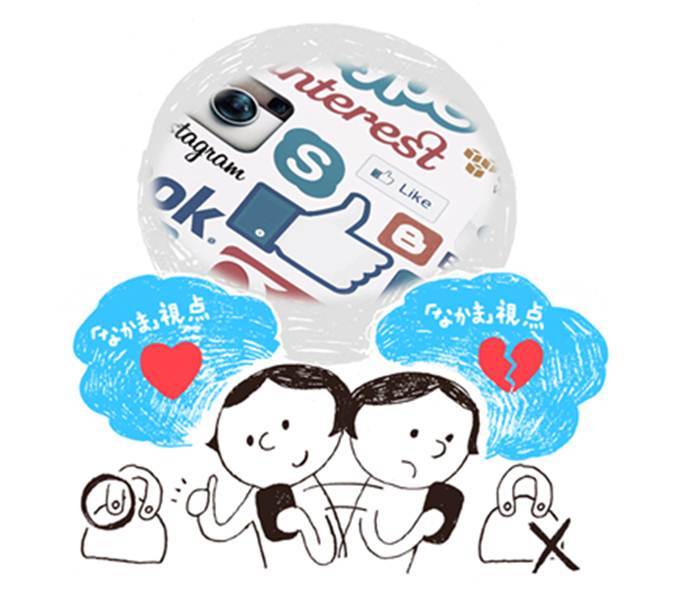
Actual surveys revealed that young people who are adept at using smartphones tend to shop with a stronger "peer perspective" in mind.
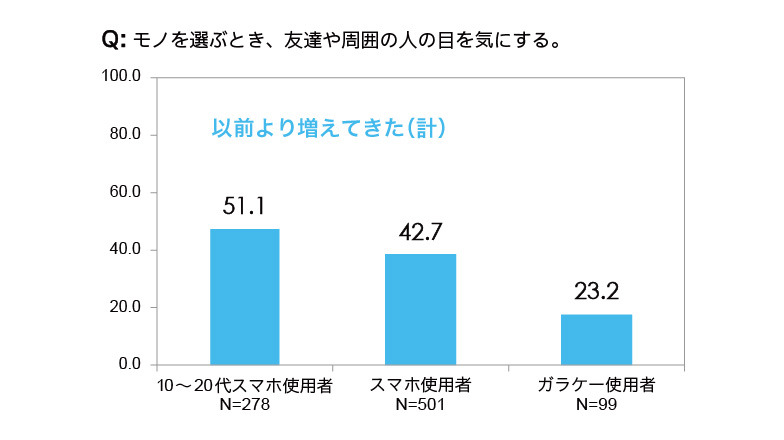
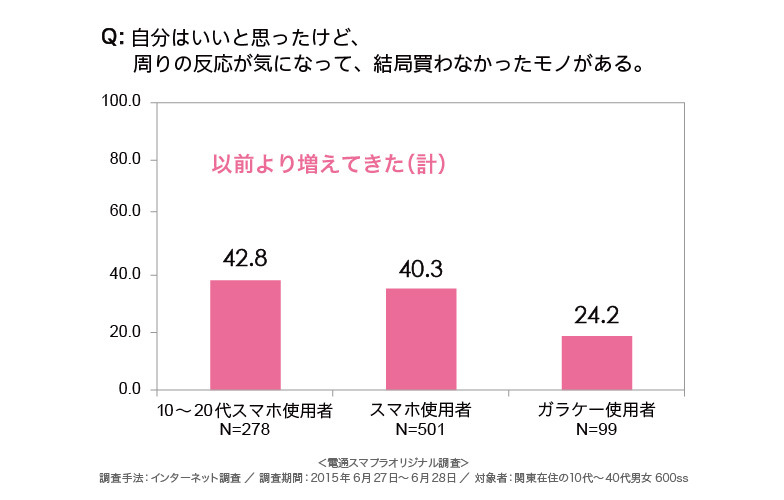
To make smartphone-savvy youth think "I want this!",
From here, Dentsu Inc. Smart Planning's Sezu will continue the analysis. Indeed, as Sugihara's analysis suggests, the changes brought by smartphones may have created new hurdles before reaching that "I want it!" feeling, or necessitated rethinking how we perceive the desire itself. However, even in this environment, many products and services strongly stir up that "I want this!" feeling and boost sales. I'd like to start by explaining the mechanism behind how that "I want it!" feeling emerges for such products and services, using the "I-perspective" and "peer-perspective" frameworks.
A survey examining several recent hit products found that purchasers and those considering purchase tended to possess both the "I perspective" and the "group perspective," while those merely interested but not considering purchase showed a notably weak "group perspective" or scattered perspectives.
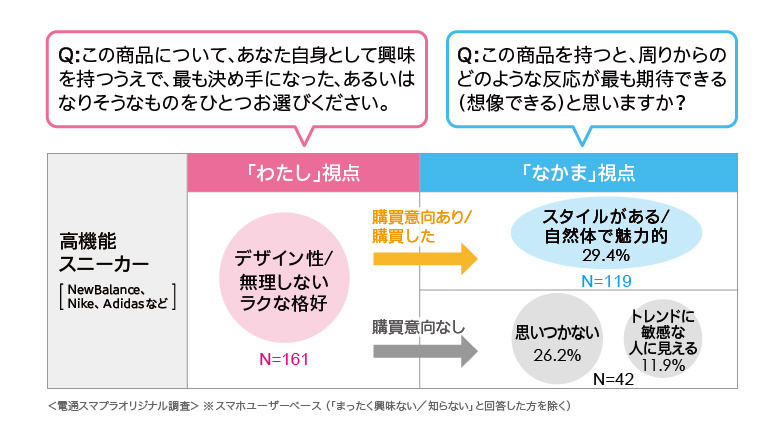
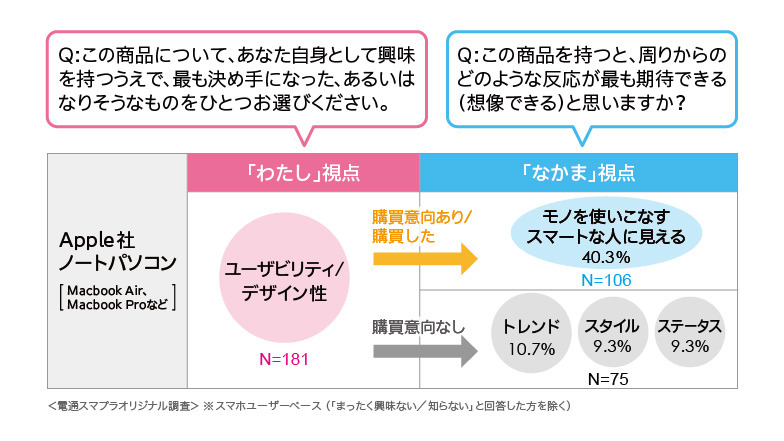
In other words, young people in the smartphone era won't be swayed by just one perspective—either "me-centric" or "peer-centric." For example, "It's trending, so my peers will likely accept it" only satisfies the "peer-centric" perspective, while "This is useful for me!" only satisfies the "me-centric" perspective. Neither alone is sufficient.
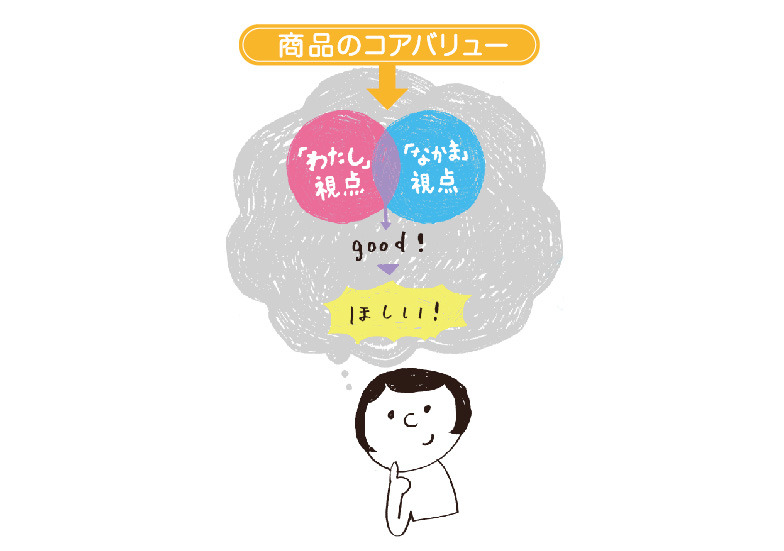
When defining a product's core value, it becomes necessary to consider both the "me perspective" and the "peer perspective" together, ensuring they perfectly align with the target audience. The challenge going forward will be designing and implementing how to make consumers feel the benefits from the "me perspective" and then have their peers evaluate and validate that benefit.
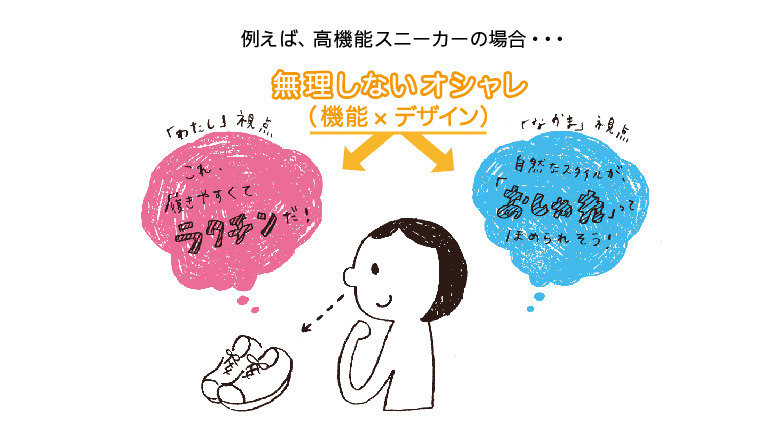
Furthermore, in this information-rich environment, both perspectives must be satisfied almost simultaneously and instantly.
Finding core values that simultaneously satisfy both the "I-perspective" and the "group-perspective"—that is, creating an "overlap" between the two perspectives—is key. Moreover, presenting this overlap in a way consumers can instantly recognize seems crucial for creating desire.
What did you think? In future installments, we'll delve deeper into analyzing their behavior by learning from more concrete data and real-world examples.
"Survey on Shopping Awareness and Behavior" Overview
Survey Method: Internet survey
Survey Area: Kanto Region
Survey Subjects: Individuals aged 10s to 40s / Personal users of smartphones or feature phones (600 respondents)
Survey Period: Saturday, June 27, 2015 - Sunday, June 28, 2015
◎What is "Dentsu Inc. Smart Plan"?
It is a planning unit that contributes to the launch, growth, and expansion of businesses on smart devices (such as smartphones, PCs, and tablets).
Our team includes diverse professionals such as strategic planners, communication planners, consultants, copywriters, and producers, all with extensive experience in marketing communications for smartphone games and apps. Furthermore, as each member is passionate about specific areas, we support marketing activities by deeply exploring challenges and engaging clients with our unique personalities and human skills.
Was this article helpful?
Share this article


Newsletter registration is here
We select and publish important news every day
For inquiries about this article
Back Numbers

Author

Yoko Seto
Dentsu Inc.
Business Transformation Division 2 Growth & HR Department
Solution Planner

Miho Sugihara
Dentsu Inc.
Third Integrated Solutions Bureau