
Note: This website was automatically translated, so some terms or nuances may not be completely accurate.
 Two Goldfish in the Brain [1/3]
On the potential for failure to bear fruit
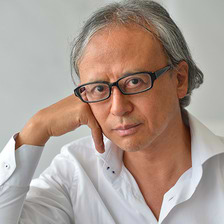
Yuya Furukawa
Furukawa Hiroya Office, Inc.
Special release of "The Two Goldfish in Your Brain" originally published in AdTae.
To commemorate Yuya Furukawa's first book , "All Work is Creative Direction" (published by Sendenkaigi), the popular Adtai column "Two Goldfish in the Brain" returns in a 6-part series. Using various masterpieces of film, music, and novels encountered over the years as references, it explores the mechanisms and mindset behind advertising creativity.
A
"Looking at this painting, like the hallucinations of a drug addict, everyone couldn't help but laugh. To put the impression of the painting simply, this artist is a mad painter who trembles with delusions while painting."
B
"A well-made fake, the kind you've seen before."
C
"About fifteen minutes into the concert, audience chatter began to rise, and a faint stomping sound could be heard. Soon, it grew louder than the performance itself. Eventually, many people, unable to endure the noise—the stomping and the music—left without hiding their displeasure."
D
"It's like a propaganda film for the Self-Defense Forces, promoting the idea of defending the nation with military force."
E
"At the exhibition, a line formed in front of this painting, with people trying to laugh so hard at its crudeness that they were in tears."
F
"What? This is just an impression, isn't it?"
Quite a string of intense insults.
To clarify their identities:
A is a critique of Cézanne's 'Moderne Olympia' published in the French art magazine L'Artist, May 1, 1874. This painting was exhibited at the historic first Impressionist exhibition, though Cézanne was virtually unknown at the time.
B is part of an American critique of The Beatles after their first US tour following the 1965 release of Rubber Soul. Even if we give them the benefit of the doubt, while early hits like "Love Me Do" or "Please Please Me" might be understandable, this was the level of comprehension even for Rubber Soul. Incidentally, the album included tracks like "Nowhere Man," "Norwegian Wood," "In My Life," and "Michelle." Rubber Soul was their sixth album. It was clearly no longer a collection of singles but had reached the state where it deserved to be called an "album" (a term now nostalgic in itself).
This review appeared in The New York Times, but two years later, the same paper did a complete about-face, running a five-page "Beatles Special Feature" full of glowing praise. Incidentally, this pattern of "bad reviews → about-face" regarding the Beatles was common around the same time. There were others like, "They're just teen idols. They'll fade away with time" → "The Beatles are the real deal."
Similarly, Newsweek wrote at the time, "Don't be fooled by their hairstyles. They have no talent whatsoever." Two years later, Newsweek would anoint the Beatles as "the great poets of pop" and do a complete about-face. Two years later means that while young people worldwide had been appropriately enthusiastic from the very beginning, the mass media only properly recognized the Beatles around the time of Sgt. Pepper's Lonely Hearts Club Band.
C: The audience reaction at the premiere of Stravinsky's The Rite of Spring, which he composed and conducted himself. The May 29, 1913 performance at the Théâtre des Champs-Élysées in Paris was apparently a huge scandal. This masterpiece wasn't accepted by the public until 1920. An anecdote remains that Coco Chanel donated 300,000 francs, overwhelmed by its brilliance, but it took seven years to gain proper recognition.
D represents the critical discourse surrounding Akira Kurosawa's "Seven Samurai" upon its 1954 release. This wasn't an isolated opinion; similar critiques appeared in various places. While it was the early Cold War era, this also proves the folly of judging all artistic expression solely through a single political ideology. Even so, such utterly nonsensical commentary is rare.
E describes audience reactions to Henri Rousseau's works at the Salon des Indépendants. It's hard to imagine people going to see paintings with the preconceived notion of mocking them. Did they all line up thinking, "If five more people laugh, I'll finally be able to laugh too"? Quite an unhealthy spectacle.
F was far too obvious as a quiz (?). At this time, the term "Impressionism" didn't exist yet. It was an exhibition of avant-garde (!) young painters like Manet and Renoir, and this was the derogatory remark spat out by a journalist upon seeing their paintings. That remark took on a life of its own, giving birth to the name "Impressionism." This happened before Cézanne's 'Moderne Olympia'.
Unfortunately, proper recognition doesn't always come immediately. There's often a time lag. The extreme example is probably Van Gogh. After all, he sold only one painting during his lifetime. After his death, he became incredibly highly regarded. Exorbitantly so, in terms of price.
As a broad tendency, things that are unprecedented or possess an inexplicable charm are highly likely to encounter misunderstanding from the world in their earliest stages. These nonsensical insults are proof of that.
What happens when this occurs to someone working in an organization today, in the 21st century, whose job is to think and create?
In most cases, it would be clearly labeled a "failure." No one waits for initial public opinion to be overturned.
Needless to say, none of the examples at the beginning were failures. Far from it—they're all world heritage treasures. Cézanne, the Beatles, Stravinsky, Kurosawa, Henri Rousseau. Yet viewed in the short term, like a first quarter, they don't necessarily appear successful. For instance, if a TV commercial aired and people murmured it looked "like a drug addict's hallucination," it would be instantly scrapped.
Cézanne, though not as extreme as Van Gogh, wasn't appreciated until after his death. The Beatles, while achieving overwhelming record sales, were in a perpetual state where half the world adored them and the other half despised them. Even during their 1966 Japan tour, there were apparently a significant number of opinions like, "As a Japanese person, I cannot tolerate such things setting foot in the Budokan."
Our work falls under the commercial sector of all creative fields, so delivering short-term results each and every time is our obligation. Moreover, that obligation includes adding some kind of "novelty," even if it's just 3 millimeters.
If we defined our work as simply doing the same thing safely as before, things would be straightforward, and "failure is not an option" would be the criterion. However, in work where we must add even a tiny, unprecedented element, we cannot reach the goal without accumulating "failures" during the process to gain new insights.
It's the kind of work where you won't know until you try. Of course—you're attempting something no one has ever done before.
"If you don't make a big mistake within the next two weeks, I'll fire you."
Seth Godin often says this to young employees. It's not just him; especially in Silicon Valley, people without failure experience are completely undervalued. They're seen as lacking sufficient learning ability and, personality-wise, lacking the spirit to challenge the unknown. They're apparently urged to set ambitious goals – things that aren't easy, things that are big, things no one has done before – and to fail quickly.
I get it.
Ultimately, what we must acquire is the same as in our work.
Since the publication of the classic work on the nature of failure, which analyzed the causes of Japanese military operational failures in World War II like Guadalcanal and Midway, research has flourished on how to leverage failure, especially within business processes.
But from a creative, on-the-ground perspective, what truly helps isn't theory or equations—it's actually experiencing failure firsthand. In other words, the only effective approach is to have opportunities to fail and learn tangibly. The sure fruit of failure is that everyone learns and shares the lesson: "This approach doesn't work."
Simply recognizing "That approach won't work" is a major achievement. Moreover, because this knowledge is experiential rather than theoretical, it becomes a reliable creative asset.
Situations that relentlessly demand short-term results don't allow for failure. Don't we all feel that we've become unable to fail even on a gut level? Yet, it's time we applied our creativity to work of a different kind, work that spans the long term.
At the entrance to Wieden+Kennedy's Portland office, the wall bears the large inscription "Fail Harder." It includes body copy containing the phrase, "You must allow people to fail."
Seeing this makes me realize that "failure" as a necessary step to doing good work isn't really about the individual coming up with ideas. It's about the organization, or the team, or the system, or the leadership, or the vision.
Because it takes courage.
It doesn't seem to be about some vague, motivational platitude like "Young people should actively embrace failure." Encouraging it without more is actually harmful. It's not a matter of attitude. Instead, the entire organization or team's workflow process should incorporate "failure" as a creative cost from the outset. Failures stemming from positive reasons should be "openly shared with everyone" as "skills development leading to the next step," while "repairing them to prevent them from becoming critical" and "clarifying what approaches aren't flawed." Without teams and organizations that allow for failure, truly excellent and innovative things simply cannot be created.
Professor Shinya Yamanaka always asks this question during interviews with students who want to join his lab:
"Can you enjoy failure?"
Impressive.
※This column was published in AdTie.
Was this article helpful?
Share this article


Newsletter registration is here
We select and publish important news every day
For inquiries about this article
Author
Yuya Furukawa
Furukawa Hiroya Office, Inc.
Creative Director