
Note: This website was automatically translated, so some terms or nuances may not be completely accurate.
 The "Specialized Talent" That Will Transform Your Company [2/7]
Learning from M&A: The Relationship Between Society, Organizations, and Individuals (Part 1)
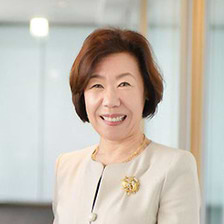
Toshiko Oka
PwC Advisory LLC
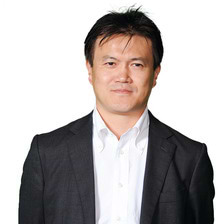
Junichi Kanno
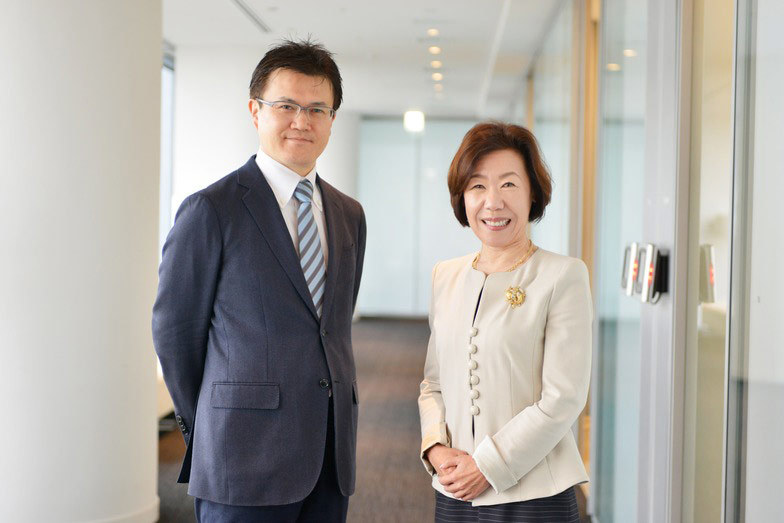
In many areas of corporate activity, it has become commonplace to hire specialized personnel from outside the company who are difficult to train internally for business growth and transformation. Starting with the second installment of this series, we will visit people active at the forefront of various fields to hear their insights on training and utilizing specialized personnel. This time, we visited PricewaterhouseCoopers Marval Partners (*title at the time of the interview; Partner at PwC Advisory LLC since April 1) and spoke with Toshiko Oka, who said, "As a top company, we feel the need to train new graduates and increase our human resources."
*Part 1 of the series: "Open Talent Utilization Realizes Innovation!"
Talent Shortage in Professional Firms
Kanno: This time, we visited Toshiko Oka, who leads PricewaterhouseCoopers Marval Partners. Actually, I was once a member of Ms. Oka's team. Ms. Oka, who has been active on the front lines of M&A for a long time, has led her team to continuously step up, giving the impression that she understands that when the environment changes, she must change as well. Would it be rude to call her a heavyweight? (laughs)
Oka: I don't know about that. I've just been desperately trying to keep up with the changing environment. Since graduating from university, I've always been in the consulting industry and have never worked for a business company. So, I've always seen business companies as clients, and the environment for business companies has changed significantly recently.
The M&A industry I work in is also extremely dynamic. My own company has changed its name every time the shareholders changed, so from the outside, it might look like major changes happen every few years.
Kanno: The reason we wanted to reference the M&A industry this time is that M&A has become a more accessible growth strategy option for companies. Consequently, there's a growing need to build internal M&A teams, leading to a noticeable trend of professionals moving from M&A firms to operating companies.
In fact, I myself have moved back and forth between professional firms and operating companies based on the skills and themes I sought at each stage. What's happening in the M&A industry now might offer insights for other fields. First, Mr. Oka, could you share your perspective on the talent challenges within the professional firm industry?
Oka: Yes, professional services firms are generally understaffed right now. This isn't limited to M&A; it's a situation across the entire consulting industry, as well as among accountants, lawyers, and even in the marketing field where Mr. Kanno works. Despite increasing workloads, there aren't enough people to handle them. This is the most pressing challenge we face.
Kanno: Professional services firms really started booming around the 1990s or early 2000s, right?
Oka: That's correct. Japanese companies once succeeded in developing generalists and a robust middle management layer within systems like mass hiring of new graduates and seniority-based promotion. A solid middle management layer provides organizational stability and strength. In an era of rapid organizational expansion, such systems played a crucial role. As organizations grow, they tend to create their own work to assert their turf and significance, fostering a culture of self-reliance where they handle everything internally.
Then came IT transformation. As IT advanced, routine administrative tasks and moderately value-added work were replaced by IT, and outsourcing also increased. In response, companies sought to pour management resources into high-value-added work requiring advanced expertise, like planning and R&D. However, they realized it was difficult to develop talent for these increasingly sophisticated areas—both in quantity and quality—internally at their own pace. While job rotation in Japanese companies can develop generalists, it struggles to cultivate specialized talent.
Amidst this, Japanese companies gradually abandoned the self-reliance approach and began utilizing external talent. This is how professional services firms flourished as suppliers to these Japanese companies.
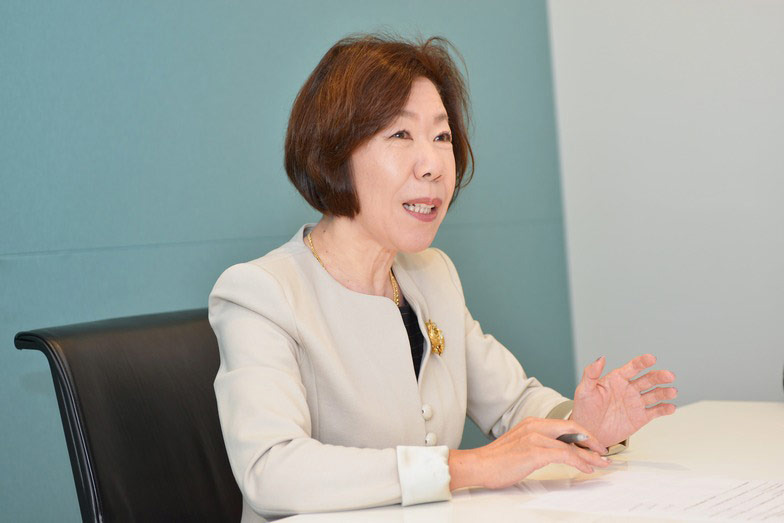
Kanno: Is the shortage of people partly because professional services themselves are a relatively new field?
Oka: That's part of it. The industry's social recognition may not yet be as high as we perceive it to be.
I heard a personal story: a young person assigned to a specialized department at a business company found the work interesting and wanted to acquire more cutting-edge skills, so they considered moving to a professional services firm. But their parents opposed the move, saying, "You worked so hard to get into that major corporation, overcoming huge hurdles, and now you want to leave for some obscure professional firm I've never heard of?" Maybe it's because of the recent super-tough job market. Stories like this seem to be quite common.
Parents often say, "If you go down the expert path, you'll become someone who can only do that one thing, and you'll lose flexibility for the future." But the person themselves feels a sense of crisis, thinking that becoming someone who can only survive at a specific company is what will really limit their future flexibility.
Industry leaders bear the responsibility of nurturing new graduates.
Kamiya: Is your company's hiring primarily focused on mid-career hires?
Oka: Mid-career hires are significant, but we also actively recruit new graduates. The advantage with new grads is the opportunity to develop completely untouched talent. Building an organization requires fostering corporate culture, and it's the new graduates we hire who embody that freshness and take on that role. Previously, our organization was smaller, so we couldn't hire many new graduates—only a few each year. On the other hand, we actively recruit mid-career professionals year-round, including those with limited experience.
Kanno: I used to be in this industry myself, and I know consulting work can seem glamorous at first glance, but it's actually incredibly demanding. What are people seeking when they enter this field these days?
Oka: Primarily, it's for personal skill development. The M&A field is one of the few growth markets in Japan. While it has had its ups and downs, like during the Lehman Shock, the number of M&A deals has been on an upward trend since around 2000. So, there's plenty of work for us.
But as you said, Kamiya, the work is demanding. Cross-border deals involve time zone differences. With restructuring cases, if you're called in, you have to respond immediately or the company might go bankrupt. We work under these pressures, constantly racing against the clock. That said, it's rewarding, and you can acquire an enormous amount of skills in a short time, so I think it appeals to young people.
Kanno: What happens after you acquire those skills?
Oka: Some people advance to higher ranks within the firm. But once they reach a level where they can work independently, many move to operating companies. Earlier, I mentioned people moving from operating companies to the firm, but recently, the opposite is happening. That's the main topic today.
Haven't you seen cases in the media where a business company declares in its mid-term management plan, "We will spend X billion yen on M&A"? Precisely these companies, having never experienced M&A before, lack personnel with M&A skills internally. Such companies then hire mid-career professionals – the very talent we've nurtured with care and invested significant time and effort in. Just think how much outstanding talent we've contributed to business companies over the years...
This leads to competition for talent among professional firms. That's why every firm is crying out that they don't have enough people.
Kanno: I see. Last year, Marval Partners, led by Mr. Oka, became part of PricewaterhouseCoopers, and its scale expanded rapidly.
Oka: Yes. At our previous scale, we couldn't hire very many new graduates, but now we can.
Recruiting new graduates takes time to train them, and even after all that effort, they may end up changing jobs, as we discussed earlier. Even so, I believe it is necessary to actively pursue the recruitment of new graduates.
I believe that professional firms have a social mission not only to provide specialized expertise to client companies, but also to play a part in developing management personnel. In M&A, you ultimately draft contracts, so legal knowledge is essential. Valuing a company requires finance expertise, and integrating organizations demands understanding of organizational and HR matters. Negotiation skills with counterparties are also crucial. M&A is like a mixed martial arts competition, so working on M&A deals directly contributes to developing managerial talent. That's why I believe industry leaders must focus on talent development not just for their own firm, but for the industry and society as a whole.
As corporate literacy rises, professional skills also improve
Kanno: I definitely feel the same thing is happening in the marketing industry. For example, when someone moves from Mr. Oka's team to a client company as a specialist, that company gradually internalizes professional know-how. Doesn't that change the relationship compared to before?
What is expected of professional firms varies—from strictly executing established procedures to leading new challenges. Has the client relationship changed?
Oka: That's an excellent point. Historically, we supported clients by handling the entire M&A process from start to finish. However, after experiencing several M&As, clients develop their own in-house M&A expertise. They then gather these people to form dedicated M&A teams. As an aside, the people we poured our hearts into developing often end up joining these very teams...
Once a dedicated M&A team is formed, professional firms like ours are only used when an external perspective is absolutely necessary. In other words, our services become commoditized. A certain level of commoditization is an inevitable phenomenon as services mature, so I don't see this trend itself as problematic. On the contrary, to provide services that avoid commoditization, we must continuously strive to sharpen the edge of the expertise we offer.
Kanno: I see. By providing clients with a high level of service, we avoid the impact of commoditization. That means we have to work even harder.
Oka: Exactly. We should view commoditization as a driver pushing us to provide even more sophisticated services. If the services we offer now were at the same level as those we provided ten years ago, commoditization would likely reduce the scale of the fees we receive. To prevent that, we must deliver services at an even higher level. Doing so requires efforts to expand the market pie.
Kanno: Earlier, we discussed how cultivating specialized talent within operating companies is difficult, leading to professionals moving from professional services firms to operating companies. Combining that with what you just said, it seems personnel moving from professional services firms isn't necessarily a loss.
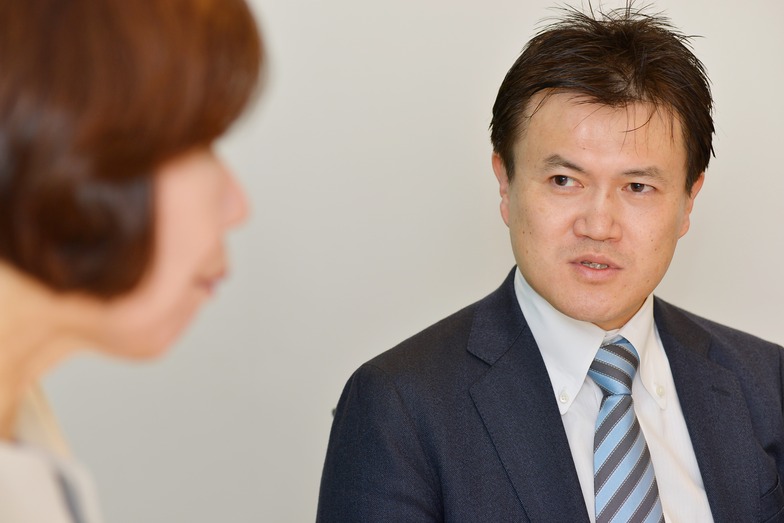
Oka: That's right. Of course, from the perspective of the firm that trained them, it's a bit frustrating when they leave after just a few years (laughs). But even if they move to a corporate client, if they later want to return to working intensely at this pace, we'd welcome them back. We should create a revolving door.
Considering the growth of operating companies and the expansion of the professional services industry, I believe the ability to move between professionals and operating companies will become increasingly important going forward.
Promoting the "Revolving Door," Cultivating Corporate Culture
Kanno: "Revolving door," you say. From my own experience, knowing multiple companies strengthens your ability to view companies objectively, which I think is positive for how you work. It heightens your awareness of your own role within an organization and deepens your understanding of how decisions are made, whether in a business company or a professional firm.
Oka: After gaining experience with us, if someone wants to focus deeply on a particular area, they can move to a business company. Then, if they later want to concentrate on work at a faster pace, they can come back to us.
Recently, I spoke with a woman handling M&A at a major manufacturer. She joined her current company right after graduation, but apparently moved to a professional services firm after a few years. After having children, she rejoined that same manufacturer. I think it's impressive that the manufacturer welcomed her back. She said she was glad she returned. If she had joined another company, she would have had to build her internal network from scratch. But since she returned to the company she joined as a new graduate, she could leverage her existing network and navigate things more effectively. I realized that returning after honing expertise at a professional services firm offers mutual benefits for both the individual and the company.
One potential issue, however, is salary levels. Since professional firms generally offer higher pay, adjusting this upon re-entry becomes a challenge. If both parties can agree and overcome this hurdle, we'll likely see more such cases.
Kanno: In the current example, alongside leveraging the internal network, the fact that they have a deep, firsthand understanding of the corporate culture seems significant. Mr. Oka also mentioned earlier that he feels the need to cultivate corporate culture through developing new graduate talent. Indeed, relying solely on fluid mid-career hires makes it difficult to foster a strong culture. This balance is essential.
Oka: Yes, I agree. I've had opportunities to work with various people whenever shareholders changed, but when corporate culture is deeply rooted, it enables that final push – that determination to "do my best for this person, for this company." Those who can't do that, even if they're highly capable overall, leave me feeling something is lacking. Like they're not giving their all.
Kanno: To hear such sentimental talk from someone who's thrived so long in such a dry industry. That's precisely why so many of us, myself included, grew under your leadership. But you're right—without that emotional connection, people just won't move.
Oka: I believe affection for the organization and gratitude toward those around you are linked to whether someone can muster that final burst of strength.
Conversely, to foster that kind of culture and enable mid-career hires to thrive, I think it's necessary to reach out to them almost excessively, ensuring they never feel alienated. From the perspective of long-time employees, it's good if it makes them feel a bit jealous. That said, this then requires care for the new graduate cohort too. Leaders might benefit from valuing this kind of internal communication a bit more.
In the second part, we'll hear Mr. Oka's perspective on the "homogenization" trap common in Japanese companies and "how to leverage talent in the era of the individual."
Was this article helpful?
Share this article


Newsletter registration is here
We select and publish important news every day
For inquiries about this article

Author
Toshiko Oka
PwC Advisory LLC