
Note: This website was automatically translated, so some terms or nuances may not be completely accurate.
 The "Specialized Talent" That Will Transform Your Company [3/7]
Learning from M&A: The Relationship Between Society, Organizations, and Individuals (Part 2)
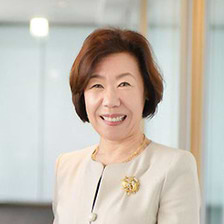
Toshiko Oka
PwC Advisory LLC
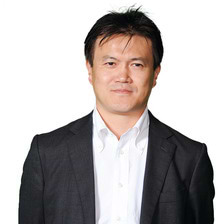
Junichi Kanno
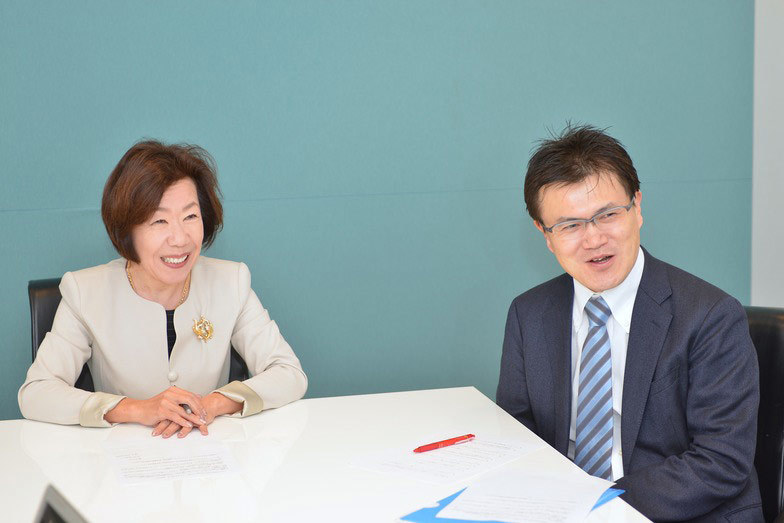
We continue our interview with Toshiko Oka of PricewaterhouseCoopers Marval Partners (title at time of interview; currently Partner at PwC Advisory LLC) about developing specialized talent, following on from Part 1. What is the background to her view that "the future belongs to the individual"?
*Part 1:"Open Talent Utilization Realizes Innovation!"
*Part 2:"The Relationship between Society, Organizations, and Individuals Learned from the M&A Field (Part 1)"
Companies Where Mid-Career Hires Don't Take Root Cannot Avoid Homogenization
Kamiya:In Part 1, we started with the current talent shortage in professional services firms, then discussed the benefits of the "revolving door" between these firms and corporations, and even touched on corporate culture development and mid-career hires.
Moving forward, I'd like to focus our discussion on how to effectively utilize specialized talent. When mid-career hires join with specific expertise, their job descriptions are often clearly defined, right? There's frequently a predefined role expected of them. However, your earlier point that "existing employees need to be actively engaged—even to the point of making the new hire feel welcome enough to overcome potential jealousy" really made me think.
Oka: Mr. Kanno also mentioned that "culture struggles to develop if you only have fluid mid-career hires." Mid-career hires are, of course, recruited because they possess a certain level of high ability. But that doesn't mean you can just leave them alone in a new organization and expect them to deliver peak performance.
Kanno: New graduates often intuitively understand what's expected beyond their role, even without being told. Such individuals are seen as capable of working proactively and become relied upon within the organization. However, we must avoid overvaluing this "unspoken understanding" to the point where it creates an unfair advantage for homegrown employees.
Oka: While new graduates who "get it without being told" are valuable assets to an organization, if the atmosphere remains one that only treasures such convenient individuals, building an organization for the era of diversity will not succeed. An organization where mid-career hires cannot take root ultimately cannot overcome homogeneity. Therefore, it's necessary to provide mid-career hires with the information needed to reach that "understanding without being told" level each time, and then evaluate how each person acts. In the sense that we must provide the information needed before they reach the starting line, more communication is required with mid-career hires.
Kanno: But then, the advantage held by new graduates disappears, doesn't it?
Oka: To some extent, yes. But since we have the history and time invested in hiring new graduates, I don't think all their advantages will disappear.
No matter how well an organization runs, some people will complain. If those are people not adding value, and their complaints offer no solutions, perhaps they should move on to another company.
Kanno: For example, from your perspective, Mr. Oka, are there successful companies that effectively utilize both homegrown talent and external hires?
Oka: It's hard to name specific companies, but I believe companies where "people who are adding value" are happy are effectively utilizing their talent. If people who are adding value leave an organization, it's a sign that something needs to change.
In reality, among companies constantly talking about diversity, some are just paying lip service because it's the current trend, without any genuine commitment. But the era where businesses themselves cannot survive without diverse talent is just around the corner, isn't it?
As an individual, where should you work to maximize your social contribution?
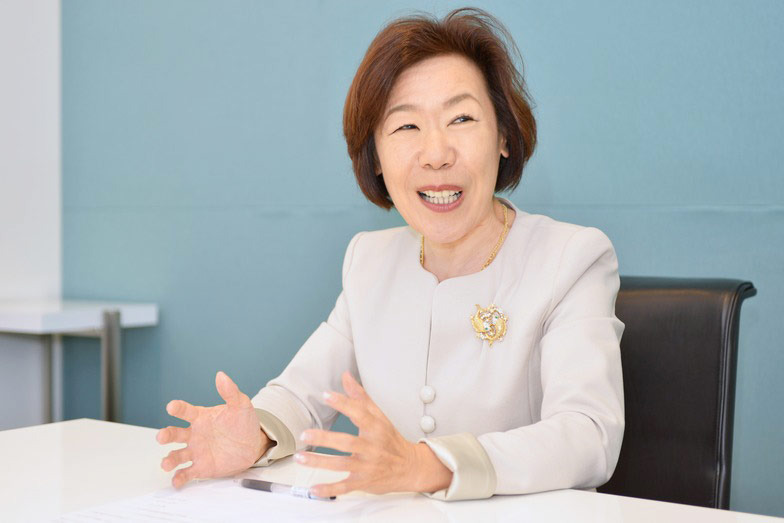
Oka: Working on M&A deals, I often ponder this: When a company is up for sale, "Which shareholders would enable that company to become the entity that delivers the most value to society?" Is it better under the current shareholders, or would different shareholders be better? If the business value of the company being sold doesn't increase after the M&A results in a change of shareholders, then the M&A itself loses its meaning.
I think the same principle applies to how we view talent. People working is contributing to society, so higher social contribution is better. If Mr. Kanno were to thrive more at another company than at Dentsu Inc., then him staying at Dentsu Inc. would be a loss for society (laughs). Of course, he's likely creating value at Dentsu Inc. now, and any dissatisfaction he has is probably positive dissatisfaction. Like, "For the sake of the younger people, we should do this more."
Kanno: Well, I do have requests (laughs). But that kind of positive dissatisfaction is different from the "complaints" you mentioned earlier.
Oka: Yes. Positive dissatisfaction can sometimes sound negative depending on how it's received. If the company doesn't grasp the true intent, they might not handle it well. Positive dissatisfaction is dissatisfaction that comes with proposed solutions. To build a more comfortable workplace, a certain amount of positive dissatisfaction is necessary, right?
Kanno: Companies pursuing workplace ease, especially startups, may adopt flexible work styles unconstrained by tradition. But scaling up remains a challenge. It's easy to dismiss this as "big company disease," but maintaining a comfortable work environment for diverse talent while expanding isn't simple. Yet without scaling, the business struggles. It's a tricky balancing act.
In the US, a leader in diversity and flexible work, we see cases where business units are given a degree of autonomy. Values are shared across levels, balanced between the unit and the company as a whole. Furthermore, because the company's core values are clearly defined, the relationship between the company and the individual becomes more flat. This perspective suggests that even as the company grows, the ease of working isn't compromised. This kind of trend might emerge in Japan in the future.
Cultivating a holistic perspective while maintaining individual roles
Kanno: Let's shift perspectives slightly and discuss talent development and educational institutions. Mr. Oka, you're also an alumnus of business school. Business schools are straightforward, aren't they? Their purpose is clear.
Oka: That's true. I'm currently considering whether universities could also engage in developing M&A talent. Many graduate school and business school students enter with a clear purpose. But for undergraduates, attending university itself often becomes the goal, and they tend to just drift through their college years. If they're spending time that way, I think it's a shame. I'd like them to engage with the social value of companies through M&A. There's also the argument that universities aren't vocational training schools, so I think we need to discuss the role of universities at some point.
Kanno: I see. Some universities do offer M&A courses, but are you aiming for something different from existing subjects?
Oka: Yes. Universities have barriers between faculties, so I want to create an M&A curriculum that transcends those faculty walls. This applies to M&A as well as entrepreneurship training – the framework of university faculties can't teach the whole picture. We need to look at things holistically, cutting across those faculty boundaries. For example, the M&A taught in law schools today focuses on the contracts involved in M&A, but it doesn't cover areas like accounting for business combinations. The finance department only teaches corporate valuation. Each department teaches its assigned area in isolated parts. This approach makes it impossible to simulate real M&A. I strongly believe we need to develop a cross-disciplinary curriculum, perhaps through industry-academia collaboration programs.
Kanno: So you're saying we need a producer-like mindset to assemble cross-departmental projects and secure budgets. That seems difficult to cultivate in current universities.
Oka: That's right. But unlike middle or high school, university students don't need to spend those four years solely preparing for entrance exams. Instead, I hope they can think deeply about "why they want to work" and "what they aim to achieve through work." Universities should actively encourage this too.
Kanno: Cultivating this producer-like perspective that sees things holistically also connects to developing management talent. As you mentioned, this approach—through industry-academia collaboration or partnerships between professional firms and corporations—will be essential for creating management talent as a societal infrastructure in the future.
For example, looking at corporate leadership, while CIOs and CTOs used to focus on efficiently building systems aligned with the CEO's vision, today they must also be able to co-create the company's growth strategy based on technological advancements to qualify for executive roles.
Oka: That's right. As you pointed out, "C●Os" are roles that require the ability to see the big picture from the same perspective as the CEO, while also contributing to management from the viewpoint of their own specialized field.
As often said, being T-shaped talent is crucial. The horizontal bar at the top of the T represents the ability to see the whole business landscape, and this bar should be as broad as possible. The vertical bar represents your specialization, and this should be as deep as possible.
I believe the same principle applies to corporate "division systems." Management meetings are supposed to be forums for discussing business from a company-wide perspective. However, the "profit representatives" sent from each division don't want other departments interfering in matters concerning their own division. So, even if they notice something questionable in another department, they don't pursue it. This prevents discussions from happening at a higher level. But that's not acceptable, is it?
The era of individuals simply dedicating themselves to the organization is over.
Kamiya: The more I hear you speak, the more I feel insights from the M&A field hold universal relevance across all sectors. So, could you share your current thoughts on talent development and your outlook for the future?
Oka: Earlier ( see Part 1 ), we mentioned the "revolving door" phenomenon. The networks built within a company can still be useful even after leaving. In the world ahead, it ultimately comes down to people. We're in an era where individuals can freely share information, and they can connect more and more with people who resonate with that. I think interpersonal relationships will become even more crucial.
Kanno: I see. It's like returning to the fundamentals of human connections, even while the company structure remains. Within that, you identify your own expertise and learn about others' specialties.
Oka: Exactly. Sometimes it's hard to recognize your true expertise—the kind that goes beyond the surface—so getting feedback from others is important. For years, the concept of a mentor didn't really click for me, but recently I found a great one.
Kanno: Really? What kind of person is he?
Oka: They know our company well. Whenever something comes up, I reach out and ask for their opinion. It's less about direct advice and more about them saying, "This is how it looks to me," considering the situation. That helps me take a step back and think things through.
Kanno: I hope you become even more powerful and lead Japan (laughs). We've heard various perspectives, from management viewpoints to those of the workforce. Finally, could you share your outlook on Japan's talent development from a macro perspective?
Oka: Unlike the high-growth era, we're now entering an "age of the individual." My work constantly involves analyzing economic and human movements through the framework of "society," "organizations," and "individuals." Society is extremely fluid right now. It's no longer an era where being Japanese automatically means living in Japan. Both companies and people relocate their headquarters and residences all over the place. Therefore, society needs centripetal forces to keep people connected.
Regarding organizations, this is no longer the era of lifetime employment. Even when an employment relationship is established, it's not an era where individuals, as members of the organization, will selflessly dedicate themselves to the organization.
Kanno: So the relationship between organizations and individuals has changed significantly.
Oka: Yes. In the past, I believe the vector was society → organization → individual, with society and the organization coming first. Now, it's the individual coming first. The vector has reversed to individual → organization → society. This is because the choices available to individuals have increased dramatically.
At the individual level, we've entered an era where people seriously consider and pursue things like "this is the life I want to live" or "this is how I want to contribute to society or the organization." Consequently, organizations themselves need to pay much closer attention to these individual intentions. That's why organizations must prioritize diversity. When diverse individuals emerge, they need receptive environments and opportunities to thrive. I believe organizations prepared to embrace this will thrive going forward. In an era of labor shortages, organizations that can attract people will win.
Was this article helpful?
Share this article


Newsletter registration is here
We select and publish important news every day
For inquiries about this article
Back Numbers

Author
Toshiko Oka
PwC Advisory LLC