
Note: This website was automatically translated, so some terms or nuances may not be completely accurate.
 The "Specialized Talent" That Will Transform Your Company [4/7]
How Japanese Companies Are Adapting to an Era of Change (Part 1)
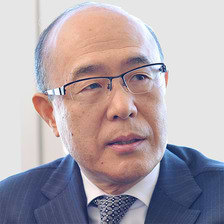
Nobuo Sato
Harvard Business School Japan Research Center
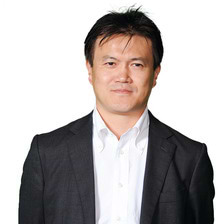
Junichi Kanno
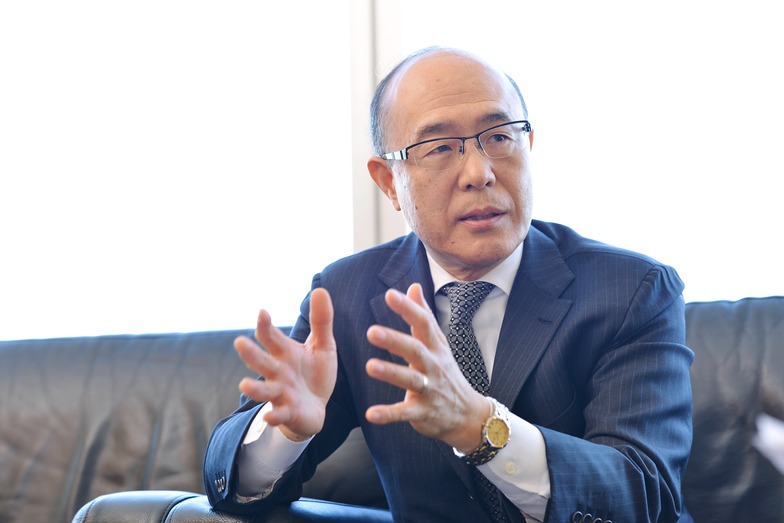
Across many areas of corporate activity, it has become commonplace to recruit specialized talent from outside the company for business growth and transformation, talent that is difficult to cultivate internally. Starting with the second installment of this series, we will visit individuals active at the forefront of various fields to gather insights on cultivating and utilizing specialized talent. This time, we visited Nobuo Sato, Director of the Japan Research Center at Harvard Business School. Drawing on his previous experience as a headhunter, we discussed challenges in developing management and global talent, as well as diversity management within Japanese companies.
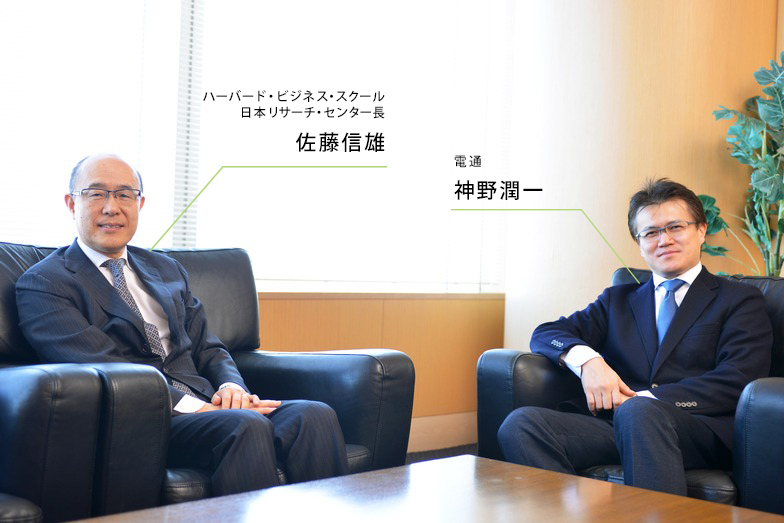
How does Japan appear from the pinnacle of leadership development?
Kanno: This series focuses on the development and utilization of professional talent. Last time, we spoke with Ms. Toshiko Oka, President of PwC Advisory, to learn from the M&A field where highly specialized professionals thrive. She mentioned that as more companies now employ in-house M&A specialists, the expertise professional service firms like hers must provide is evolving, and they need to adapt accordingly.
Sato: That makes sense. Corporate expectations of professional firms must be changing too.
Kanno: Yes. Also, unlike in the past, this isn't an era where individuals will remain loyal to a company without prompting. We must consider the axes of society, organization, and the individual. Japanese companies cannot avoid homogenization and uniformity unless they effectively utilize mid-career hires, including the soft aspects like whether they can integrate into the organization. The challenge of being unable to respond globally was also raised.
What I'd like to ask Mr. Sato this time is—and this might be my own assumption—that business schools, rather than being purely academic, have a stronger aspect of being executive training grounds. Particularly at Harvard Business School (HBS), as the world's premier school, I'm curious about what kind of executive talent development is currently being conducted there and what the global trends are. From that, I'd like to hear your insights on how Japan should cultivate and utilize talent capable of thriving globally.
Mr. Sato, you yourself studied at HBS, correct? I understand you built your career at a bank and a human resources consulting firm before assuming your current position in 2009. First, could you tell us about the HBS Research Center?
Sato: HBS is headquartered in Boston, USA. Its MBA program currently has over 900 students per class year from more than 80 countries. Since the MBA is a two-year program, there are always over 1,800 students studying at any given time. Additionally, approximately 10,000 executives from around the world participate annually in its executive education programs. About 250 faculty members conduct research daily and develop case studies for teaching materials. However, being based solely in Boston inevitably leads to information bias. To address this, HBS began establishing regional research centers worldwide starting in 1996, with the goal of providing insights from regions outside the United States.
The Japan Center was established in 2002. Today, the network covers the globe, including centers in Hong Kong, Shanghai, Mumbai, Istanbul, Paris, São Paulo, Buenos Aires, and California, which serves the U.S. West Coast.
Practical programs focused on developing leadership talent
Kanno: HBS produces a large number of case studies annually. What percentage of these are global cases now?
Sato: Out of about 300 cases per year, roughly 50-60% are global. Back in 1996, it was less than 20%, so I believe the significance of actively disseminating information from around the world is substantial. Separately, among the approximately 200 papers published annually by faculty, about 40% address global situations.
The Japan Research Center has two main missions. First, as mentioned earlier, it disseminates global information to faculty to promote and support research on Japanese companies and the economy, as well as case development. Students who study in Boston become important leaders in their home countries or globally after earning their MBAs. If they know nothing about Japan's economy or companies, Japan will be missing from their decision-making. That would be a significant loss for Japan, so we aim to prevent it by increasing the number of cases.
The second is to deepen understanding of HBS within Japan by communicating our research and educational content, thereby enhancing its perceived value. This includes outreach to increase Japanese student enrollment and visiting corporate HR departments to encourage company sponsorship for executive programs.
Kanno: As you mentioned, HBS has produced many leaders. What changes have you seen in educational program trends recently?
Sato: In recent years, we've placed greater emphasis on hands-on programs alongside the case method. For example, a program where teams launch micro-businesses. The key point here is that many teams fail, but that's expected. Rather, it's about experiencing failure and learning humility—understanding the importance of a modest, reserved attitude. There's a certain Japanese element to that.
Students tend to be confident and strong-willed, often thinking "I should lead, I should lead." But naturally, that approach doesn't work well for a team. So we let them experience that being self-centered leads to failure, helping them understand the importance of listening. HBS teaches that this reflects today's leadership philosophy.
Additionally, we take Boston students to our global campuses for programs involving local participants. The Japan program began the year after the Great East Japan Earthquake, initiated by Japanese students enrolled at the time. For five consecutive years, professors have led students to Tohoku every January. They interview companies in the midst of reconstruction and provide consulting on challenges faced by local businesses and entrepreneurs.
Is the term "global talent" unique to Japan?
Kanno: HBS emphasizing the importance of listening for team building is quite a shift from my previous impression. It seems rooted in recent trends. Learning to collaborate across cultures and values through such team activities likely contributes to developing global talent.
Sato: Yes, I think there's a lot to gain from practical experience. However, HBS itself is inherently a global environment for both faculty and students, and with 40% of MBA students being women, diversity is more of a daily baseline. "Global talent" might be a term specific to Japan.
Kanno: In Japan, since you're almost always surrounded by Japanese people in any environment, you have to consciously strive to become a "global talent," right?
Sato: In Western companies, it's commonplace for multinational talent to join. They become global talent and build global companies by finding common ground on equal footing. But when Japanese companies talk about "globalization," it often means "how Japanese people can globalize to effectively utilize local talent." It doesn't seem to extend to the idea of integrating people hired in the West or Asia as equals to become a global company. That's a significant difference between Japan and other countries.
Kanno: As we discussed in my previous conversation with Mr. Oka, I believe that unless we fundamentally become more accepting of diversity, neither people nor companies can grow. This is precisely why I started this series – the old roles and frameworks from the high economic growth era simply won't work anymore.
Unless we actively cross boundaries with people from different cultures and ways of thinking to create something new, we can't escape homogenization. We discussed how breaking free from homogenization requires more than just developing talent within the company itself, both in terms of skills and values.
Sato: For Japanese companies, diversity has precisely the two meanings you just pointed out: skills and values.
First, we must bring in diverse specialists and executives from outside to enhance skills and competencies. The other aspect is ensuring diversity in terms of perspectives, values, or exposure to different worlds to drive innovation... We still seem far from achieving that true meaning of diversity.
Regarding the first point, accepting people with different skills and competencies also contributes to diversity enrichment because they bring experiences from different companies and industries, carrying distinct cultures and values. Therefore, if we consider this the first step, the hurdle for Japanese companies at this stage is the lack of position specifications.
Kanno: Position specifications refer to the list of required abilities and the authority and responsibilities granted for that role, right?
The lack of clear position specifications is a problem for Japanese companies.
Kanno: If position specifications aren't clear, not only does recruitment suffer, but the evaluation system also breaks down.
Sato: Exactly. During the period of rapid economic growth, companies could expand simply by emulating or improving upon Western corporate models as the market grew rapidly. Position specifications and evaluation systems based on them weren't necessary. Consequently, there was no need to meticulously break down what specific skills or competencies were required internally for the company's medium-to-long-term growth.
But now, the environment surrounding Japanese companies is completely different. Therefore, they must fundamentally consider why their company exists and what value it aims to create. They must then determine what strategy is needed to continuously deliver that value, and what kind of organization and people are required to execute that strategy. They must first break these down. Regarding talent, they must consider whether it exists internally or can be developed. If that proves difficult, they must recruit externally. They must establish this roadmap themselves.
Certainly, some Japanese companies are doing this well, but overall, they lag behind their Western counterparts. For instance, regarding organizational and human aspects, it's not uncommon for Western companies to have a CHO (Chief Human Resources Officer) – a professional in organizational and HR management who can speak directly to the CEO. This is based on the concept that HR plays a strategic role. They also often have a CLO (Chief Learning Officer) for talent development.
In contrast, Japanese HR departments are, unfortunately, very administrative. The HR director is not typically in a position to advise the CEO, and talent development is usually handled at the "section" level.
Kanno: Hearing that really highlights how Japan lags behind.
Sato: I can't help but agree. Of course, even without a CHO, some Japanese companies do develop solid HR strategies and hire mid-career professionals. However, overall, it seems common to hire based on vague selection criteria and evaluation systems, often just "somehow." As a result, they tend to hire people similar to themselves. Furthermore, few seem to think strategically with a broad view of the entire organization.
Fundamentally, unless you define the necessary talent by assessing the company's strategy and even the business unit's strategy, you end up hiring people and forcing them into positions without even knowing if the hole you want to fill is round or square. This leads to situations where mid-career hires aren't utilized effectively, evaluation systems don't function properly, and companies can't escape homogenization.
Kamiya: So, to achieve true diversity in the sense of embracing a variety of values, we first need to go beyond the initial step of ensuring diversity in skills and competencies.
In the second part, we'll hear Mr. Sato's views on the senior management shortage he identifies as problematic, and explore how individuals can survive going forward.
Was this article helpful?
Share this article


Newsletter registration is here
We select and publish important news every day
For inquiries about this article
Back Numbers
Author
Nobuo Sato
Harvard Business School Japan Research Center
Center Director