
Note: This website was automatically translated, so some terms or nuances may not be completely accurate.
 The "Specialized Talent" That Will Transform Your Company [5/7]
How Japanese Companies Are Adapting to an Era of Change (Part 2)
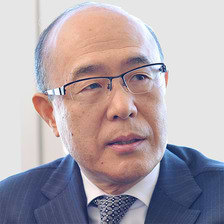
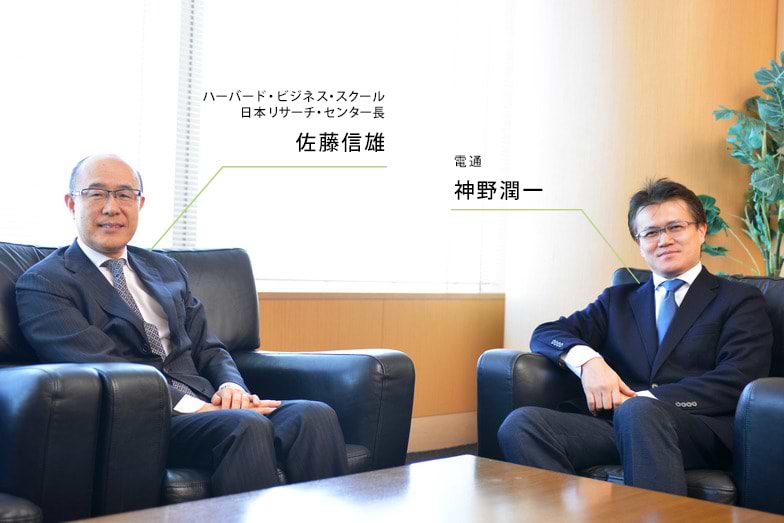
Nobuo Sato
Harvard Business School Japan Research Center
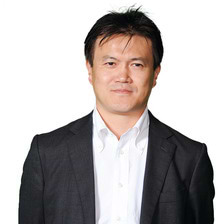
Junichi Kanno
Across many areas of corporate activity, it has become commonplace to hire specialized talent from outside the company—talent that is difficult to cultivate internally—to drive business growth and transformation. In this series, we visit leading figures active at the forefront of various fields to gather insights on cultivating and utilizing specialized talent. This time, we visited Nobuo Sato, Director of the Japan Research Center at Harvard Business School. We asked him about Japan's challenges from a global perspective and how these challenges should be overcome.
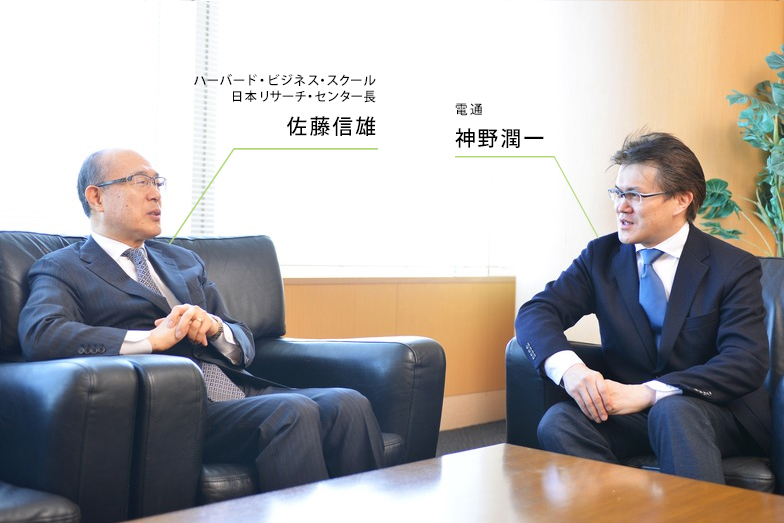
Komatsu: Documenting and Embedding Its Own Culture
Kanno: Continuing from the previous part, we hear from Director Sato of Harvard Business School (HBS). In our earlier discussion, it was striking to learn that Western companies have roles like CHO (Chief Human Resources Officer) and CLO (Chief Learning Officer), and that HR has established itself as a strategic function.
I believe embracing workforce diversity is essential for companies to create new value going forward. You explained a two-step path: ① First, clearly define the company's direction and required position specifications to ensure diversity in skills and competencies. Then, ② Build true diversity that transcends differing values and cultures.
While many struggle to even achieve the first step, how do you think we can overcome the second?
Sato: A common misconception is that "gathering diverse people will prevent the company from uniting as one." But if that were true, wouldn't Western companies with multiracial workforces be less cohesive than Japanese companies? That's not the case. Why? Because they first have a clear corporate mission, philosophy, and values, and they thoroughly embed these within the organization.
This ties back to the earlier discussion on position specifications ( Part 1 ). In Western companies, it's standard practice to explicitly state their mission and values and actively share them internally. Through this, they strive to build a unified culture.
Japanese companies, for better or worse, often have a familial or homogeneous culture, fostering an expectation that things are understood without being said. While this can sometimes work positively, it simply isn't feasible for Western companies that have built their success by bridging differences across diverse cultures and ethnicities. I believe learning from their approach – embracing diverse nationalities and cultures while sharing and growing a unified corporate culture – is the path to becoming truly global companies capable of competing worldwide.
Kanno: That's true. While Japanese companies may have stated principles, concrete actions to embed them are perhaps lacking. From your perspective, Sato-san, are there any good examples among Japanese companies?
Sato: Komatsu, a manufacturer of construction and mining equipment, is a global company with over 80% of its sales coming from overseas. During its full-scale globalization process, the company discussed what its core values were, codified them as the "Komatsu Way," and rolled it out globally. It has many overseas factories and has steadily overcome the challenge of communicating and unifying its values and culture even among the people working there.
Western companies invest significant effort in permeating their corporate culture throughout every corner of their workforce. Internal communication is also extremely important for CEOs, and this is taught at HBS. However, Japan still falls short in this area. I suspect it barely reaches the executive level, so if companies aim for global expansion, CEOs should focus more intently on internal communication.

If the executive level doesn't change, we can't utilize young talent.
Kanno: Top leadership has immense power. Only by firmly communicating and embedding a company-wide culture can diversity be supported.
Sato: That's right. Additionally, I believe the lack of training for senior management in Japanese companies is a problem. Compared to training for younger employees, companies don't allocate resources to developing mid-level managers and above who are potential executives. They assume, "You're already somewhat developed, so learn on your own."
Yet, it's the people at the top who can have the greatest impact on a company. First the CEO, then the executive class. However, the more senior they become, the busier they are, making it difficult to carve out time for self-learning. Furthermore, if someone has spent 20 or 30 years in the same company, there are significant limits to their ability to change their perspective on their own.
HBS also offers executive programs and encourages corporate sponsorship. When executives step away from their companies and work for a month or two to learn alongside multinational peers, they gain an external perspective on their company's challenges and often reevaluate their own approach to leadership. Everyone returns deeply inspired, feeling their horizons have broadened.
Kanno: That's true. Now that you mention it, the concept of educational investment for executives isn't really common in Japan.
Sato: Exactly. Even if their tenure is only five or ten years left, their mindset determines whether they can effectively empower those below them. That makes senior management education incredibly valuable. Companies may be enthusiastic about developing young global talent, but if senior leaders aren't also global-minded, a gap emerges that drives young people to leave. Even HBS alumni sometimes return with an MBA only to find they can't apply what they learned. When they try to influence change internally and see no results, sadly, they end up leaving for other companies.
Kanno: This connects to your earlier point ( in Part 1 ) about HBS's program where teams build startups—that learning to "listen" is crucial. I think there's a significant lesson in HBS's continued emphasis on this education: a leader is someone who listens to others' opinions and integrates differing values.
Sato: Leadership education is also lacking in Japan. Conversely, though, Japanese companies traditionally fostered a bottom-up culture. If the family-like aspect evolves positively, it could lead to an open atmosphere where opinions are easily voiced.
But this tendency is weakening significantly now. While top management still desires active input from below, we see a situation where younger employees lack energy, the middle management layer also lacks vitality, and they fail to incorporate the opinions of the younger generation.
Kanno: That might be one symptom of "big company disease."
Sato: Exactly . It's like "leaning on the shade of a big tree." As organizations grow larger, it becomes harder to maintain ownership over one's work, and people tend to become followers who just do what they're told. While it may be difficult for everyone to adopt a management perspective, I still believe it's crucial to train people to constantly think proactively about how their own department or team should operate, cultivating a leader's mindset.
Individuals should develop their own capabilities without relying solely on the company
Kamiya: Related to what you just said, I'd like to shift to the individual perspective and ask what kind of value each person should aim to develop going forward. It's not about the corporate bureaucracy issue, but obviously, just hanging onto the company isn't enough. How to effectively leverage one's abilities within the organization is also an individual responsibility, right?
Sato: Exactly. There are several key mindsets for thriving personally. One is recognizing that in today's era, no company can guarantee eternal survival. Therefore, continuously enhancing your own capabilities is crucial from a risk-hedging perspective.
During the high economic growth period, work kept increasing, so lifetime employment offered significant benefits for companies. But now we're in an era of low economic growth, with intensifying global competition and a drastically changed environment. With lifetime employment no longer the baseline, individuals must constantly consider both the company's future and their own career path.
Another point, which ties back to the earlier discussion on leadership, is that regardless of your position, you must think for yourself: "Is this really the best way to do this job?" "Is this strategy truly the right one?" If you believe it isn't, you must actively propose alternatives.
Kanno: That mindset and effort itself builds your capabilities. Even if the company falters, you become someone who can succeed elsewhere.
Sato: Exactly. Merely following existing methods prevents both individuals and organizations from growing. Moreover, companies today tend to cut costs on education and training compared to the past, so you also need to make your own efforts—studying through books or attending schools.
By enhancing your capabilities and adding value, you increase your contribution to your current company. Furthermore, being entrusted with more important tasks builds your skills, which ultimately becomes an asset when considering a career move.
Kanno: Conversely, if middle management and executives don't listen to those who can think independently and make proposals, the company risks retaining only inward-looking talent, trapped in homogeneity. This pushes them further away from diversity and leaves them ill-equipped to respond to our rapidly changing times.
Sato: When a company becomes filled with inward-looking, homogeneous individuals, everyone views the world through the same lens. This makes it impossible for the entire company to notice major societal changes invisible through that lens. Many companies have declined unknowingly this way.
The "ideal state" evolves with the times
Kanno:In a previous discussion, Mr. Oka also mentioned that "the era of the individual is coming." I feel this resonates with what you're saying, Mr. Sato. As individuals strengthen their personal capabilities, more unique individuals emerge. This further compels companies to increasingly leverage diverse talent. Finally, could you share your thoughts on how diversity management can truly take root in Japan?
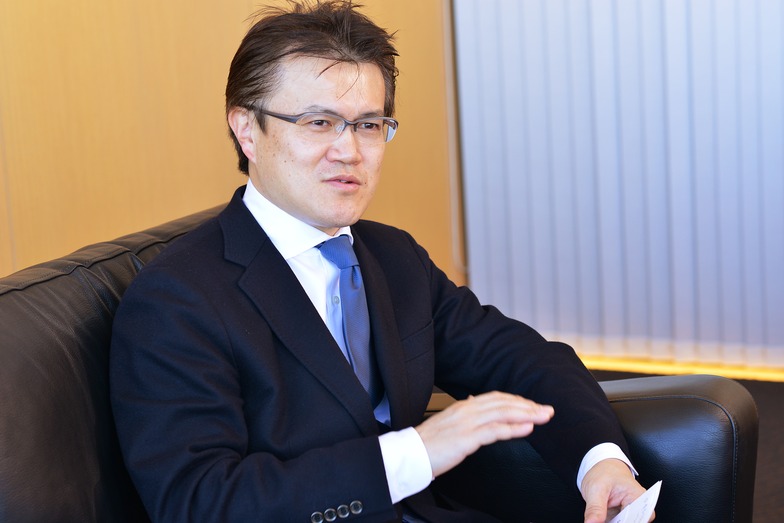
Sato: Currently, more Japanese companies are actively pursuing diversity management, such as promoting the hiring of foreigners and women. That in itself is very positive.
However, as I mentioned earlier, there are two steps: diversity of skills and diversity of values. The latter, especially diversity management involving different races, is particularly challenging for Japanese people.
To begin with, few Japanese companies hire mid-career talent with experience in other industries, even among fellow Japanese. Even when they do hire, many companies struggle to integrate them effectively. If Japanese companies can't manage diversity among their own people, how can they manage it across racial lines? You could try both simultaneously, but it's incredibly challenging to talk about welcoming foreigners and embracing diversity when you haven't even mastered the basics at home.
I don't deny the value of riding the diversity management trend itself, but it's better to break down the challenges, understand the risks, and then tackle it. First, even among Japanese people, recognizing that "different backgrounds and skills require a diversity management mindset" is crucial. Why not start by integrating mid-career hires and unlocking their potential?
Kanno: Achieving diversity itself isn't the goal. Unless we clearly understand why diverse talent is needed and then design systems and mechanisms to leverage that diversity, it doesn't constitute true diversity management.
Sato: Japanese people possess fundamentally excellent traits—they are diligent and capable of steadily accumulating results. However, companies lack mechanisms to harness the potential of diversity or to nurture individual potential. Conversely, if such mechanisms existed, embracing diversity would be possible.
Today, competitors aren't just Western companies; businesses and talent from India, China, and other Asian nations are rapidly growing. Japanese companies must change their existing approaches in various ways.
Kanno: To put it simply, what should they change from and to?
Sato: Abstractly speaking, from the "ideal state" of the past to the "ideal state" of the present. Lifetime employment and family-like homogeneity worked well in the past. But times change. External factors like the low-growth era, global competition, and the emergence of new technologies and businesses, combined with internal factors such as organizational maturity and becoming large corporations, have revealed numerous instances where the old "ideal state" no longer fits. We need to identify and redefine these aspects, but homogeneity prevents us from noticing.
For this reason, ensuring diversity within companies is truly indispensable. It should not be a mere formality; companies must commit to developing and utilizing talent with diverse values, as their very survival depends on it.
Was this article helpful?
Share this article


Newsletter registration is here
We select and publish important news every day
For inquiries about this article
Back Numbers
Author
Nobuo Sato
Harvard Business School Japan Research Center
Center Director