Note: This website was automatically translated, so some terms or nuances may not be completely accurate.
 Experience-Driven Showcase [60/77]
Designing New Ecosystems and Norms Through Architecture: Keisuke Toyoda (Part 2)
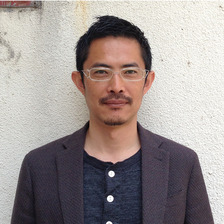
Keisuke Toyoda
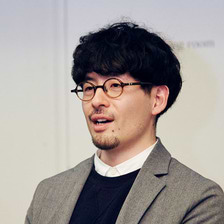
Yū Nishimuta
Dentsu Inc.
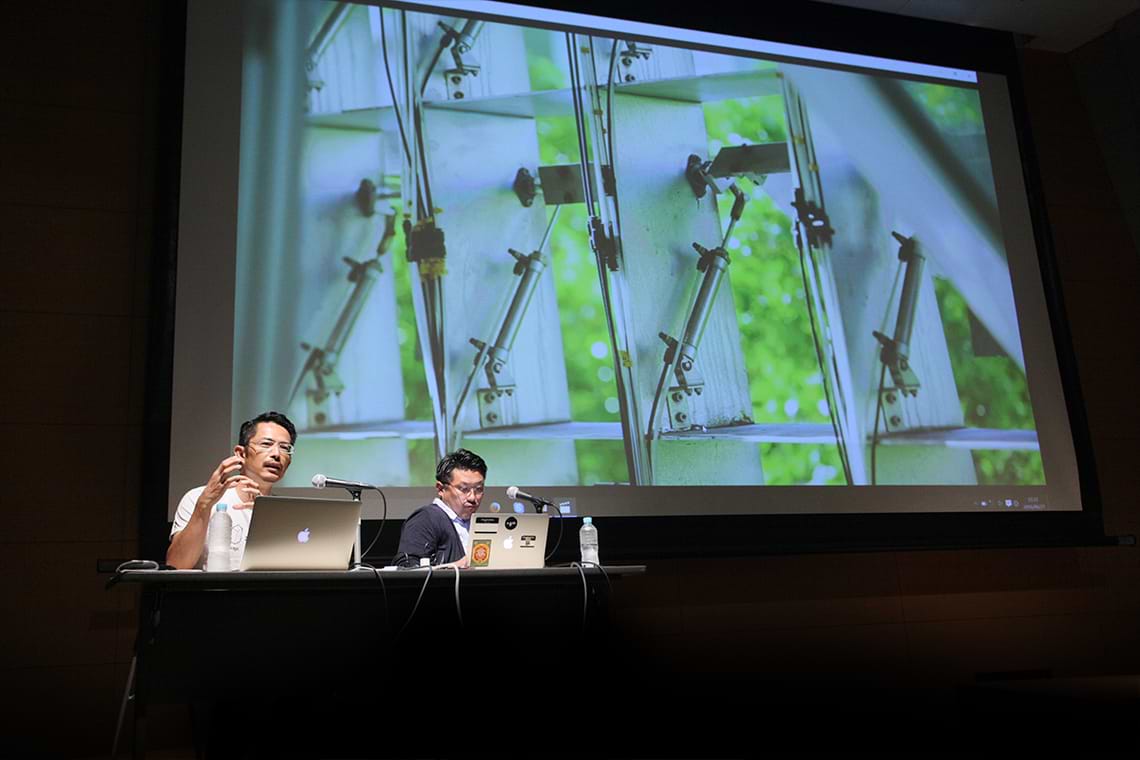
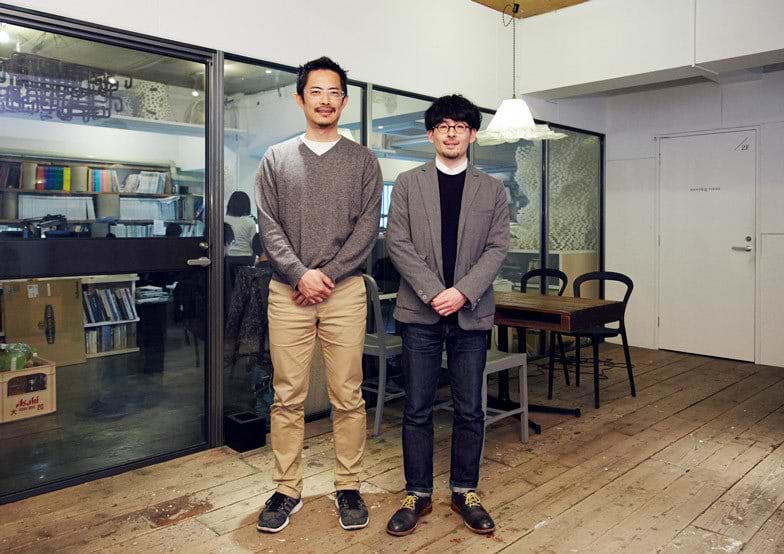
"Going to Meet the People I Want to Meet!" Part 5: Dentsu Inc. Event & Space Design Bureau's Yu Nishimuta met with architect Keisuke Toyoda, co-founder of noiz, based in Japan and Taiwan. Looking ahead to the future of an IoT society woven with digital networks, Mr. Toyoda actively develops various experimental works and research activities. He is a top runner in computational architecture. We delve into his problem awareness and his perspective on the future of humanity and society.
Interview & Editing: Aki Kanahara, Dentsu Inc. Event & Space Design Bureau
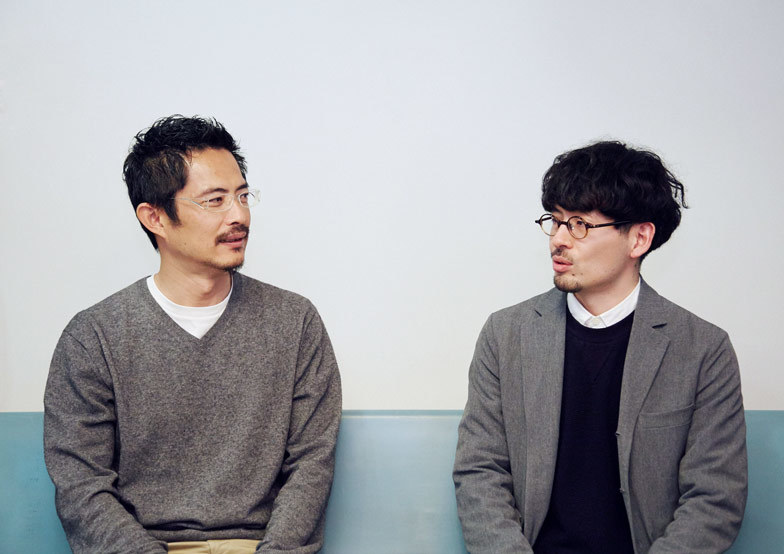
Despite the need for cross-genre co-creation, corporate and university education remain siloed.
Toyoda: We also want to bring in various experts for cross-genre work. Small firms have limitations, but when I go to California for work about once a month, my colleagues there are cross-genre. Especially those in digital who also do architecture are often cutting-edge. I wish we could do that kind of thing more as a social experiment, not just at the individual level.
University education, especially at comprehensive universities, absolutely needs to become more interesting. For example, architecture students should be required to take economics credits or biochemistry credits. The fact that companies and universities aren't investing in this makes me very uneasy. We want to try to initiate something, even if it's just a little.
Nishimuta: Earlier we talked about music. Are there other fields or industries you'd like to collaborate with?
Toyoda: I'd love to collaborate with people from absolutely every field. To give a recent example: when we use algorithms for 3D modeling, the optimal use for the resulting shapes isn't necessarily architecture. If scaled up, it might be the form that fulfills the purpose of a skyscraper, but scaled down, it could be the molecular structure of a shoe sole. These kinds of possibilities keep emerging. Utilizing such outputs might be realized faster in product design than in architecture. I really want to reach a point where collaborating with, say, Nike on developing the molecular structure of a shoe is just a normal part of our work.
Nishimuta: Designing parts of car interiors or designing tatami mats—applying an architectural approach to create products is incredibly interesting. It also expands the possibilities for how we create things in the product realm!
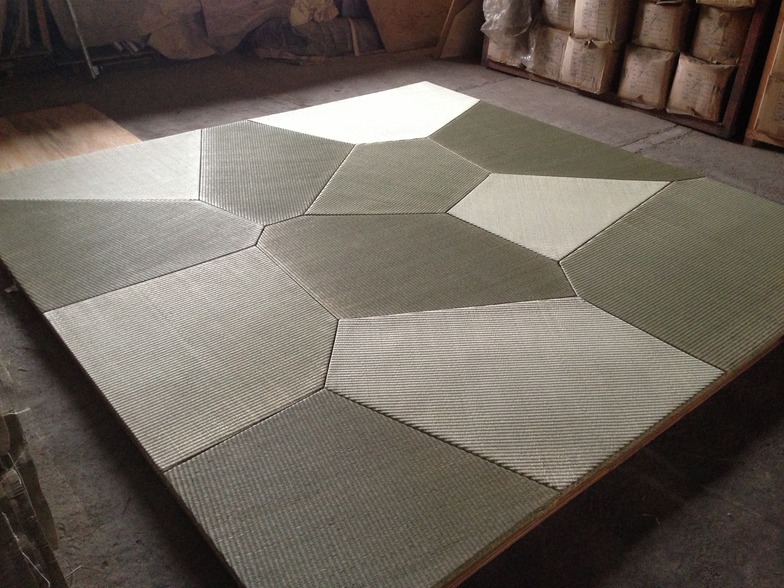
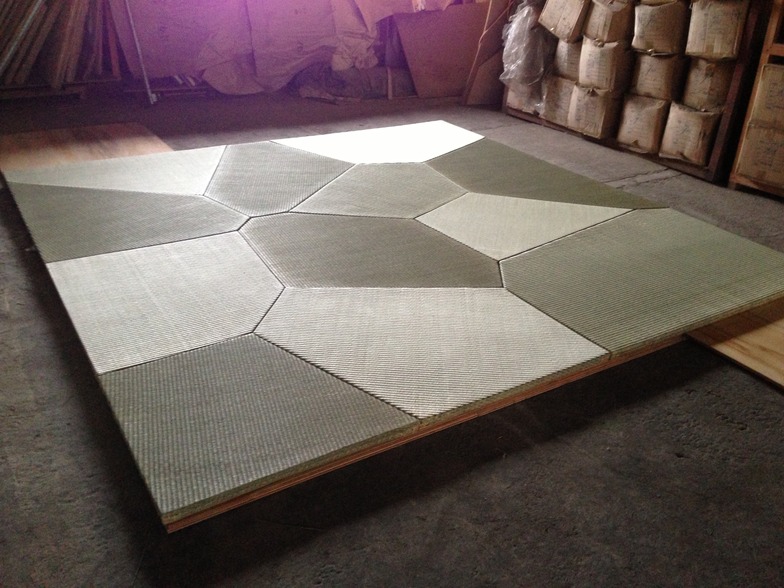
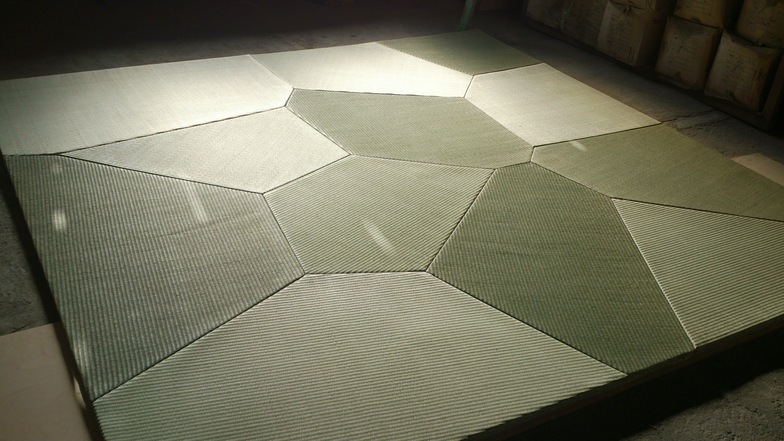
Applying Voronoi diagrams, a geometric pattern, it generates unique patterns for each order. Custom orders are available online, aiming to provide Japanese rush grass farmers and traditional tatami makers, struggling with a shrinking market, with a global market and new design value.
Toyota: Lately, I've been noticing these loop-like patterns emerging. I'm currently working on knitting too, and when you analyze knitting through algorithms, you can create geometries impossible with conventional methods. By first exploring how controlling these algorithms shapes the resulting products, I've seen outputs completely unrelated to architecture emerge. Pushing this further leads to experimental derivatives like tatami mats that automatically control room layouts, using algorithms to explore possibilities. I feel this has come full circle, spiraling back to transform architectural concepts we couldn't previously approach.
For example, we have the same 3D printer at our Taipei office. Since the prints come out identical regardless of location, we keep Skype open constantly. We're always conducting experiments face-to-face, saying things like, "Hey, look at this..." It's become completely normal over time.
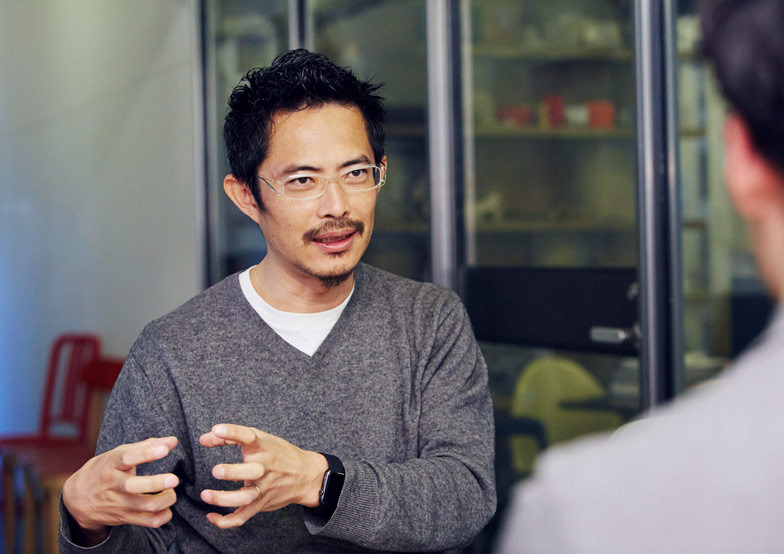
Nishimuta: How do you allocate investment toward cases that start with technological development like 3D modeling or knitting?
Toyoda: We consciously allocate about 30% of our work to play. We ensure that 30% of everyone's workload is dedicated to non-client experimental projects. This builds up a reservoir of ideas, so when something comes up, we can think, "Oh, we could apply this!" Without accumulating the team's collective experience, we can't deliver value as a team. That's why we always stay combat-ready. An army that never trains is weak, no matter how well-equipped it is.
We created a research department called EaR—short for Experimental and Research—and it consistently conducts research across various fields. We want to keep our senses constantly sharpened so that fascinating, cutting-edge examples from diverse fields—far beyond what we could cover alone—constantly flow through our team. Doing this allows us to share interesting information, making it easier to pinpoint "Could this be it?" with greater precision. It's part of a system designed to improve the accuracy of our choices within limited time.
We don't clearly define the boundaries of the noiz platform.
Nishimuta: When you want to incorporate diverse, unconventional individuals, how do you approach it?
Toyoda: At noiz, Japanese people make up about one-third of the team. We actively seek to include people from diverse backgrounds and multiple nationalities. This means everything from the technical environment to common sense is completely different. Employment arrangements range from full-time to just three days a week, or people who are essentially independent but come in once or twice a week. Surrounding them are freelancers and diverse specialists from companies, forming a loose team. To keep people engaged, we share research—otherwise they lose interest. We collaborate with these individuals on a project-by-project basis. There's even competition for talented freelancers (laughs).
We don't want to create clear boundaries for the office platform. We operate across various layers, keeping the cell membranes as loose as possible. It's like organs within a body, but also like independent cells outside it—a gradient where it's hard to clearly define "inside" or "outside." That kind of environment feels more interesting, you know? Though it's quite challenging from a management perspective.
Nishimuta: When adopting that approach, both universities and corporations lack organizations structured for collaborative thinking, making it difficult. In the architecture world, what's the biggest barrier? The wall of wanting to make the membrane thinner and thinner but just not being able to.
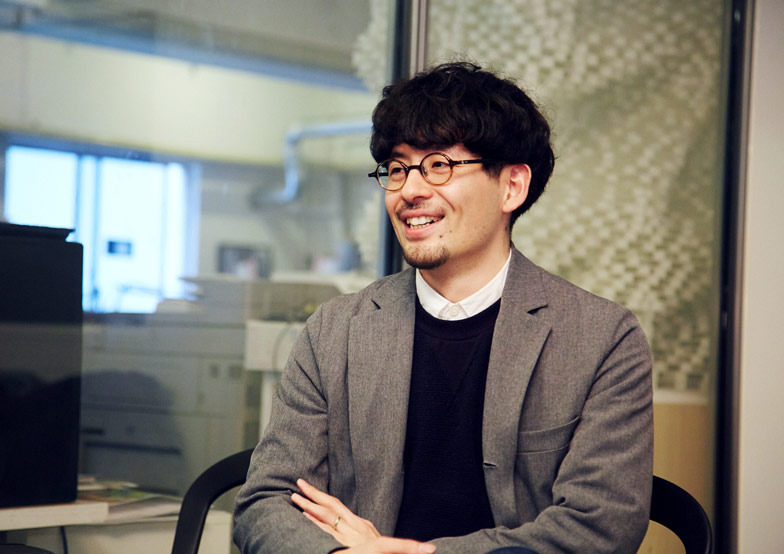
Toyoda: Fundamentally, it boils down to the education system. Architecture departments exist within the Meiji-era educational framework, where the architecture program has separate fields like design, structure, systems, environment, history, and planning. Each becomes its own academic society with little interaction. Historically, considering technical aspects and construction realities, it was like a bucket relay: once the design was done, it went to structural engineers for review, then to mechanical engineers. Design and structure were separate organizations with different sensibilities, languages, everything. That connection never became seamless.
The overwhelming power of new digital technology lies in creating within a computer, outputting via techniques like digital fabrication, and enabling a feedback loop that incorporates sensor data into the design process—a time-transcending feedback loop. If design, structure, construction, and regulations remain compartmentalized, the potential of the digital environment is completely wasted, which is a tremendous shame. At the level of art installations, we can handle everything—design, engineering, and construction—like a mini-general contractor, so we can create model cases.
Nishimuta: Regarding potential collaborations with Dentsu Inc., what kind of projects would you like to pursue?
Toyoda: We're an omnivorous firm, like a dog—we'll eat anything (laughs). Any form can be an experiment. But if we're going to do something with Dentsu Inc., it shouldn't just be about doing interiors. Ideally, we'd work on a premise that includes research and seriously implements social experiments.
Nishimuta: Personally, I think it would be interesting to work on projects where we design the information itself or the environment, rather than just designing the space.
Like digitizing information—converting content into digital data—and then seeing what emerges when you bring it back into three dimensions.
Toyoda: That sounds incredibly interesting! I think there are plenty of design firms out there with great taste. Of course, we can do that too! (laughs) But we're interested in going beyond mere taste. As architecture specialists, we'd be thrilled and excited to have opportunities to engage with questions like how to visualize information or how to digitize objects.
Nishimuta: Today was truly fulfilling, getting to talk at length with Mr. Toyoda, who I most want to work with right now. I'm determined to make some kind of project with him a reality! Looking forward to continuing our collaboration.
<End>
Was this article helpful?
Share this article


Newsletter registration is here
We select and publish important news every day
For inquiries about this article
Back Numbers
Author
Keisuke Toyoda
Architect
Yū Nishimuta
Dentsu Inc.
Dentsu Live Inc.
Planner