Note: This website was automatically translated, so some terms or nuances may not be completely accurate.
 FC Imabari's Challenge [1/2]
Takeshi Okada Speaks: What Sports Can Do for Japan's Future.
Okada Takeshi
Imabari Yume Sports Co., Ltd.
Nobutaka Hayashi
Dentsu Inc.
Imabari City, Ehime Prefecture, Shikoku. This is the place where Takeshi Okada, a heavyweight in the soccer world who once played for Japan's national team on the global stage and later led the team as manager in two World Cups, chose as the stage for his new challenge. In November 2014, Okada acquired a 51% stake in " Imabari. Yume Sports," the operating company of the Shikoku Soccer League club " FC Imabari." He took on the role not as a coach, but as an owner-manager. The club does not even compete in the JFL, the tier below J1, J2, and J3 leagues.
Okada deliberately chose this obscure regional club, aiming to strengthen the team and achieve promotion while also seeking to transform Japanese soccer and revitalize the region. As an owner-manager, he has spent the past year and a half engaging with local government, the media, and corporate sponsors.
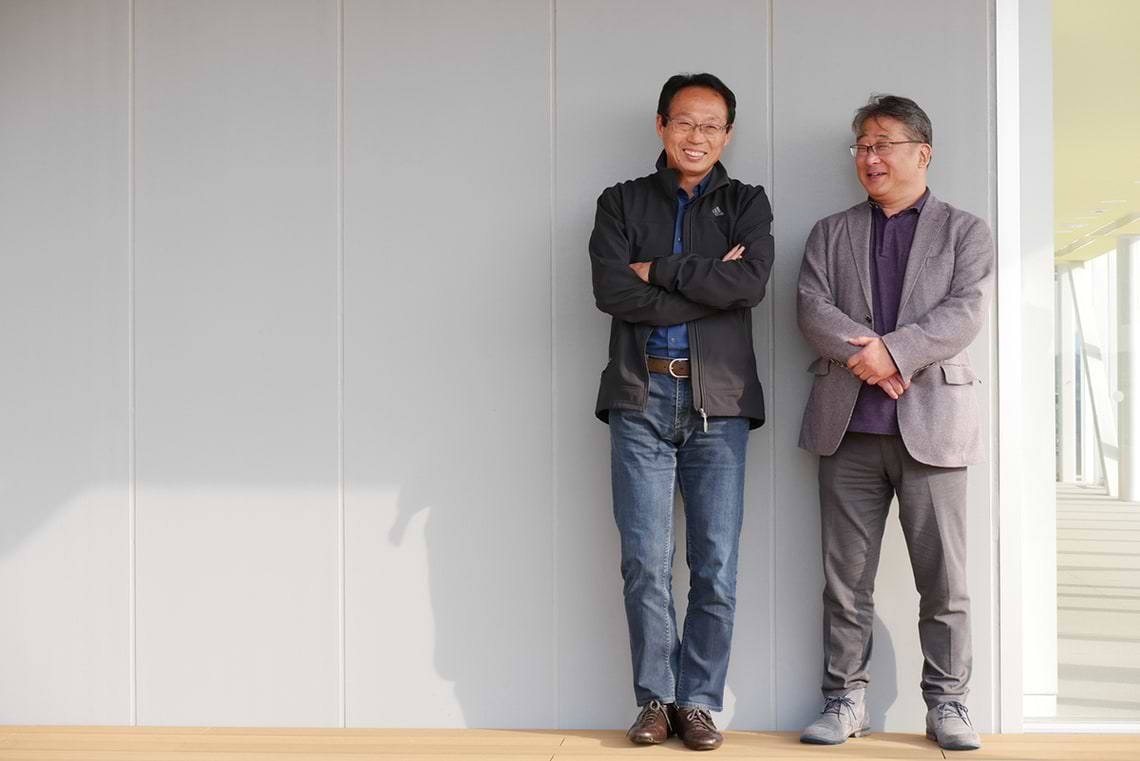
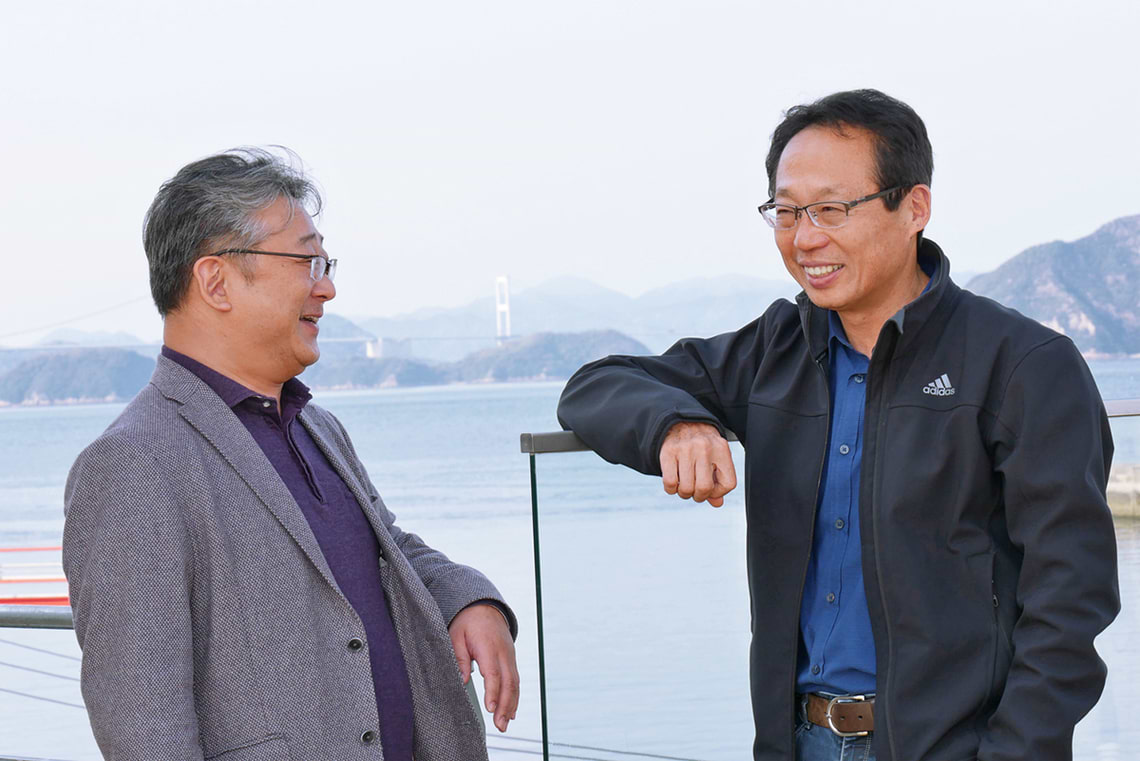
Now, we wanted to hear from Okada himself about the new relationship between society, business, and sports. Japan is set to host the 2020 Tokyo Olympics and Paralympics. How should we perceive the social and cultural value of sports, and how can we leverage it to shape Japan's future? Nobutaka Hayashi, Director of Dentsu Inc. Marketing Solutions Bureau, conducted an interview with him on location.
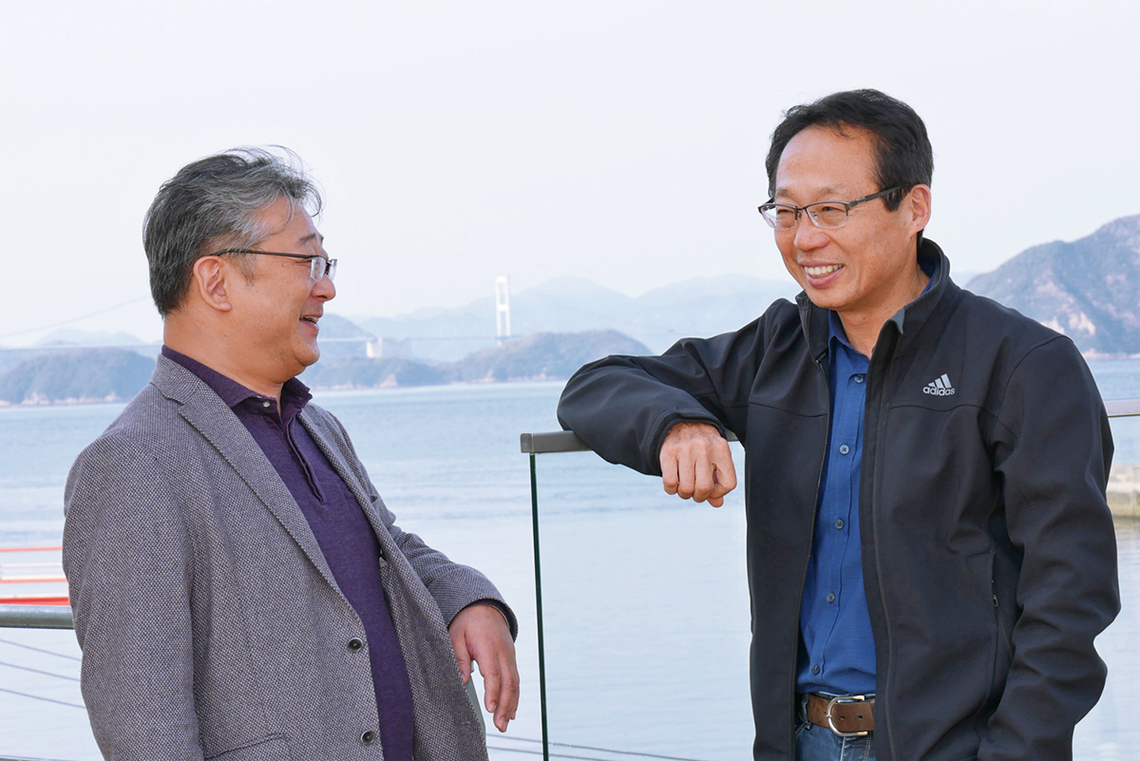
The satisfaction of sweating it out, having a beer, and heading home.
Changing lifestyles through sports
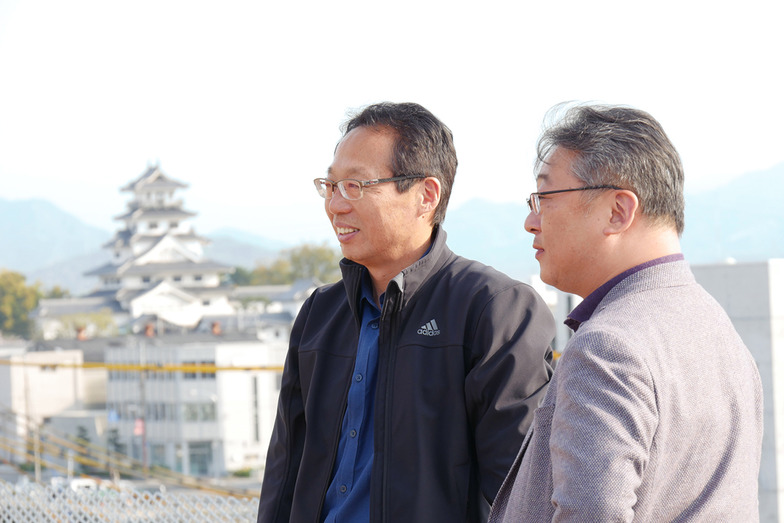
Hayashi: It's a town with many beautiful views.
Okada: It's a great place. Even driving from the Shimanami Kaido to the islands is beautiful.
Hayashi: I think I understand a little why Mr. Okada, who has been involved in environmental activities and next-generation education, chose Imabari. I believe there are many sides to Mr. Okada that aren't widely known. Of course, he's at the top as a soccer coach, but based on my interactions with him, I feel "social activist" is a more fitting description.
Okada: No, call me a "social entrepreneur." I've even received awards for it.
Hayashi: My apologies. By the way, Mr. Okada, you always approach your various activities from a perspective that takes a bird's-eye view of social issues. From that viewpoint, could you tell us about the potential of sports?
Okada: A commonly cited power of sports is its ability to forge bonds across borders. People who love soccer can become friends. But beyond that, I believe sports have the power to transform people's lifestyles and shift their values.
Hayashi: Could you elaborate?
Okada: Until now, "consuming goods" has been central to our behavior.
But now, people who used to engage in consumption after work or on holidays are finding deep satisfaction through sports and returning home fulfilled. This lifestyle is spreading.
Playing tennis at a sports club on weekends. Sweating it out playing soccer. Coming home after working up a sweat, having a beer, and feeling that kind of happiness – a lifestyle you can't get just from consuming things. We want to make that a permanent part of people's lives. Sport is a very effective means to achieve that.
Hayashi: While consumption may decrease, life satisfaction increases.
Okada: Exactly. In today's capitalist society, I think everyone feels some kind of deadlock or friction. It seems to me that stems from placing too much importance on "visible value."
Hayashi: Tangible value refers to things like product sales, GDP, stock prices—values measurable by numbers.
Okada: Exactly. The opposite values are things like "trust," "empathy," and "inspiration." These are incredibly important values, but they're hard to express in economic activity. However, sports can create them.
We call these things "invisible capital" (*). We need to build a society that values this "invisible capital." I have a feeling we won't last if we keep going like this.
※ Proposed by Hiroshi Tasaka, Professor at Tama Graduate School, on the advisory board of "Imabari. Yume Sports" (Book: "Invisible Capitalism," Toyo Keizai Inc.).
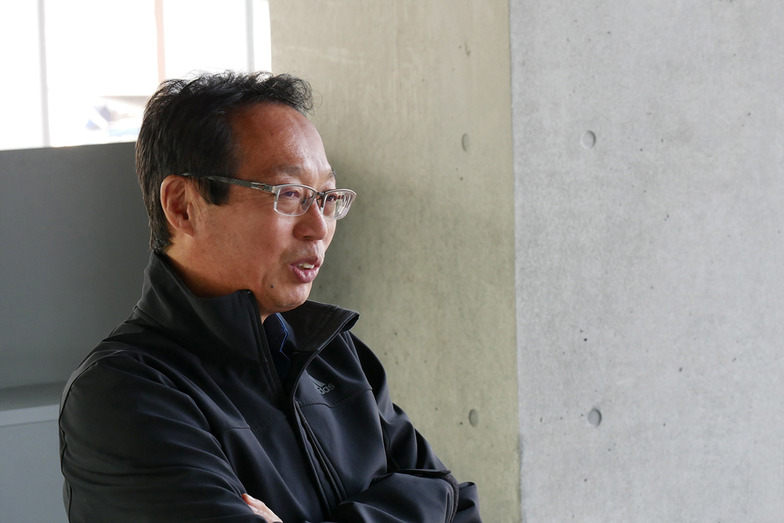
Recognizing capital that cannot be measured by financial statements or sales performance
Hayashi: This is deeply connected to the nature of sponsorship, isn't it?
Okada: Yes. I believe traditional club sponsors were evaluated based on the value of "how much sales would increase." Dentsu Inc.'s business model was precisely that.
But going forward, I believe it will become increasingly important for sponsorship to take forms that don't appear on financial statements – like "I'm investing because I empathize" or "I'm sponsoring because I was moved."
Of course, if we did this, management might face lawsuits from shareholders. But I believe sports and culture are the very things that can help build a society where intangible capital is recognized.
I strive to give sponsors tangible value in return, but the companies supporting FC Imabari now are investing money because they empathize. I want to cherish that.
In fact, this directly contributes to corporate branding, trust, and ultimately, improved performance.
Hayashi: Why is valuing intangible capital so important?
Okada: Because it leads to embracing diversity.
For example, imagine an employee with outstanding sales performance. Then there's another employee whose sales aren't that great. Normally, the high-performing employee would be seen as "superior," right?
But the employee with the lower sales is loved and cherished by those around them. This means that employee possesses "invisible capital" that doesn't show up in sales figures.
We must stop judging someone as incapable based solely on numbers and instead recognize their "invisible capital" – like improving the workplace atmosphere – as equally valuable. That's what "embracing diversity" means.
Hayashi: So sports have that power too, right?
Okada: Exactly. I think the beauty of sports lies in its ability to embrace diversity. Sports have the power to make us recognize that capital – the ability to build trust and empathy across countries and languages, based on the premise that people are diverse.
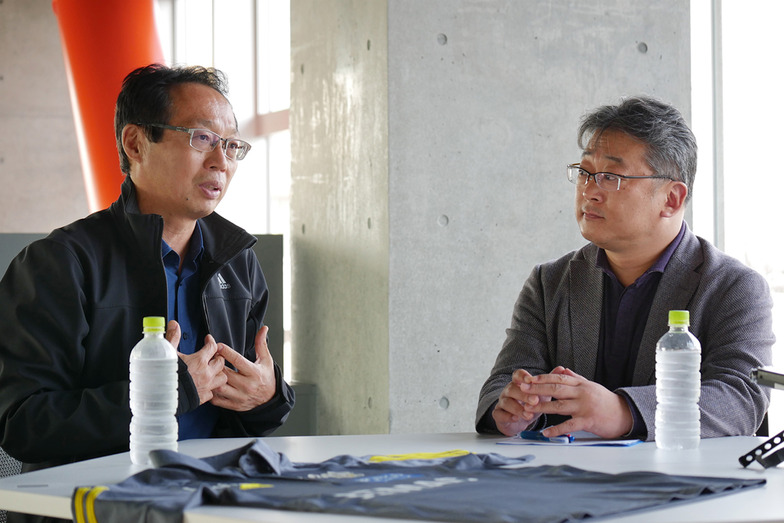
We fight, but we don't kill each other. Sports contribute to world peace.
Okada: Sports possess many other powers, but I strongly believe it holds significant power to contribute to solving social issues.
I've been saying that Tokyo should declare, even if it sounds a bit cliché, that the 2020 Olympics and Paralympics will "contribute to world peace."
For instance, athletes could enter by sport instead of by country. Host "Fan Fests" at each sport's main venue, gathering fans for cross-border exchanges. Attendees at the soccer venue's Fan Fest could experience Japan's traditional "kemari" ball game.
Ideas like spreading Japanese culture while fostering cross-border exchanges are just a matter of creativity. By doing this, sports can truly demonstrate their "power to contribute to peace."
Hayashi: I completely agree. I think it's crucial that the legacy of 2020 isn't just for Tokyo or Japan, but something we can leave for the world. For example, there's the concept of "bunbu ryodo" (cultivating both mind and body). It originated in China but is a concept almost exclusively preserved in Japan. Japan has long integrated sports into school education as "physical education" (taiiku), playing a role in character development. Reexamining that value and sharing it with the world could be one form of legacy.
Okada: From the original meaning of sports, physical education represents a completely opposite value. Taken too far, it's problematic. However, it might be important to create and spread new, uniquely Japanese values from both sports and physical education.
Hayashi: I see, that's true. Are there other benefits of sports?
Okada: There's a book called The Ethics of Combat: Questioning the Origin of Sports by Tetsuyoshi Onishi, former coach of the Japanese national rugby team. In it, Onishi writes: "If humans go to war and see their comrades killed, they might end up killing prisoners. Human nature is terrifying. The rationality that stops us before reaching that point can be cultivated through sports."
When humans expose their struggle instincts, they become like beasts. Restraining that is the power of reason. Cultivating this power is also a vital role of sports. He argues, "It's important to follow the rules, avoid doing what you shouldn't, and not lose your reason. That's where sports are useful."
And interaction through sports truly builds connections between people. My company, "Imabari. Yume Sports," is deepening exchanges with people in China, and it's all thanks to the power of soccer.
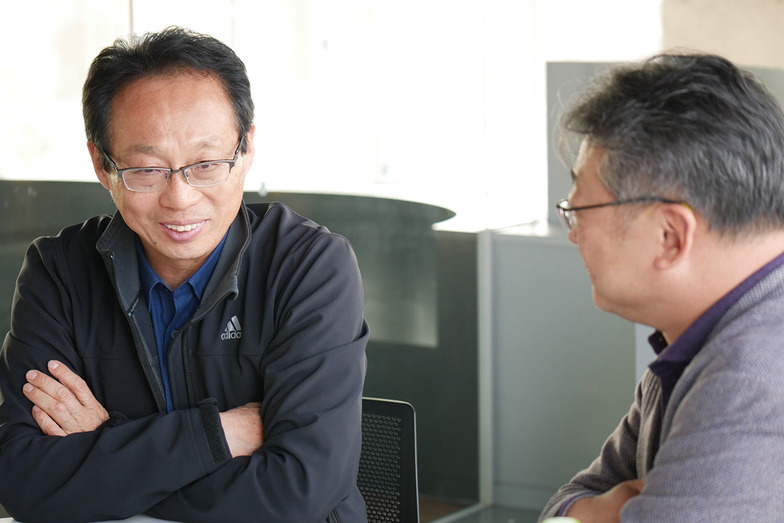
Why do sponsors invest money? Looking ahead to 2020
Okada: The corporate philosophy of "Imabari. Yume Sports" isn't about sports itself, but rather "contributing to building a society that values richness of heart over material wealth for the next generation."
We want to embody invisible consumption, not just visible expansion of consumption.
Hayashi: I think clients are increasingly seeking this kind of approach lately. Many companies feel that mere exposure through advertising billboards isn't the only meaning. They say, "We want to redefine why we pay sponsorship fees."
Okada: It seems they're feeling stymied by the current situation.
Hayashi: Two years ago, we planned and executed a campaign to support the Japanese national team at the Brazil World Cup. Using the tagline "Turn Dreams into Power," we created a campaign that went beyond mere team support. It encouraged even people who didn't play soccer to pursue their own dreams, inspired by the national players' fighting spirit.
Many sponsors agreed it was "worth sponsoring." Through the national team's matches, we were able to shape values within Japanese society.
Okada: Sports truly can turn dreams into power.
Hayashi: On a personal note, my daughter chose a book written by Japanese national team player Nagatomo for her middle school graduation report. In that book, she learned about Nagatomo's attitude: using mistakes as opportunities for objective self-reflection and always overcoming challenges with positive thinking. She was deeply moved. It really struck me how the messages conveyed by Japanese national team players offer intangible value.
Okada: So Nagatomo-kun is useful too, huh? (laughs)
Hayashi: I think sponsor companies are pondering what kind of value creation they should pursue for the 2020 Tokyo Olympics and Paralympics. What you're doing now in Imabari, Okada-san, could be a model example or even the answer.
Okada: Sponsors spend advertising and promotional budgets to promote their own companies. Or they engage in social contribution activities. The purpose isn't solely to boost performance.
Corporate activities always benefit society. In other words, they always make someone "smile."
Take Dentsu Inc., for example. They bring in sponsors, which makes me smile. Those sponsors watch FC Imabari play a great game and smile. The fans who come to watch the game smile too.
By considering who we're putting smiles on, we see the true value of that company. When that happens, employee motivation shifts dramatically. Staff take pride in thinking, "Our company sponsors such wonderful things."
It doesn't immediately show up in sales figures, but it boosts employee motivation. People within companies are starting to realize this.
Hayashi: Indeed, over the past few years, I've definitely sensed this awareness growing strongly among clients.
Okada: Even if it doesn't show in the numbers, valuing that kind of impact ultimately leads to business growth. You don't have to spend advertising and promotion budgets solely for immediate sales; the sales will still increase as a result.
This is very similar to CSR. You might think, "We won't do social contribution if it stops generating profits," but actually, there's a structure where companies that properly engage in social contribution are the ones consistently generating profits.
Genuine social contribution boosts employee motivation and clarifies the company's purpose. Then, you'll find that "before you know it, sales have grown."
Hayashi: That's exactly what you're doing now as the owner of FC Imabari, Mr. Okada. Next time, please tell us more specifically about FC Imabari.
For inquiries regarding FC Imabari, please contact fcimabari@dentsu.co.jp (c/o Dentsu Inc. Sports Bureau).
Was this article helpful?
Share this article


Newsletter registration is here
We select and publish important news every day
For inquiries about this article
Author
Okada Takeshi
Imabari Yume Sports Co., Ltd.
Chairman and CEO
Nobutaka Hayashi
Dentsu Inc.
Executive Officer