
Note: This website was automatically translated, so some terms or nuances may not be completely accurate.
 The boss is great. [1/1]
Teens hide porn magazines, twentysomethings hide dating guidebooks, and thirtysomethings hide business books.
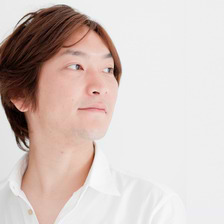
Hiroki Nakamura
PARTY
You, the third-year student who spends every day rushing to speed-dating events.
You, the young person who scraped together every last penny to go to Cannes and soak up the creative vibe.
You, the manager-type who got subordinates but can't handle them, lecturing them at Starbucks after client meetings.
This series will be a passionate cheer for you.
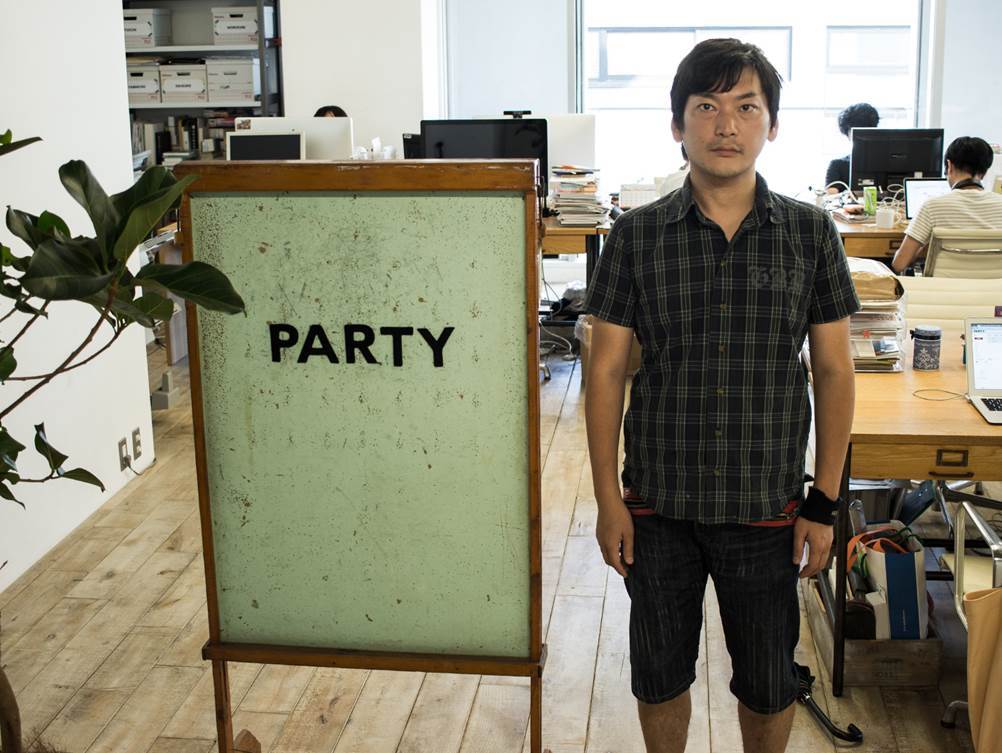
Good evening, everyone. I'm Hiroki Nakamura.
I'm the guy who wears shorts and worries about carbs—the one Director Nagai from "If Cats Disappeared from the World" told, "Fat guys always wear shorts, don't they?" and now I'm a little self-conscious about it.
After nine years at Dentsu Inc., I went independent and became a founding member of a company called PARTY. I'm one of the founders*. Day in and day out, I'm fully engaged in founding—creating promotional strategies, videos, services, and all that.
*Founder = someone who establishes a company.
As I've written before, I left Dentsu Inc. I don't regret going independent, but it's a workplace I still love dearly even after parting ways.
However, when I went independent, I had one lingering regret.
That I was always just a regular employee during my time there.
(To be specific, I wasn't even a full employee at first. I had an unusual arrangement working only three days a week: Monday, Wednesday, and Friday.)
I completely refused to be a senior or a boss, sticking to a zero-hospitality, youngest-child persona. Or rather, I actually was the youngest child.
I barely even organized drinking parties.
What's more, I was a problem child. I'd love to write about it someday (though I probably won't), and I have plenty of regrettable "heroic tales" I desperately want to share with someone.
Then, this person with zero hospitality started PARTY, and everything changed. Before I knew it, I had to play the role of the "dependable leader" – the boss – running a company of about 25 people.
When people hear this story,
our employees snorted, "Playing the boss... you're totally failing at it lol."
To that employee who snorted derisively, I'll stuff the second agent of Nerunerunerune into their nose and, starting next month, pay their monthly salary not in Japanese yen, but in Nerunerunerune.
That's right. It's been five years now, and I'm still not cool as a boss. I haven't even leveled up.
On a boss level scale, I'm about a 4. It's like thinking, "Maybe I should try fighting something other than slimes now," only to get utterly crushed by a mage.
Until then, I'd been a lone wolf, thinking "As long as I'm okay, whatever," and my careless actions confused employees, hurt them, or sometimes made them happier than I expected. It seems I've finally realized I need to be more mindful of every move I make. Whether I bring them to life or kill them depends entirely on me as their boss.
So, the first thing I did was to read books by great leaders.
I devoured books on management and the theory of how to behave properly as a boss, such as Shigenobu Nagamori's "Become a Person Who Moves People!", Jim Collins' "Built to Last", Tadashi Yanai's "Nine Defeats in a Lifetime", "Steve Jobs: The Presentation", and Minami Takahashi's "Theory of Leadership". Each time, I found myself nodding in agreement, thinking, "Hmm, successful people really do have something to say." My bookshelves were filled with books on management and business.
One day, while I was deep into these business books, my friend Mr. Tomoyasu Kitanishi of Kaibutsu and Mr.Takao Kato, president of SCRAP (famous for "Real Escape Games"), came over to my place. They saw my bookshelves and burst out laughing.
"Your bookshelf is overflowing with business books—it's way too intense!"
they said.
Then, they started picking out the most embarrassing business books from the shelves and displaying them face-out.

Do you know Mr. Masataka Haba?
He's a book director—a magician who transforms bookshelves beyond recognition through his selections and layouts. My bookshelf, however, was directed into a state that was essentially the "opposite of Haba."
I felt so embarrassed I could have died, and threw most of it away.
Teenagers hide their porn magazines. To avoid the awkwardness of their parents finding them.
In their twenties, they hide books like 'How to Be Popular' or dating manuals for group events. To avoid their girlfriend thinking, "So I was picked up using this manual... How awful!"
Then, in their thirties, they hide business books. To avoid being laughed at by people like Mr. Kitani or President Kato around them.
Back when I was a low-level employee at a big corporation, I couldn't care less about what the upper management was thinking. The rule was "It's fine if you don't care." I was just completely absorbed in the mission right in front of me: "Do something interesting with digital creative work and stand out."
I left without knowing a single thing about my boss's struggles, leaving him with the hassle.
It's not exactly atonement, but I became curious about what my boss was really thinking.
As I've had more chances to talk with people called executives, I've realized something.
There are no executives without a vision.
But employees are completely unaware of their boss's vision or intentions.
Even as a boss at a company of about 25 people, there's a lot to do. Reviewing financial statements, creating budgets, managing employee motivation and counseling them through worries, hiring, secretly changing the copier's default setting to "monochrome," and standing at the front more than anyone else to bring in money... Sometimes I get frustrated thinking, "You guys should be able to decide that much on your own." But then, when someone says, "Mr. Nakamura, you're the CD, so you don't need to come out yet. We'll handle it over here," it actually bothers me.
Imagine this happening in a company with thousands of employees... I can't even fathom it.
A supervisor's small decision could hurt people without them even knowing. If you ordered, "Set the copier to monochrome to cut costs," it might even trigger a butterfly effect like, "Manager, we can't win a single competitive presentation anymore." The responsibility is huge.
Also, in big companies, people who become bureau chiefs, executive officers, or presidents of subsidiaries usually have "something extraordinary." It could be success in a major project or personal charm. But those qualities aren't visible to the people below them.
In this series, I'll confront so-called "bosses" with direct questions, learning from their success stories and management visions. You'll discover they care far more about us subordinates than expected. For those who suddenly feel intimidated by someone's new authority, Nakamura will act as the human shield—approaching them on your behalf, even getting scolded for careless remarks.
The series is planned for six installments total. Whether we reach the ultimate boss, the "President," depends on your "likes"!
Please give this article a boost by clicking "Like!" at least 50 times each.
Finally.
When I first got the offer to contribute to Dentsu Inc. Tsūhō, I couldn't believe my ears.
That I, who left Dentsu Inc. in disgrace, would one day contribute to Dentsu Tsūhō.
This will likely be the first serialized column in Dentsu Inc. written by someone outside Dentsu Inc. I sincerely hope it can help foster a more open and transparent company culture for everyone. I'll work tirelessly to deliver interesting content, so please support me.
Sincerely,
The next installment is scheduled for publication in spring 2017 or later.
Was this article helpful?
Share this article


Newsletter registration is here
We select and publish important news every day
For inquiries about this article
Author
Hiroki Nakamura
PARTY
Creative Director / Founder