Note: This website was automatically translated, so some terms or nuances may not be completely accurate.
 Dentsu Inc. Megatrend Research Institute "Simptank" is about to hit the big time. [1/4]
[Prediction] Medicine will increasingly intertwine with marketing.
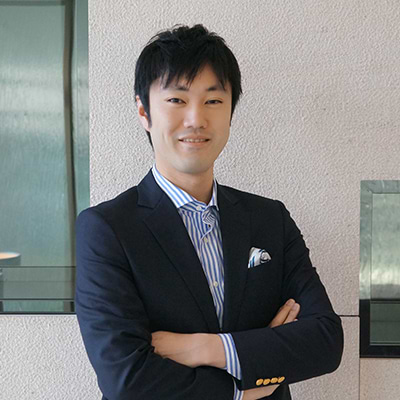
Yoshiki Ishikawa
Preventive medicine researcher

Masato Hiruma
Dentsu Inc.

This is a corner where employees of Dentsu Inc., as "mysterious paper researchers," explore various signs (SYMPTOM) in the world.


If you want to be healthy, you should stop eating when you're 80% full. Moderate exercise is necessary. Adequate rest is also important... I know all that. I haven't forgotten my bad health check results either. I'm well aware of what the public health nurse tells me. It's just a "model of a 1-kilogram fat mass," right?
I know all of this.
Yet, when I step into the shoes of a doctor or healthcare provider, I find myself assuming, "This person isn't doing it because they don't know."
We should know all too well that it's not "they don't do it because they don't know," but "they don't do it because they know"...
So, I asked Yoshiki Ishikawa, a data scientist and expert in preventive medicine, what we should do about this.


When you lack motivation is your chance to change
Ishikawa: Why do people gain weight? I've thought about this for over a decade, and the conclusion is: "Because they eat" (laughs).
Hiruma: Well, that's obvious (laughs).
Ishikawa: So why do we eat? Because it's delicious, right? Thinking it through to this point, I found the answer. Delicious things are either "fat and sugar" or "umami." Fat and sugar create the desire to "eat more," but umami produces a "sense of satisfaction," which suppresses appetite. By the way, taste buds renew themselves in about 10 days . That means if you drink kombu tea or something for two weeks, your taste buds will become satisfied by umami, and you'll naturally lose weight.
Hiruma: I see. So you just have to push through for 10 days?
Ishikawa: No, you shouldn't force it. You'll eventually hit a backlash and fail. The ideal is for it to change without you noticing. That's why when I support someone's diet, I start only after I see their motivation waning. The key is to avoid needing willpower. Ultimately, I think it would be great to have a "Chef Robot" that constantly makes healthy meals tailored to the person. We're currently developing a prototype for that.
Hiruma: You change first, then realize it. Action comes before awareness. I see what you mean, but even if a robot cooks, it's still just "healthy food," right? It sounds bland... not very appealing...
Ishikawa: Of course, it's delicious and healthy food. Actually, the average number of different ingredients we use in a single dish is about nine. When you calculate all possible combinations using just those nine ingredients, you realize that the dishes humanity has experienced are just a tiny fraction of all possible combinations. So, there are still countless delicious and healthy dishes we can create.
Beyond Preconceptions with Data and Computing Technology
Hiruma: Meaning there's actually an enormous expanse beyond what we know.
Ishikawa: Exactly. The human brain reads far too many patterns into too few samples. It's both a strength and a weakness, but we tend to assume the patterns we find represent the whole.
Hiruma: I get that. Overcoming such shortcuts and assumptions is a fundamental challenge for logical thinking, regardless of whether you're in the humanities or sciences.
Ishikawa: And data and computational technology are effective tools for overcoming that bias.
Hiruma: I see.
Ishikawa: To elaborate further, once we can define "limits" mathematically, the creativity computers generate will surpass that of humans.
Hiruma: Huh?
Ishikawa: Take engines, for example. Carnot's theorem states there's a limit to combustion efficiency. Science has advanced technology by defining such limits and striving to approach them. Similarly, if we can define the limits of creativity, we can quantitatively evaluate human creations and gain insights for further leaps.
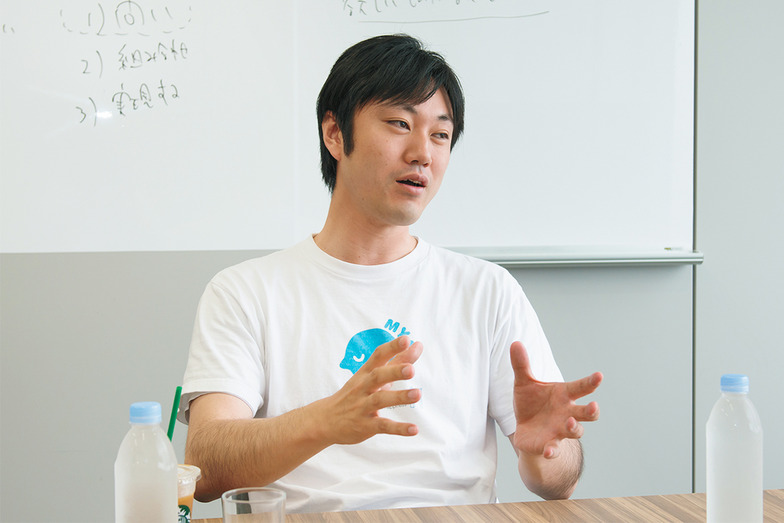

After this interview, I'm heading to a computational creativity conference in Paris. From iPhone designs to catchphrases, I want to quantify this idea—to express "how many points out of 100 does this creativity score?" as an equation. Doing so should surely enable us to break through the limits of human creation!

Medicine Approaches Marketing Through "Behavioral Change"
In a super-aged society, maintaining current levels of healthcare and nursing care—both in quality and quantity—will be incredibly difficult. Therefore, the paramount goal is for individuals to actively improve their health and for society as a whole to rigorously implement prevention. However, people often "know they should, but don't do it." Consequently, future healthcare will require not only cutting-edge medical knowledge but also insights into behavioral change.
What does this mean concretely? Based on the hypothesis that "motivation is the cause of failure," Mr. Ishikawa devised a strategy of "unconscious behavioral change." From the vast body of scientific knowledge about the human body, he selected two key insights: "umami can replace carbohydrates and fats" and "tongue cells renew themselves every 10 days." From the perspective of behavior change, he rediscovered the significance of existing knowledge and created a new solution. He then dismantled our preconception that "healthy food isn't tasty" using a probabilistic viewpoint, inviting us to explore new possibilities.
This made me think: In our daily lives, dominated not by knowledge, principles, or ideals, but by emotions, impulses, habits—by human "foolishness"—marketing communication has accumulated techniques for behavioral change. As a marketer , I can't help but feel a flutter of excitement , wondering if the intersection of medicine and marketing communication might give birth to a new era of healthcare.
Though I must admit, I feel a touch of envy that the vanguard of this movement is Dr. Yoshiki Ishikawa, a specialist in preventive medicine.
Notice from Researcher Hiruma
We plan to launch "Wellness Crossing" (tentative name), a forum for dialogue with experts across various fields on how marketing insights and techniques can be applied in the medical and healthcare domains.
Was this article helpful?
Share this article


Newsletter registration is here
We select and publish important news every day
For inquiries about this article
Author
Yoshiki Ishikawa
Preventive medicine researcher
Masato Hiruma
Dentsu Inc.
Business Development & Activation Division
Senior Consulting Manager