Note: This website was automatically translated, so some terms or nuances may not be completely accurate.
 Experience-Driven Showcase [76/77]
Designs that fully utilize the properties of light: Izumi Okayasu (Part 1)
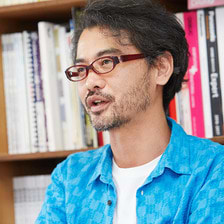
Izumi Okayasu
Okayasu Izumi Lighting Design Office
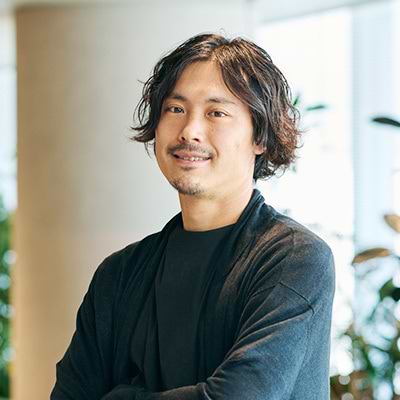
Takuya Fujita
Dentsu Inc.
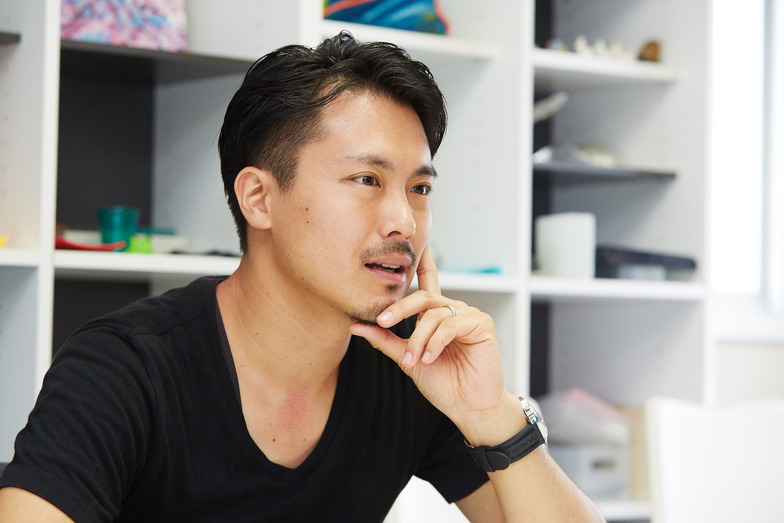
"Meeting the People We Want to Meet!" Episode 11 features Takuya Fujita from Dentsu Inc. Event & Space Design Bureau meeting Izumi Okayasu. As a lighting designer, Okayasu has collaborated with numerous architects and continues to create compelling light artworks. While lighting is often treated as a supporting role in spatial production, light design profoundly influences human emotions. We explore Okayasu's approach and creative philosophy that delves into this realm.
Interview and Composition: Aki Kanahara, Dentsu Inc. Event & Space Design Bureau
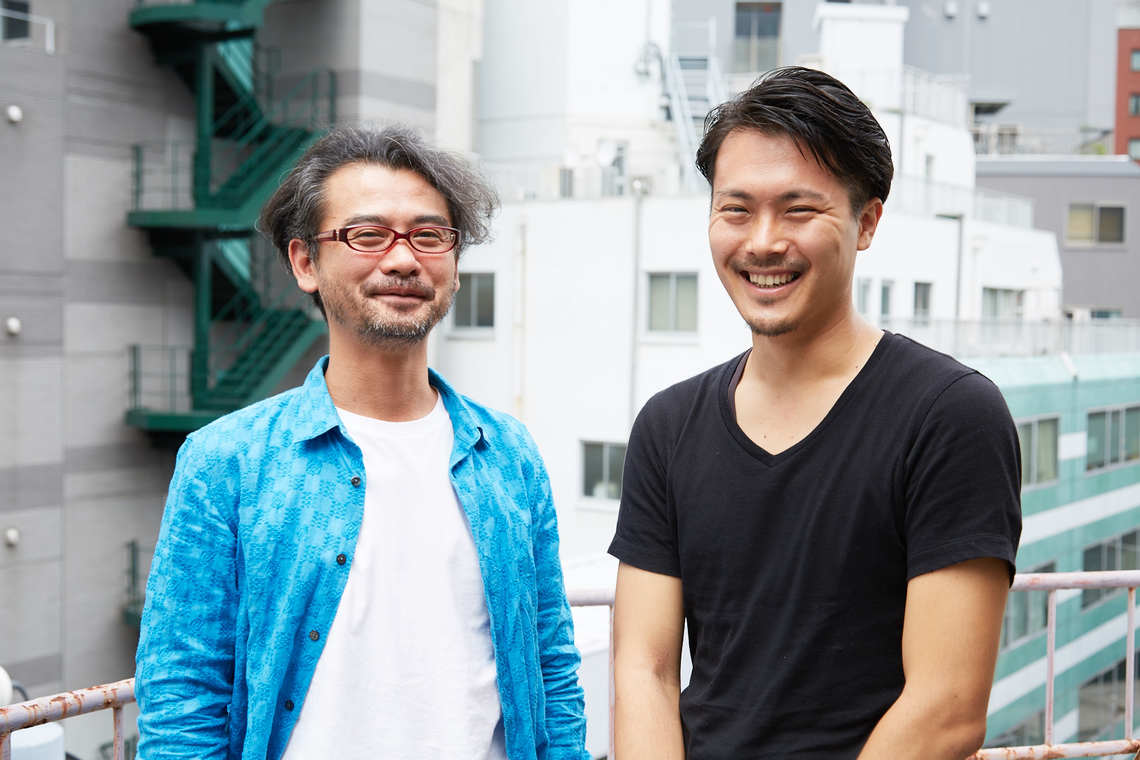
Is lighting's status too low? Proposing lighting as the main focus
Fujita: I work in the production section handling events and space development. We handle projects that are closer to tangible objects or actual projects than the typical image of "advertising." When people in the world actually experience the spaces or events we create, lighting is incredibly important and requires delicate design. But lighting is often the first thing to get cut from the budget, isn't it?
Okayasu: I really hate that. With lighting, it's not always about providing easily recognizable value. Even basic lighting is important, right? Conveying that is incredibly difficult. In my case, to protect my position, I end up proposing things like, "If we remove this, it's completely ruined" (laughs). I often force it to a state where lighting is practically the star.
I absolutely aim to reach a point where others can't touch it, where it's "If we don't get this person involved, we're in trouble." In my mind, it's about elevating the design to the same level of value as architecture – though saying "equal" might be disrespectful. It's that sense of bringing the design up to architecture's level.
I intended to start a manufacturer, but somehow I ended up becoming a lighting designer.
Fujita: So, it's impossible unless they reach out to me early on.
Okayasu: That way, ideas actually stick. Projects that come later usually end up with the budget slashed. You hit limits on what you can do. You propose something bold, they say "That's great," but then it's "We're out of money."
Fujita: You work with renowned architects like Takashi Nakamura and Jun Aoki. Does the way you're approached change how you work with them?
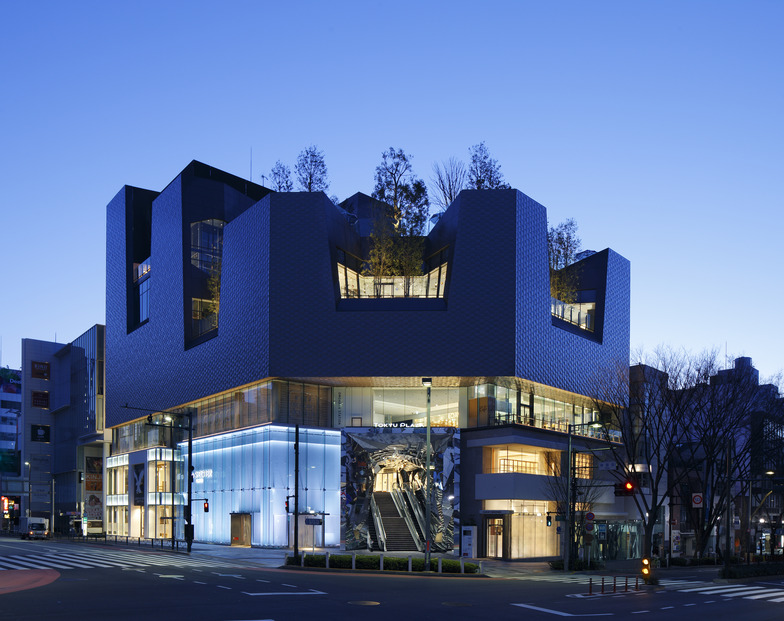
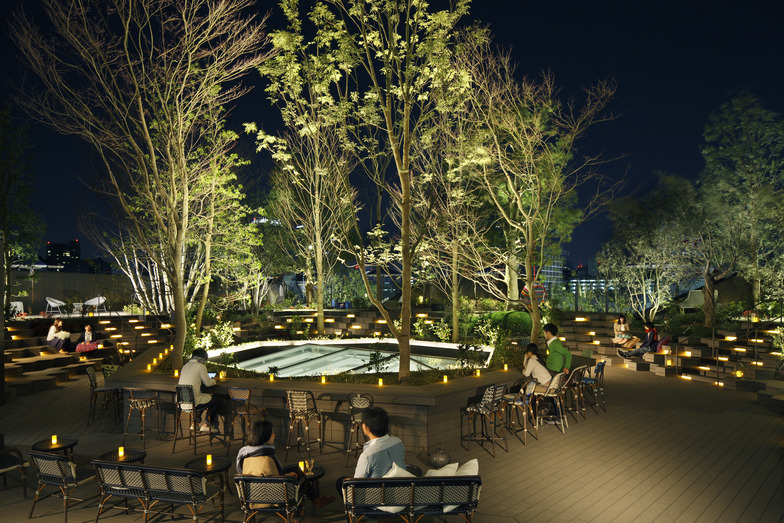
Takashi Nakamura / NAP Architects + Takenaka Corporation
©Koji Fujii / Nacasa and Partners Inc.
Okayasu: It depends on the case. In my line of work, which also involves engineering aspects, there have been times when a project was being handled by another lighting manufacturer, and then at the very last minute, they'd suddenly say, "This is getting serious," and ask me to step in and help.
Fujita: Before becoming a lighting designer, you were a lighting fixture engineer, right? Was there a specific turning point that led you to switch to becoming a lighting designer?
Okayasu: There wasn't really a specific trigger. I was originally doing mechanical engineering at an affiliated organization of the Ministry of Agriculture, Forestry and Fisheries. I sort of got swept up in the idea of starting a lighting manufacturer, started designing fixtures, and before I knew it, I was handed business cards from all sorts of different manufacturers.
Fujita: Whoa. That sounds kind of shady (laughs).
Okayasu: They started telling me to bring business cards from all these different companies to meetings. Naturally, that meant meeting all sorts of people. Eventually, among architects, word spread: "Hey, that guy who used to work for that manufacturer? He's over there now too" (laughs). It became like, "No matter which manufacturer you ask, I'm there" (laughs). People started thinking, "Wait, that's the same guy, right?" and "Well, wouldn't it be faster to just ask him?"
At that time, I was just starting out with a new manufacturer. Seriously thinking about how a small manufacturer could survive, I realized a company started with just three or four people couldn't compete unless we leaned a bit more into design. To specialize, after finishing commissioned work, I started offering design and technical support to architects of my generation.
I kept advising architects like Yuko Nagayama and Junya Ishigami for free, actually collaborating to bring their ideas to life. Around three or four years after entering the lighting world, requests for design work started pouring in. Still, I thought, "We founded a manufacturer, and growing the company as a manufacturer seems like the way to get rich" (laughs), so I just couldn't bring myself to stop.
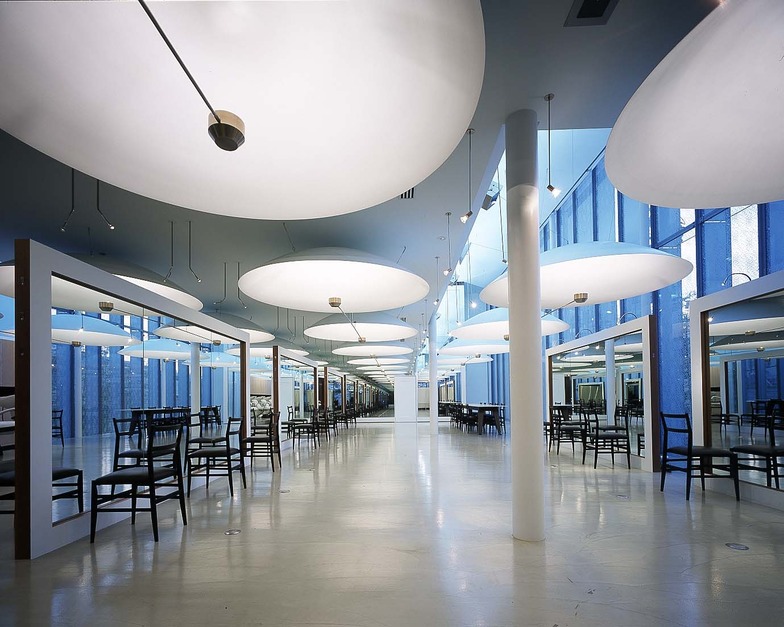
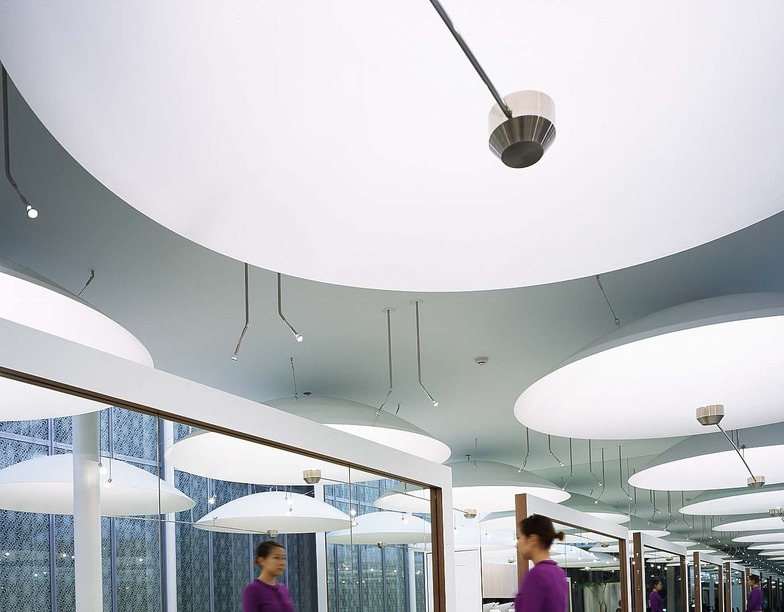
Yuko Nagayama Architects
©Daici Ano
Lighting has become intensely mass-produced, so simply lining them up won't do.
Okayasu: About eight years ago, we got hit with a huge wave of massive projects from some of the big-name architects. We realized we couldn't handle it on the side, so we stopped being a manufacturer.
Fujita: I see. When you say the company "provides design," that's obviously from a lighting perspective, right?
Okayasu: Exactly. Ultimately, when I wanted to properly create something special for each project, lighting is so intensely mass-produced. I agonized over whether simply rearranging off-the-shelf products could truly deliver something unique. Even when someone specifically requested our work, was it really acceptable to just line up items you could buy at an electronics store? I spent a long time building a system to figure out how to create something special within budget constraints.
Fujita: That approach of starting from the very method of creation is both a strength and a defining characteristic, isn't it?
Okayasu: It's liberating, isn't it? Thinking through all the possibilities.
Fujita: I envy that. I think people who can create from the very method are the strongest.
Okayasu: I think the strongest person has to be the richest (laughs). Since I'm not rich, I don't think I'm doing anything that amazing.
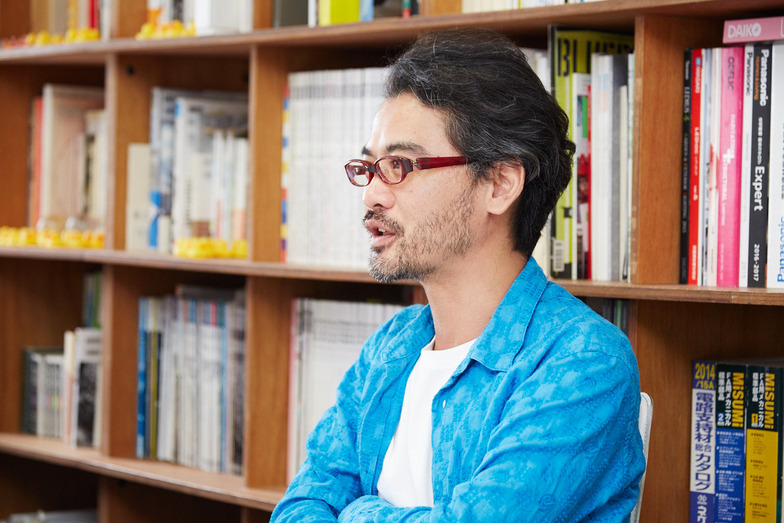
My lighting design is "utilization engineering" that transforms existing things into different values.
Fujita: You shifted your focus from being an engineer to a designer. What do you find most interesting about your current work?
Okayasu: In my case, I wasn't the kind of engineer who invents products. It's utilization engineering—taking existing things and shaping them into form. It's not really engineering in the grand sense; perhaps it's simply about understanding the process of making things.
Not too long ago, few people at manufacturers could design reflectors. I thought being able to make reflectors and design lenses was my advantage. But with LEDs, reflector design became less necessary.
So, understanding the characteristics of light might become a valuable skill. Right now, I'm in a position where I can create things people haven't even imagined yet. Being in this current role, I tend to get relatively new information easily. I'm in a place where technical discussions often come my way, and I also hear a lot about the design industry. So, in the sense that knowledge and experience can relatively easily translate into tangible results, having design and engineering both close at hand is definitely a good thing.
Fujita: There's also the approach of deliberately using non-LED lighting, right?
Okayasu: That's true. But mastering LED is crucial. For the past decade, I've believed that if lighting failed to create certain value, it's because "during the fluorescent lamp era, we didn't design fluorescent lamps properly."
Around the same time as fluorescent lights, discharge lamps—the kind used for streetlights—also appeared. But these weren't well designed, and the designs that did exist never truly integrated into people's lives. While incandescent bulbs and halogen bulbs became widespread as design products, fluorescent lights and discharge lamps were never properly designed.
Ever since LEDs first appeared around 2005-06, I was determined to make them usable. While LEDs have improved and are now commonplace, even back when they were unusable, I was desperately trying to transform those poor-quality LEDs into something practical for everyday use.
*Continued in Part 2
Was this article helpful?
Share this article


Newsletter registration is here
We select and publish important news every day
For inquiries about this article
Back Numbers
Author
Izumi Okayasu
Okayasu Izumi Lighting Design Office
Lighting Designer
Takuya Fujita
Dentsu Inc.
Customer Experience Creative Center
Creative Director / Communications Planner