
Note: This website was automatically translated, so some terms or nuances may not be completely accurate.
The 71st Dentsu Inc. Advertising Awards Awards Presented to 61 Winning Entries
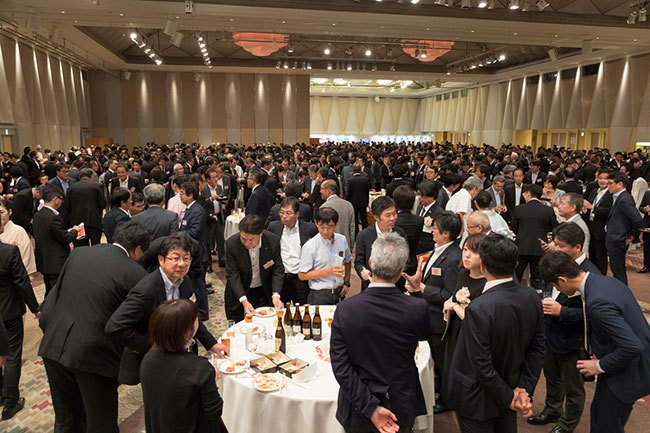
The award ceremony for the 71st Dentsu Inc. Advertising Awards, Japan's oldest comprehensive advertising prize, was held on July 2 at the Grand Prince Hotel New Takanawa in Minato Ward, Tokyo. Approximately 1,000 attendees, including advertisers, media companies, and related parties, were present.
Certificates and trophies were presented to the winning companies, including NTT DOCOMO, which received the inaugural Grand Prize, and other recipients of the Dentsu Inc. Advertising Awards.
List of Winners:
https://adawards.dentsu.jp/prize/list71/
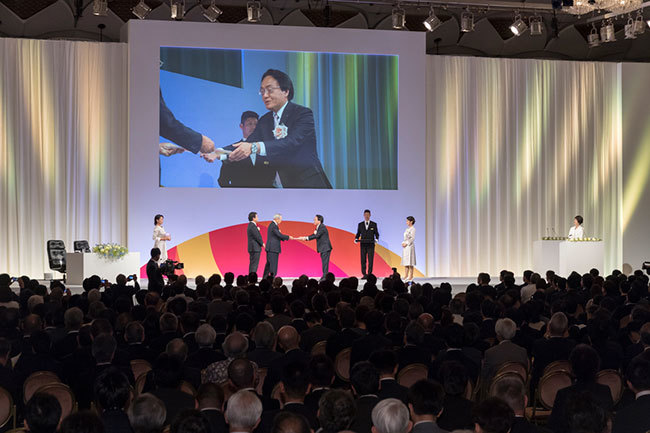
In his address, the Chairman of the Dentsu Inc. Advertising Awards Council, Takashi Imai, stated, "This year's entries demonstrated not only originality but also sophisticated communication that deeply resonated with consumers, making us feel the further evolution of advertising. Furthermore, the trend of local governments and media companies proactively disseminating messages has made us recognize the power and potential of advertising."
Akira Ohira, Director of the same council, reported on the selection process and judging. Regarding NTT Docomo's award, he praised, "In the challenging field of telecommunications services, where differentiation is difficult, they submitted many outstanding works through various ingenious approaches." He introduced Beppu City, Oita Prefecture, recipient of the Special Award, as a project representing regional revitalization in fiscal 2017.
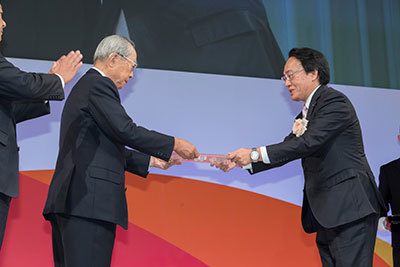
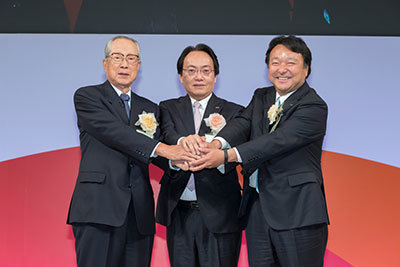
NTT Docomo Vice President Hiroyasu Asami mentioned that the company celebrated its 25th anniversary last year. He explained that the TV commercial "Summer 25 Years Later," which won the Dentsu Inc. Film Advertising Award, depicted the years the company and its customers had walked together, leading to strong user engagement. He also explained the intent behind the OOH and newspaper ad works that won the Dentsu Inc. Award and Excellence Awards, while declaring the company's commitment to actively pursuing next-generation mobile communications "5G" ahead of 2020.
Dentsu Inc. President Toshihiro Yamamoto stated, "This year, I felt bright expectations for the further evolution of advertising technology and ideas, and their potential. Many works reaffirmed the universal truth that 'advertising is always directed toward people, regardless of the era.'" He concluded, "In a changing society, to further expand the potential of advertising, we will strive even harder, adapting the role we must play as an industry member."
Was this article helpful?
Share this article


