Note: This website was automatically translated, so some terms or nuances may not be completely accurate.
Revealing the hidden side of high-net-worth business in the art market
Naohiko Kurashu
Art Tokyo General Incorporated Association Representative Director
Shinya Ito
Dentsu Inc.
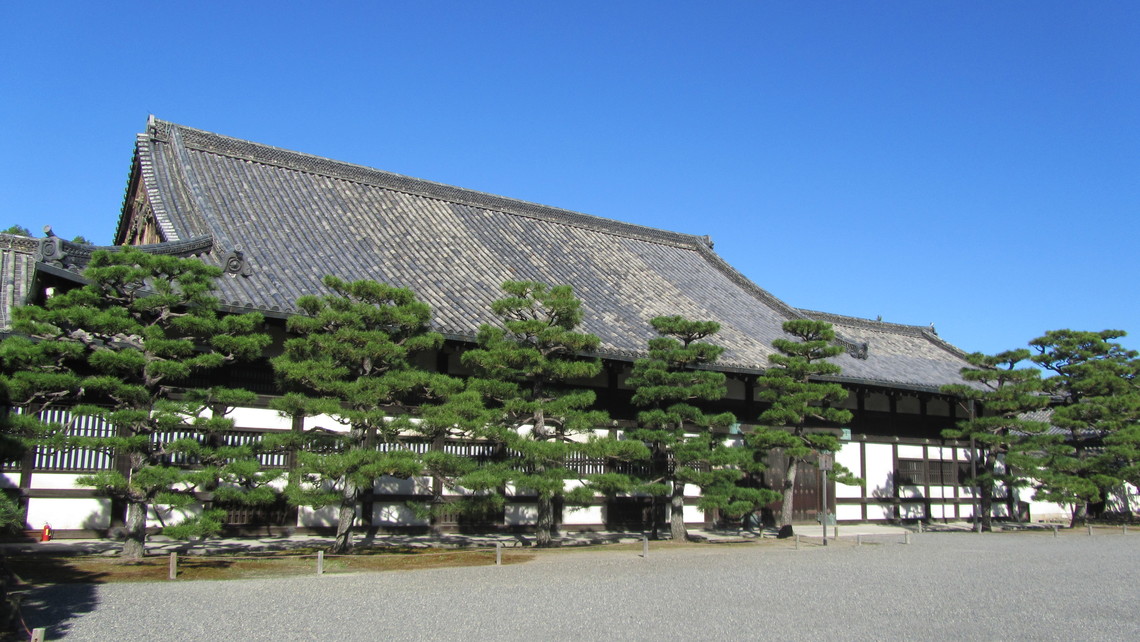
From September 6 to 9, 2019, the international art fair "artKYOTO" (*) was held for the first time at the World Heritage site Nijo Castle, attracting approximately 10,000 visitors.
Dentsu Inc., as one of the organizers alongside Kyoto City and the general incorporated association Art Tokyo, was involved from the ground up in developing and executing the project.
In this article, artKYOTO's General Producer Naohiko Kijima and Dentsu Inc.'s Shinya Ito, who worked on the project for a year, delve into "The Current State of the Rapidly Growing Art Market and the Affluent Marketing Supporting It."
* artKYOTO: This event, gathering 31 galleries and art dealers from Japan and abroad, created diverse experiences aimed not only at appreciation but also at art ownership. Supported by five government ministries including the Cabinet Office and 73 embassies/consulates, it was featured in numerous media outlets as a driving force for the development of Japan's art scene and the promotion of the art industry, set against the backdrop of Kyoto's history and culture.
French People Introduce Themselves Through Artworks, Japanese Keep Their Art Purchases Secret Even From Family
Ito: First, could you tell us about the current state of the "art market"?
Kisumi: The global art market is estimated to be around 7 trillion yen. In contrast, Japan's art market is just under 300 billion yen. For a world-leading economic power, this figure is far too small.
Ito: I believe Japan was originally a country rich in art, whether it be Heian culture or the Genroku culture that saw the spread of tea ceremony.
Kisumi: Is Japanese culture truly rich? To be precise, is the culture that was once rich being properly passed down? If "culture = the flow of time," then Japanese culture blossomed in the Asuka capital. Over the roughly 1,400 years since, has that culture truly taken root in us today?
Take the French, for example. They talk endlessly about their own culture. In contrast, we Japanese tend to gloss over it. We haven't properly confronted the questions: "What does it mean to be Japanese? What is Japanese culture?" I think this is also why art hasn't taken root here.
Ito: So, the Japanese identity, you mean.
Kurusu: You mentioned the French earlier, but in countries with a strong awareness of art, like the UK or Germany, when people invite guests into their homes, they immediately show off their favorite paintings or sculptures. They introduce themselves by sharing what they love.
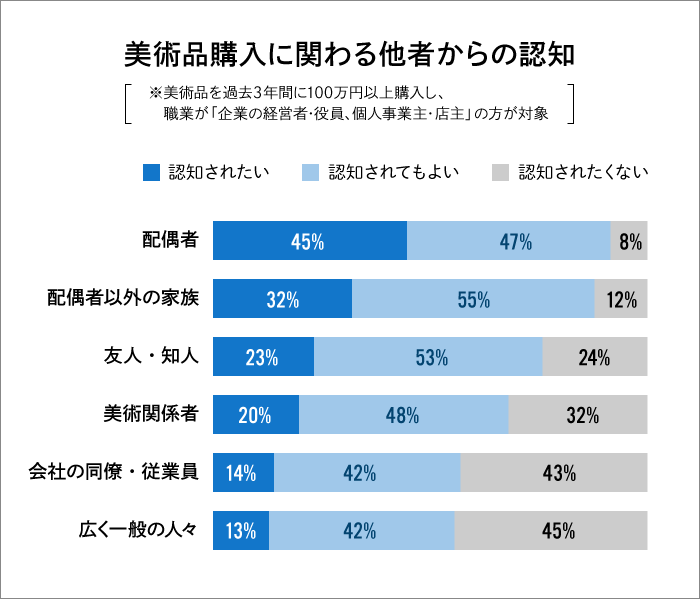
In contrast, when we surveyed people considered affluent in Japan and asked, "Would you like to tell someone you bought an art piece?" about 40% answered NO. Astonishingly, a quarter of those who said NO stated, "I don't even want my spouse to know." I find this deeply troubling.
Ito: So, what exactly is the "goal" that you, Mr. Kurusu, aim for in producing art in such a Japan?
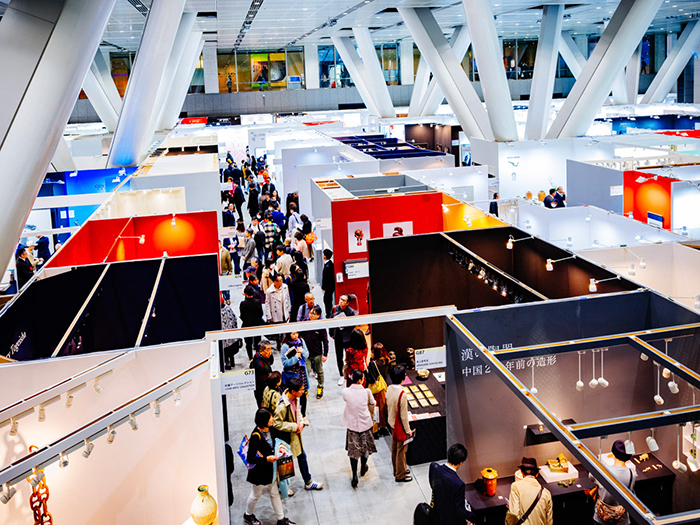
Kurusu: Financially speaking, there are two goals. First, the sales at Art Fair Tokyo, which we organize and hold in Tokyo, currently stand at around 3 billion yen, making it the second largest in Asia. We want to surpass Art Basel Hong Kong, which is said to be Asia's largest at 6 to 7 billion yen, and grow Art Fair Tokyo to a scale of around 10 billion yen.
The other is that we must grow the Japanese art market itself from ¥300 billion to ¥1 trillion.
Ito: Beyond the figures?
Kurusu: For example, I'd say it's about "increasing the number of people who are confident in themselves," people who can use art to introduce themselves. If more people gain confidence in themselves, their families, their companies, their towns, their society, their country, and this world, I believe we can surely achieve the sustainable society envisioned by the SDGs.
The role of an art fair is threefold: first, contributing to the cultivation of culture; second, contributing to asset formation as an investment target for clients; and third, and this is crucial, contributing to society. That means creating a system for the affluent to nurture the next generation of artists.
What is the moment when the affluent decide to purchase art?
Ito: The keyword "affluent individuals" comes up frequently. What is the deciding factor for them when they decide to purchase art?
Kurusu: Observing buyers at Art Fair Tokyo, there's a moment when you see them holding a piece, and their thinking shifts from the "present" to the "future." That's precisely the moment they decide to purchase.
Ito: The moment they envision their future life with the art they're purchasing.
Kurusu: Furthermore, I'd say the wealthy's criteria extend beyond price alone—they consider value as well.
Ito: What are the secrets you practice at Art Fair Tokyo for gathering "things people want to buy" and "people who want to buy"?
Kisumi: Regarding the "objects," meaning the artworks themselves, I want to have much more conversation with the exhibiting galleries. Overseas galleries simply have different financial resources. They can comfortably let art sit unsold for five or even ten years. During that time, the price can skyrocket.
Furthermore, to showcase matured works, the entire art fair needs to have greater impact. Simply put, this means the size of the exhibition space. With ample space, the energy of the entire fair changes. The design of the visitor flow also changes. In a sense, it's the same as "town planning" or "town revitalization."
That's the perspective from the standpoint of "the object." Thinking only, "Since there are few works, even a small space is sufficient," won't expand the business. It's about how well you can create a space that conveys your worldview.
Embassies are among the most crucial influencers
Ito: Regarding "people," I understand that the presence of embassies in Japan is indispensable for invigorating the art market.
Kisumi: I believe embassies serve two roles.
First, "promoting their own country's cultural industries in Japan," and second, "promoting Japanese cultural industries in their own country."
Ito: So, that means they also influence the "people" network you're trying to build, Mr. Kurusu?
Kisumi: The number of supporting embassies, which started with about five countries, will reach 117 countries for next year's Art Fair Tokyo 2020. They are also wonderful influencers.
Ito: If you establish a connection with one ambassador from each country, their friends become connected too. Many ambassadors themselves are affluent and deeply knowledgeable about art. Their friends are also well-versed in art. Then, affluent individuals and corporate leaders who want to connect with those friends gather. Before you know it, a community has formed.
Kurusu: Exactly. Regarding "people," we aim to attract more individuals who truly understand art's value without changing the total number of visitors over the four days. We want them to become peers who can elevate each other.
Ito: That is precisely what the affluent seek, I believe.
Kurusu: There is no single correct answer for the product itself. Ultimately, it's the people who decide. That's why we need to understand the people thoroughly.
Luxury isn't about being special. What's special is what makes it luxurious.
Ito: Could you elaborate further on what kind of people the affluent truly are?
Kurusu: The affluent are people who "have money, possess refinement and knowledge, and are also self-indulgent." What does self-indulgent mean, you ask...?
Ito: "Understand me better!"?
Kurusu: What the so-called affluent think is this: "Luxury isn't what makes something special. What makes something special is what makes it luxurious." I think that's a profound statement. As a producer, I believe one must constantly confront that psychology.
Ito: I hear you often produce parties for the affluent. Could you tell us what these parties are actually like?
Kisumi: Naturally, we focus on the venue's specialty, but to create a truly "special party," superficial elements alone aren't enough. It's crucial to give the party a "story."
Ito: A story?
Kisumi: For example, let's say I'm planning a party for Art Fair Tokyo. Naturally, I'll leverage connections to arrange the venue. When doing so, I make one request to the company president who kindly lends the space: I ask them to present it as if they arranged the venue for me as a "friend."
Both the company president and the guests attending understand it's all part of the performance. They understand it, yet within this strange narrative – where only people who "truly understand the value of art" gather, free from business – a deeper sense of solidarity emerges.
Ito: At the heart of the gathering is art. It's not about the president who arranged the venue or Mr. Kurisu; it's about "placing art at the center of communication."
Kurusu: The most crucial thing is that there is no such thing as "everyone." Each person has different tastes in art, food, and friends. That's precisely why it matters how many people you can meet within limited time. For example, if you work for another 30 years, you only have about 10,000 opportunities to share dinner with someone. Thinking about it that way makes you want to be incredibly selective about who you spend your time with.
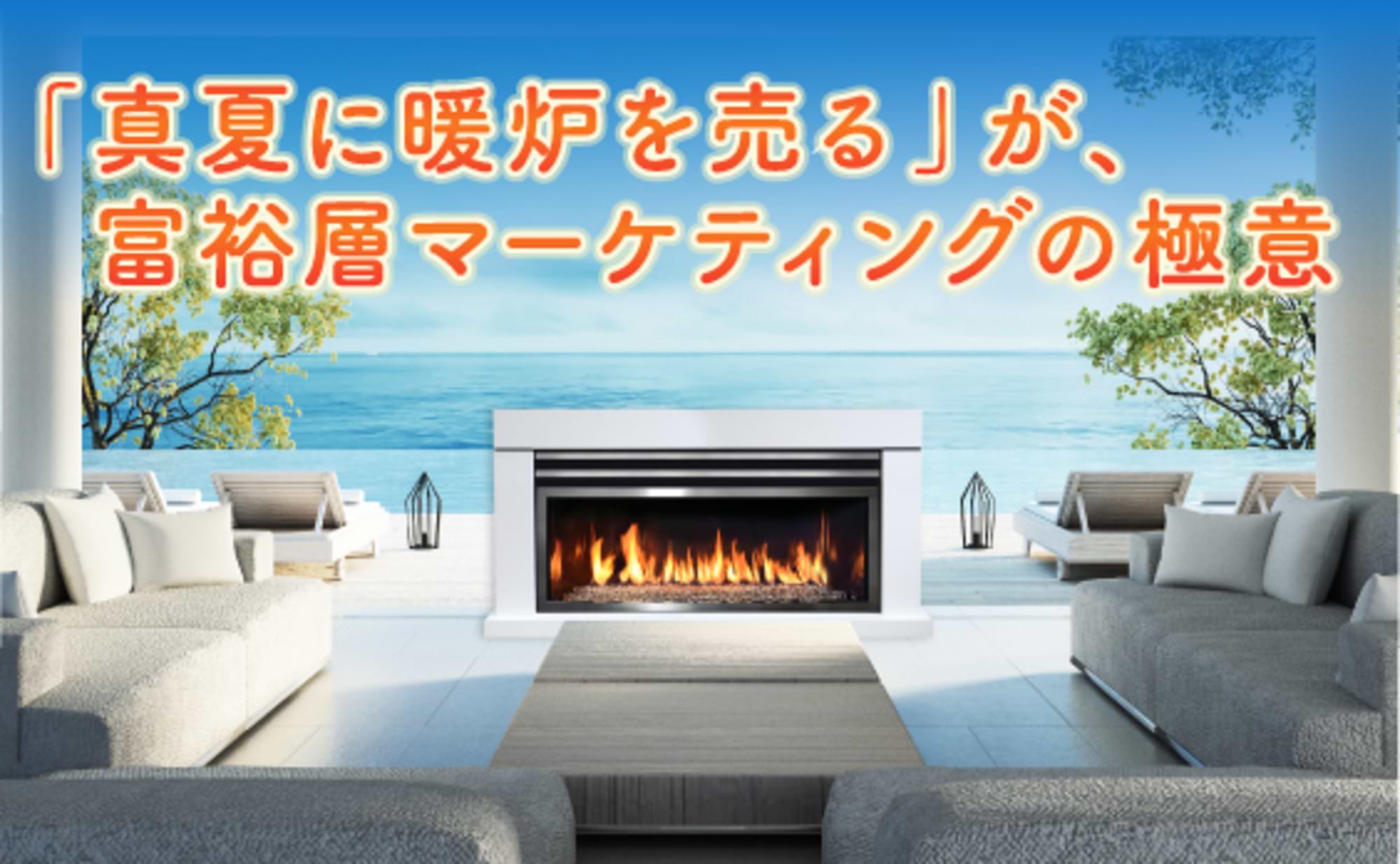
The secret to affluent marketing is "selling fireplaces in the middle of summer."
Ito: Summarizing what we've discussed so far, what exactly is the "ultimate secret to marketing to the wealthy"?
Kisumi: First, you must become the kind of person who could afford to buy what you're trying to sell. Otherwise, you won't earn their trust.
Ito: You're selling a ¥100 million product to just one person, after all. The fundamental methodology is completely different from selling a ¥100 product to a million people.
Kisumi: To put it in perspective, the business I'm in is like "selling a 100 million yen fireplace in the middle of summer."
Ito: Meaning?
Kisumi: The key isn't the function. The timing and price are off, but you're selling something that, if they own it, they'll absolutely find joy in someday. It's about how passionately and persuasively you can explain, "Buying a fireplace in summer brings such incredible benefits."
Ito: That requires explaining the essence of art.
Kisumi: Ultimately, I think it comes down to your own growth. This person must secretly crave a more relaxed pace of life. Even if they pay 100 million yen in the middle of summer, they'll surely want a fireplace come winter. So, it's about anticipating what kind of fireplace would suit them. Did I sound a bit too pretentious just now?
Wealthy customer marketing requires engaging with the customer's individuality.
After the discussion, Mr. Shinya Ito summarized the outlook for the future.
During our discussion, Mr. Kurusu repeatedly emphasized the importance of "customer-centricism" – thoroughly understanding the individuality and preferences of each affluent client. The essence of affluent marketing may lie in treating affluent individuals not as a homogeneous "class," but as people with strong personalities, engaging with each sincerely.
I truly felt that only after gaining their trust does a virtuous cycle emerge, where connections expand to their friends and partners, further broadening the community. In that sense, it's a business that tests our human capabilities. How can we delight the other person? Business follows as a result. This is precisely the field where customer-centric thinking is essential.
Dentsu Inc. also conducts activities to understand the realities of the affluent through various surveys and data analysis. However, by establishing real-world touchpoints with the affluent, like the "artKYOTO" initiative we launched, we engage with each individual and enhance our own human capabilities. I feel that through practice, we grasp the key points of affluent marketing and further increase the potential to build our own affluent networks.
"High-net-worth individuals decide to purchase art when they can vividly envision a wonderful scene featuring that art." For Dentsu Inc. to contribute to the expansion of the art market going forward, articulating and quantifying the benefits art brings from various angles is both a priority and an opportunity.
New work from Kyoto
While artKYOTO's inaugural event revealed many challenges, the process of realizing it as the organizer—navigating all adjustments against the backdrop of a World Heritage site—provided valuable experience and strengthened relationships with partners.
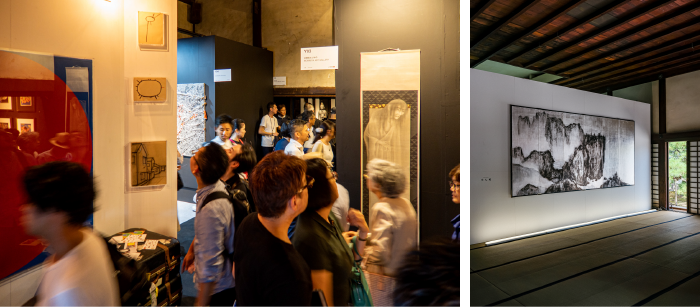
With the relocation of the Agency for Cultural Affairs pending, Kyoto is drawing attention for its history, culture, and the aesthetic sensibilities that flow through it. In an era where both individuals and companies are challenged to demonstrate their "individuality," a prime opportunity has arrived to disseminate information from Japan's origin, "Kyoto." As a senior colleague once said, "If major projects come from Tokyo, then new ventures should come from Kyoto." With this spirit, we intend to continue our efforts to expand the company's scope.
In closing, I would like to take this opportunity to express my gratitude to everyone who supported the inaugural artKYOTO.
Was this article helpful?
Share this article


Newsletter registration is here
We select and publish important news every day
For inquiries about this article
Author
Naohiko Kurashu
Art Tokyo General Incorporated Association Representative Director
Executive Producer, Art Fair Tokyo General Producer, artKYOTO
Shinya Ito
Dentsu Inc.
Kyoto Business Acceleration Center